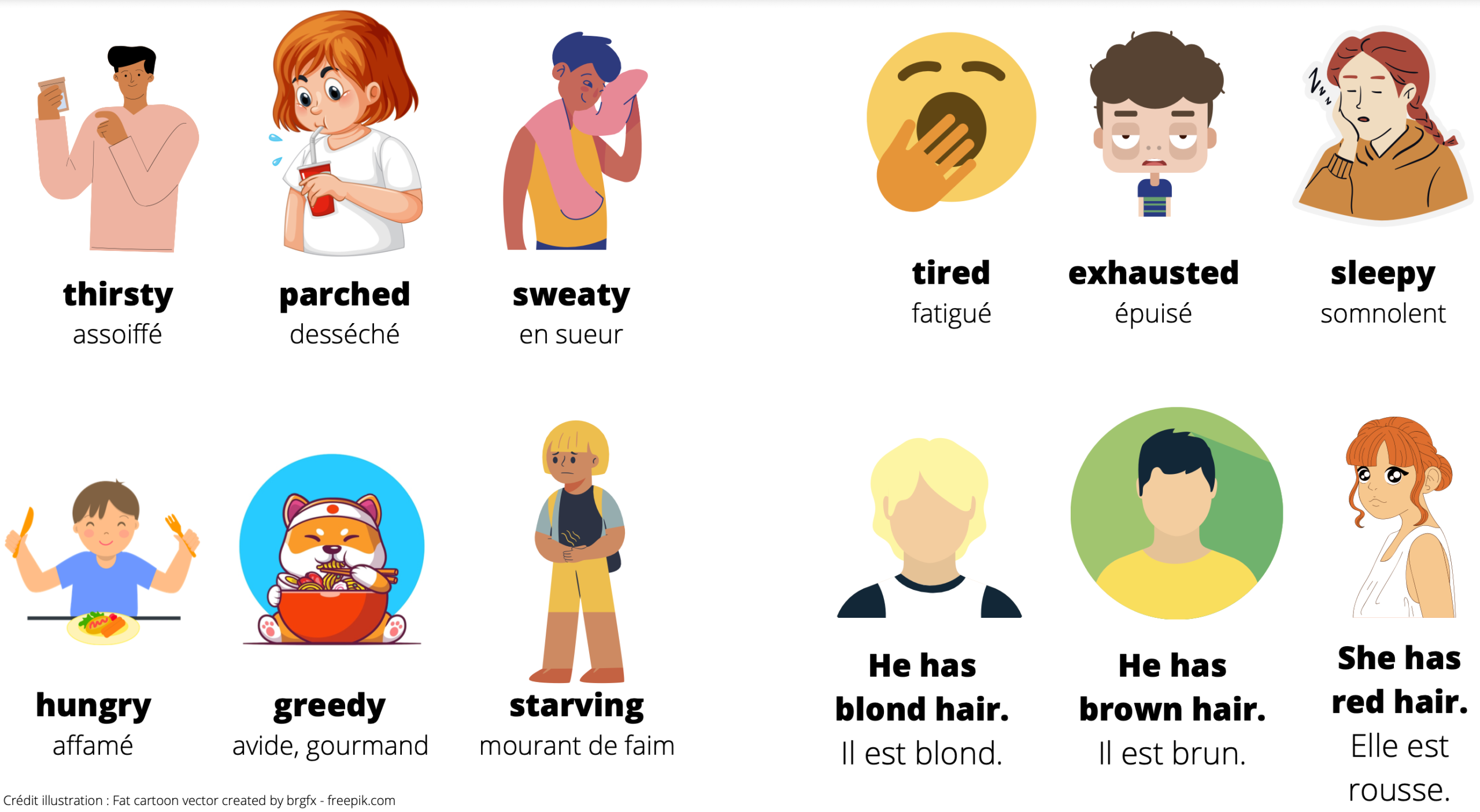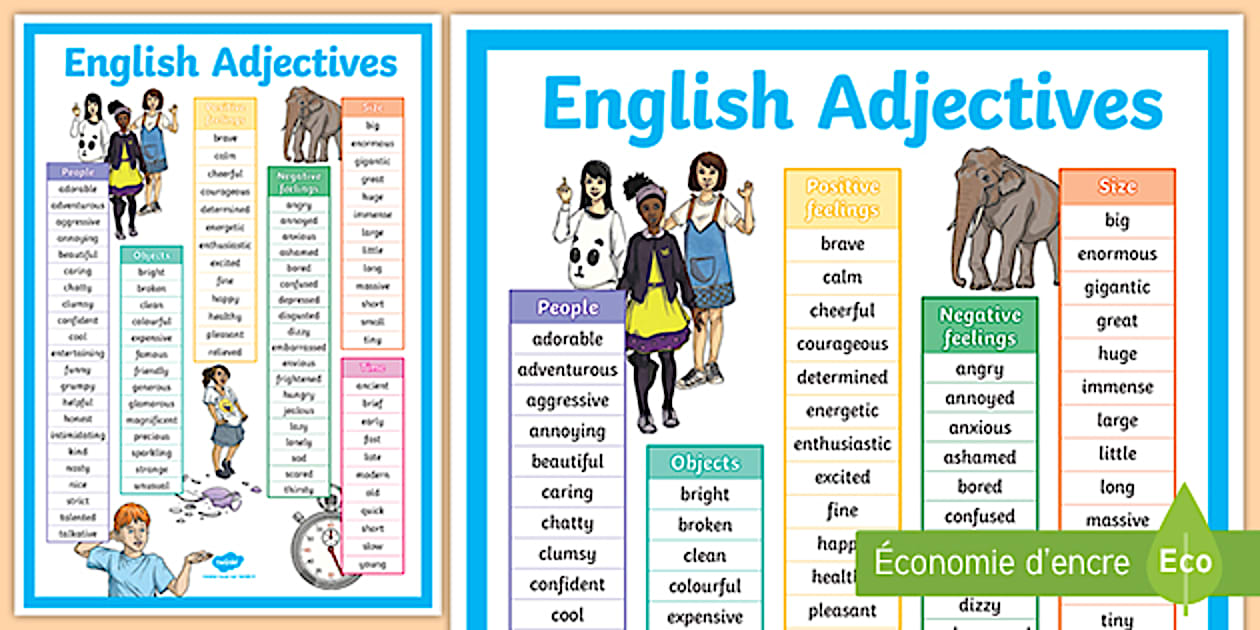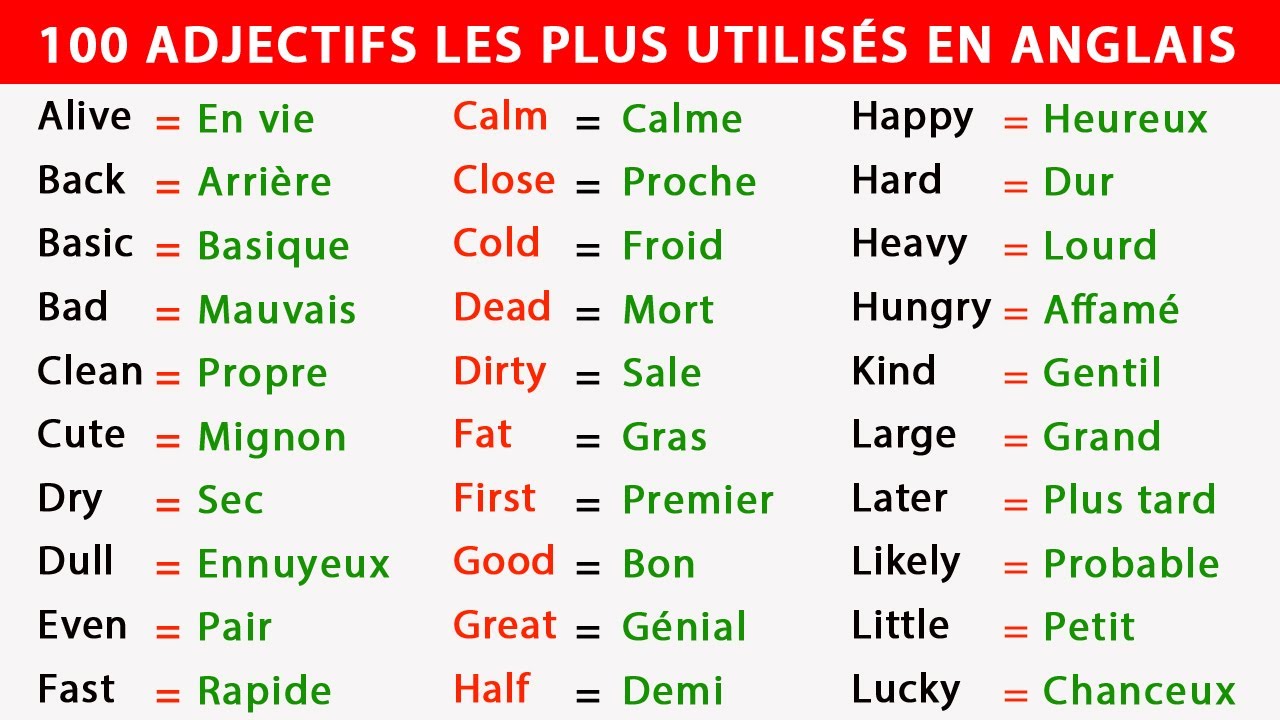
Salut, les anglophiles! Let's be honest, we've all been there. Staring blankly at a sentence, desperately searching for the perfect word to express ourselves. Well, mes amis, fini! Today, we're diving headfirst into the 100 most used adjectives in the English language. Think of it as your linguistic baguette – a staple, delicious, and surprisingly versatile.
Why Adjectives Matter: More Than Just Fluff
Before we get to the list, let's quickly chat about why adjectives are so crucial. They're not just decorative; they're the architects of description, painting vivid pictures with words. They add nuance, clarity, and emotional weight to our communication. Imagine describing your weekend without them – it'd be like a croissant without butter! Sacrilège!
The Magnificent 100: Your Go-To Adjectives
Alright, let's get to the good stuff! Here's a curated selection of adjectives that pop up everywhere in English. Think of this list as your secret weapon for conquering conversations, crushing creative writing, and generally sounding more eloquent. We've broken them down into categories to make it even easier:
The Basics: Foundation Builders
- Good: Because everything deserves a little positivity!
- New: "A brand new day," as they say!
- First: The beginning of something awesome.
- Last: The end of something...hopefully also awesome!
- Long: Time, distance, hair...the possibilities are endless.
- Great: Beyond good, edging towards fantastic.
- Little: Small but mighty!
- Own: Possessive and proud.
- Other: For all things alternative.
- Old: Wise, vintage, or just plain…old.
Describing Things: Adding Color and Detail
- Big: Obvious, but essential. Think "Big Apple".
- High: Altitude, ambition, or just a really tall building.
- Different: Embrace the unique!
- Important: Matters a great deal. Like finding good coffee.
- Public: For the people!
- Possible: Where there's a will, there's a way.
- Small: Think "small victories."
- Young: Full of energy and potential.
- White: Classic and clean.
- Real: Authentic and genuine.
People and Personalities: Getting Emotional
- Best: The crème de la crème.
- Right: Accurate and just.
- Social: Connecting with others.
- Human: Imperfectly perfect.
- Open: Receptive and honest.
- Free: Like a bird!
- Easy: Relaxed and uncomplicated.
- Clear: Understandable and transparent.
- Strong: Resilient and powerful.
- Ready: Prepared for anything!
The "Feelings" Section: Expressing Yourself
- Bad: The opposite of good, obviously.
- Early: Getting a head start.
- Late: Fashionably…delayed.
- Hard: Challenging but rewarding.
- Local: Supporting your community.
- Full: Satisfied and content (after a good meal!).
- True: Honest and factual.
- Sure: Confident and certain.
- Black: Mysterious and chic.
- Private: Keeping things personal.
And a Smattering of Others...
- American: Because cultural identity matters.
- Federal: Related to the government.
- Specific: Pinpointing the details.
- Available: Open for business.
- Medical: Pertaining to health.
- Simple: Elegant in its straightforwardness.
- Past: Reflecting on history.
- Hot: Temperature or attractiveness – you choose!
- Cold: The opposite of hot…duh.
- Dead: …Moving on.
Tips for Mastering Adjectives
- Read, Read, Read: Expose yourself to diverse writing styles. Notice how authors use adjectives effectively. Think Proust, but maybe shorter sentences to start.
- Keep a Vocabulary Journal: Jot down interesting adjectives you encounter. Add a definition and a sentence using the word.
- Practice Makes Perfect: Challenge yourself to use new adjectives in your daily conversations and writing.
- Don't Overdo It: A well-placed adjective can be powerful, but too many can become overwhelming. Remember, less is often more! Find the right word, not just any word.
Un Petit Mot de la Fin
So there you have it! A crash course in the 100 most used English adjectives. Incorporate these into your vocabulary, and watch your communication skills blossom. Remember, language is a living, breathing thing. Embrace the beauty of description, and don't be afraid to experiment. Until next time, happy describing! Et n'oubliez pas: "The limits of my language mean the limits of my world." – Ludwig Wittgenstein