Okay, imagine this: you're throwing a killer party. Like, the kind that goes down in legend. You’ve got the playlist sorted, the decorations are Instagram-worthy, and you're even attempting to make those fancy layered dips you saw on Pinterest (good luck with that!). But then, BAM! You realize you absolutely hate making layered dips. And you're running out of time. What do you do?
Well, you might delegate. You might ask your friend, the one who’s secretly a Dip Master, to take over. And that, my friends, is a super simplified (like, extremely simplified) analogy to the world of co-traitants and sous-traitants. Think of it as business-level delegation, but with contracts, legal obligations, and a whole lot more paperwork. Exciting, right? (Don’t answer that.)
So, What's the Deal with Co-Traitants and Sous-Traitants?
Let's dive into the nitty-gritty. These terms often get thrown around, especially in large-scale projects, and it's easy to get them confused. Basically, they both involve one company bringing in outside help to complete a task or project. But the nature of that help, and the relationship between the parties involved, is what really distinguishes them.
Co-traitance: It Takes Two (or More) to Tango
Co-traitance, or co-contracting, is all about collaboration. Think of it as a group project in university, except with actual consequences. Two or more companies join forces to bid on a project, each bringing their own specific expertise and resources to the table. They are essentially partners in crime (in a legal, business-y way, of course). They sign a single contract with the client (the "maître d'ouvrage" in French legal terms), and they are jointly responsible for the project's success (or failure!).
Key characteristics of co-traitance:
- Joint Responsibility: This is huge. If one co-traitant messes up, the others are also on the hook. Shared risk, shared reward, shared potential for disaster!
- Single Contract: They all sign the same contract with the client. It's a unified front, even if internally they have their own agreements.
- Equal Footing (usually): While one company might be designated as the "chef de file" (lead partner), the other co-traitants generally have equal rights and responsibilities. But this can vary depending on the specifics of the agreement. Always read the fine print, folks! Always!
- Complementary Skills: Co-traitance is often used when a project requires a diverse set of skills that no single company possesses. It's like assembling the Avengers, but for business.
Imagine a construction project. One company might specialize in foundation work, while another is an expert in electrical systems. Instead of trying to do everything themselves (and potentially doing it poorly), they team up as co-traitants to offer a complete package to the client. Win-win (hopefully)!
Sous-traitance: The Helping Hand (or Hands)
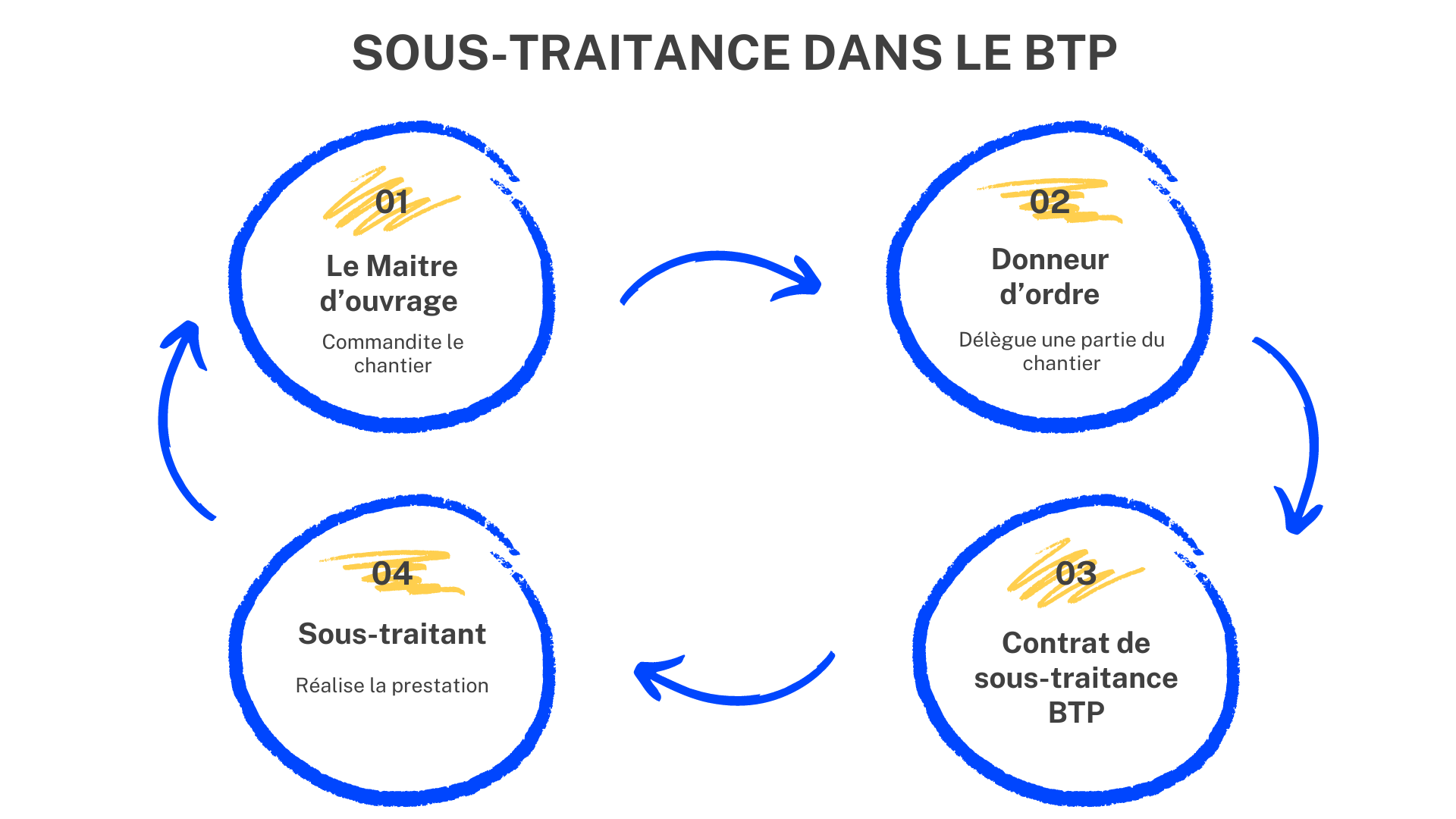
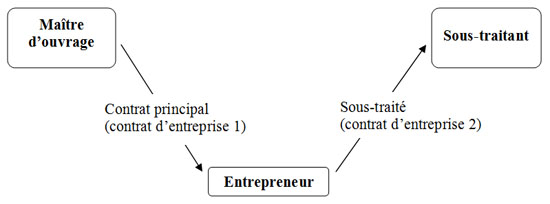
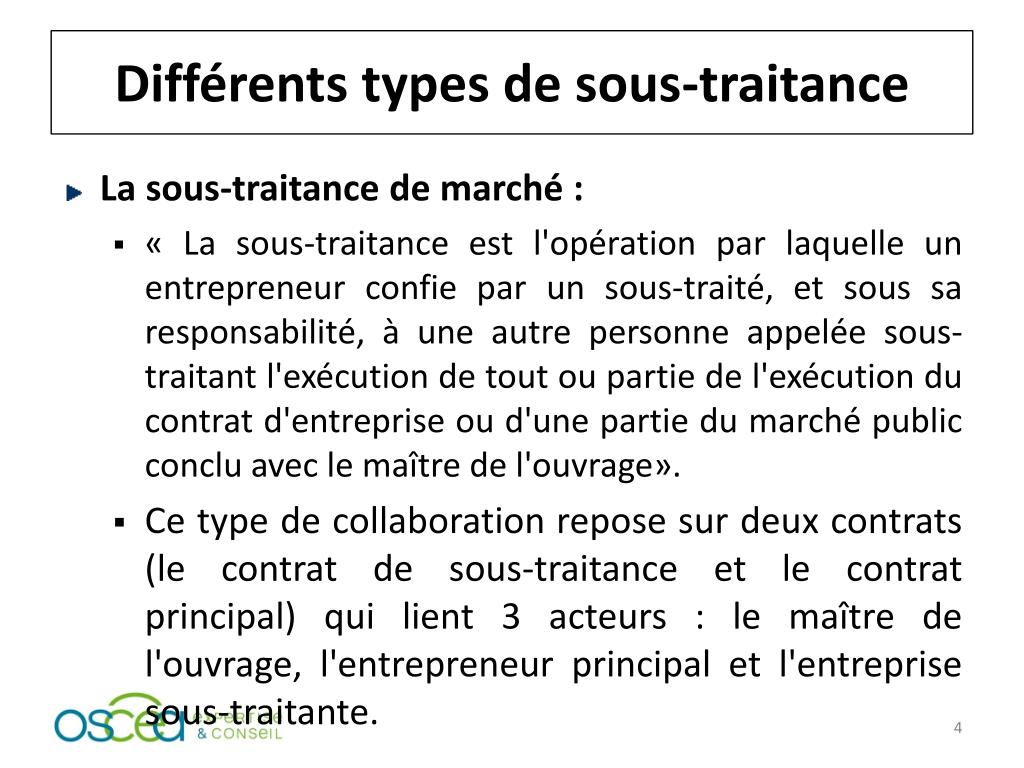
Sous-traitance, or subcontracting, is a different beast altogether. Here, one company (the "contractant principal") hires another company (the "sous-traitant") to perform a specific part of a project. The sous-traitant works under the contractant principal, and their relationship is governed by a separate contract. Think of it as outsourcing a task.
Key characteristics of sous-traitance:

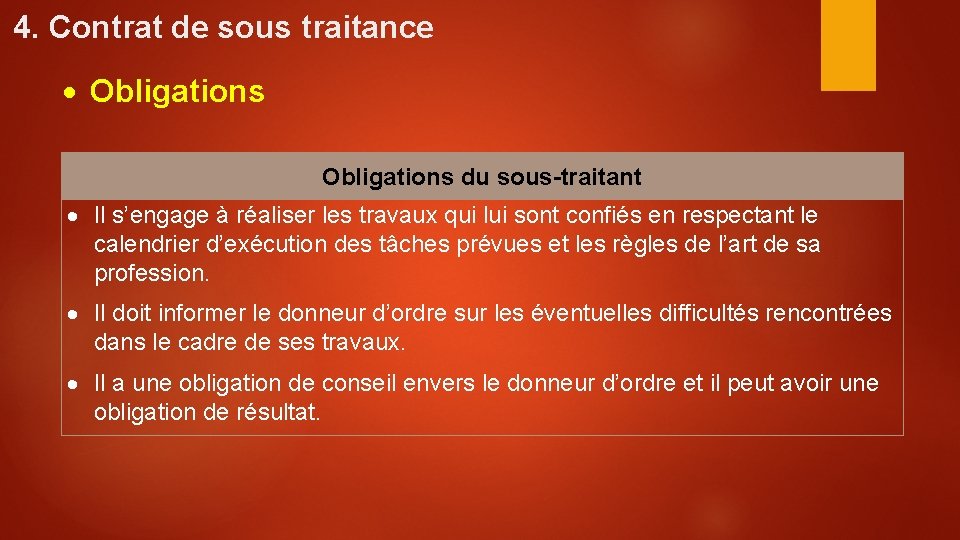
- Hierarchical Relationship: The contractant principal is in charge. They are responsible for overseeing the work of the sous-traitant and ensuring it meets their standards.
- Separate Contract: The sous-traitant signs a contract with the contractant principal, not with the original client. This contract will outline the specific tasks to be performed, the payment terms, and other relevant details.
- Limited Responsibility: The sous-traitant's responsibility is limited to the specific tasks they were hired to perform. They are not generally responsible for the overall success of the project. However, their mistakes can impact the overall project, which is why the contractant principal needs to choose wisely!
- Specialized Expertise (often): Sous-traitants are often hired for their specialized expertise or because they can do the work more efficiently or cost-effectively than the contractant principal.
Using the same construction project example, the company responsible for building the entire structure might hire a subcontractor to handle the plumbing. The plumbing company is responsible for installing the pipes and fixtures according to the specifications provided by the main contractor. If the plumbing leaks, the plumbing company is responsible, but the main contractor is still ultimately responsible for delivering a functioning building to the client.
The Key Differences in a Nutshell (Because Who Has Time to Read a Novel?)
Let's make it crystal clear. Here's a quick comparison table:

| Feature | Co-traitance | Sous-traitance |
|---|---|---|
| Relationship | Partnership | Hierarchical |
| Contract | Single contract with the client | Separate contract with the contractant principal |
| Responsibility | Joint and several | Limited to specific tasks |
| Risk | Shared | Primarily borne by the contractant principal |
Hopefully, that clears things up! Think of it this way: co-traitants are dancing the tango together with the client, while the sous-traitant is dancing at the instruction of the contractant principal.
Why Does This Matter? (Besides Being a Great Conversation Starter at Parties…)
Understanding the difference between co-traitance and sous-traitance is crucial for several reasons:
- Legal Implications: The type of agreement you enter into will have significant legal consequences, particularly in terms of liability and responsibility. Get it wrong, and you could be facing a legal nightmare.
- Risk Management: Knowing whether you are jointly responsible for the entire project or only for a specific part will impact your risk management strategy. You need to understand the potential pitfalls and how to mitigate them.
- Financial Considerations: The payment terms and profit-sharing arrangements will differ depending on whether you are a co-traitant or a sous-traitant. Make sure you understand how you will be compensated for your work.
- Reputation: Your reputation is on the line, regardless of whether you are a co-traitant or a sous-traitant. Delivering quality work and meeting your obligations is essential for maintaining a good reputation and securing future projects.
Basically, it's all about understanding your role, your responsibilities, and your potential exposure. Ignorance is not bliss in the world of business. Do your research, consult with legal professionals, and make informed decisions.

Final Thoughts (and a Word of Warning)
The world of co-traitance and sous-traitance can be complex and confusing. There are countless nuances and variations depending on the specific project and the applicable laws. This article is just a general overview, and it is not a substitute for legal advice. Seriously. Don't rely solely on this article to make important business decisions. Talk to a lawyer! (I'm not one. I just write blog posts.)
But hopefully, this has given you a better understanding of the key differences between these two types of agreements. Now you can impress your friends (or at least confuse them) with your newfound knowledge of business terminology. And maybe, just maybe, you'll be a little less intimidated the next time you encounter these terms in the real world. Good luck out there!
Oh, and about those layered dips… maybe just stick to chips and salsa next time. Less stress, more party!