Salut, les amis! Ever felt like you were swimming in a sea of Spanish verbs, especially when trying to nail down the present tense indicative? Don't worry, you're not alone! Think of it as learning a new dance – a few steps might seem tricky at first, but once you get the rhythm, you'll be gliding across the floor!
Why Bother with the Present Indicative?
Okay, so why should you even care? Well, imagine trying to order your perfect tapas in Barcelona or telling your new amigo about your weekend. The present indicative is your best friend for these situations! It's how you talk about what you do, what is happening, and general truths in the Spanish-speaking world.
Think of it: "Yo como tapas." (I eat tapas.) "Ella vive en Madrid." (She lives in Madrid.) See? Super useful for everyday conversations!
The Three Verb Groups: Your New Crew
Spanish verbs are like different teams, each with their own way of playing. We've got the -AR verbs, the -ER verbs, and the -IR verbs. Let's meet them!
-AR Verbs: Imagine the verb hablar (to speak). The endings are like a fun little song: -o, -as, -a, -amos, -áis, -an.

So, "Yo hablo español." (I speak Spanish.) "Tú hablas inglés." (You speak English.) It’s like saying "I speak" with a little Spanish twist!
-ER Verbs: Think comer (to eat). The endings are: -o, -es, -e, -emos, -éis, -en.

For example, "Yo como pizza." (I eat pizza.) "Él come fruta." (He eats fruit.) Notice the subtle change? Each team has their own signature move!
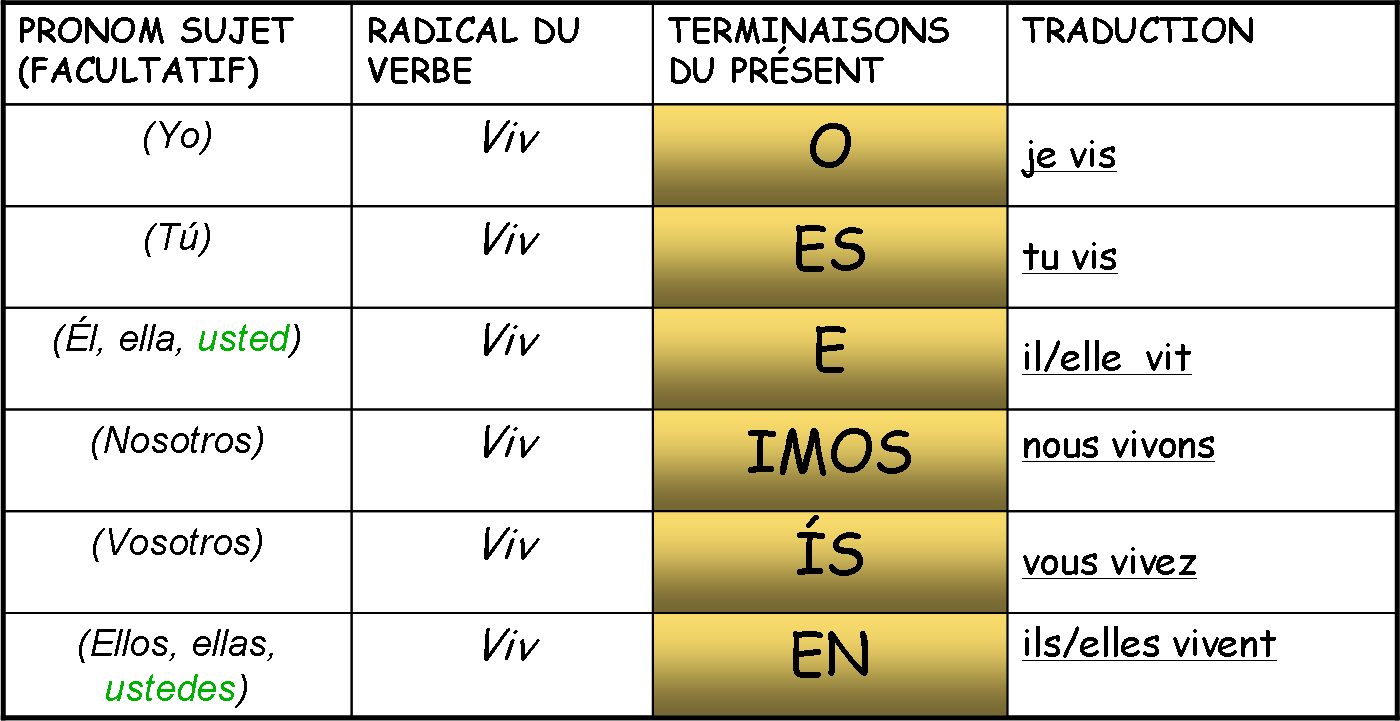
-IR Verbs: And finally, vivir (to live). These guys end in: -o, -es, -e, -imos, -ís, -en.

"Yo vivo en París." (I live in Paris… dreaming!). "Nosotros vivimos juntos." (We live together.) Aren't they cozy?
Irregular Verbs: The Rebels of the Verb World
Now, just like in any team, there are always a few rebels! These are the irregular verbs, and they don't always follow the rules. Ser (to be), estar (to be), tener (to have) – these guys are important, but they like to do things their own way. Don't be intimidated! Just learn their conjugations by heart; think of them as your cool, slightly eccentric friends.

For example, ser: Yo soy, tú eres, él/ella/usted es… and so on. It's a bit different, but you'll get the hang of it!
Practice Makes Perfect (and Delicious Tapas!)
The best way to master the Spanish present indicative? Practice, practice, practice! Start with simple sentences. Talk about your daily routine. Describe what you see around you. Listen to Spanish music and pay attention to how the verbs are used.
And remember, don't be afraid to make mistakes! Every stumble is a step closer to fluency. So, go out there, conjugate those verbs, and order your tapas like a pro!