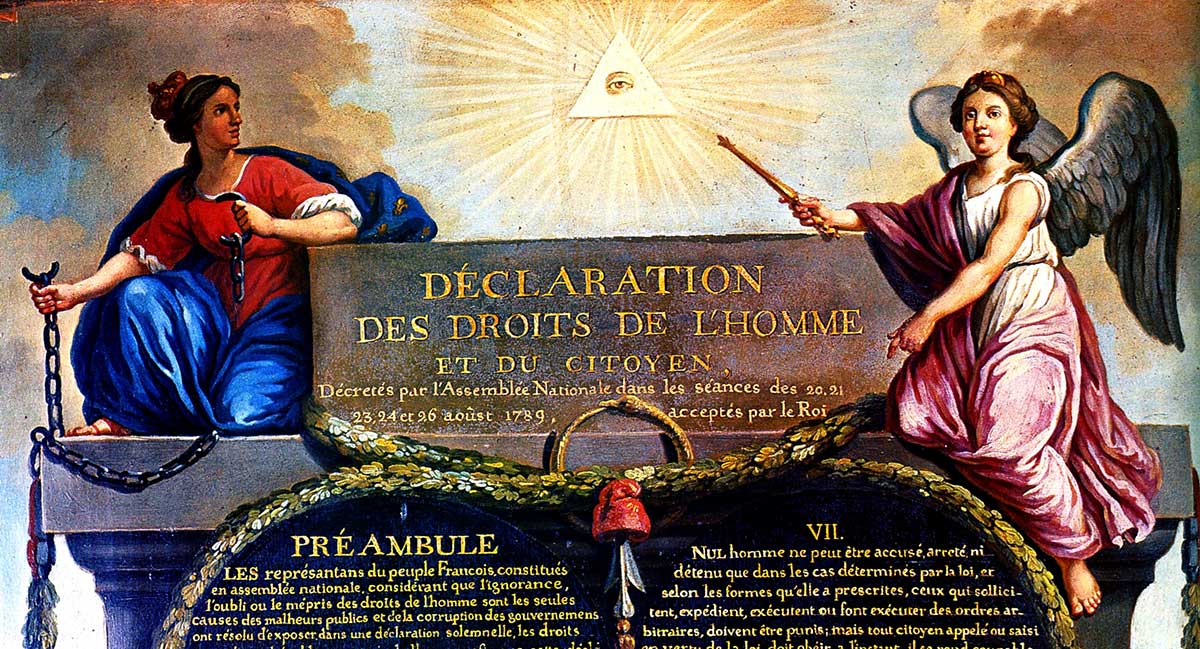
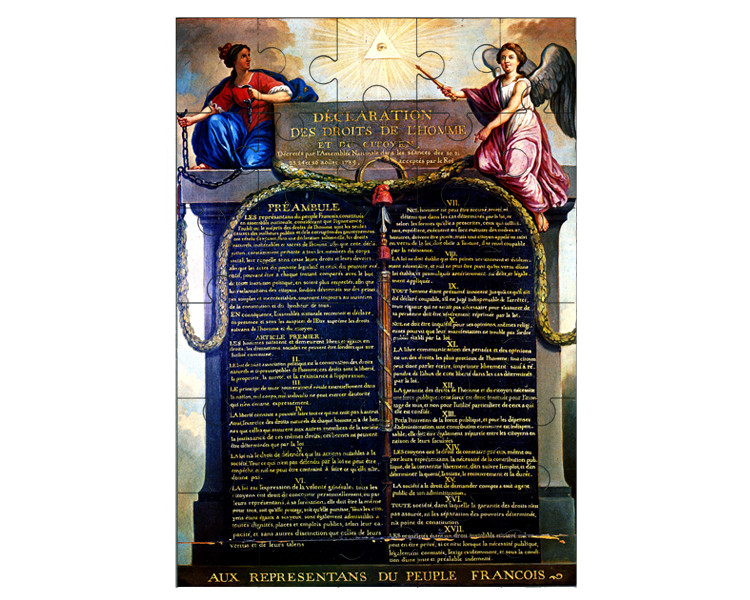
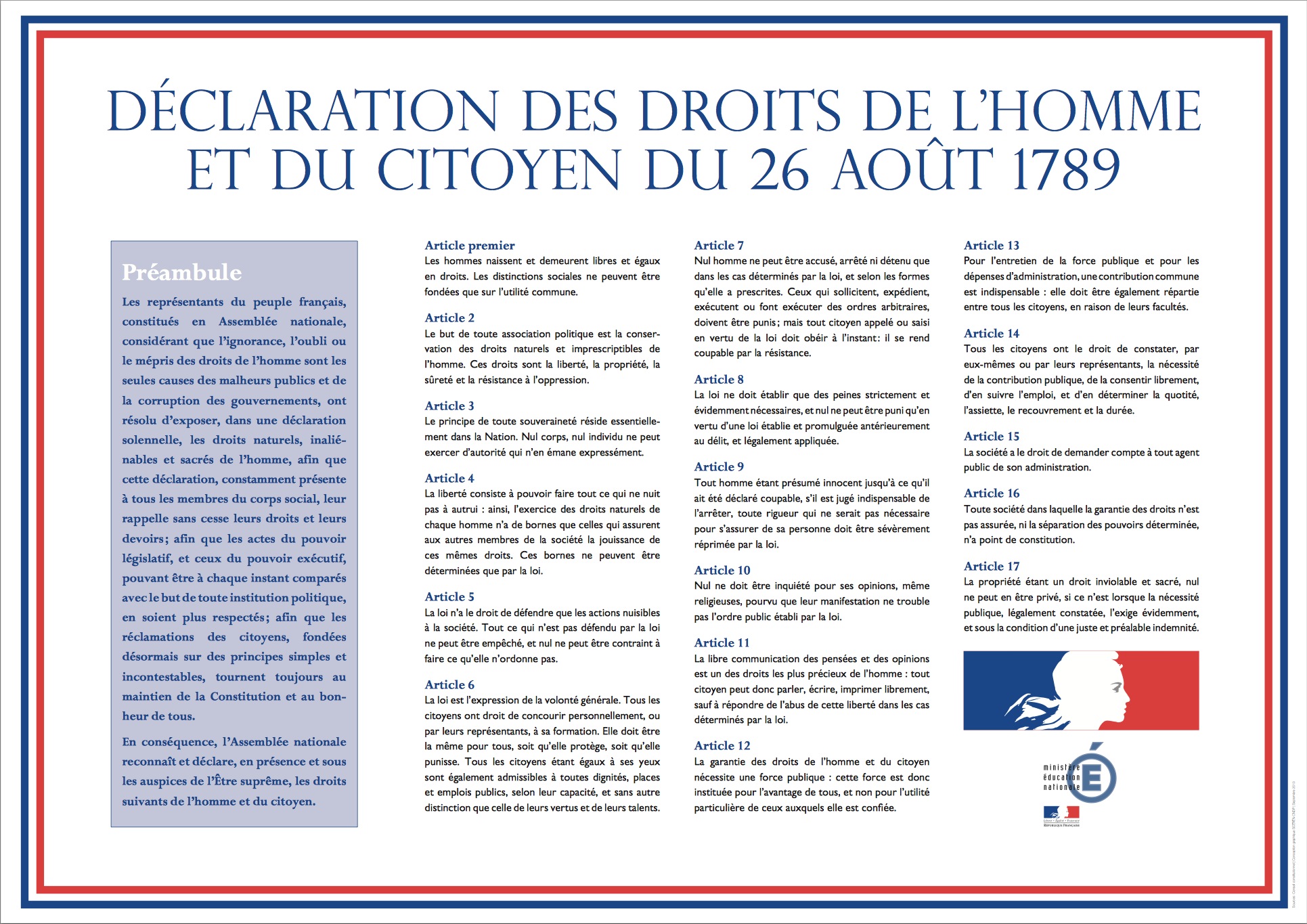
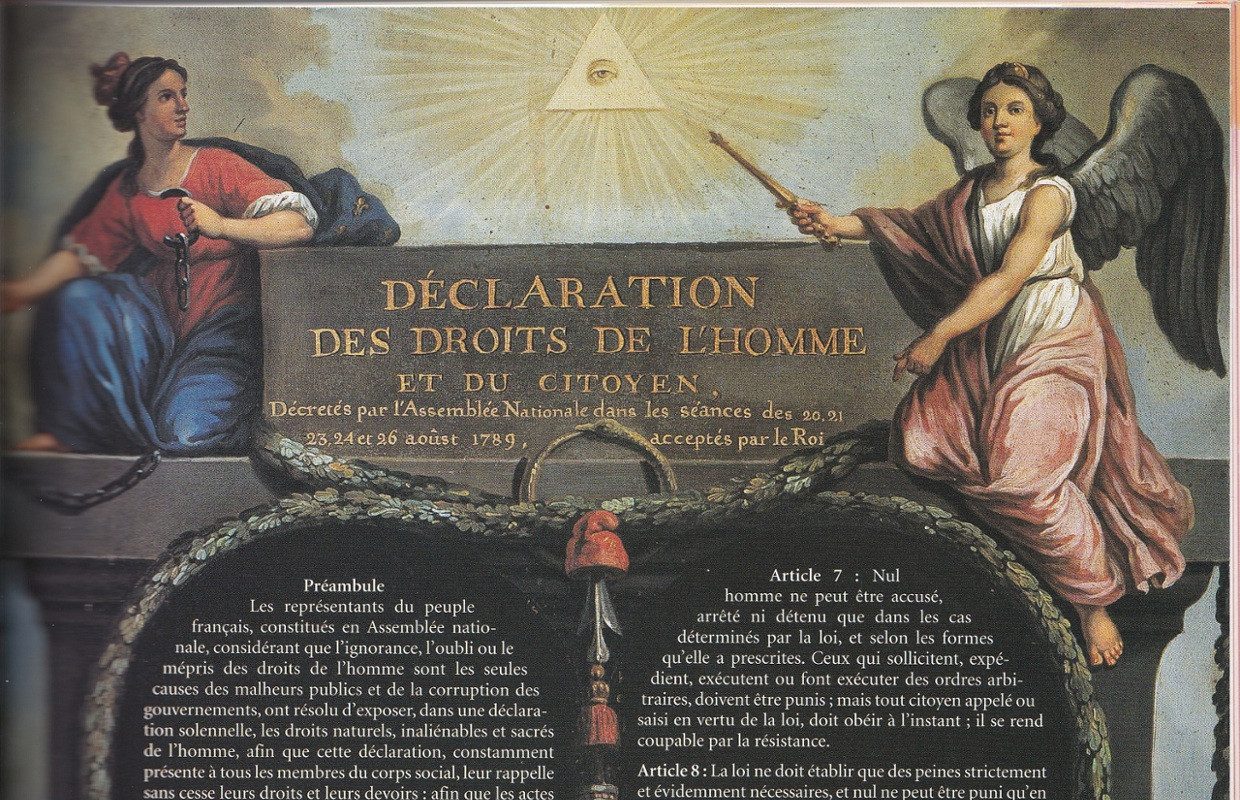
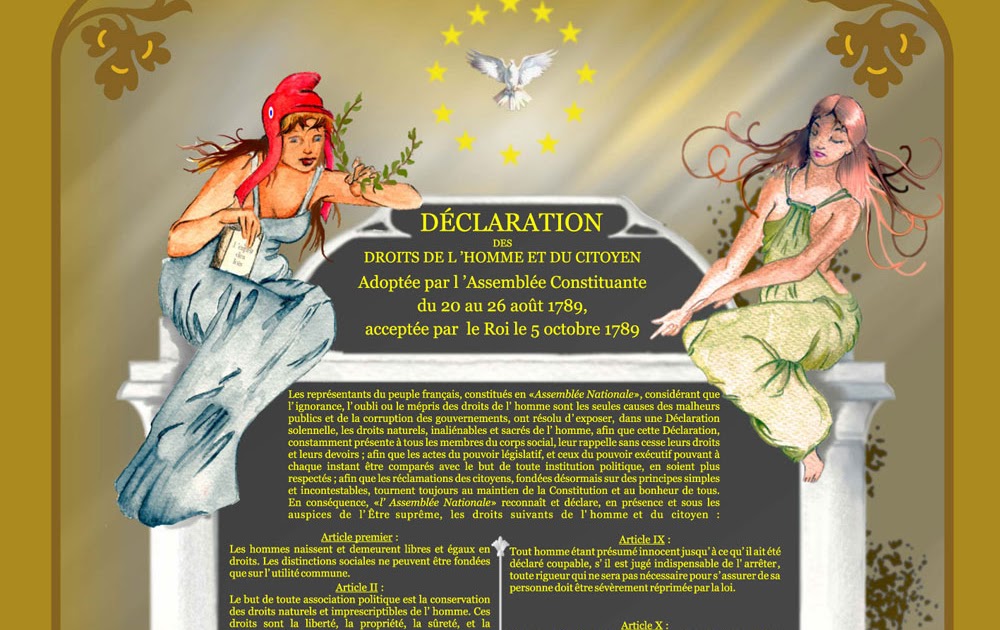
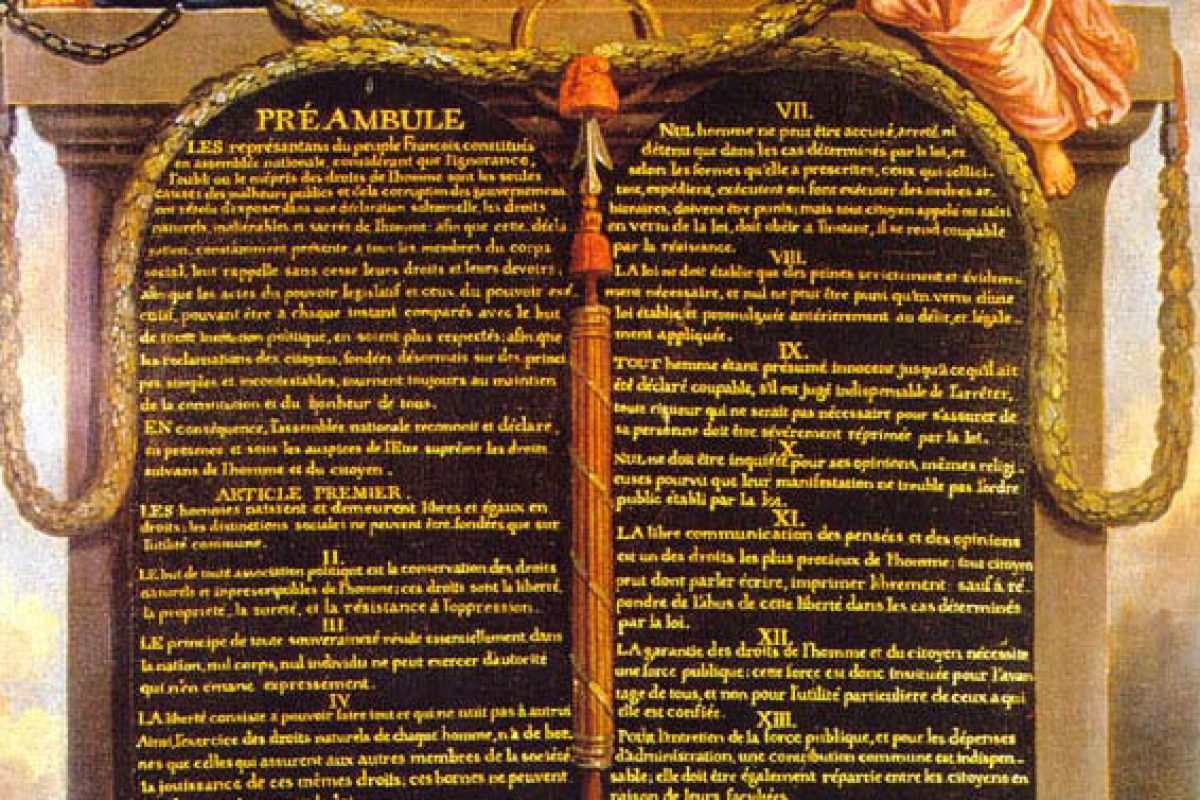
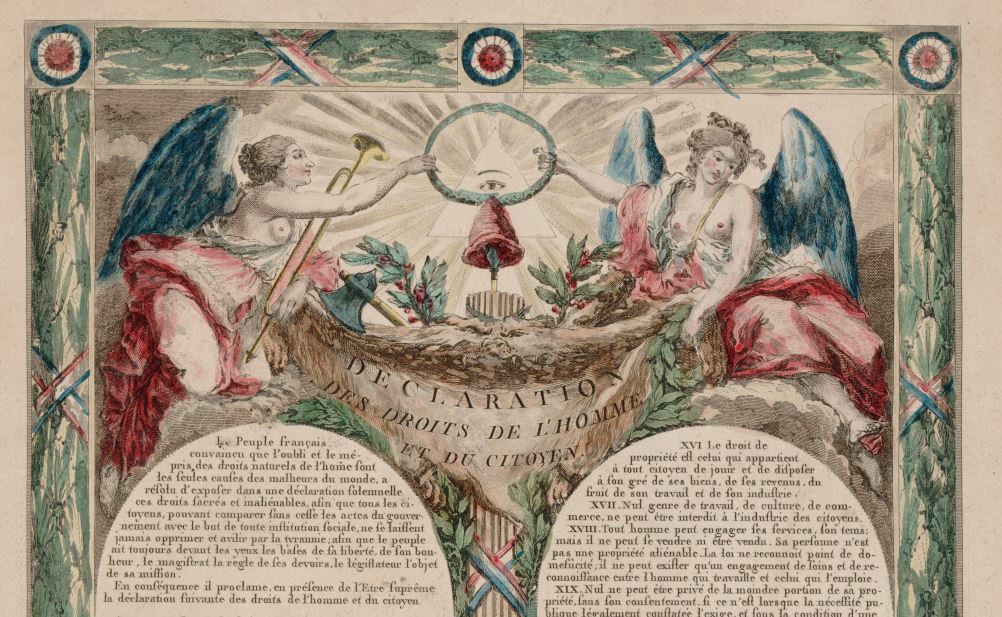
Okay, imagine this: you're chilling at a café in Paris, right? Sipping your café au lait, maybe people-watching (it's a Parisian pastime, after all). Suddenly, a group of guys in powdered wigs starts shouting about "natural rights" and "liberty" and… wait, is that Robespierre in the corner looking intense? Yeah, you've stumbled into the French Revolution, circa 1789. And all that shouting? It's probably about this little document we're going to talk about: the Déclaration des Droits de l'Homme et du Citoyen (Declaration of the Rights of Man and of the Citizen).
Sounds intimidating, right? A historical document... but trust me, it's way more exciting than your average history textbook. Think of it as the French Revolution's greatest hits album. Or maybe its manifesto. Whatever you call it, it was a big deal.
So, what's the Big Deal with the Declaration?
Seriously though, why should we care about some dusty old document written over 200 years ago? Well, because it laid the foundation for a lot of the rights and freedoms we take for granted today. Like, the right to speak your mind, the right to a fair trial, the right to not be arbitrarily thrown in jail... all that good stuff.
Basically, the Declaration was a giant "eff you" to the old system (the Ancien Régime), where the king had absolute power, and everyone else was basically just there to serve him. Think of it as a historical equivalent of a mic drop. It was that impactful. (And okay, maybe a little bit dramatic, but hey, it was the French Revolution!).
Think of the time. People were born into roles. No social mobility. The King was appointed by God (so he claimed) and could do what he wanted. The declaration flipped the script.
The Context: A Revolution Brewing
To understand the Declaration, you gotta know the backstory. France was a mess. The monarchy was spending money like it was going out of style (spoiler alert: it eventually did), the peasants were starving, and everyone was generally unhappy. Remember those powdered wigs I mentioned? Yeah, they were pretty symbolic of the whole disconnect between the ruling class and the rest of the population.
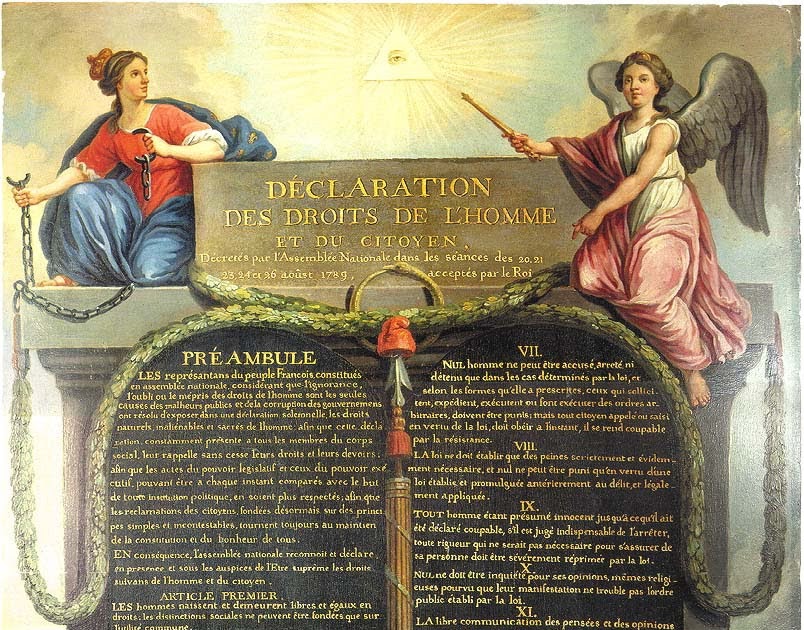
Adding fuel to the fire, enlightenment thinkers like Rousseau and Voltaire were spreading ideas about individual rights, popular sovereignty, and the importance of reason. Basically, they were saying, "Hey, maybe we don't have to put up with this whole absolute monarchy thing." And people were listening.
And then, BOOM! Revolution. The storming of the Bastille, the Reign of Terror, and a whole lot of other dramatic events that you probably learned about in high school. (Or maybe you just skimmed the Wikipedia page. No judgment here!)
So, in the midst of all this chaos, the National Assembly (a bunch of representatives from the Third Estate – basically, everyone who wasn't a noble or a cleric) decided to write a declaration of rights. And that's where our little friend, the Déclaration des Droits de l'Homme et du Citoyen, comes in.
Key Principles of the Declaration: The Good Stuff
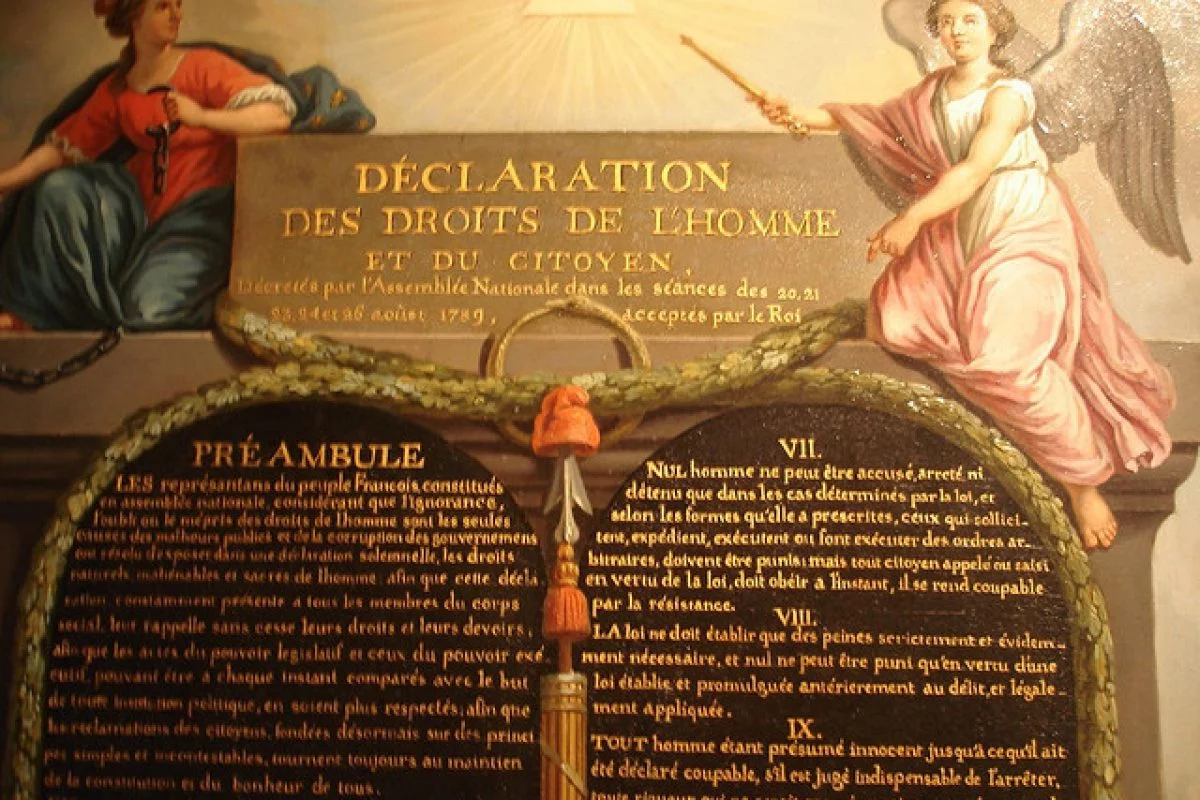
Let's break down some of the core ideas of the Declaration. It's surprisingly readable, even in French (though maybe grab a translation if your French is a little rusty!).
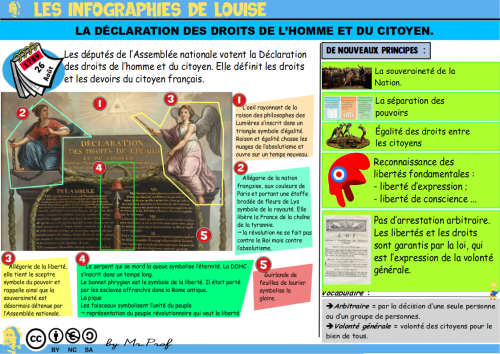
- Natural Rights: This is the big one. The Declaration states that all men (yes, sadly, it mostly focused on men at the time – more on that later) are born free and equal in rights. These rights include liberty, property, security, and resistance to oppression. Basically, you're born with these rights, and no one can take them away from you. These rights are yours, by simply being human.
- Sovereignty of the Nation: No more divine right of kings! The Declaration states that sovereignty resides in the nation, meaning that the power to govern comes from the people, not from God or some hereditary ruler. This was revolutionary stuff back then.
- Equality before the Law: Everyone is equal before the law, regardless of their birth or social status. This meant that nobles and commoners would be subject to the same laws and punishments. A radical departure from the previous system, where the elite operated above the law.
- Freedom of Speech and Religion: People have the right to express their opinions freely and to practice their religion (or not practice any religion at all) without fear of persecution. This was a huge step towards religious tolerance and freedom of thought.
- Presumption of Innocence: You're presumed innocent until proven guilty. This means that the burden of proof is on the prosecution, not on the accused. This one seems obvious today, but it was a big deal back then. A stark contrast to the arbitrary justice of the old regime.
These principles might seem fairly standard now, but in 1789, they were absolutely groundbreaking. They challenged the very foundation of the Ancien Régime and paved the way for a more just and equitable society (at least, in theory...).
Impact and Legacy: More Than Just Words
The Declaration wasn't just some abstract philosophical statement. It had a real impact on the course of history. It inspired revolutions and reforms around the world, and its principles were incorporated into the constitutions of many countries. You can see its influence in the Universal Declaration of Human Rights, adopted by the United Nations in 1948.

It became a touchstone for movements for freedom and equality. Think of it. People were inspired to question the status quo, to fight for their rights, and to build a better world. The declaration was more than just a statement of principles; it was a call to action.
However, it's important to acknowledge that the Declaration wasn't perfect. It primarily focused on the rights of men, and it took many years (and a lot of struggle) for women to achieve equal rights. Olympe de Gouges, in 1791, wrote the Declaration of the Rights of Woman and of the Female Citizen as a direct response.
There was also the issue of slavery, which wasn't explicitly abolished by the Declaration. It wasn’t a fully perfect document. Like most historical events and pieces of writing, it has its limitations.
The Declaration Today: Still Relevant?
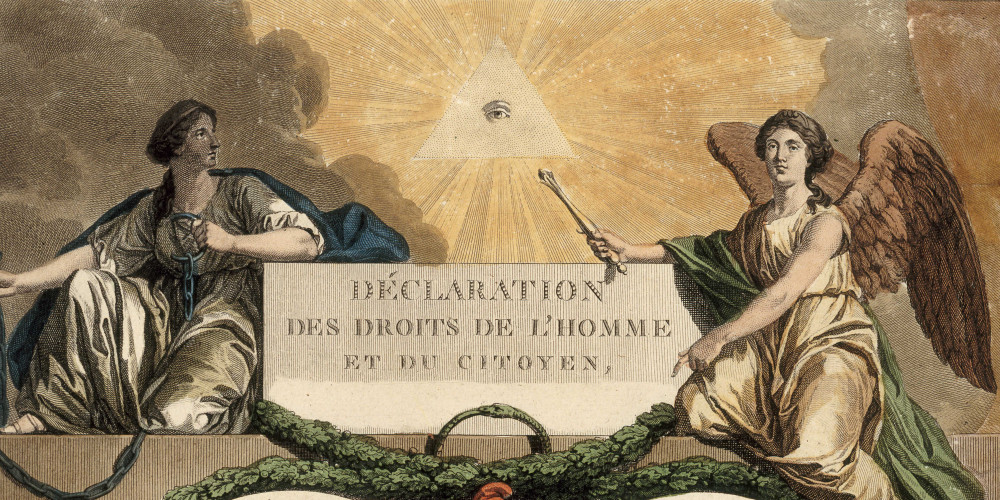
So, is the Déclaration des Droits de l'Homme et du Citoyen still relevant today? Absolutely! While the world has changed a lot since 1789, the principles enshrined in the Declaration remain as important as ever. The fight for human rights is an ongoing one, and the Declaration serves as a reminder of the values we should be striving for. Every single day.
Think about it: the right to speak your mind, the right to a fair trial, the right to be free from discrimination... these are all fundamental rights that are still being challenged in many parts of the world. And even in countries where these rights are formally protected, they can still be threatened by political instability, economic inequality, and social injustice.
Therefore, understanding the Déclaration des Droits de l'Homme et du Citoyen is not just an exercise in historical curiosity. It's a way to connect with the ongoing struggle for human rights and to become a more informed and engaged citizen. It's a reminder that freedom is not something that is simply granted to us; it's something that we must constantly defend and fight for.
So, next time you're in Paris, take a moment to reflect on the legacy of the French Revolution and the Declaration of the Rights of Man and of the Citizen. And maybe raise a glass (of café au lait, of course) to the ideals of liberty, equality, and fraternity. They're still worth fighting for. (Even if it means putting up with powdered wigs and intense revolutionaries.) Because hey, freedom never comes easy!