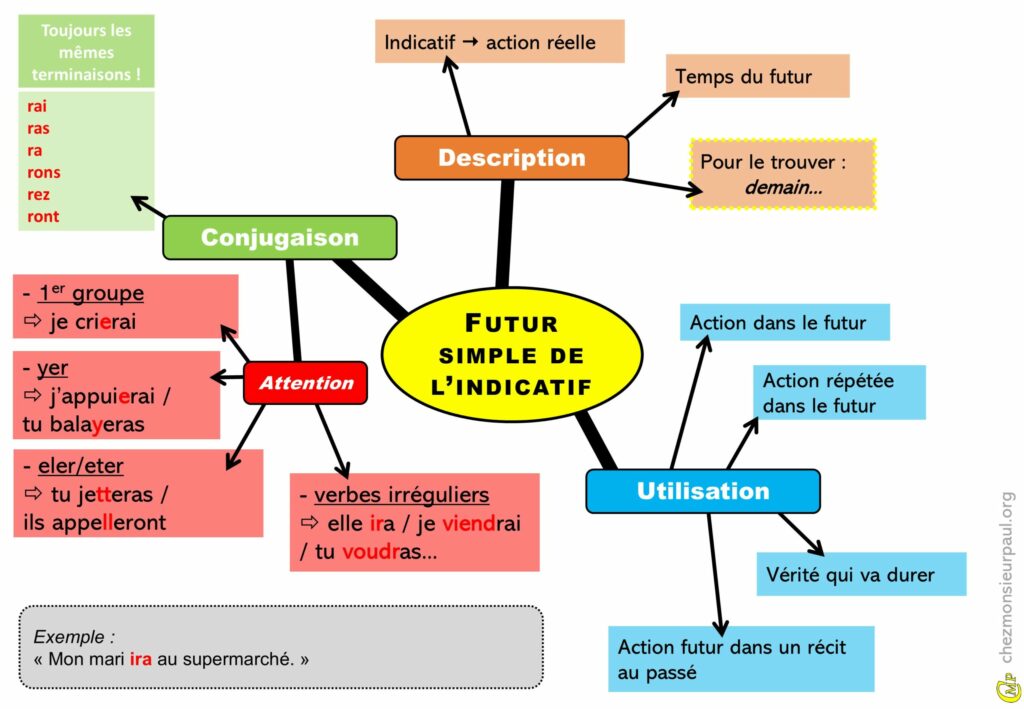
Ah, le français! The language of love, croissants, and… grammar! But don't let the word "grammar" scare you. Today, we're diving into something surprisingly simple, yet incredibly useful: le devoir au futur de l'indicatif. Think of it as your personal crystal ball for future obligations, but instead of vague prophecies, it gives you clear, concise statements about what will have to happen.
What is "Devoir" Anyway?
First things first, let's brush up on our basics. "Devoir" is a verb meaning "to have to," "must," or "to be supposed to." It's one of those helper verbs – like "pouvoir" (to be able to) and "vouloir" (to want to) – that adds a layer of meaning to another verb. So, knowing how to conjugate it is essential for expressing obligations, duties, and even probabilities.
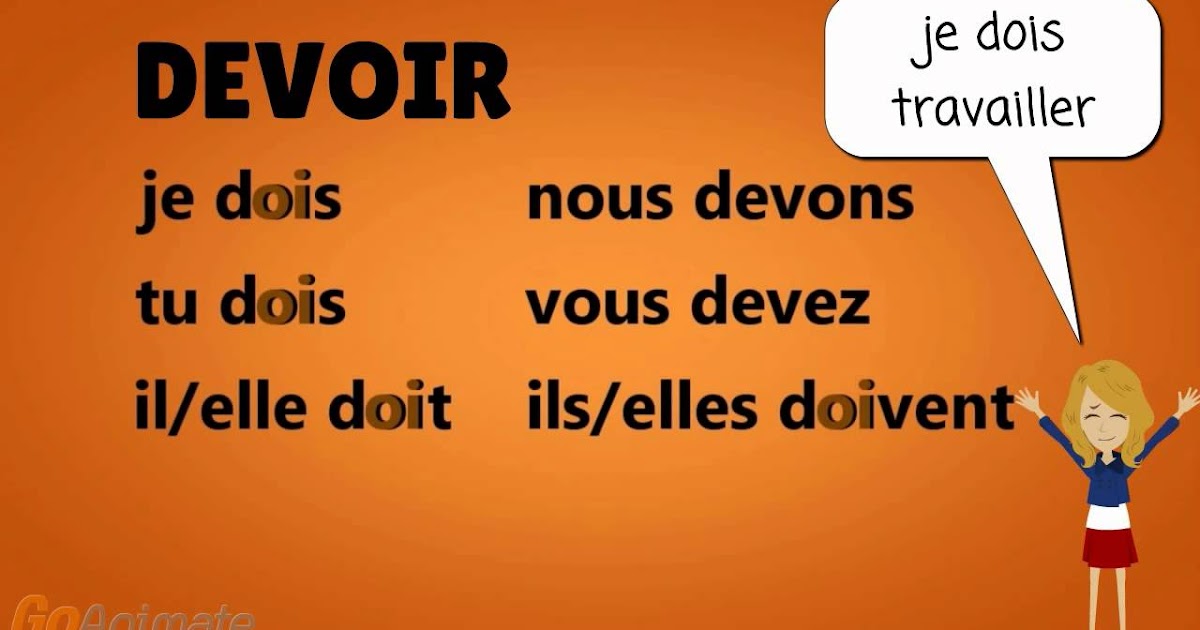
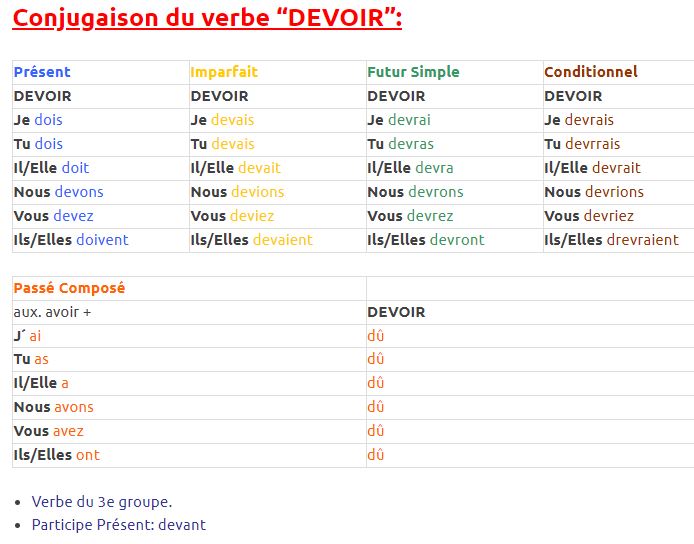
The present tense is pretty straightforward. For example: "Je dois travailler" (I have to work) or "Nous devons partir" (We must leave). But what about the future? That's where our star of the show, "devoir au futur de l'indicatif," comes in!
Unveiling the Future: Le Futur de l'Indicatif
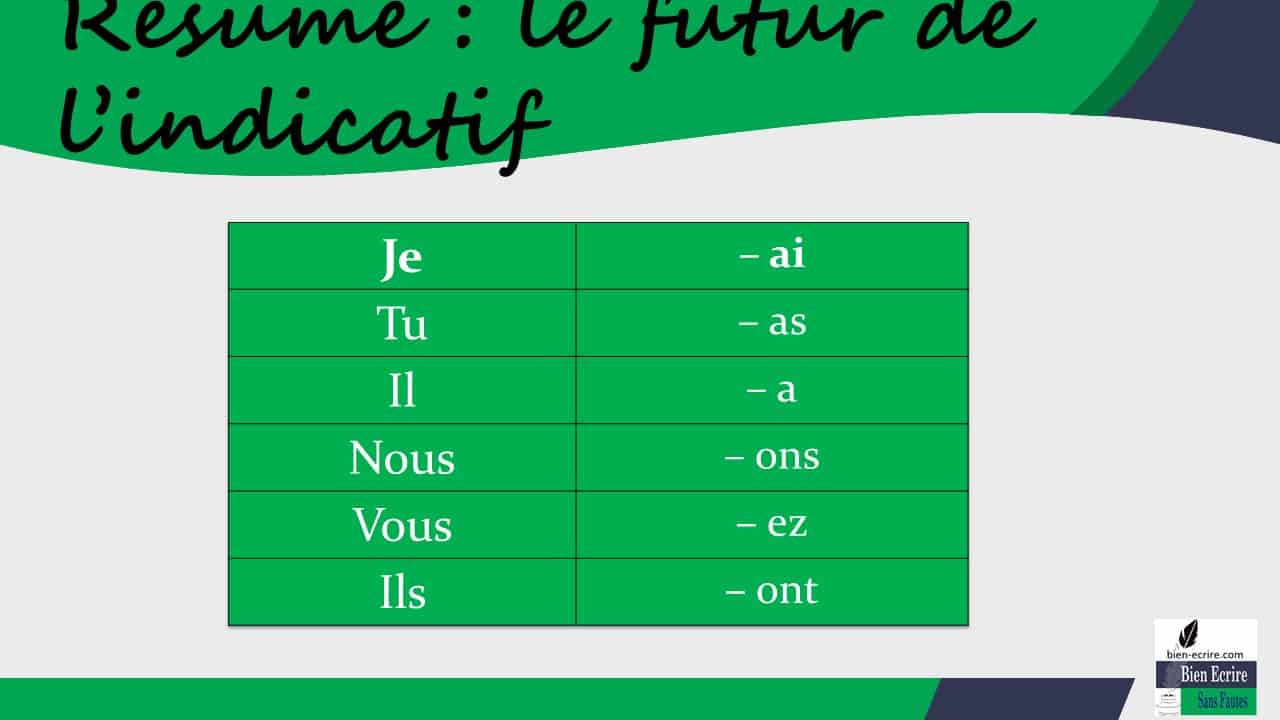
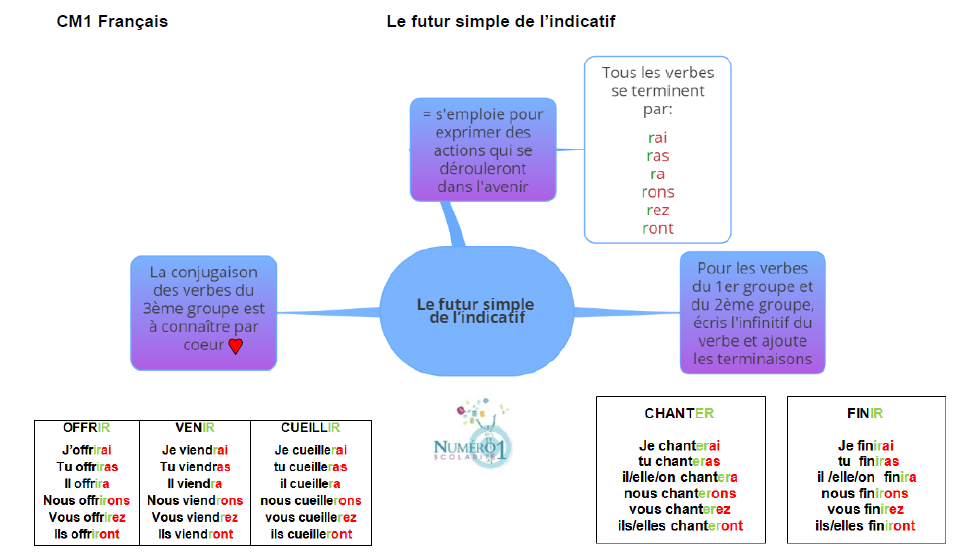
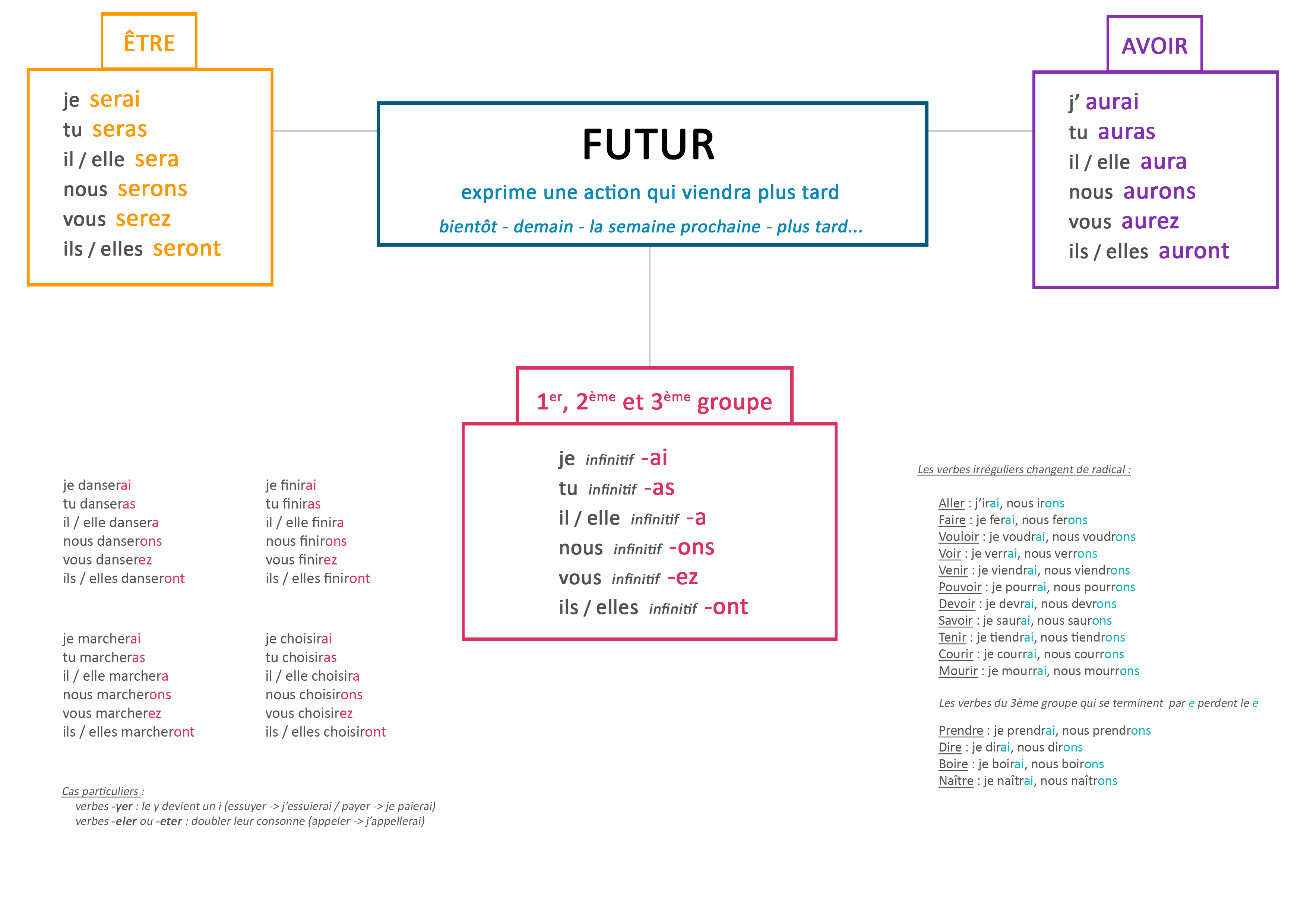
The futur de l'indicatif is used to express actions that will happen in the future. It's a cornerstone of French grammar and surprisingly easy to form for most verbs. For regular verbs ending in -er, -ir, and -re, you simply add the following endings to the infinitive:
- -ai (je)
- -as (tu)
- -a (il/elle/on)
- -ons (nous)
- -ez (vous)
- -ont (ils/elles)
So, for "parler" (to speak), you get: "Je parlerai," "Tu parleras," "Il/Elle parlera," etc. Easy peasy, lemon squeezy!

Devoir au Futur: The Full Picture
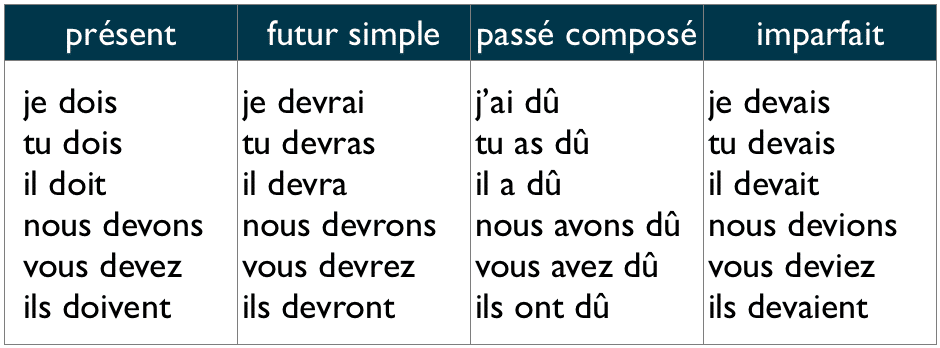
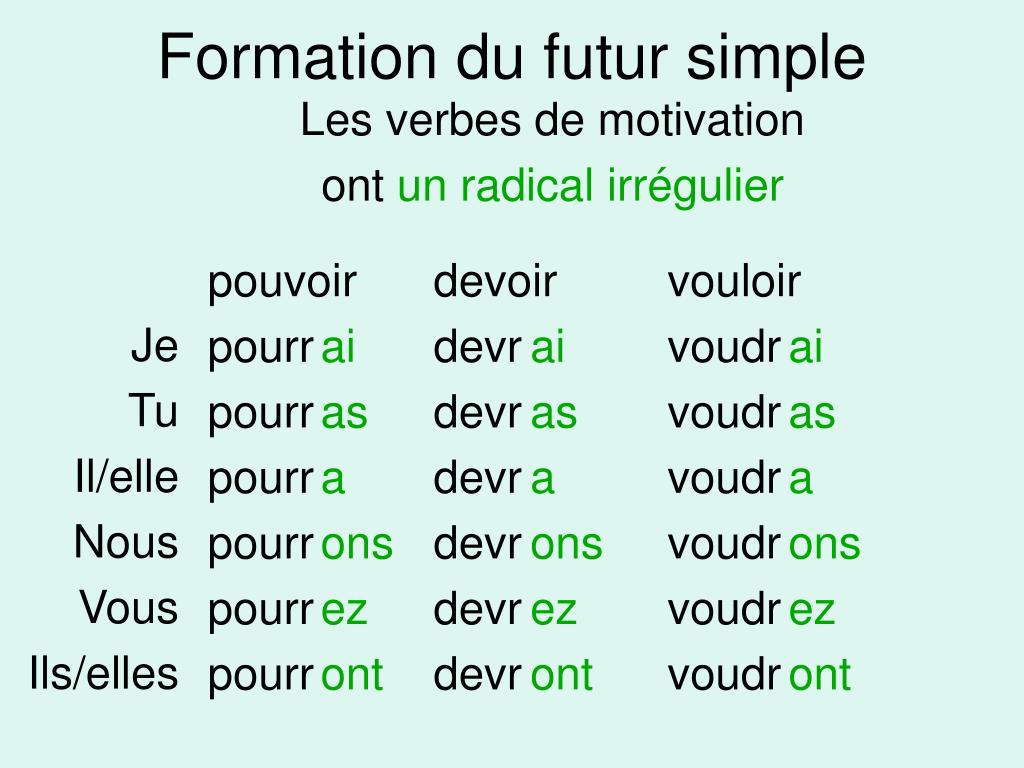
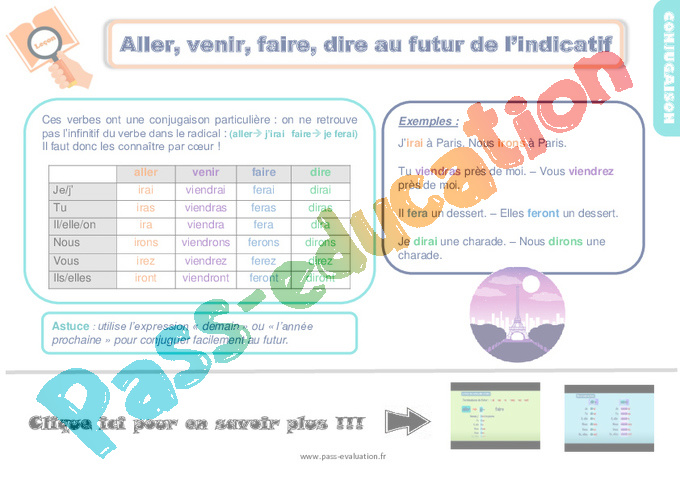
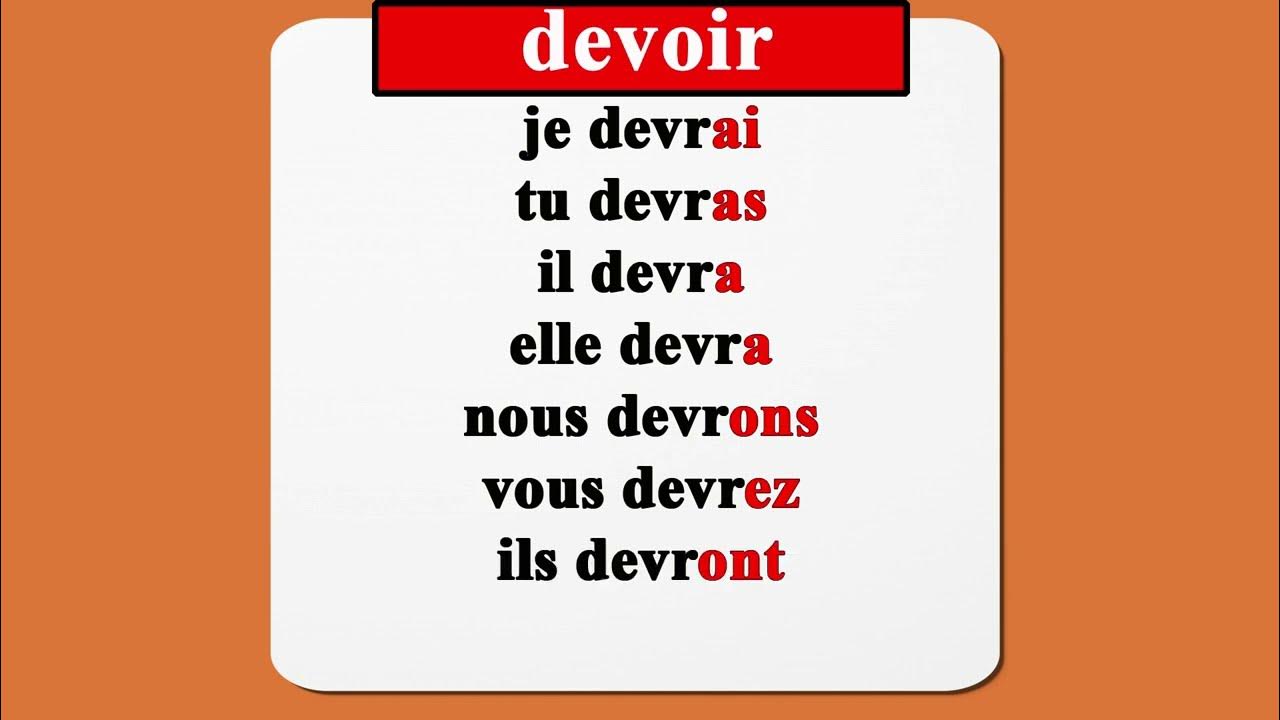
Now, let's bring "devoir" into the mix. "Devoir" is irregular, but the future conjugation follows a pattern. Here's how it breaks down:
- Je devrai (I will have to/must)
- Tu devras (You will have to/must)
- Il/Elle/On devra (He/She/One will have to/must)
- Nous devrons (We will have to/must)
- Vous devrez (You will have to/must)
- Ils/Elles devront (They will have to/must)
Notice the stem changes slightly from "dois" to "devr-". That's the irregularity we mentioned, but once you memorize it, you're golden!
Practical Applications: Speaking Like a Parisian
So, how can you actually use "devoir au futur de l'indicatif" in everyday conversation? Let's look at some examples:
- "Je devrai rendre ce livre à la bibliothèque demain." (I will have to return this book to the library tomorrow.) – A simple, practical obligation.
- "Tu devras faire tes devoirs avant de regarder la télé." (You will have to do your homework before watching TV.) – A classic parental instruction.
- "Nous devrons partir tôt pour éviter les embouteillages." (We will have to leave early to avoid the traffic jams.) – Planning ahead is essential, especially in Paris!
- "Ils devront présenter leur projet la semaine prochaine." (They will have to present their project next week.) – A workplace scenario.
Think of it as your "to-do" list verbalized into the future tense. Mastering this conjugation lets you communicate your future responsibilities clearly and confidently.
Cultural Context: "Devoir" and French Society
In French culture, the concept of "devoir" is quite significant. While not as rigid as some stereotypes suggest, there's still a strong emphasis on duty, responsibility, and fulfilling one's obligations. From the "devoir" to one's family to the "devoir" to uphold social norms, it's a recurring theme in French society.
Consider the importance of education in France. Students are expected to take their studies seriously and fulfill their "devoir" to learn and excel. This is often reflected in conversations about future career paths and societal contributions.
Fun Fact: Beyond Obligations
While "devoir" primarily expresses obligation, it can also be used to express probability or conjecture, especially in the conditional tense ("devrait"). For example, "Il devrait arriver vers 18h" (He should arrive around 6 pm). This usage adds a touch of uncertainty and politeness.
Tips and Tricks for Mastering "Devoir au Futur"
- Practice, Practice, Practice: Conjugate "devoir" aloud and write out sentences using it. Repetition is key!
- Use Flashcards: Create flashcards with the different conjugations of "devoir au futur de l'indicatif" to aid memorization.
- Immerse Yourself: Listen to French podcasts, watch French movies, and read French books. Pay attention to how native speakers use "devoir" in context.
- Find a Language Partner: Practice speaking with a native French speaker and get feedback on your pronunciation and grammar.
- Online Resources: Utilize websites and apps dedicated to French grammar and verb conjugation. Many offer interactive exercises and quizzes.
Think of it like learning a new dance. The first few steps might feel awkward, but with practice and repetition, you'll soon be gliding across the dance floor (or, in this case, navigating the complexities of French grammar) with ease!
Don't Stress!
Learning a new language takes time and effort, and grammar can sometimes feel daunting. But don't get discouraged! The beauty of French lies in its nuance and elegance. Embrace the journey, celebrate your progress, and remember that even native speakers make mistakes. The key is to keep learning and keep practicing.
Final Thoughts: "Devoir" in Your Daily Life
Reflecting on "devoir au futur de l'indicatif," it's more than just a grammatical concept. It's about planning, responsibility, and understanding the expectations you place on yourself and that others place on you. Whether it's promising to call a friend, committing to a deadline at work, or simply planning your weekend activities, "devoir" plays a constant role in shaping our future actions.
So, the next time you're thinking about what you will have to do, remember "devoir au futur de l'indicatif." It's a powerful tool for expressing your intentions and navigating the complexities of life, one verb conjugation at a time.