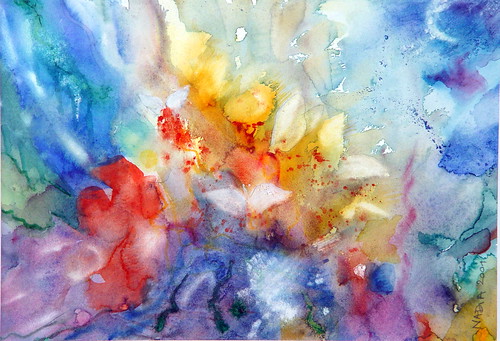
Okay, imagine this: I'm at this totally pretentious art gallery opening, right? Everyone's sipping lukewarm champagne (quelle horreur!) and pretending to understand the abstract expressionist blob on the wall. Seriously, it looked like my cat had an accident with a jar of paint. Anyway, I overhear two people having a heated debate. One's going on about "the profound socio-political commentary embedded within the artist's visceral deconstruction of capitalist norms," and the other's just like, "Dude, it's ugly. Plain and simple." So, which one is right? Is beauty really in the eye of the beholder, or is there something more to it?
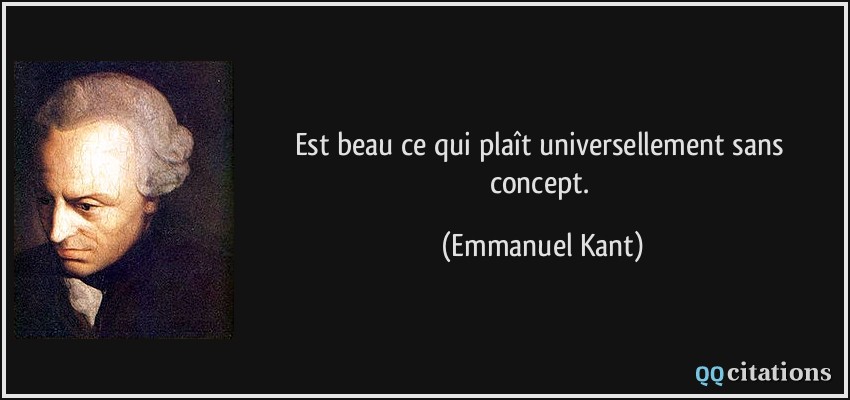
That whole scene got me thinking about Kant, because, you know, that's what you do when you're surrounded by questionable art and free champagne. Specifically, I started pondering his famous (or infamous, depending on your perspective) claim: "Le beau est ce qui plaît universellement sans concept." Or, in English: "The beautiful is that which pleases universally without a concept."
Kant and the Judgment of Taste: Decoding the Mystery
So, what the heck does that even mean? Buckle up, mes amis, because we're about to dive into some philosophical waters. But don't worry, I promise to keep it (relatively) painless.
Kant, in his Critique of Judgment, was trying to figure out how we make judgments about beauty. He noticed that we often say things like, "This sunset is beautiful," or "This painting is gorgeous." But what makes us say that? And are we just talking about our personal preferences, or is there something more objective going on?
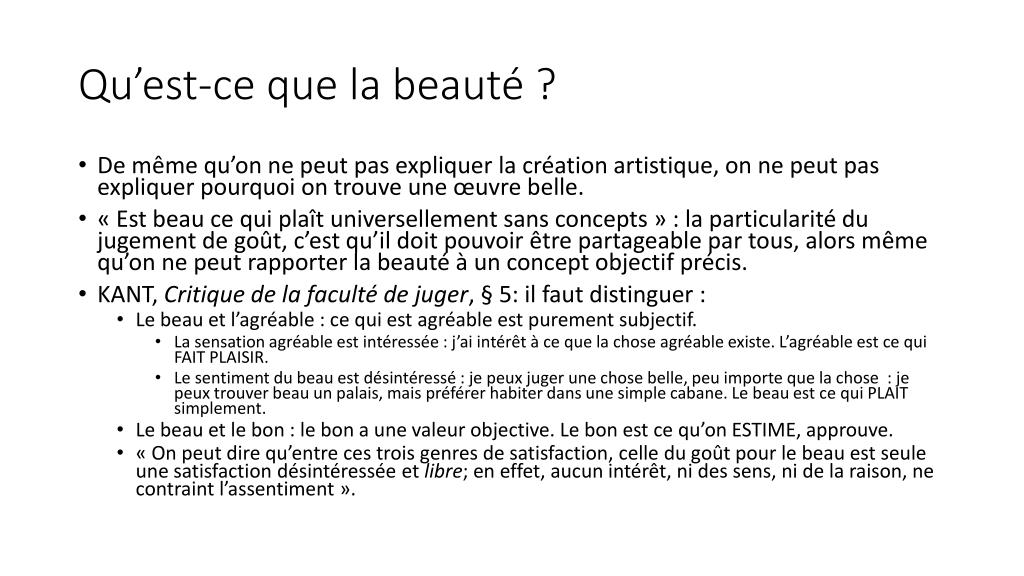
He argued that aesthetic judgments (judgments about beauty) are different from other kinds of judgments. For example, if I say, "This cake is delicious," I'm talking about my own personal satisfaction. I might like chocolate cake, but you might prefer vanilla. No problem. But when I say, "This painting is beautiful," I'm not just saying that I like it. I'm implying that everyone should like it. See the difference?
The Four Key Elements: Unpacking Kant's Claim
Kant's definition has four key elements, and we need to understand each one to grasp his point:
- Pleasure: Obviously, beauty involves pleasure. We find something beautiful because it gives us a sense of enjoyment, satisfaction, or delight. But it's not just any kind of pleasure. It's a specific kind of disinterested pleasure.
- Universality: This is the tricky one. Kant argues that when we judge something as beautiful, we're implicitly claiming that everyone should agree with us. It's not just a personal opinion; it's a judgment that aims for universal validity. But how can that be possible when everyone has different tastes?
- Without a Concept: This means that our judgment of beauty isn't based on any specific intellectual understanding or conceptual analysis. We don't need to understand the history of art or the artist's intentions to appreciate a beautiful painting. The beauty is directly perceived, and it doesn't require any prior knowledge. (Think of it like seeing a stunning view; you don't need to know the geology of the mountains to appreciate its beauty).
- Necessity: This is the idea that the pleasure we derive from beauty is somehow necessary. We believe that others ought to share our judgment, even though we can't logically prove that they should. It's a feeling of obligation, a sense that beauty demands recognition.
Let's break that down even further because, let's face it, Kant can be a bit dense. Imagine you're looking at a rose. You don't need to know the botanical classification of the rose to find it beautiful. You don't need to know that it symbolizes love or passion. You simply perceive its beauty directly, and you feel a sense of pleasure. And, crucially, you believe that others should also find it beautiful. You're not just saying, "I like this rose." You're saying, "This rose is beautiful."
Disinterested Pleasure: The Key to Kantian Beauty
The idea of disinterested pleasure is super important here. Kant argues that true aesthetic appreciation is free from any personal desires or practical interests. It's not about whether the object is useful or beneficial to us. It's about appreciating it for its own sake. (Think about it: you don't find a beautiful sunset beautiful because it benefits you. You find it beautiful simply because... it is!).
So, if you're admiring a painting because you think it might be a good investment, or because you want to impress your friends, you're not experiencing true aesthetic pleasure. You're experiencing something else entirely. You're motivated by something other than the pure appreciation of beauty. And, according to Kant, that disqualifies your judgment from being a true aesthetic judgment.
But wait, isn't taste subjective?
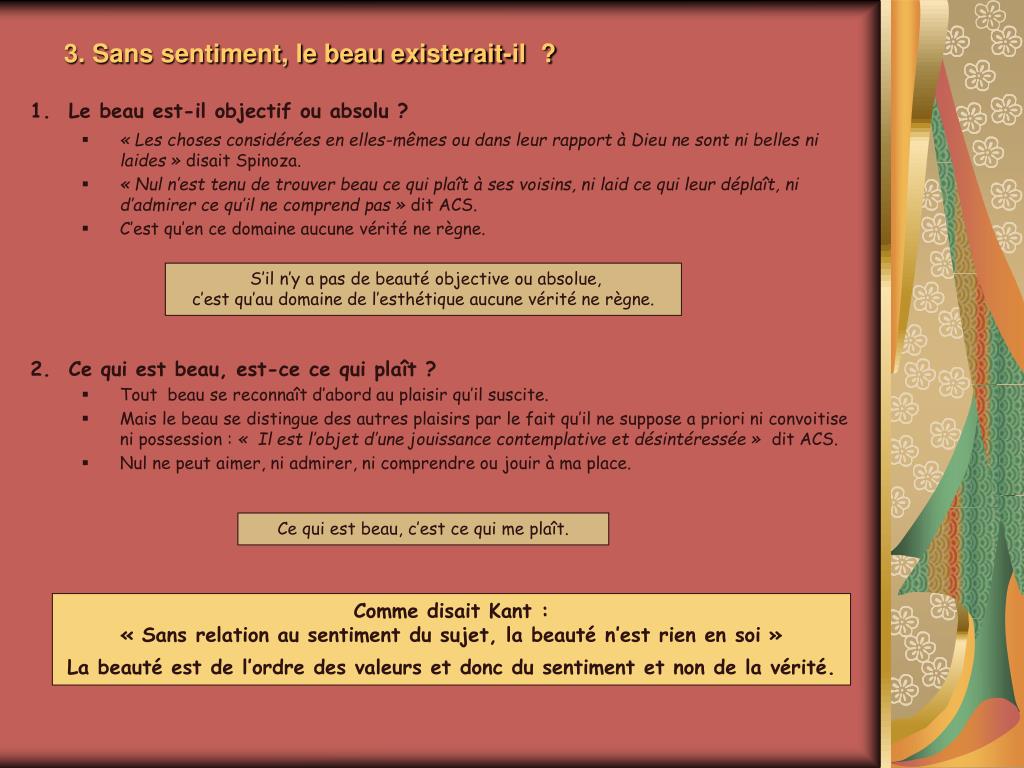
Okay, I know what you're thinking. "This all sounds very high-minded, but isn't beauty just a matter of personal taste? One person's masterpiece is another person's eyesore." And you're right, to some extent. Kant acknowledges that people have different preferences. He's not trying to impose a rigid standard of beauty on everyone.
But he is arguing that there's a difference between a subjective preference and an aesthetic judgment. A subjective preference is just a matter of personal liking. An aesthetic judgment, on the other hand, aims for universality. It's a claim that something is beautiful, not just that I like it. And this claim is based on a particular feeling, a disinterested pleasure that arises from the object itself.
It's a subtle distinction, but it's important. Think of it this way: you might prefer chocolate ice cream to vanilla ice cream. That's a subjective preference. But if you say that a particular piece of music is beautiful, you're making a different kind of claim. You're suggesting that the music has qualities that elicit a feeling of pleasure in anyone who is properly attuned to it.

Criticisms and Challenges: The Debate Continues
Of course, Kant's theory isn't without its critics. Many people argue that his notion of universal agreement is unrealistic and even elitist. Who gets to decide what's beautiful? And isn't it possible that beauty is shaped by culture, history, and social factors? (Spoiler alert: YES! It totally is, and that's a valid critique).
Some argue that the very idea of "disinterested pleasure" is a fiction. Can we ever truly separate our appreciation of beauty from our personal interests and desires? (Seriously, can we? I'm not so sure!). Others point out that Kant's theory seems to privilege certain kinds of art over others. Is a classical symphony inherently more beautiful than a pop song? According to Kant, maybe... which is, let's be honest, a bit snobbish.
- Cultural Bias: Kant's examples are often drawn from Western art and culture, raising questions about the universality of his claims across different cultures. What constitutes "beauty" in Japanese calligraphy might be vastly different from Renaissance painting.
- The Role of Knowledge: While Kant argues that beauty is appreciated "without a concept," some argue that knowledge and understanding can enhance our appreciation of art. For example, knowing the historical context of a painting can deepen our understanding and enjoyment of it.
- Subjectivity Still Lingers: Even with disinterested pleasure, individual experiences and perspectives inevitably shape our aesthetic judgments. No two people will experience a work of art in exactly the same way.
So, What's the Verdict? Is Kant Right?
Ultimately, whether you agree with Kant or not, his theory raises important questions about the nature of beauty and the role of aesthetic judgment. He challenges us to think about what it means to find something beautiful and to consider whether our judgments are based on genuine appreciation or mere personal preference.

Maybe beauty is in the eye of the beholder. Maybe it's subjective and relative. But maybe there's also something more to it. Maybe there are certain qualities that can elicit a feeling of pleasure in almost everyone, regardless of their background or experience. And maybe, just maybe, that's what Kant was trying to capture with his famous definition.
Personally, I think there's a bit of both. There's definitely a subjective element to beauty, but there are also certain things that seem to resonate with a lot of people, regardless of their individual tastes. (Think of things like sunsets, nature, kindness... they don't require a fancy art degree to appreciate, right?).
So, the next time you're looking at a piece of art (or a cat-paint-accident, for that matter), ask yourself: Am I just liking this because it appeals to my personal preferences? Or am I appreciating it for its own sake, recognizing something that transcends my own individual biases? And, most importantly, are you enjoying the free champagne?
Because, let's be real, even Kant would probably admit that a little bit of bubbly can make almost anything seem a little bit more beautiful. À votre santé!


![[50] Citation D Emmanuel Kant Sur La Philosophie](https://i0.wp.com/img-4.linternaute.com/PUpp-nkE9q1a7tH_4wv-HVcDUHQ=/1240x/smart/e6d0c3acaee34fc39969c032b249ee3c/ccmcms-linternaute/11459900.jpg)
![[50] Citation D Emmanuel Kant Sur La Philosophie](https://i0.wp.com/www.cultivonsnous.fr/citations-img/11224-celui-qui-sennuie.jpg)



![[59] Emmanuel Kant Citation Sur La Philosophie](https://i.ytimg.com/vi/U4N-17xJxaE/maxresdefault.jpg)




/impulse-85150127-593ea43f5f9b58d58a0f8008.jpg)


