.jpg)
Okay, picture this: I'm scrolling through Instagram, right? Lost in a sea of perfectly filtered sunsets and avocado toast. And then BAM! Someone's posted a picture of a dusty, leather-bound book, caption saying something cryptic about "finding beauty in darkness." I’m intrigued, naturally. Turns out, it’s a volume of Rimbaud, and specifically, his poem Le Dormeur du Val. I'd vaguely heard of Rimbaud, the wild child poet, but hadn't really read him. This Instagram post was my gateway drug, I guess. (Don't judge, we all have our vices!)
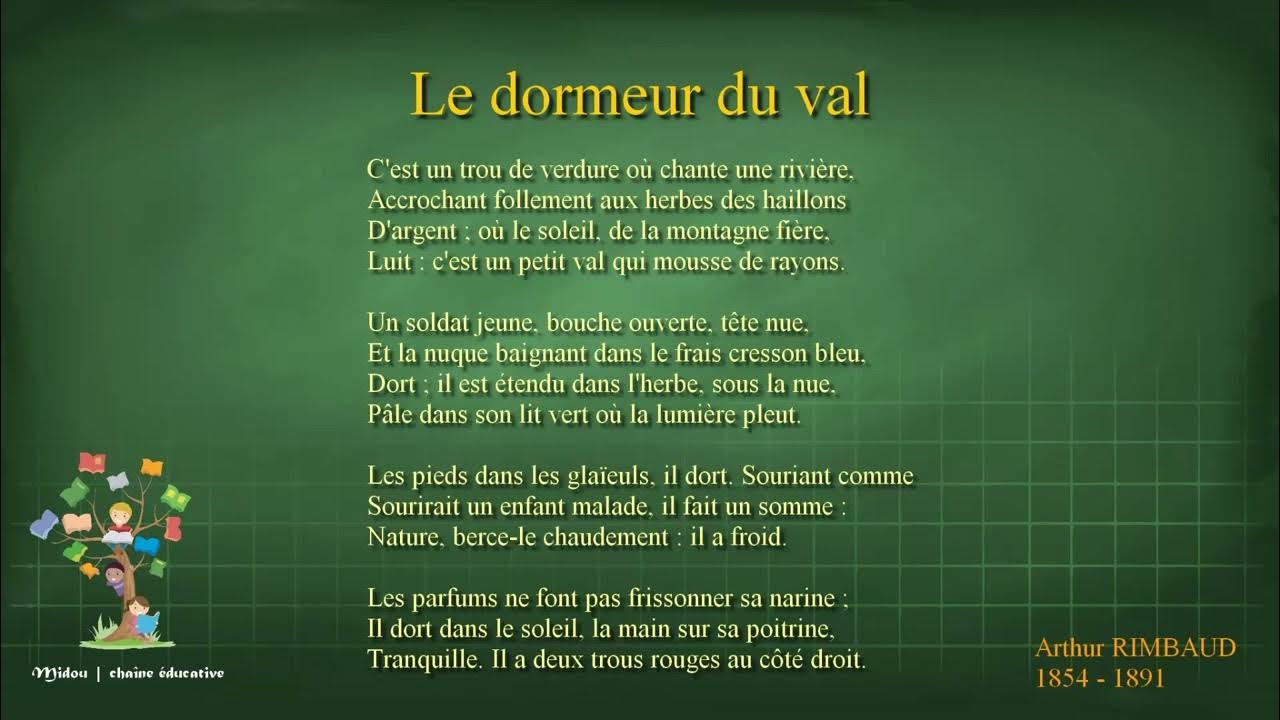
And honestly, thank goodness for that random Instagram find, because Le Dormeur du Val is… well, it's a punch to the gut disguised as a postcard. A seemingly innocent nature scene that morphs into something profoundly unsettling. And that, mes amis, is what we're going to dissect today. Let's dive in!
Rimbaud 101 (A Very Brief Overview)
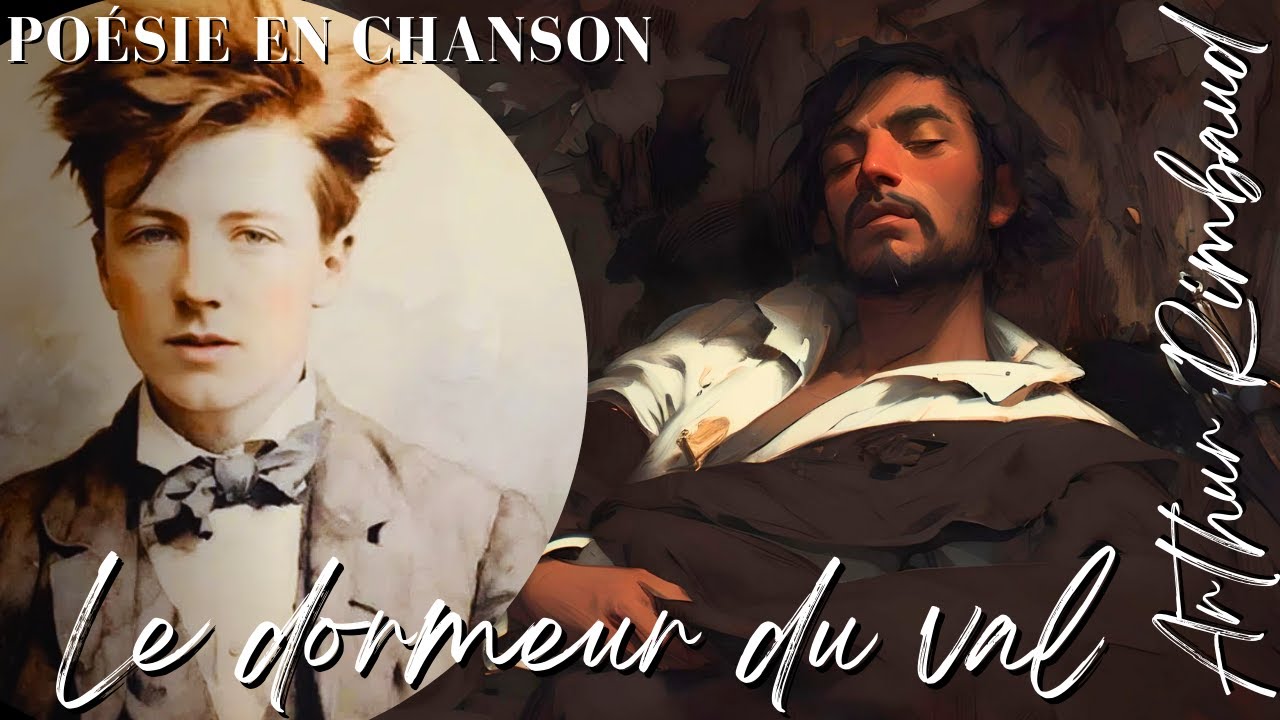
Before we get all deep and poetic, let's just establish some basics. Arthur Rimbaud was a French poet, lived a relatively short but intensely chaotic life (think: genius level writing, scandalous affairs, and then abruptly abandoning poetry altogether). He was a very influential figure, a rebel, and basically, the rock star of the 19th-century French literary scene. Le Dormeur du Val, written when he was around 16, is considered one of his most famous and anthologized works. So, yeah, it's kind of a big deal.
The Postcard Scene: Painting a Picture
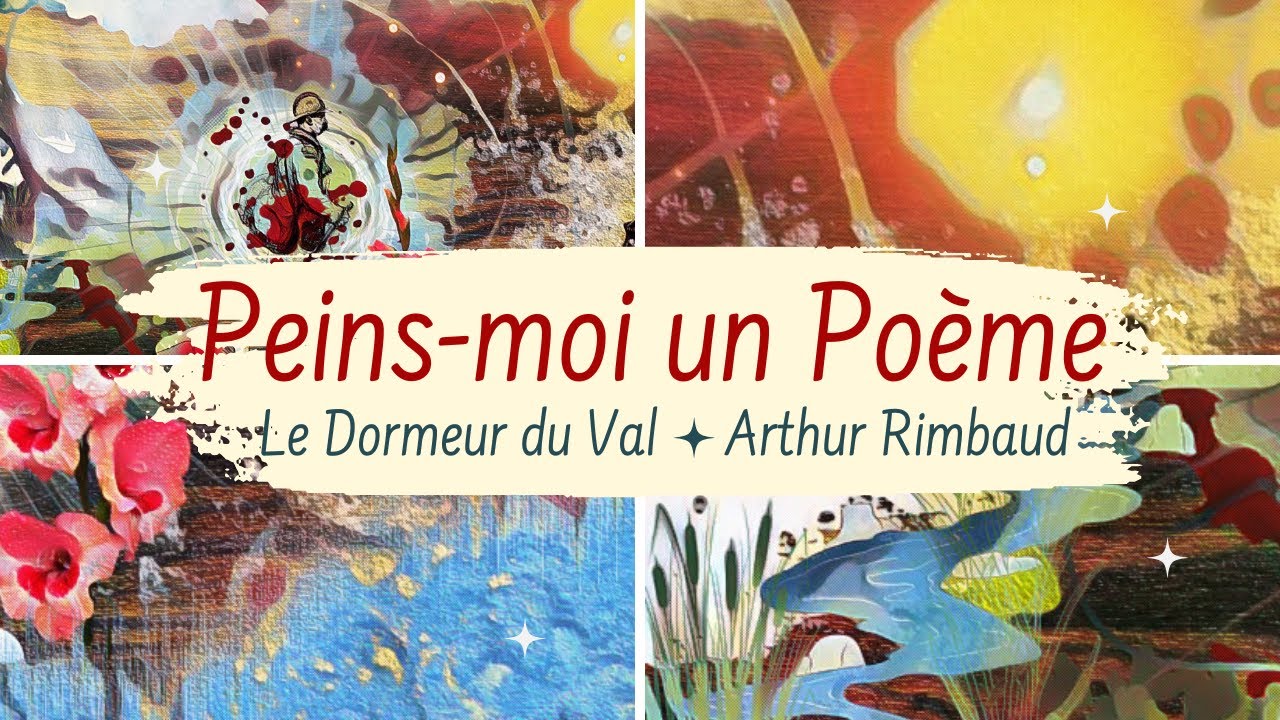
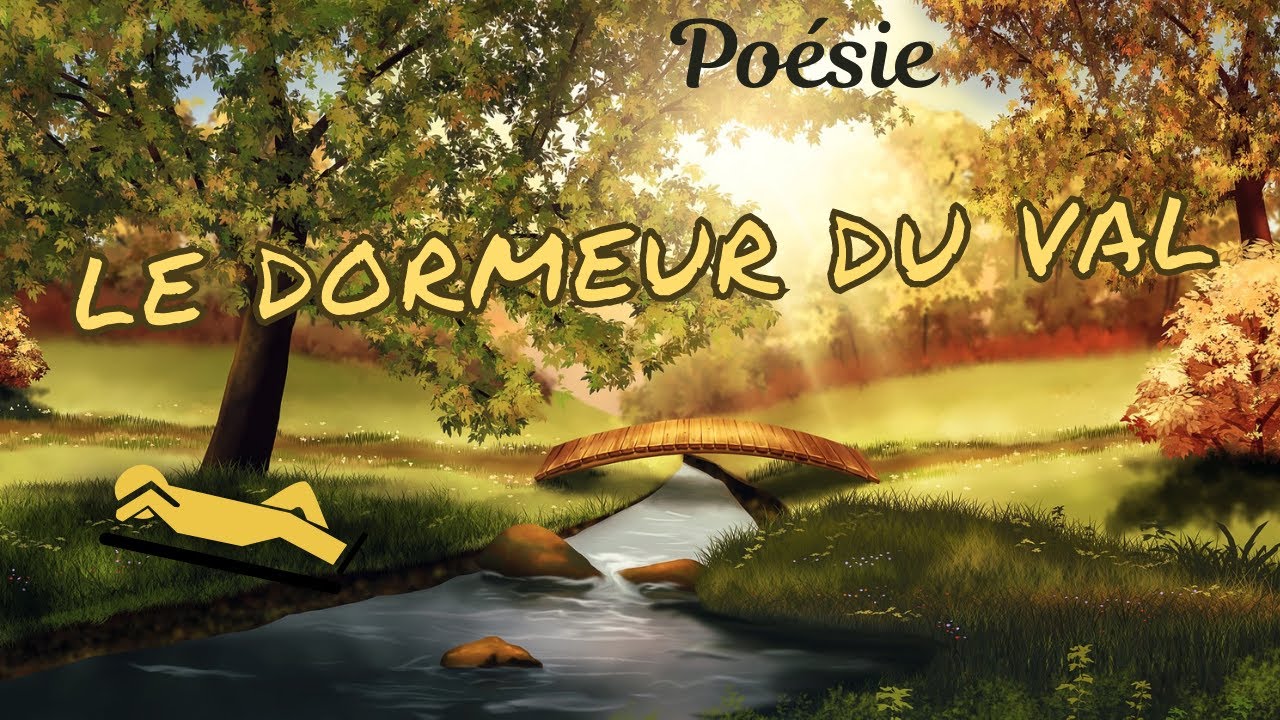
The poem opens with a description of a serene valley, bathed in sunlight. You can almost feel the warmth and hear the gentle sounds of nature. Think idyllic. Think peaceful. Think… something's about to go horribly wrong. (Because, you know, poetry.)
Here's a breakdown of the initial imagery:
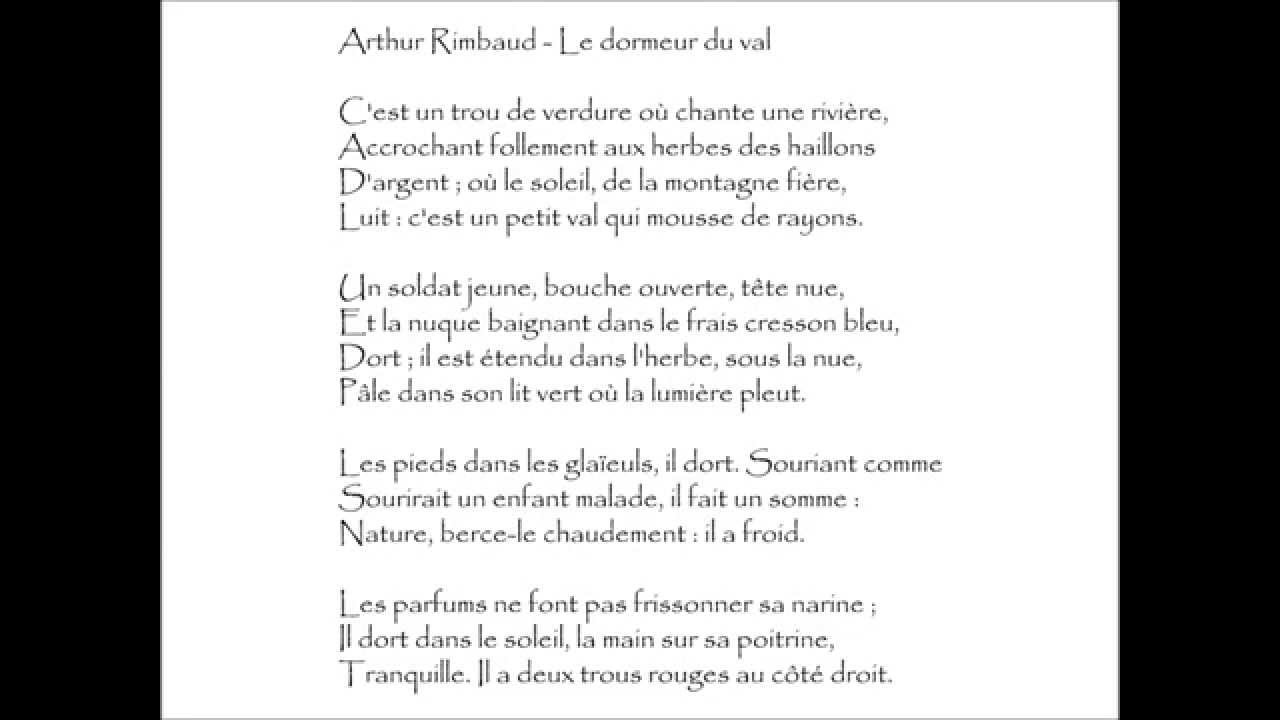
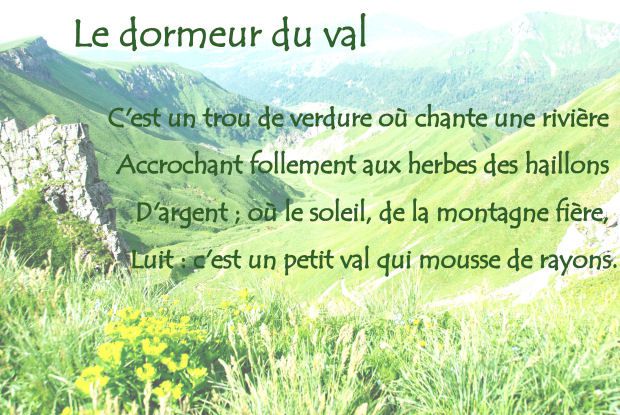
- A "green hollow where a river sings." Sounds lovely, right?
- "Madly hanging rags of silver on the grass." This refers to sunlight reflecting off the water, creating shimmering effects. A bit more poetic than saying "the sun glinted off the water," don’t you think?
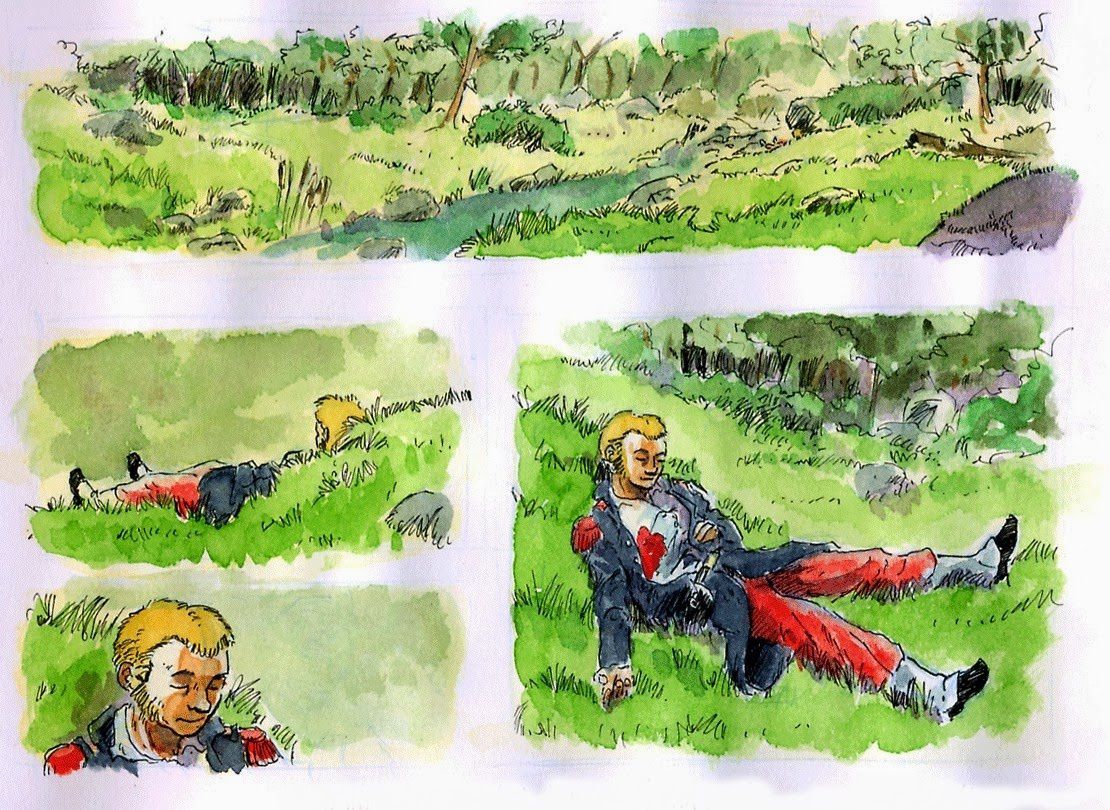
- "A soldier, young, mouth open, head bare." Okay, now we're introducing a human element. A young soldier is lying in this picturesque setting. Seemingly, everything is still calm.
- He's "sleeping." Key word, folks. He's sleeping. Or is he…?
- He is described as being "pale in his green bed where the light rains". It's a striking image, the youth of the solider, the color contrast, the "green bed".
Rimbaud masterfully uses vivid language to create this sense of tranquility. He wants you to feel relaxed and at ease. He wants you to lower your guard. Because… well, you'll see.
The Twist: Unveiling the Truth
The poem continues with descriptions of the soldier's posture, his peaceful expression. He seems completely at rest, unburdened by the horrors of war. It's almost…too perfect. And that's when Rimbaud drops the bombshell.
The final two lines reveal the devastating truth: "Il a deux trous rouges au côté droit." He has two red holes in his right side. He's not sleeping. He's dead. The seemingly peaceful scene has been masking a tragic reality. BOOM! Mic drop.
Did you feel it? That sudden shift in tone? That feeling of being completely blindsided? That’s Rimbaud doing his thing. He lures you in with beauty and then hits you with a devastating dose of reality.

Analyzing the Impact: What Makes It So Powerful?
So, what is it about these fourteen lines that makes Le Dormeur du Val such a powerful and enduring poem?
- The Juxtaposition: The contrast between the idyllic setting and the brutal reality of the soldier's death is jarring and unsettling. It highlights the senselessness and futility of war. A gorgeous valley, a young life cut short. It's devastating.
- The Deception: Rimbaud deliberately misleads the reader, creating a sense of false security. We're lulled into a state of complacency, only to be jolted awake by the shocking revelation. Sneaky, but effective.
- The Simplicity of Language: While Rimbaud is known for his complex and often obscure poetry, Le Dormeur du Val is relatively straightforward. This simplicity allows the poem's message to resonate even more deeply. He could have used all sorts of complicated metaphors, but he didn’t. The bluntness of the final lines packs a punch.
- The Ambiguity: Rimbaud doesn't explicitly state that the soldier died in battle. The "two red holes" could be from any number of causes. This ambiguity allows the reader to project their own interpretations onto the poem. Maybe the soldier was ambushed? Maybe he was a victim of friendly fire? The possibilities are endless, and each one is equally tragic.
- The Silence: The poem is full of unspoken questions. Who was this soldier? What were his dreams? What will his family think? The silence amplifies the sense of loss and grief.
The Anti-War Message: A Timeless Theme
While Rimbaud never explicitly states that Le Dormeur du Val is an anti-war poem, the message is clear. The poem exposes the brutal reality of war, stripping away any romantic notions or heroic narratives. It shows the human cost of conflict in a stark and unforgettable way.
Think about it: we often hear about wars in terms of statistics, casualties, and strategic objectives. But Rimbaud brings it down to the individual level. He focuses on the life of one young soldier, reminding us that behind every statistic is a real person with hopes, dreams, and a family who will mourn his loss. The power of poetry is in making us feel that human connection.
Modern Relevance: Why It Still Matters
Even though Le Dormeur du Val was written over a century ago, its message remains relevant today. War continues to plague our world, and the poem serves as a powerful reminder of the human cost of conflict. It challenges us to question the narratives we're told about war and to consider the individual stories behind the headlines.
In a world saturated with images of violence and suffering, it's easy to become desensitized. Le Dormeur du Val cuts through the noise and forces us to confront the reality of war in a raw and visceral way. It's a poem that stays with you long after you've finished reading it.
Beyond the Poem: The Enigma of Rimbaud
Of course, part of the allure of Le Dormeur du Val is its association with the enigmatic figure of Arthur Rimbaud. Here was a teenager who could write with such profound insight and emotional depth. And then, almost as quickly as he burst onto the literary scene, he vanished. He abandoned poetry and went off to Africa to become a trader. What happened? What drove him to abandon his art? The mystery surrounding Rimbaud only adds to the power and mystique of his work.

It's like he knew something the rest of us didn't. He saw the world with a clarity and intensity that was both breathtaking and terrifying. And he captured that vision in his poetry.
Final Thoughts: Read It Again (And Again)
So, there you have it: a (hopefully) not-too-dry analysis of Rimbaud's Le Dormeur du Val. I encourage you to read the poem for yourself, maybe even read it aloud. Let the words sink in. Let the images wash over you. Let the message resonate. It's a short poem, but it packs a powerful punch.
And who knows? Maybe it'll inspire you to dig a little deeper into the world of poetry. Or maybe it'll just make you appreciate the simple beauty of a sunny day… with a newfound awareness of the shadows that lurk beneath the surface. Either way, thanks for taking this poetic journey with me!
(P.S. If you happen to find your own dusty volume of Rimbaud on Instagram, tag me! I’m always looking for new literary adventures.)