Salut toi! Ever tangled with French adjectives? Those descriptive little words? Get ready, because we're diving into their plural forms. It's less scary than a mime convention, promise!
Why Should I Care About Adjective Plurals?
Okay, valid question. Simply put, it's about sounding très sophisticated. Imagine saying "des chats mignon" instead of "des chats mignons." Ouch! It’s like wearing socks with sandals – a fashion faux pas of the linguistic kind.
Think of it this way: French is a polite language. It wants things to agree. Nouns (the things) and adjectives (the descriptions) should hang out harmoniously, plural matching plural. It’s like making sure everyone has the same dress code at a party.
Plus, mastering adjective plurals unlocks a whole new level of understanding and expression. You'll sound more natural, more fluent, and avoid those awkward grammatical gaffes that make native speakers raise an eyebrow (and sometimes giggle... quietly).
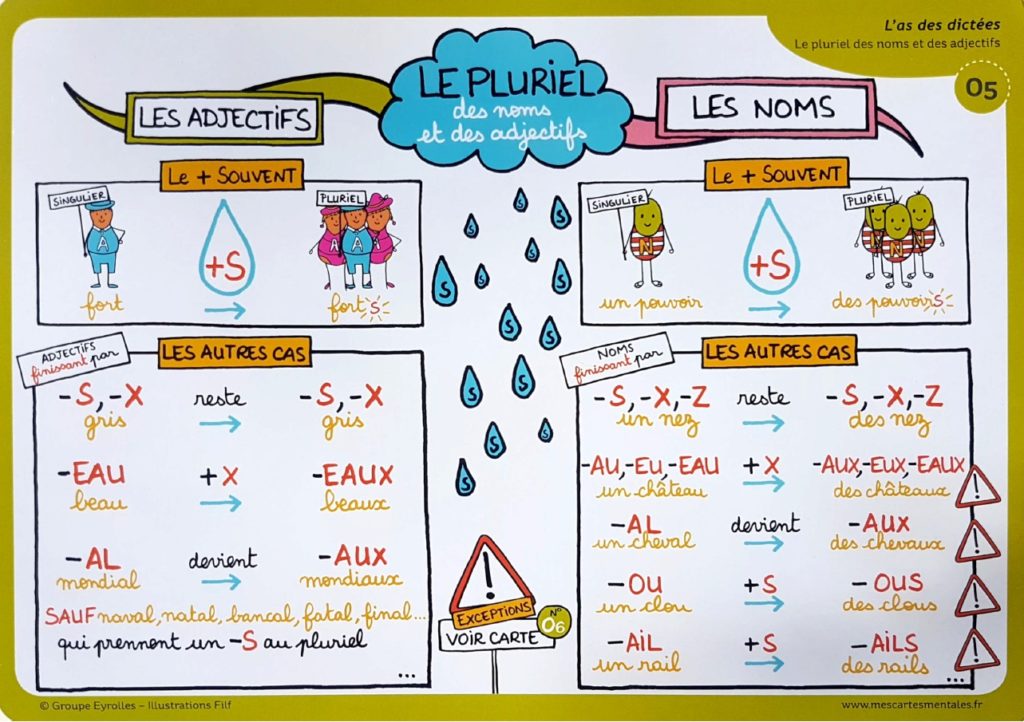
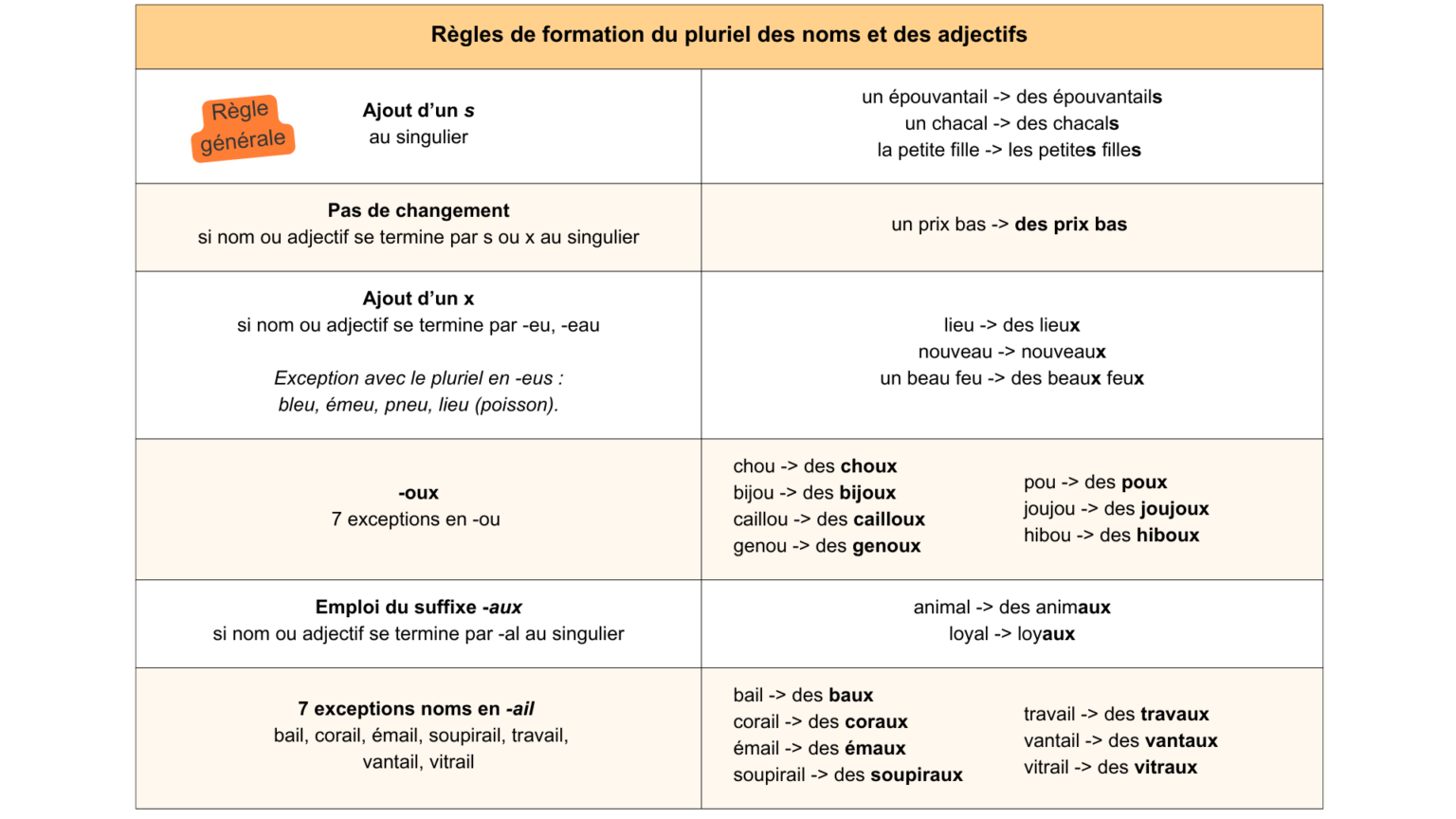
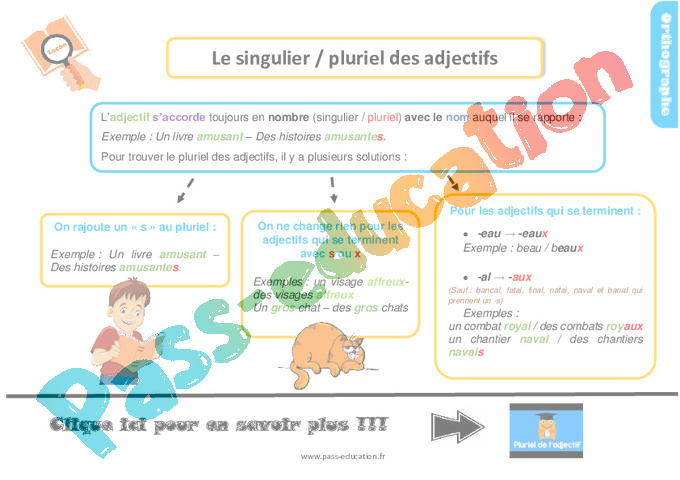
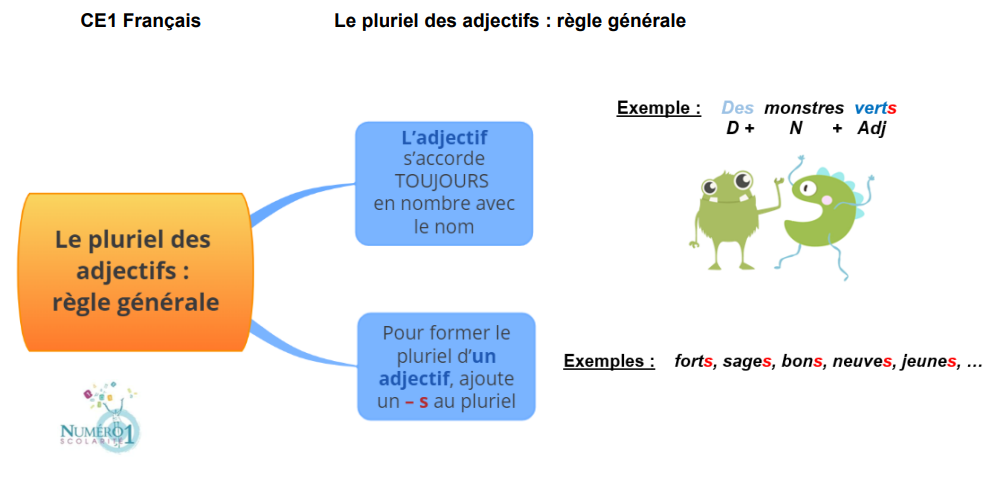
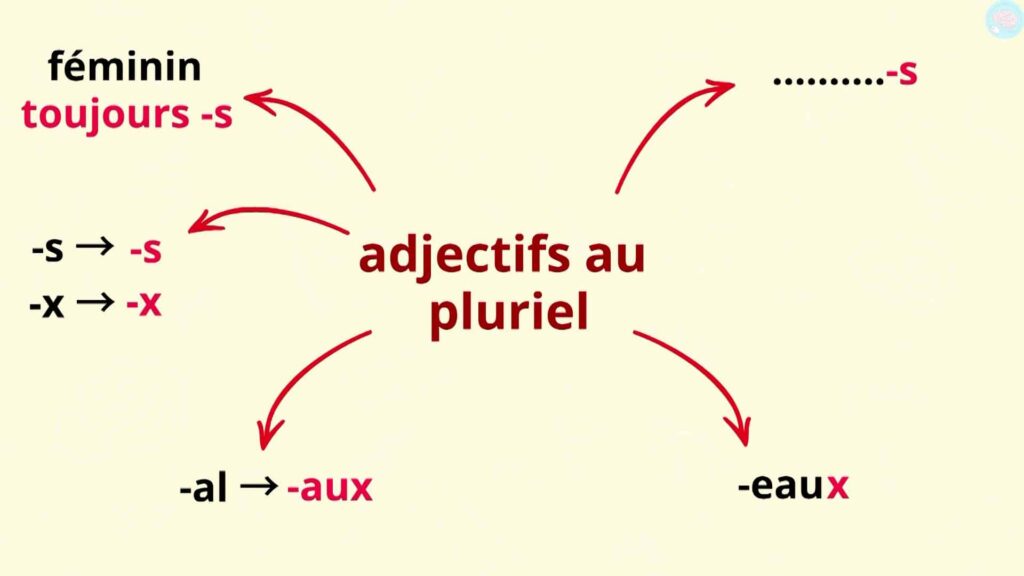
The Basic Rule: Add an "s"
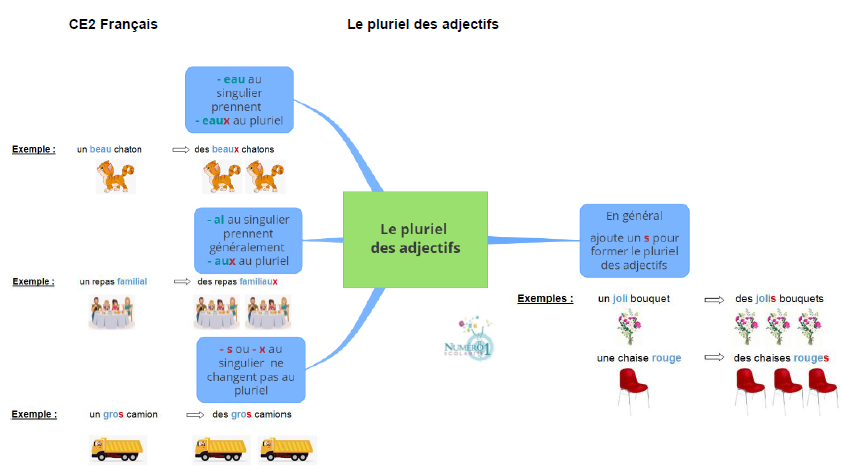
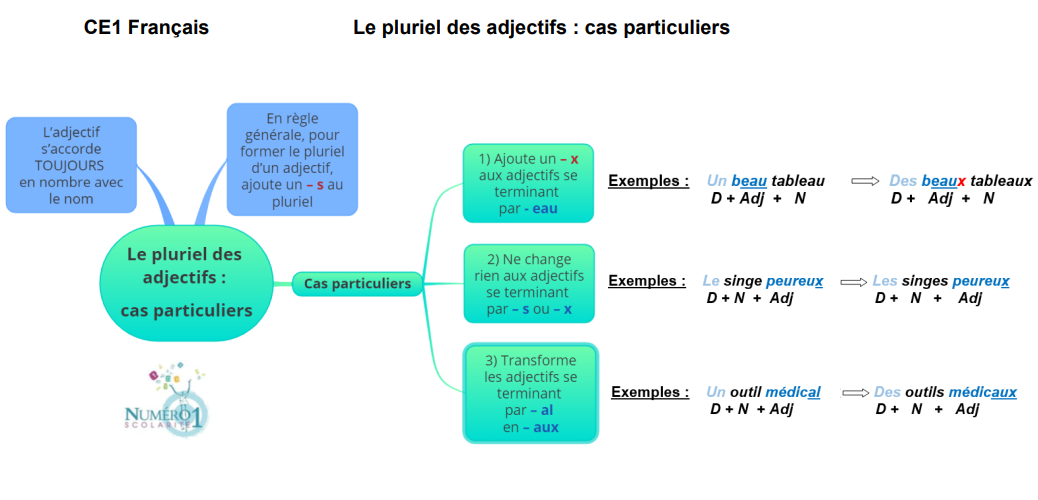
Alright, let's get down to brass tacks. The most common rule? Slap an "s" on the end. Easy peasy, right?
Un chat mignon (a cute cat) becomes des chats mignons (cute cats). See? Simple! Just like adding an extra sprinkle to your crêpe.
Une voiture rapide (a fast car) becomes des voitures rapides (fast cars). Bam! You're on a roll.
But, of course, because this is French, there are exceptions. Buckle up!

The Sneaky "x" Ending
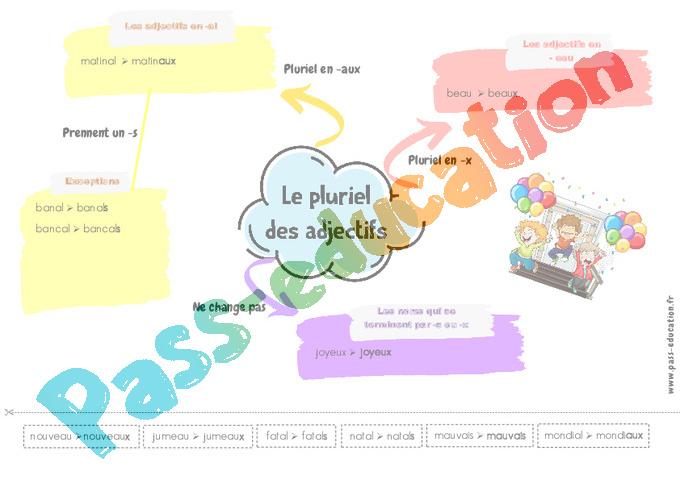
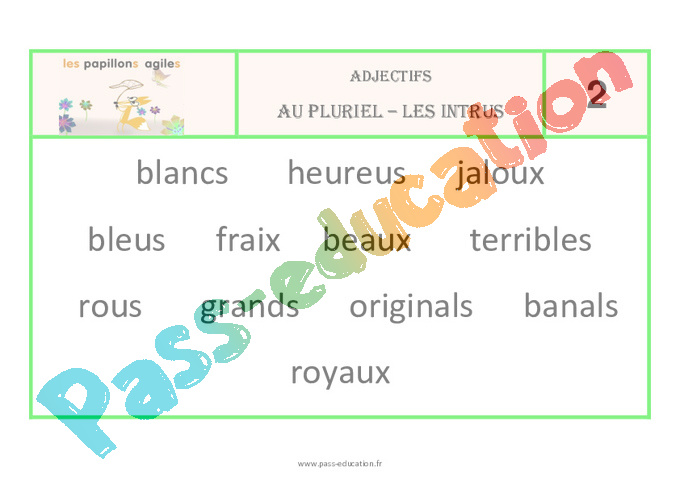
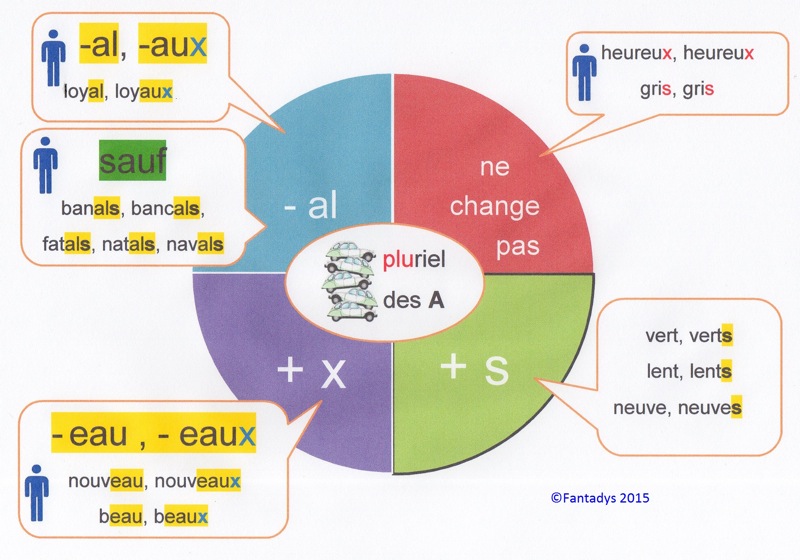
Some adjectives, the rebels of the French language, add an "x" instead of an "s" in the plural. These are the ones that end in -eau, -au, or -eu in the singular. Think of them as the cool kids who wear leather jackets to the grammar party.
Un nouveau livre (a new book) becomes des nouveaux livres (new books). Notice that silent 'x'? Very mysterious.
Un beau garçon (a handsome boy) becomes des beaux garçons (handsome boys). Suddenly, things are getting interesting!
Important Note: Adjectives ending in -al can also be a bit quirky. Many (but not all!) change to -aux in the plural. Un journal original (an original newspaper) becomes des journaux originaux (original newspapers). Watch out for these tricky fellas!
Silent Letters: The Unsung Heroes
Here's where things get a little (or a lot) French. Often, that added "s" or "x" is silent. Yes, you heard me right. Silent! The French love to torture us with unspoken letters.
So, how do you know if it’s there? Context, my friend! Pay attention to the surrounding words. The article ("le," "la," "les," "un," "une," "des") is your best friend here.

For example: Listen to "petit" and "petits." Both sound the same, but the context lets you know whether you’re talking about one small thing or many small things.
Adjectives That Don't Change (Gasp!)
Yes, there are exceptions to the exception! Some adjectives are so cool, so nonchalant, that they don’t bother changing for plural nouns. They're the hipsters of the adjective world.
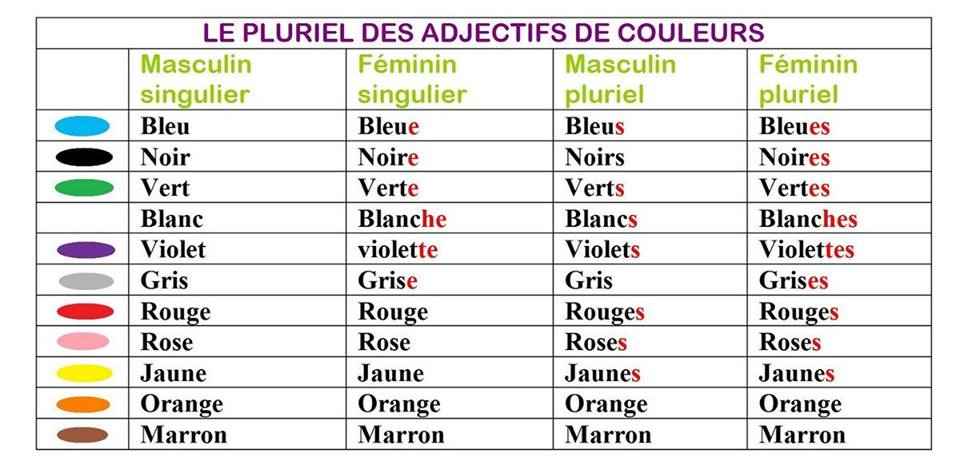
These are usually adjectives of color that are derived from nouns. Think orange, marron, crème, etc. It's like they're saying, "I'm already perfect, why change?"
Un pull orange (an orange sweater) becomes des pulls orange (orange sweaters). No 's', no 'x', just pure, unadulterated orange-ness.
Des chaussures marron (brown shoes). See? Marron remains marron. It's the rock star of adjectives, refusing to conform.
Placement is Key: Adjective Order
Okay, this isn't strictly about plurals, but it's important! In French, adjectives usually come after the noun. Un chat noir (a black cat). Des chats noirs (black cats). But there are exceptions!
Some adjectives go before the noun. Remember the acronym BAGS: Beauty, Age, Goodness, Size. These adjectives usually come before the noun they modify.
Un beau chat (a beautiful cat) is fine. It adheres to the BAGS rule. But un chat beau sounds odd (unless you're going for a specific stylistic effect).
It's like deciding where to put the spices in your soupe – get it right, and the flavor is amazing. Get it wrong, and... well, it's still soupe, but not as good.
Let's Practice!
Ready to put your knowledge to the test? Here are a few to try. No peeking!
1. Un livre intéressant (an interesting book) -> Des ______ ______ (interesting books)
2. Un chapeau bleu (a blue hat) -> Des ______ ______ (blue hats)
3. Un film original (an original movie) -> Des ______ ______ (original movies)
(Answers below!)
So, there you have it! A whirlwind tour of adjective plurals in French. It might seem daunting at first, but with practice, you'll be conjugating those adjectives like a pro.
Remember: Don't be afraid to make mistakes. That’s how you learn! And don't take it too seriously. Grammar can be fun... right?
Answers: 1. Des livres intéressants; 2. Des chapeaux bleus; 3. Des films originaux
Now go forth and pluralize with confidence! À bientôt!