Bonjour, mes amis francophiles! Let's talk about something that fills many a student's heart with dread, and even more with, well, let’s call it "acute grammatical apprehension": Le Présent de l'Indicatif. Yes, that simple (ha!) present tense in French. But fear not! Today, we're not going to dissect it like a particularly unhappy frog in science class. Instead, we're going to approach it with the playful abandon of a mime trapped in a hurricane of pastries. And, most importantly, we’ll talk about those oh-so-necessary exercises that can be printed. Because who doesn't love a good, old-fashioned, ink-smudged worksheet? It's practically an antique in this digital age!
Pourquoi "Le Présent" Matters (Or, Why You Can't Just Say "Hier, je mange")
So, why bother with this "Présent" business? Isn't French hard enough already? Mais oui! it can seem daunting at first. But think of it this way: the present tense is the bedrock of communication. It’s how you describe what you are doing, what you feel, what you see, and what your eccentric Aunt Gertrude always does with her collection of porcelain thimbles. It’s the foundation upon which all your other tense-related grammatical shenanigans are built. Without it, you're essentially reduced to grunting and pointing, which, while effective in certain situations (like ordering croissants), isn't exactly conducive to nuanced conversation.
Imagine trying to explain your passion for interpretive dance using only the past participle. Utter chaos! Mon dieu!
Here’s a quick and dirty list of when to use le présent:
- Actions happening right now: "Je parle français… enfin, j'essaie!" (I speak French... well, I try!)
- Habits and routines: "Tous les matins, je bois du café." (Every morning, I drink coffee.) Yes, even on Sundays. Especially on Sundays.
- General truths: "La Terre tourne autour du soleil." (The Earth revolves around the sun.) Unless you're a flat-earther, in which case, this might be a contentious statement.
- Describing states: "Je suis fatigué." (I am tired.) Likely after attempting to conjugate irregular verbs.
- To express near future (with indications of time): "Je vais au cinéma demain." (I'm going to the cinema tomorrow.) Essentially, a French version of “I’m gonna…” but classier.
The Verb Families: It's Not as Scary as "The Godfather"
Alright, let’s talk verbs. In French, verbs are divided into three main groups, like houses in Hogwarts, but with slightly less magic and a lot more memorization. Okay, maybe a lot more memorization.
The "-er" Verbs: The Reliable Workhorses
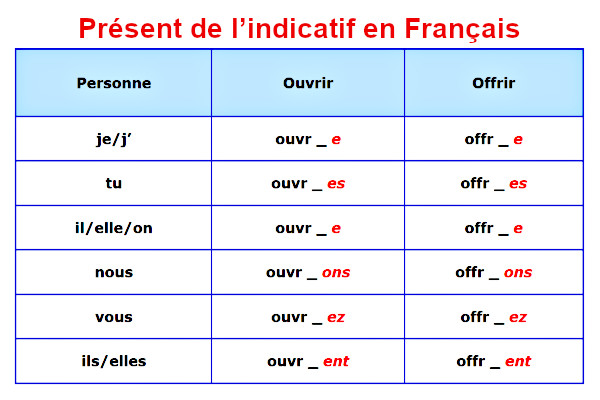
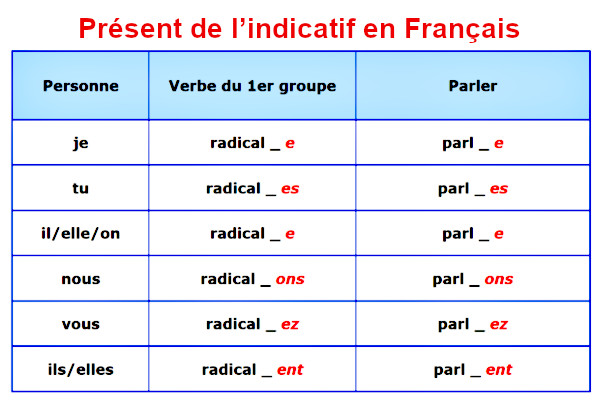
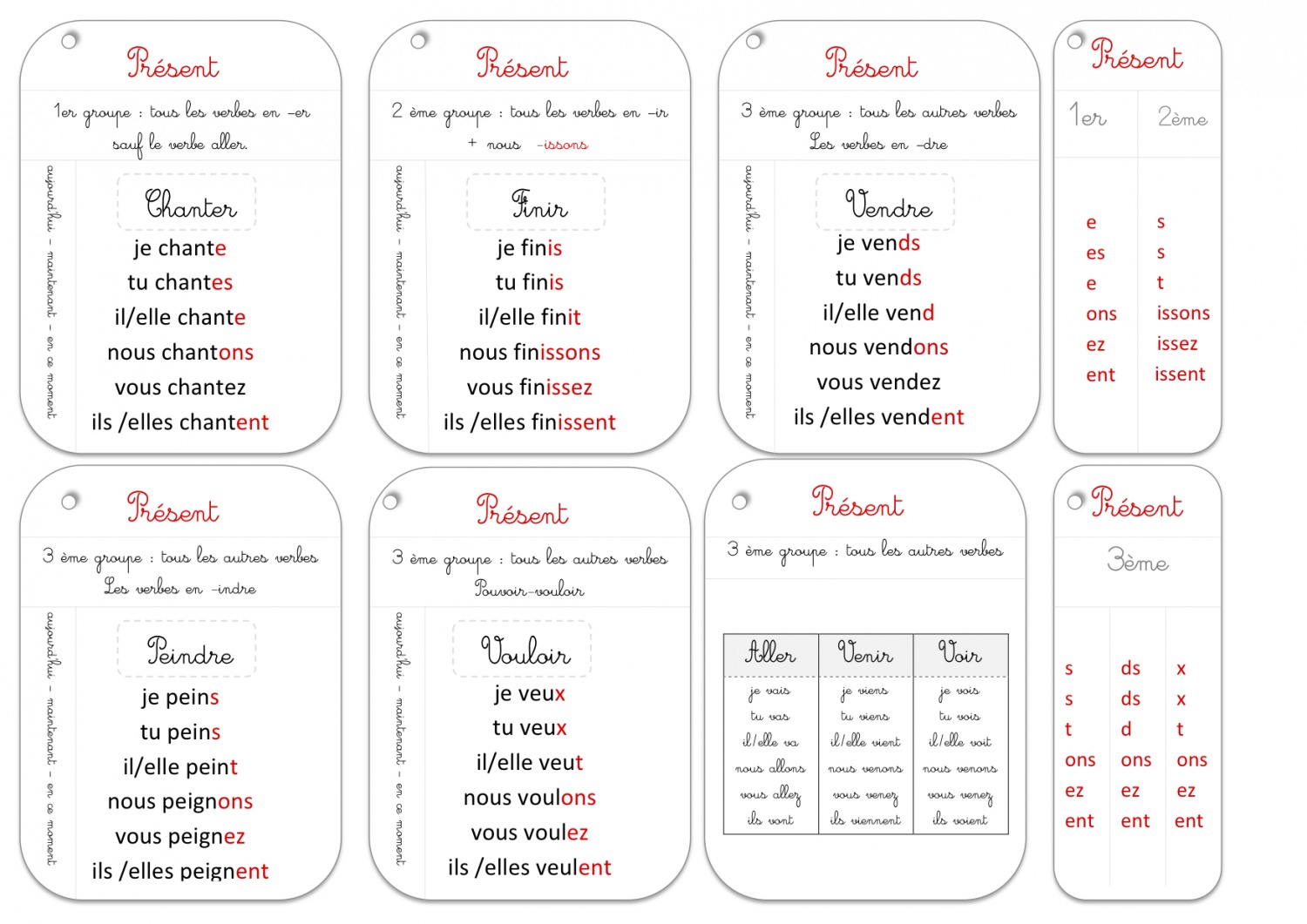
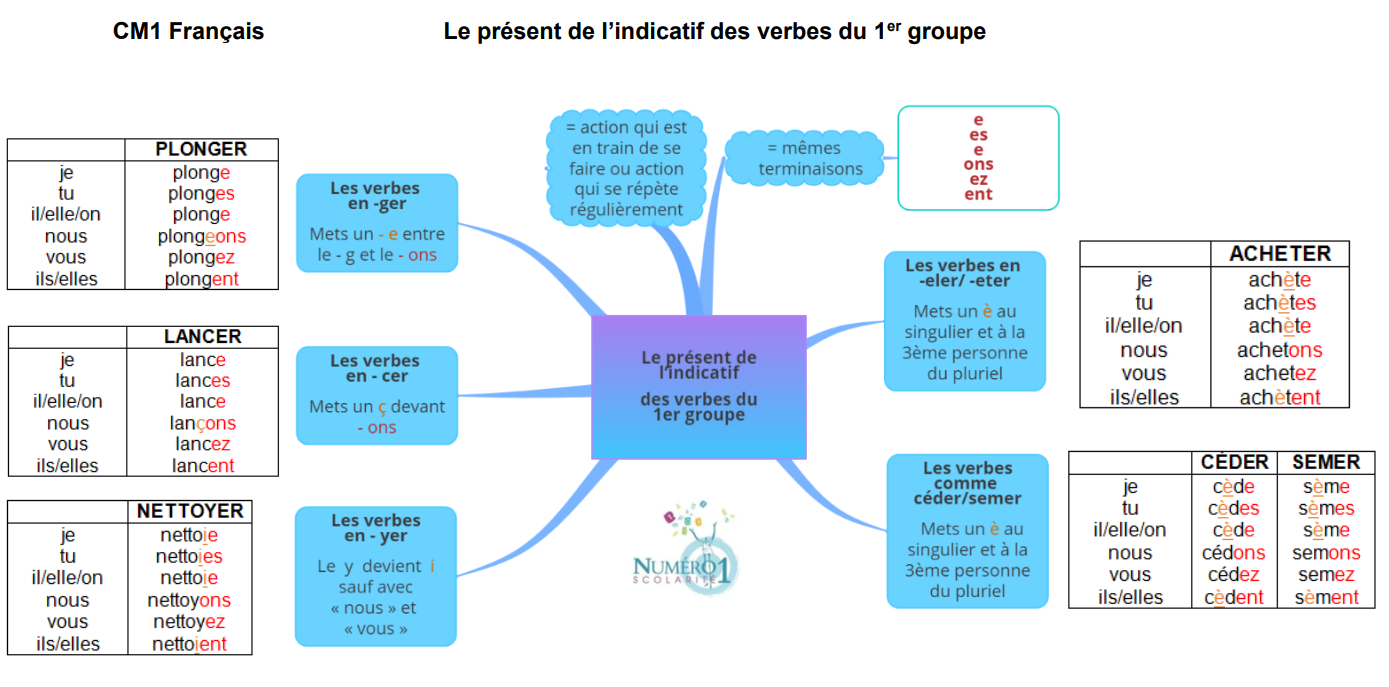
These are your bread-and-butter verbs. The vast majority of French verbs belong to this group. Think parler (to speak), manger (to eat), aimer (to like/love), and détester (to hate). Okay, maybe not all warm and fuzzy. Conjugating them is relatively straightforward. You drop the "-er" ending and add the appropriate ending for each pronoun:
- Je: -e
- Tu: -es
- Il/Elle/On: -e
- Nous: -ons
- Vous: -ez
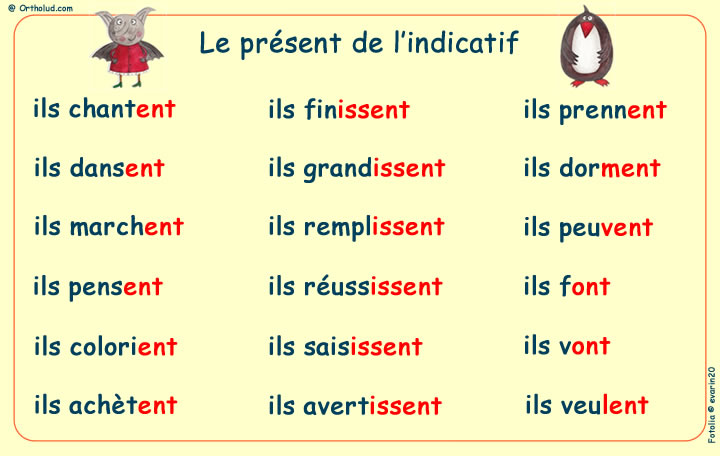
- Ils/Elles: -ent
So, for parler, it becomes:
- Je parle
- Tu parles
- Il/Elle/On parle
- Nous parlons
- Vous parlez
- Ils/Elles parlent
See? Not so bad! Except, of course, for those pesky spelling-change verbs….
The Spelling-Change "-er" Verbs: The Minor Annoyances
Just when you thought you had it all figured out, French throws you a curveball. Some "-er" verbs have spelling changes in certain conjugations, usually to maintain the correct pronunciation. These are verbs like manger (to eat) and commencer (to begin). For instance, with manger, you need to keep that "e" before the "-ons" ending in the nous form to preserve the soft "j" sound. Otherwise, it would sound like you were commanding someone to mangle something. "Nous mangons le gateau!" Nope. "Nous mangeons le gateau!" Yes!
These little exceptions are designed purely to torment language learners. I’m convinced of it.
The "-ir" Verbs: The Slightly More Sophisticated Cousins
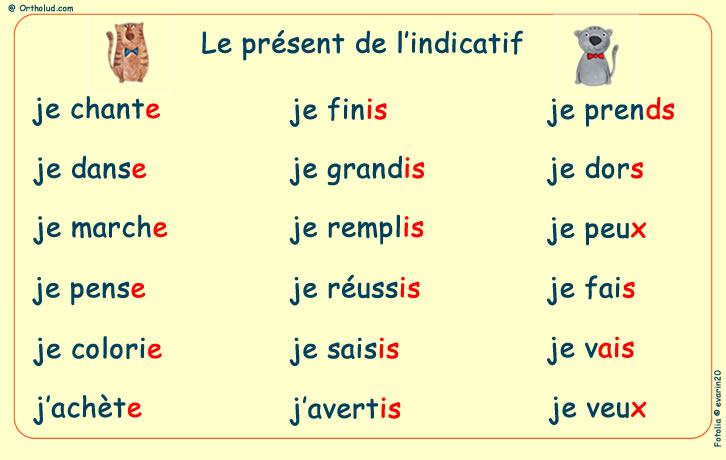
These verbs end in "-ir," and while their conjugations are also regular, they follow a different pattern. Common examples include finir (to finish), choisir (to choose), and grandir (to grow). You drop the "-ir" and add these endings:
- Je: -is
- Tu: -is
- Il/Elle/On: -it
- Nous: -issons
- Vous: -issez
- Ils/Elles: -issent
So, finir becomes:
- Je finis
- Tu finis
- Il/Elle/On finit
- Nous finissons
- Vous finissez
- Ils/Elles finissent
Getting the hang of it? Don’t worry if it takes a bit of practice. Rome wasn't built in a day, and neither was fluency in French verb conjugations. Unless you’re Asterix. Then, maybe.
The "-re" Verbs: The Underdogs
Last but not least, we have the "-re" verbs. These are a smaller group, and their conjugations are… well, let’s just say they’re a bit more quirky. Common examples include vendre (to sell), attendre (to wait), and rendre (to return/give back). You drop the "-re" and add:
- Je: -s
- Tu: -s
- Il/Elle/On: (nothing)
- Nous: -ons
- Vous: -ez
- Ils/Elles: -ent
So, vendre becomes:
- Je vends
- Tu vends
- Il/Elle/On vend
- Nous vendons
- Vous vendez
- Ils/Elles vendent
Notice the lack of an ending for il/elle/on? Just another way French keeps you on your toes. Think of it as a linguistic trust fall.
Irregular Verbs: The Rebellious Teenagers of French Grammar
Ah, irregular verbs. The bane of every French student’s existence. These verbs refuse to play by the rules. They laugh in the face of conjugation patterns. They are the grammar gremlins that live under your bed, waiting to trip you up at the most inopportune moments.
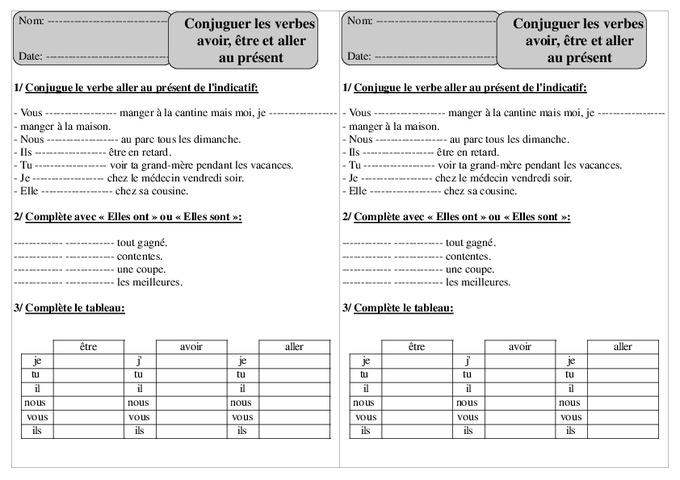
There's no real way around it: you just have to memorize them. Here are some of the most common offenders:
![Le Present de l'Indicatif Exercices Et Corrige Web - [PDF Document]](https://cdn.vdocuments.mx/doc/1200x630/5695d25c1a28ab9b029a1c09/le-present-de-lindicatif-exercices-et-corrige-web.jpg)
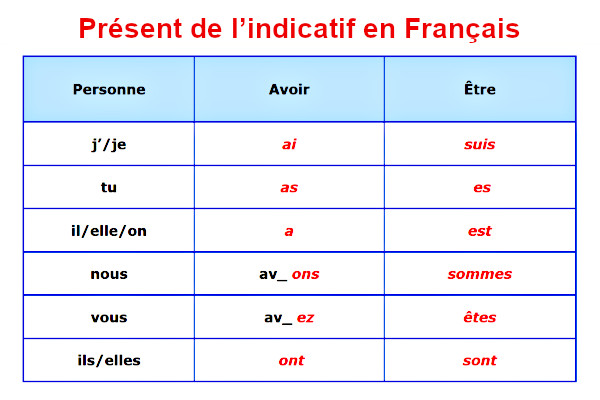
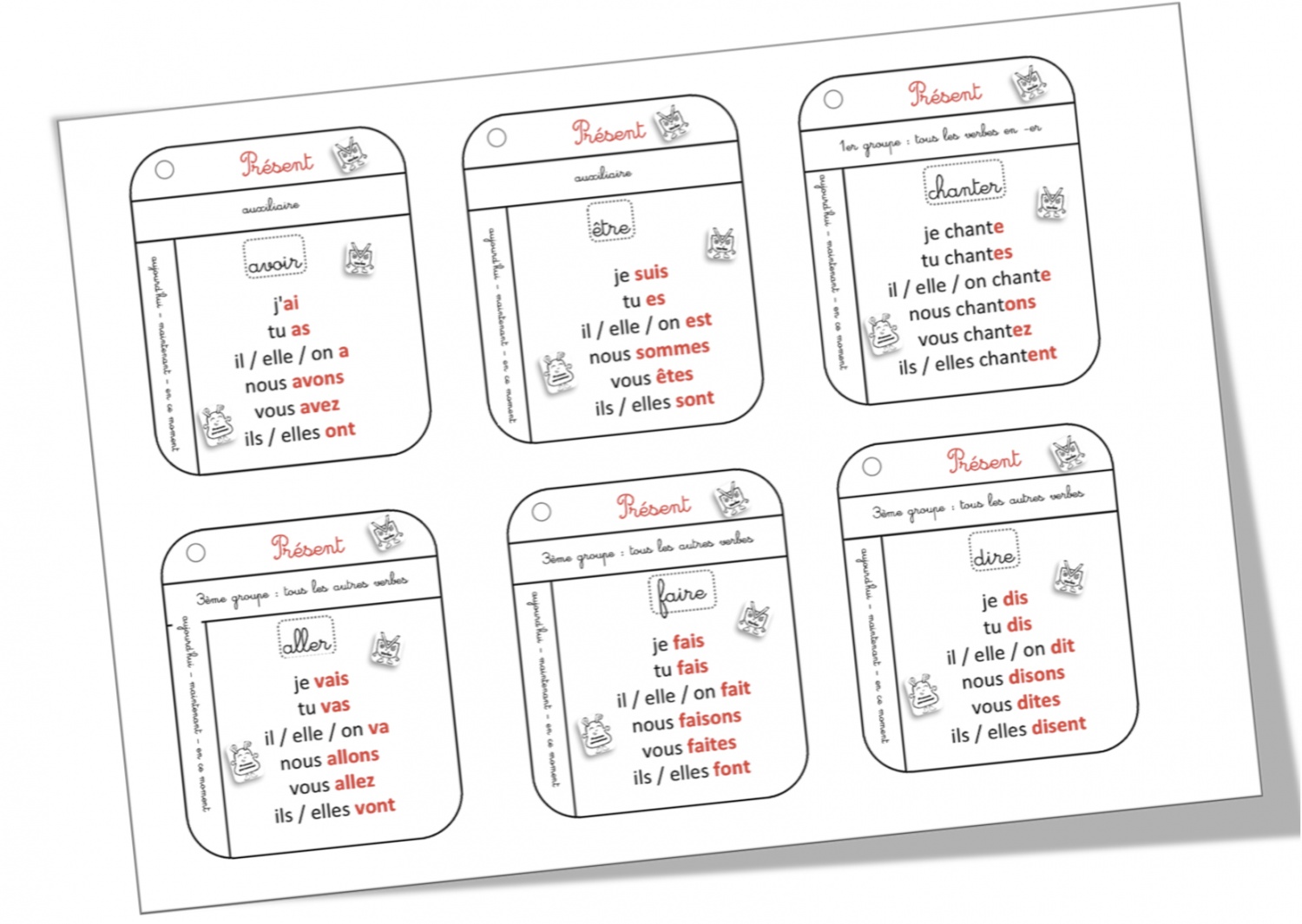
- Être (to be): The absolute king of irregular verbs. Learn it. Love it. Live it. You'll use it constantly. (Je suis, tu es, il/elle/on est, nous sommes, vous êtes, ils/elles sont)
- Avoir (to have): Another essential verb that's completely irregular. (J'ai, tu as, il/elle/on a, nous avons, vous avez, ils/elles ont)
- Aller (to go): Describes movement and is used in the near future tense. (Je vais, tu vas, il/elle/on va, nous allons, vous allez, ils/elles vont)
- Faire (to do/make): Used in countless expressions. (Je fais, tu fais, il/elle/on fait, nous faisons, vous faites, ils/elles font)
- Venir (to come): And all its compound forms like revenir and devenir. (Je viens, tu viens, il/elle/on vient, nous venons, vous venez, ils/elles viennent)
- Prendre (to take): Another frequent flyer in French conversations. (Je prends, tu prends, il/elle/on prend, nous prenons, vous prenez, ils/elles prennent)
- Pouvoir (to be able to): Essential for expressing ability or possibility. (Je peux, tu peux, il/elle/on peut, nous pouvons, vous pouvez, ils/elles peuvent)
- Vouloir (to want): Expressing desires and intentions. (Je veux, tu veux, il/elle/on veut, nous voulons, vous voulez, ils/elles veulent)
- Devoir (to have to/must): Expressing obligation. (Je dois, tu dois, il/elle/on doit, nous devons, vous devez, ils/elles doivent)
The good news is that with practice, these irregular verbs will become second nature. The bad news is that there are a lot of them. Think of it as a long-term investment in your linguistic future.
Le secret? Exercices, exercices, exercices! (The Secret? Exercises, exercises, exercises!)
Okay, now for the part you’ve (probably) been dreading: practice. There’s no magical shortcut to mastering le présent de l'indicatif. You can’t just osmosis the information from a textbook while you sleep (trust me, I’ve tried). You need to roll up your sleeves, sharpen your pencil (or fire up your printer), and get to work.
Why Printed Exercises Are Your Best Friend (Sometimes)
In this digital age, it might seem a bit old-fashioned to advocate for printed exercises. But hear me out! There's something about physically writing out the conjugations that helps them stick in your brain. It’s like a tactile connection to the language. Plus, you can take them anywhere – on the bus, to the park, even to that excruciatingly boring family gathering where Great Aunt Mildred insists on telling the same stories every year.
Here's why printing out exercises can be surprisingly beneficial:
- Focus: No distracting notifications from social media. Just you, your pencil, and the verb être. A zen-like experience, almost.
- Tangible Progress: Seeing a stack of completed exercises gives you a sense of accomplishment. It's proof that you're actually learning something!
- Offline Access: No need for Wi-Fi. Perfect for those moments when you're stuck in a remote cabin with nothing but a French grammar book and a yearning for knowledge.
- Less Eye Strain: Give your eyes a break from staring at screens all day. Embrace the analog!
- Recyclable (Eventually): Once you've mastered the present tense, you can recycle those exercises and feel good about your contribution to saving the planet. Or, you know, use them as kindling.
What to Look for in a Good Printable Exercise
Not all exercises are created equal. You want exercises that are:
- Varied: Fill-in-the-blanks are great, but also look for exercises that ask you to write full sentences, translate phrases, or even create short dialogues.
- Progressive: Start with simple exercises that focus on regular verbs, then gradually introduce irregular verbs and more complex sentence structures. Don't try to run before you can walk (or conjugate courir, for that matter).
- Answer Keys: Absolutely essential! How else will you know if you’re right? (Unless you have a French-speaking parrot, in which case, congratulations on your unusual pet choice.)
- Visually Appealing (Optional, but Nice): A well-designed worksheet can make the learning process a little less painful. Avoid exercises that look like they were designed by a committee of disgruntled spreadsheets.
Where to Find These Magical Printable Exercises
The internet is awash with French grammar exercises. Here are some reliable sources:
- Bonjour de France: A classic website with a wealth of free exercises and resources. They even have exercises specifically for le présent de l'indicatif!
- Lawless French: Another excellent resource with clear explanations and plenty of practice exercises.
- ThoughtCo: Offers a good selection of printable worksheets for various French grammar topics.
- Your French Textbook: Don't forget the trusty textbook! It probably has a whole section of exercises just waiting to be tackled.
- Google: Just type in "Le Présent de l'Indicatif Exercices à Imprimer" and watch the magic happen! But be discerning; not everything on the internet is accurate (except this article, of course!).
Example Exercises to Get You Started
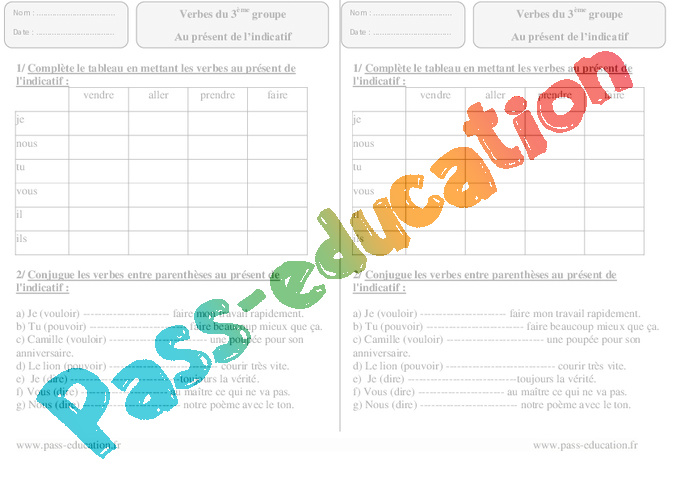
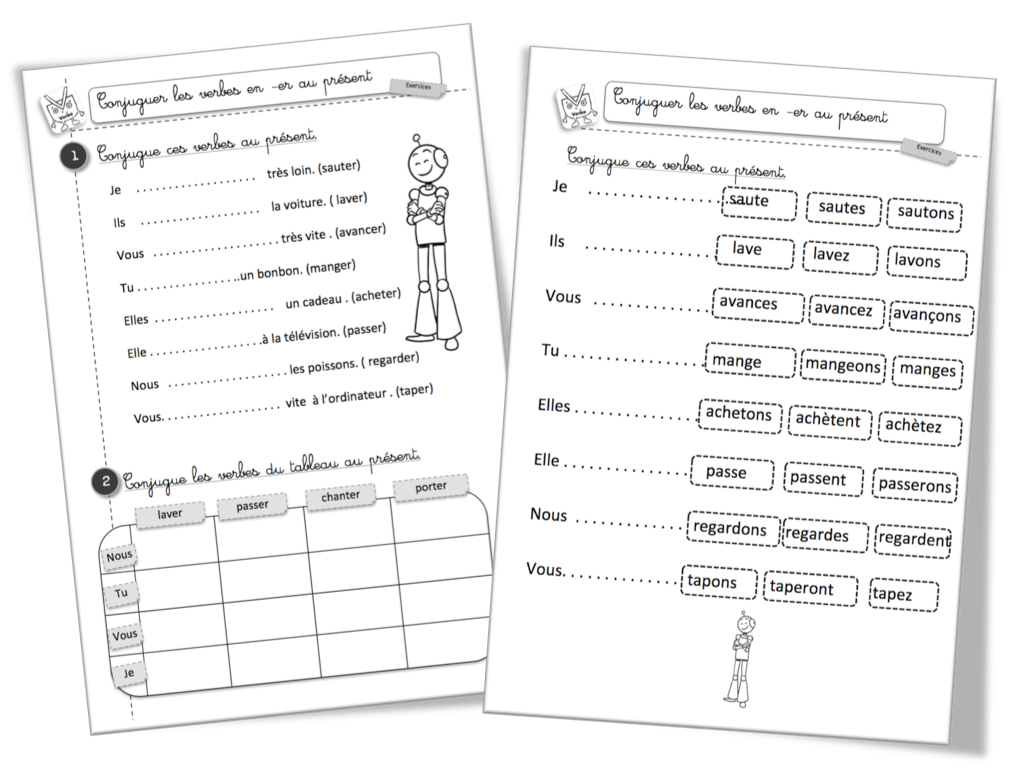
Alright, let's get practical! Here are a few examples of the types of exercises you might find (and should definitely print out):

Exercise 1: Fill in the Blanks (Regular Verbs)
Complete the following sentences with the correct conjugation of the verb in parentheses.
- Je _______ (parler) français.
- Tu _______ (aimer) le chocolat.
- Il _______ (manger) une pomme.
- Nous _______ (chanter) une chanson.
- Vous _______ (danser) bien.
- Elles _______ (étudier) le français.
Exercise 2: Translate the Sentences into French
Translate the following sentences into French using the present tense.
- I am eating an apple.
- You (singular, informal) are speaking English.
- He is watching television.
- We are listening to music.
- You (plural/formal) are working hard.
- They (feminine) are traveling to Paris.
Exercise 3: Fill in the Blanks (Irregular Verbs)
Complete the following sentences with the correct conjugation of the verb in parentheses.
- Je _______ (être) étudiant.
- Tu _______ (avoir) un chat.
- Il _______ (aller) au cinéma.
- Nous _______ (faire) nos devoirs.
- Vous _______ (vouloir) un café.
- Elles _______ (pouvoir) parler français.
Exercise 4: Write Your Own Sentences
Write five original sentences in French using the present tense. Be creative! (And grammatically correct, please.)
- __________________________________________________________________________
- __________________________________________________________________________
- __________________________________________________________________________
- __________________________________________________________________________
- __________________________________________________________________________
Tips and Tricks for Mastering Le Présent
Here are a few extra tips to help you on your journey to present tense proficiency:
- Start Small: Don't try to learn everything at once. Focus on one verb group (or even just a few key verbs) at a time.
- Use Flashcards: A classic method for memorizing verb conjugations. Write the verb and pronoun on one side, and the conjugation on the other.
- Practice Regularly: Even just 15 minutes of practice each day can make a big difference. Consistency is key!
- Immerse Yourself: Watch French movies, listen to French music, read French books. The more you expose yourself to the language, the more natural it will become.
- Don't Be Afraid to Make Mistakes: Everyone makes mistakes when they're learning a new language. The important thing is to learn from them and keep practicing.
- Find a Language Partner: Practice speaking with a native French speaker or another learner. This is a great way to improve your fluency and get feedback on your pronunciation.
- Use Online Resources: There are tons of great websites and apps that can help you learn French grammar. Duolingo, Memrise, and Babbel are all popular options.
- Reward Yourself: After a particularly grueling study session, treat yourself to something you enjoy. A croissant, perhaps? Or a glass of wine? You deserve it!
- Sing French Songs (Badly): There's no better way to ingrain the language than by butchering a Serge Gainsbourg classic at the top of your lungs.
- Embrace the Absurdity: French grammar can be illogical and frustrating at times. Learn to laugh at the ridiculousness of it all.
Common Mistakes to Avoid
Here are a few common pitfalls to watch out for:
- Forgetting the "-e" in "nous mangeons": As mentioned earlier, this is a classic mistake. Always remember to keep that "e" to preserve the soft "j" sound.
- Mixing up "tu" and "vous": Remember that "tu" is the informal singular pronoun, while "vous" is the formal singular or plural pronoun. Using the wrong one can be a social faux pas.
- Using the wrong verb ending: Double-check your verb endings to make sure they match the pronoun.
- Forgetting to conjugate irregular verbs: This is a surefire way to lose points on a test. Make sure you know your irregular verbs inside and out.
- Overthinking it: Sometimes, the simplest answer is the correct one. Don't get bogged down in complex grammatical rules when a straightforward conjugation will do.
Beyond the Basics: Nuances of Le Présent
Once you've mastered the basic conjugations, you can start exploring some of the more subtle nuances of the present tense.
Le Présent de Narration (The Narrative Present)
This is when you use the present tense to describe past events, as if they were happening right now. It's often used to create a sense of immediacy and drama.

Example: "Soudain, il ouvre la porte et entre dans la pièce." (Suddenly, he opens the door and enters the room.)
Le Présent de Vérité Générale (The Present of General Truth)
This is used to express facts or general truths that are always true.
Example: "L'eau bouille à 100 degrés Celsius." (Water boils at 100 degrees Celsius.)
Le Présent Duratif (The Durative Present)
This is used to emphasize the duration of an action that is ongoing.
Example: "J'habite à Paris depuis dix ans." (I have been living in Paris for ten years.)
Alors... Ready to Conquer Le Présent?
So, there you have it! A comprehensive (and hopefully slightly amusing) guide to mastering le présent de l'indicatif. Remember, the key is practice, patience, and a willingness to embrace the occasional grammatical absurdity. Print out those exercises, grab a pencil, and get conjugating! And if you get frustrated, just remember that even native French speakers sometimes stumble over their verbs. (Okay, maybe not sometimes. But it makes you feel better, right?).
Now go forth and conjugate! And if you ever find yourself completely lost, just remember the immortal words of Douglas Adams: "Don't Panic." And maybe have a croissant. Croissants always help.
Bon courage! (Good luck!)