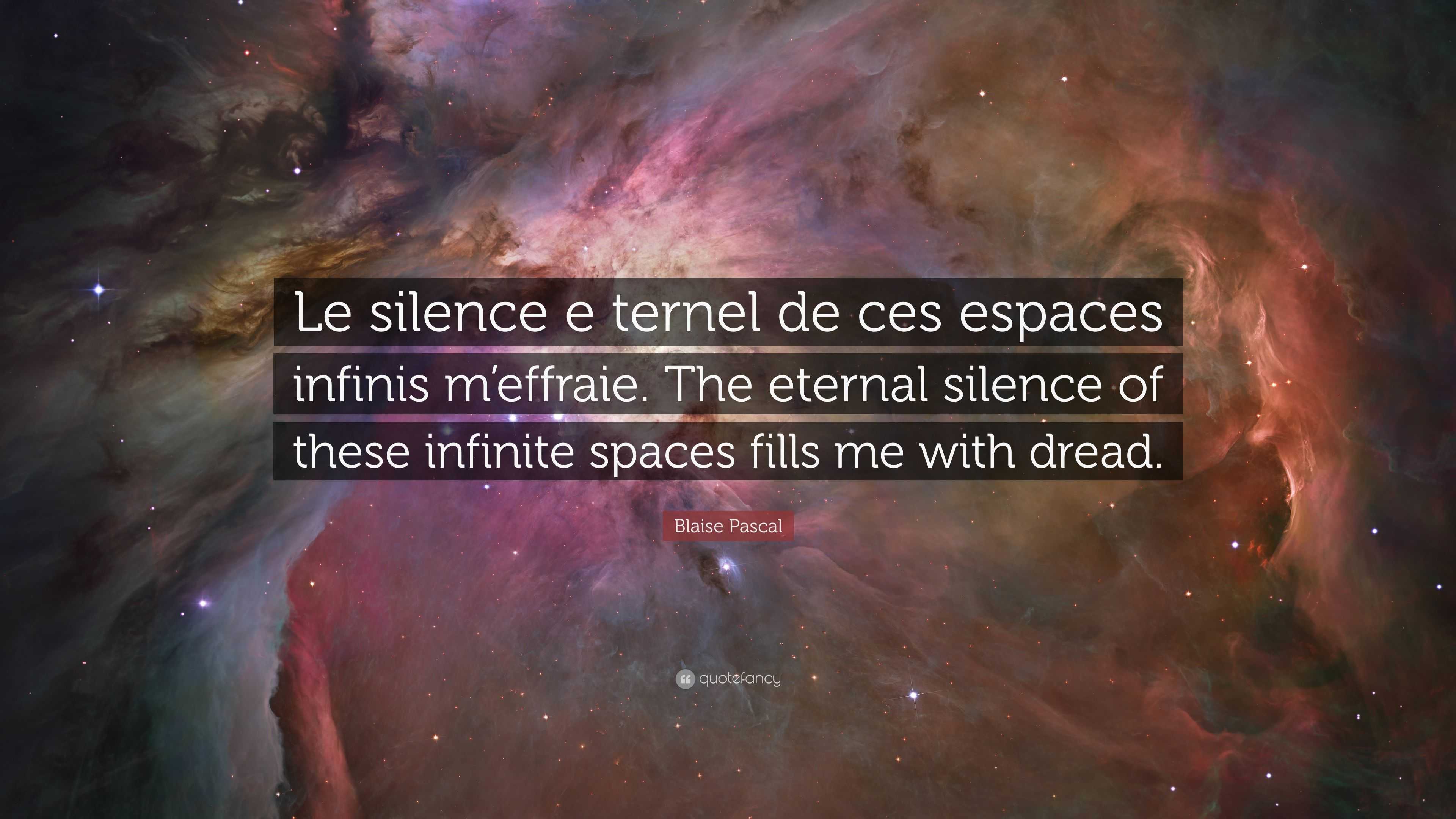
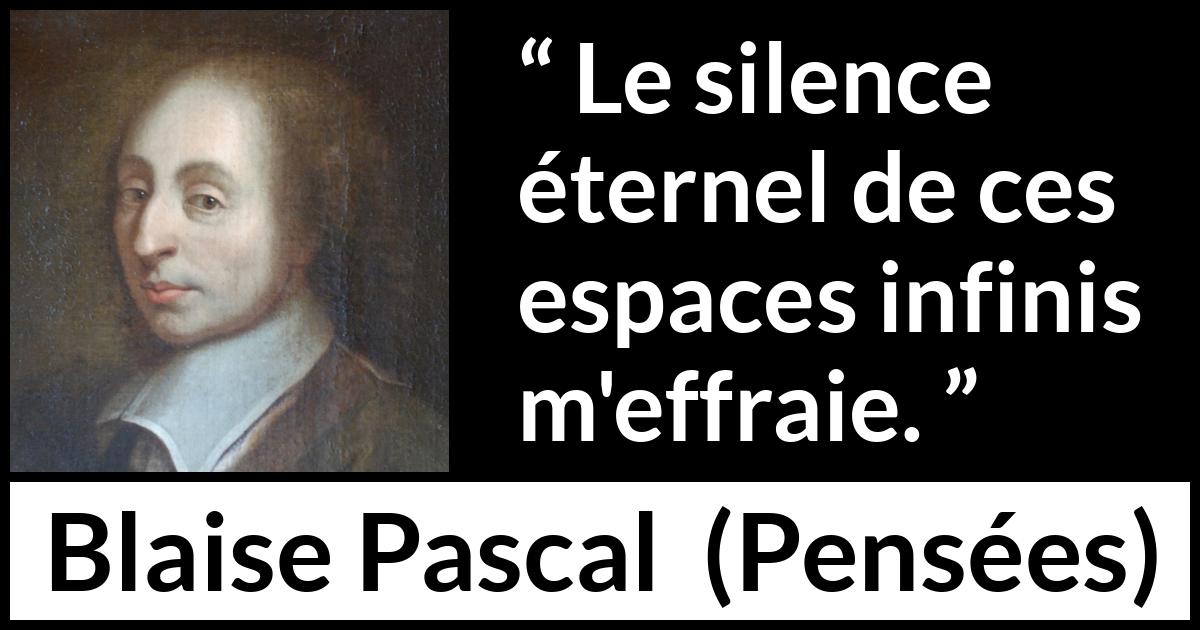
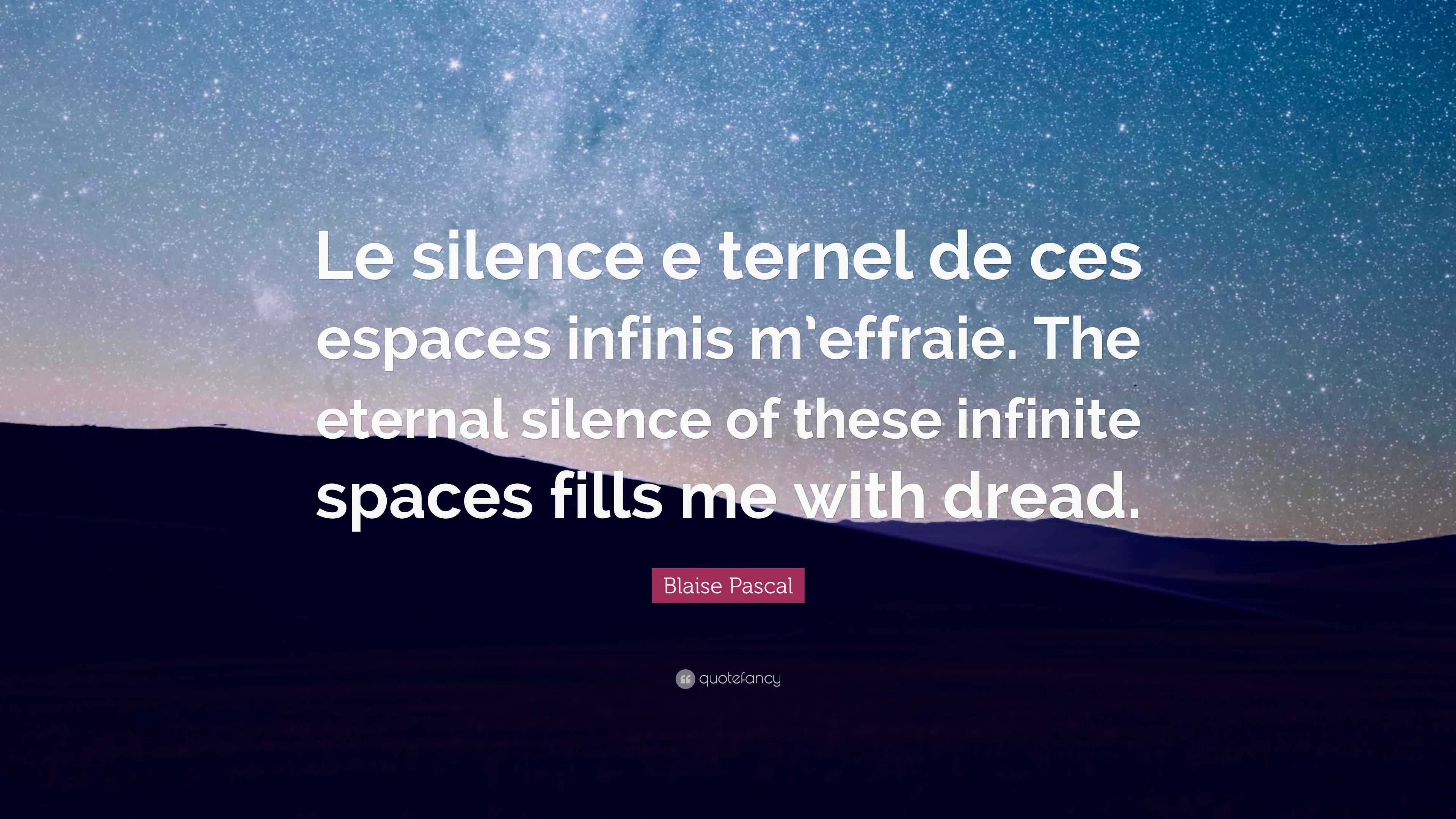
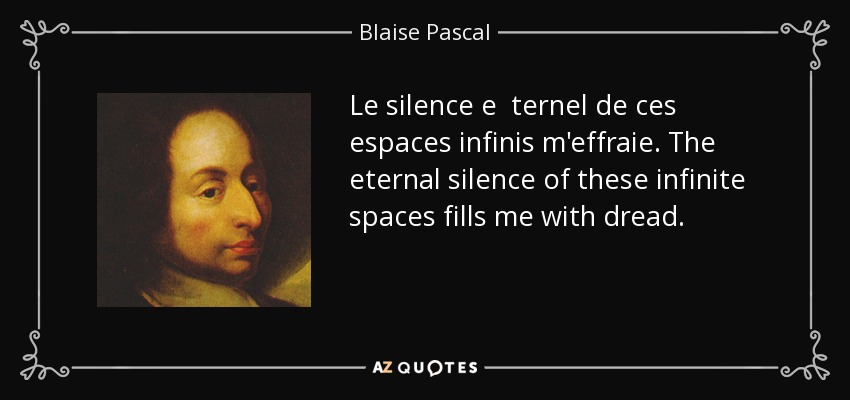
Ah, "Le Silence éternel de ces espaces infinis m'effraie." It's a mouthful, isn’t it? Sounds so profound, so… French! It’s Pascal, of course. Blaise Pascal. A philosopher, mathematician, and all-around brilliant guy. But what does it really mean? Let's unpack this, shall we, like a carefully wrapped croissant at our favourite café?
Literally, it translates to “The eternal silence of these infinite spaces frightens me.” But that's just the surface. What's hiding underneath? It's not just about being scared of outer space, although... who isn't a little freaked out by the sheer scale of it all?
The Vastness and Our Place Within It
Think about it. We're tiny. Incredibly tiny. We exist on this little blue marble, spinning in a solar system, within a galaxy, in a universe that's constantly expanding. And beyond that? Who knows? Is there even a "beyond?" Shivers
Pascal was grappling with something deeper than just a fear of the dark. He was contemplating our insignificance in the grand scheme of things. He felt the weight of our existence – or perhaps, our seeming lack of importance – when confronted with the universe's boundless nature.
Ever looked up at the night sky, really looked? Seen the countless stars and felt a sudden pang of… well, what is it? Awe? Wonder? Or maybe a little bit of dread? That's Pascal's fear. It's the fear of being utterly alone in a cosmos that doesn't even notice we're here.
The Silence Speaks Volumes
And that silence… that's crucial. It's not just a lack of noise. It's the absence of response. We send out signals, search for life, try to make contact. But what if there’s just… nothing? No echo, no reply, just the cold, vast silence stretching out forever?
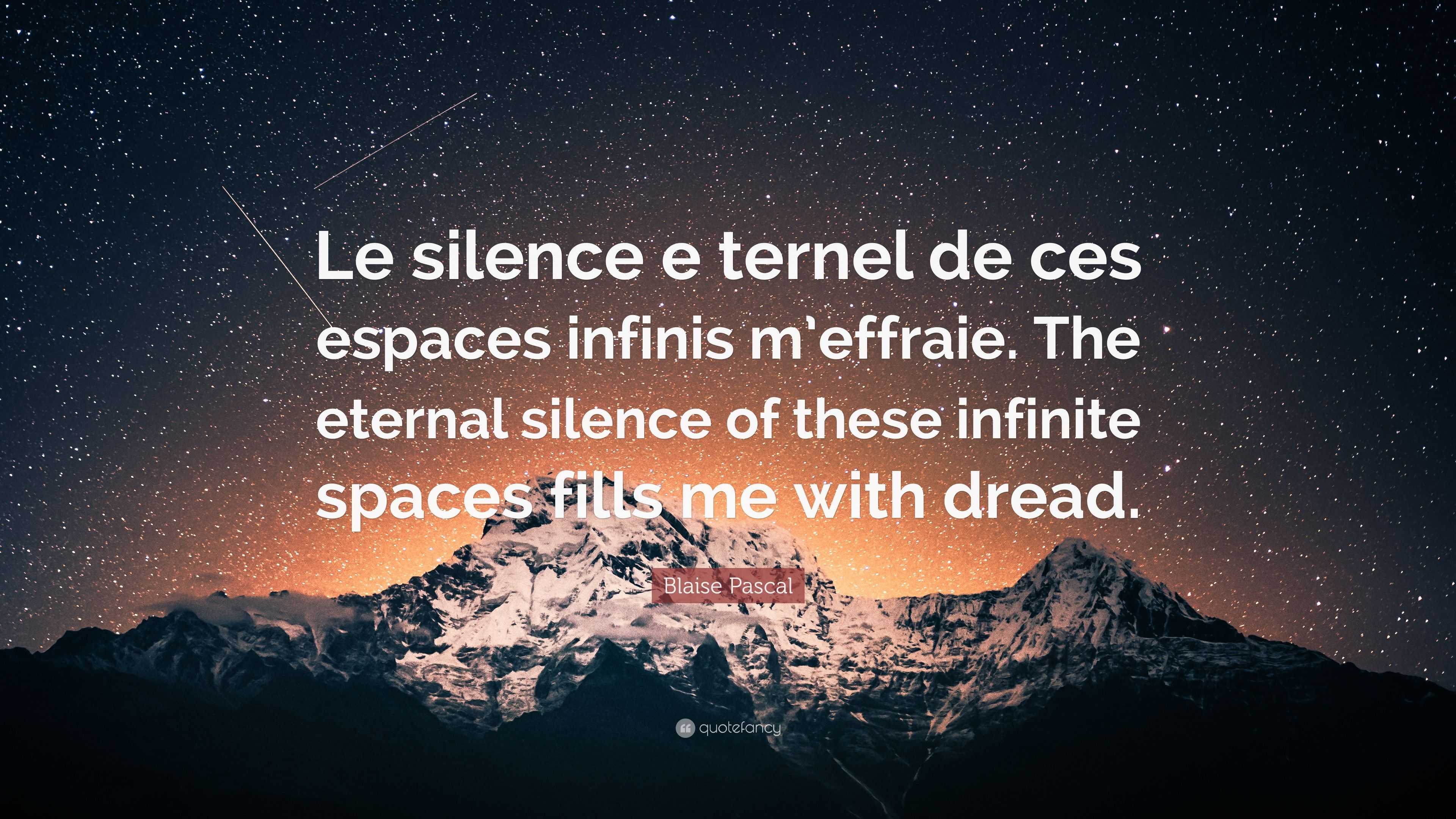
The silence isn't empty, you see. It’s pregnant with possibilities, yes, but also with the crushing realization that our search for meaning might be a solo journey. A very, very long and quiet solo journey.
It's the difference between being alone in a crowded room and being alone on a deserted island. In the crowded room, there's potential for connection, for noise, for life. On the deserted island? Just the waves, the wind, and your own thoughts. Forever. Pascal felt like he was stranded on that cosmic island. Can you blame him?
More Than Just Space
Now, Pascal wasn't just thinking about actual space, the kind with planets and nebulae. He was also thinking about the spaces within ourselves. The existential questions we all face. Why are we here? What's the point? What happens when we die? These are the "infinite spaces" of the mind.
Think of all the unanswered questions, the mysteries of the human heart, the things we can't explain. Those, too, are vast and silent. And sometimes, they can be just as frightening as the universe itself.
We fill those spaces with beliefs, with relationships, with work, with hobbies. We create meaning to combat the silence, to give ourselves purpose. But sometimes, the silence creeps back in. A moment of doubt, a feeling of emptiness, a sudden realization of our own mortality. That's Pascal's fear knocking at the door of our souls.
Ever had that feeling? That sudden jolt of awareness that everything is temporary, that you’re just a tiny speck in an enormous, indifferent universe? It’s a bit unnerving, isn't it?
Finding Comfort in the Face of the Void
So, is this all doom and gloom? Is Pascal just a cosmic Debbie Downer? Not necessarily. He was also a deeply religious man. He found solace in faith, in the belief that there was something beyond the silence, something that gave meaning to our existence.
And even if you're not religious, there's still hope! We can find meaning in connection, in love, in creating, in experiencing the beauty of the world around us. We can build our own little pockets of warmth and light in the face of the vast, indifferent universe.
We might be tiny, yes. Our lives might be short, yes. But that doesn't mean they're meaningless. Every act of kindness, every moment of joy, every connection we make, adds a little bit of light to the darkness. We can create our own meaning, define our own purpose. We don't have to be afraid of the silence. We can fill it with our own songs.

Think about the things that make you feel alive. The things that bring you joy. Hold onto those. Let them be your anchors in the storm of existential dread. Because even in the face of infinite space and eternal silence, there is always beauty, there is always hope, and there is always love.
So, next time you look up at the stars, don't just feel fear. Feel wonder. Feel awe. And remember that even though we're small, we're not alone. We have each other. And that's enough. Perhaps, even more than enough.
And, let’s be honest, maybe Pascal just needed a really good cup of coffee and a pastry. It helps, you know. It really does.



.jpg)