Ah, le français! Isn't it just the most charming language? We're here, virtually, sipping café au lait, and today, we’re going to chat about something essential: the verb servir. Not just any servir, mind you, but servir au présent. Are you ready? Let's dive in!
Why servir, you ask? Well, it's a word we use all the time! Think about it: serving food, being useful, helping someone... It’s all servir. It's like the Swiss Army knife of verbs! Plus, mastering it will make your French sound so much more natural.
Understanding Servir - The Basics
Okay, so servir is an irregular -ir verb. Don't panic! Irregular verbs just mean they don't follow the super predictable pattern. But that's okay; we can learn it with a little practice. Plus, there are patterns to even irregularity – it’s all about recognizing them.
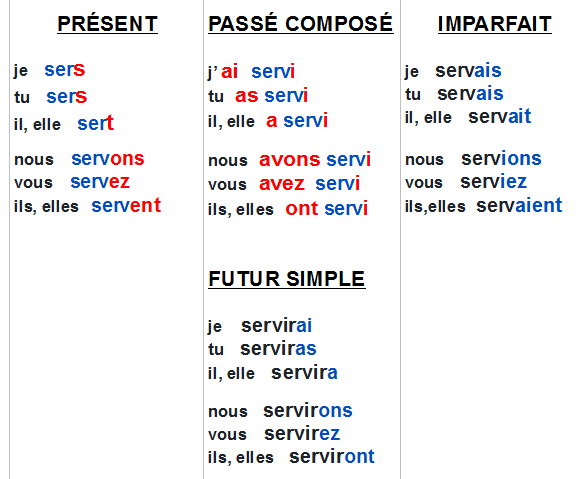
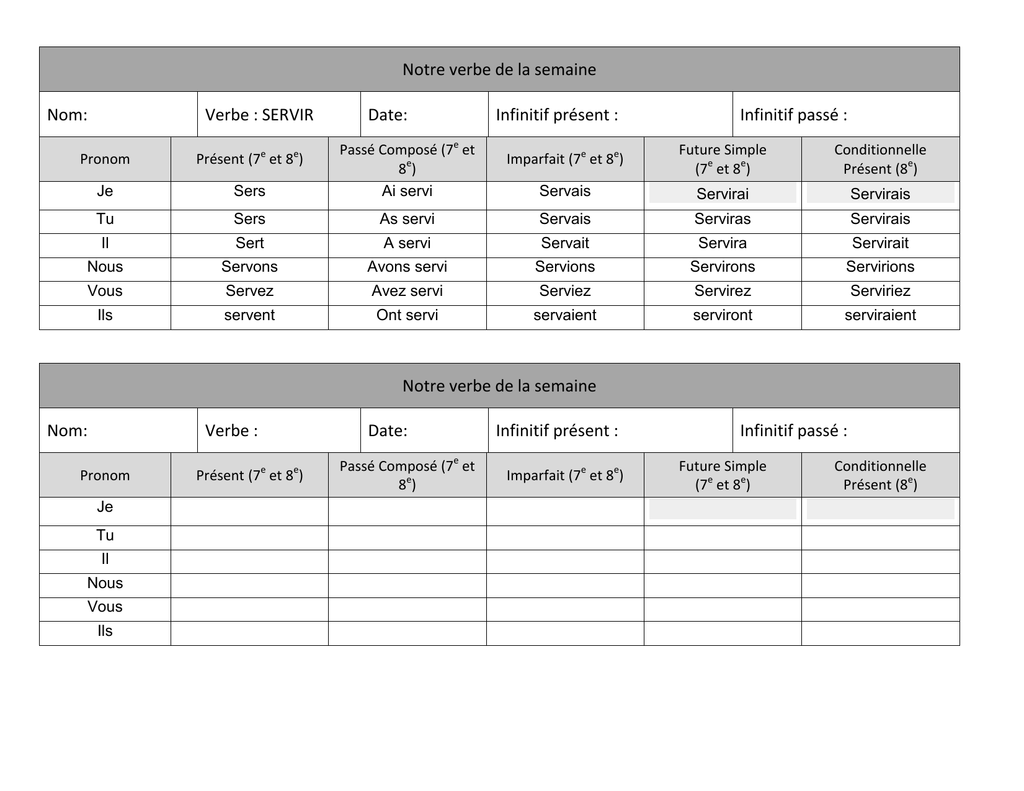
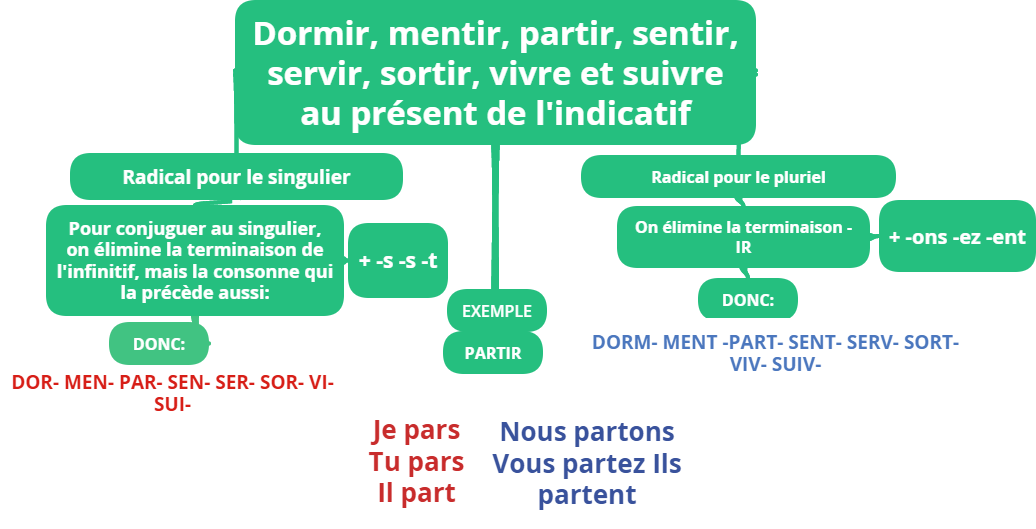
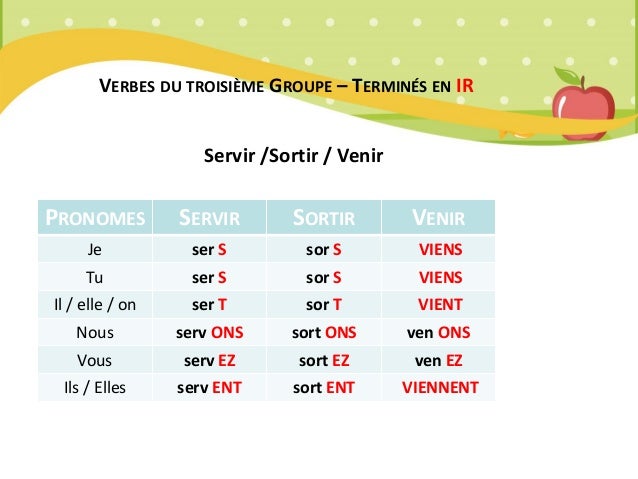
Here's the conjugation of servir in the present tense:
- Je sers (I serve)
- Tu sers (You serve - informal)
- Il/Elle/On sert (He/She/One serves)
- Nous servons (We serve)
- Vous servez (You serve - formal or plural)
- Ils/Elles servent (They serve)
Notice that little "s" at the end of je sers, tu sers, and il/elle/on sert? That's important! Don't forget it. It's like the little cherry on top of your French verb sundae.
Pronunciation Pointers
Speaking of pronunciation, let's tackle that. The s in sers and sert is generally pronounced, but it's very subtle. Listen carefully to native speakers, and you'll get the hang of it. Nous servons and vous servez are pretty straightforward. Ils servent and elles servent sound just like il sert and elle sert. Tricky, right? But that's French for you!
Using Servir in Everyday Conversation
Now for the fun part! Let's see servir in action. Imagine you're at a restaurant. You might hear:
"Je vous sers quelque chose à boire?" (Can I serve you something to drink?)
Or maybe:
"Nous servons le déjeuner jusqu'à midi." (We serve lunch until noon.)
See? So simple! And you can use it too. For example, if you're offering someone a piece of cake, you could say:
"Je te sers une part de gâteau?" (Can I serve you a piece of cake?)
Or if you're helping out a friend:
"Comment puis-je te servir?" (How can I help you? - more formal) or "Comment je peux te servir?" (How can I help you? - informal)
It's all about context, right? Servir isn't just about physical service; it's about being of use, being helpful. It's a beautiful thing, really.

Let's look at a few more examples:
- Il sert de guide touristique. (He works as a tourist guide.)
- Elle sert à l'église tous les dimanches. (She serves at the church every Sunday.)
- Ces outils servent à réparer la voiture. (These tools are used to repair the car.)
Notice how the meaning can shift depending on the sentence structure. It's like servir is a chameleon, adapting to its surroundings.
Reflexive Use: Se Servir De
Now, let's throw in a little curveball: the reflexive form se servir de. This means "to use" or "to make use of." It's another common and super handy expression.
For example:
"Je me sers de mon ordinateur tous les jours." (I use my computer every day.)
Or:

"Tu te sers de ton téléphone pour prendre des photos?" (Do you use your phone to take pictures?)
Don't forget to conjugate the reflexive pronoun too! It's me, te, se, nous, vous, se. Like a little dance of pronouns around the verb.
Common Mistakes (and How to Avoid Them)
Okay, confession time! Everyone makes mistakes when learning a new language. It's part of the process. But let's try to avoid some common servir pitfalls.
Mistake #1: Forgetting the "s" in the singular forms. Remember je sers, tu sers, il/elle/on sert. Drill it, write it down, say it out loud. Whatever works for you!
Mistake #2: Mixing up servir with other similar verbs. French is full of verbs that sound alike but mean different things. Pay attention to the context and make sure you're using the right one.
Mistake #3: Not using the reflexive form correctly. Remember that se servir de requires the reflexive pronoun. Don't forget me, te, se, nous, vous, se! It's a party, and everyone's invited.
Mistake #4: Overthinking it! Sometimes, the best thing to do is just try. Don't be afraid to make mistakes. That's how you learn. The French are, generally speaking, very kind about people trying to speak their language, even if it's not perfect.
Practice Makes Perfect (Almost!)
So, how do you become a servir master? Practice, practice, practice! Find opportunities to use the verb in conversation, in writing, in your thoughts. Watch French movies and TV shows, listen to French music, read French books. Immerse yourself in the language and let servir become a part of your vocabulary.
Try writing some sentences using servir in different contexts. Imagine you're at a café, a restaurant, a friend's house. What would you say? How would you use servir?
For instance:
- Je sers le café à mes invités. (I serve coffee to my guests.)
- Le serveur nous sert avec un sourire. (The waiter serves us with a smile.)
- Nous nous servons de ce livre pour apprendre le français. (We use this book to learn French.)
The more you use it, the more natural it will become.
Remember, learning a language is a journey, not a destination. Enjoy the process, embrace the challenges, and celebrate your successes. And most importantly, don't be afraid to make mistakes. They're just stepping stones to fluency. So go out there and sers your French to the world! I know you can do it.
And as our café au lait gets cold and our virtual time comes to an end, remember: mastering even one little verb like servir opens up a whole new world of communication and connection. Keep practicing, keep exploring, and keep enjoying the beautiful journey of learning French! À bientôt!