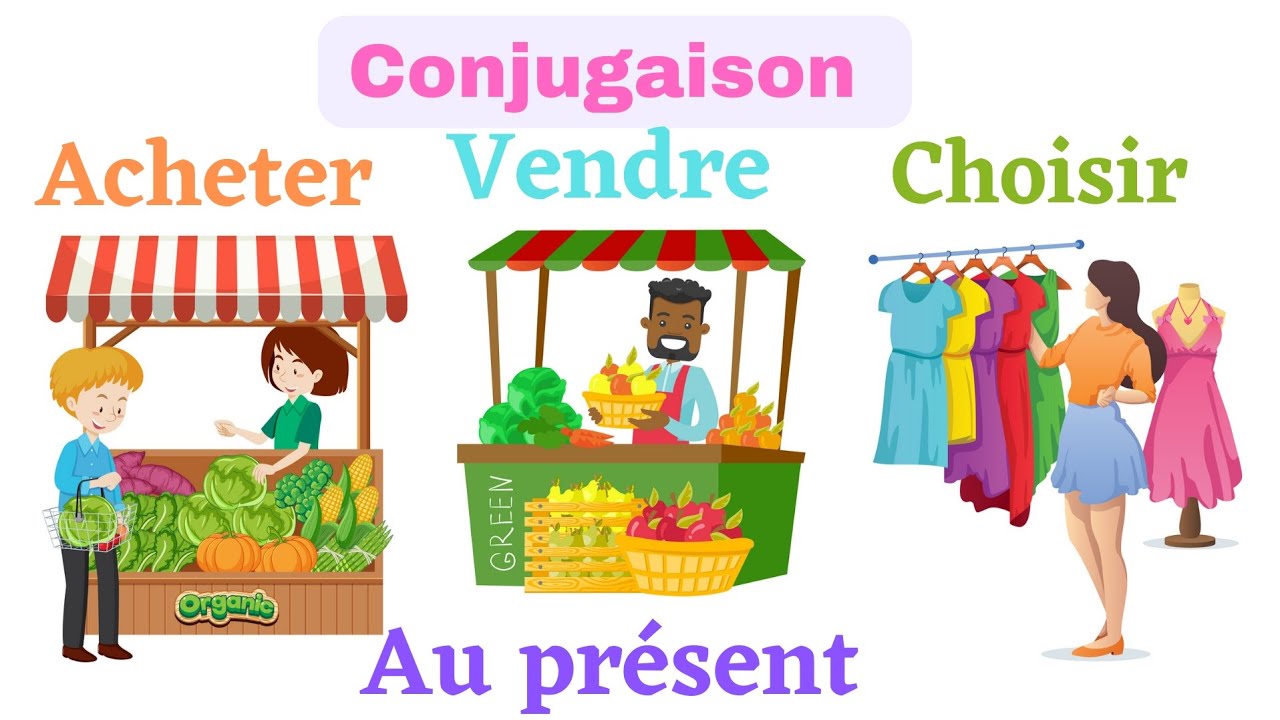
Salut, mes chéris! Ever found yourself stumbling over past actions in French? Don't worry, you're not alone. Today, we're tackling a verb that’s essential for everyday conversation and commerce: vendre, to sell. We're going full passé composé on this baby, making sure you understand how to use it with confidence and flair. Get ready to say "J'ai vendu!" with panache!
The Passé Composé Basics: A Quick Refresher
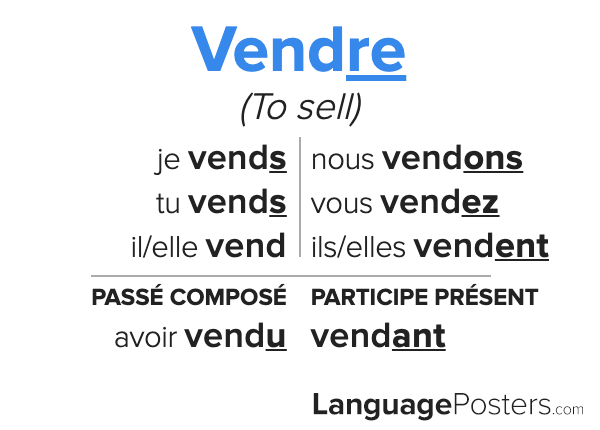
Before we dive into vendre, let’s do a quick recap of the passé composé. It's a past tense used for completed actions. Think of it as the French equivalent of "I have sold" or "I sold." It's formed with two key ingredients:
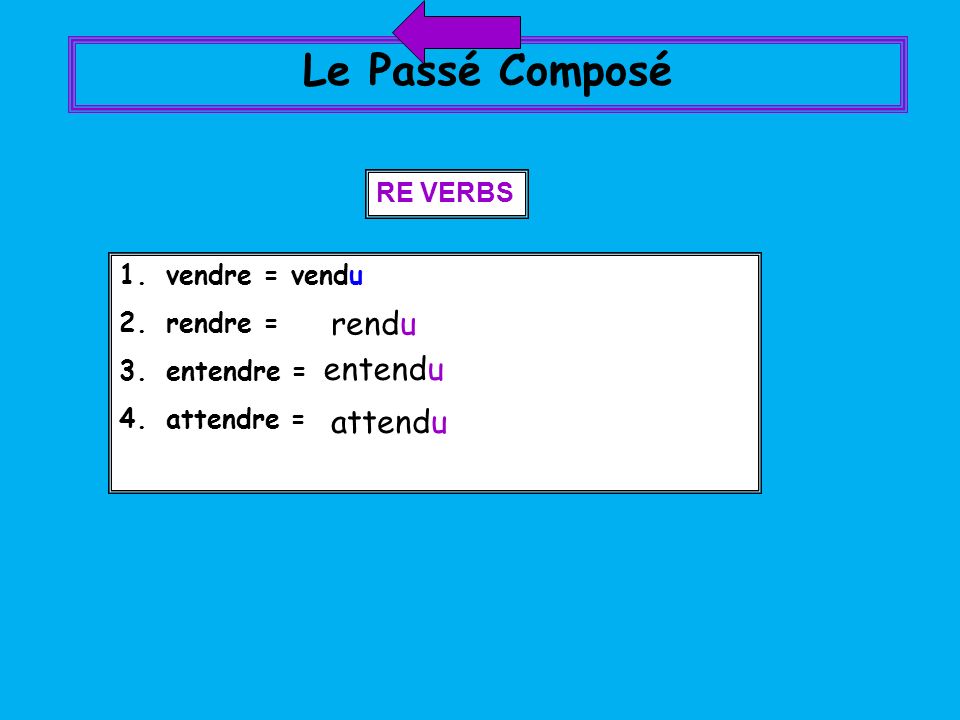
- An auxiliary verb (either avoir – to have – or être – to be). For vendre, we use avoir.
- The past participle of the verb. The past participle of vendre is vendu.
So, the basic formula is: Subject + avoir (conjugated) + vendu.
Conjugating Vendre in the Passé Composé: Let’s Get Specific!
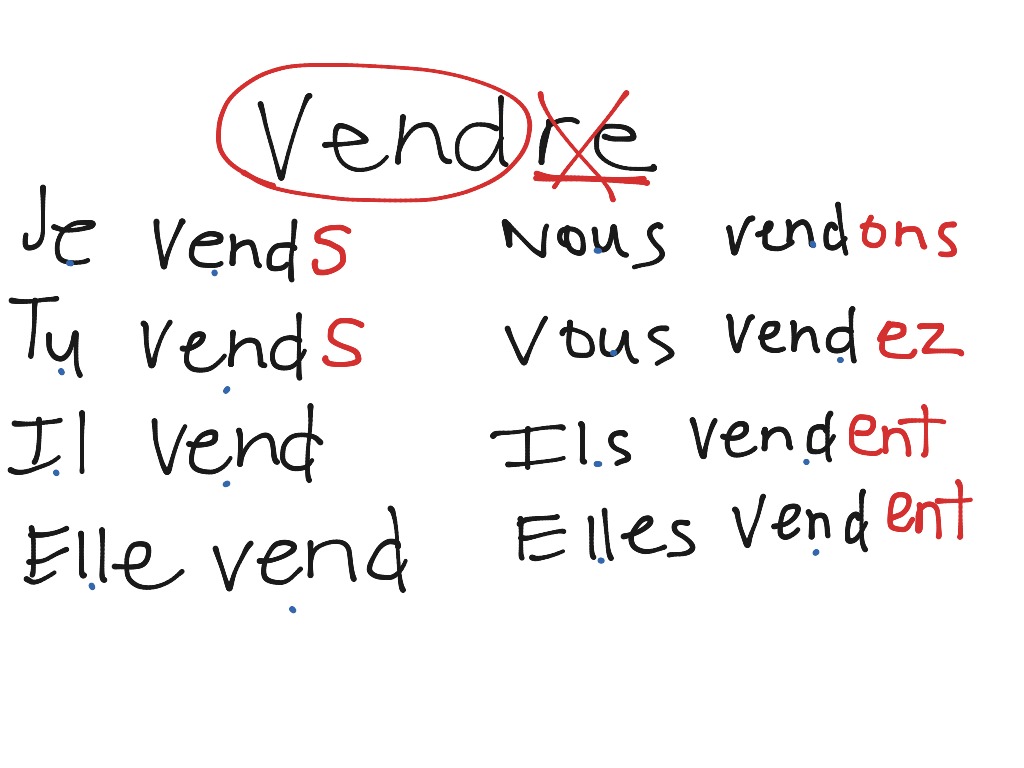
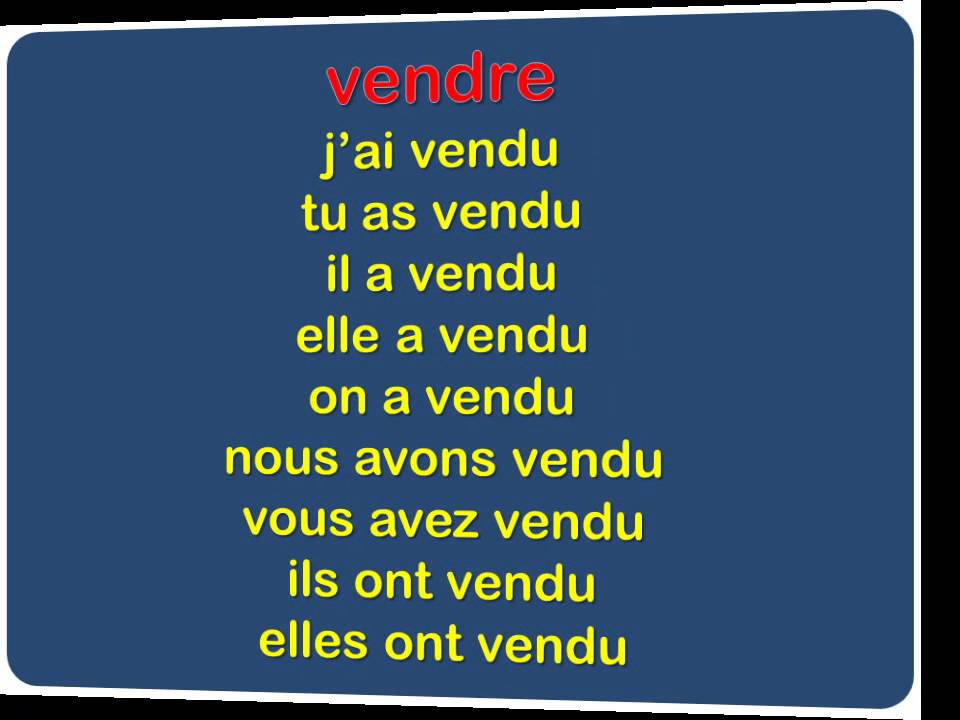
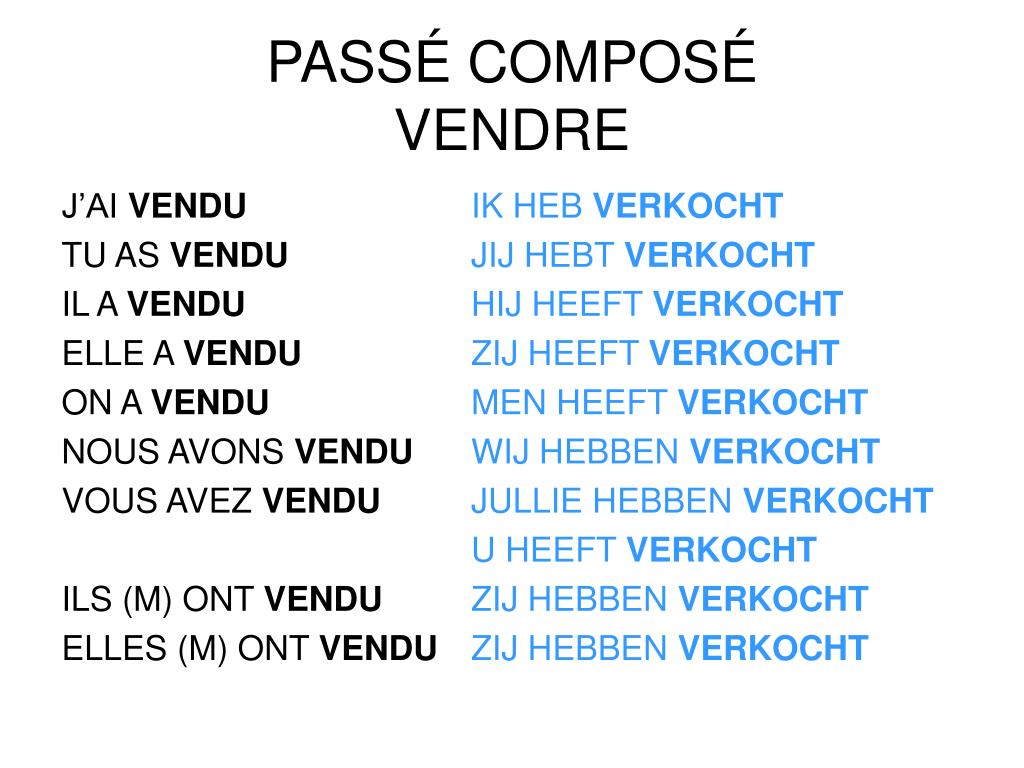
Now, let's get down to the nitty-gritty. Here’s vendre in the passé composé:
- J’ai vendu – I sold / I have sold
- Tu as vendu – You sold / You have sold (informal)
- Il/Elle/On a vendu – He/She/One sold / He/She/One has sold
- Nous avons vendu – We sold / We have sold
- Vous avez vendu – You sold / You have sold (formal/plural)
- Ils/Elles ont vendu – They sold / They have sold
See? Not so scary, right? The key is remembering the correct conjugation of avoir and sticking with the past participle vendu.
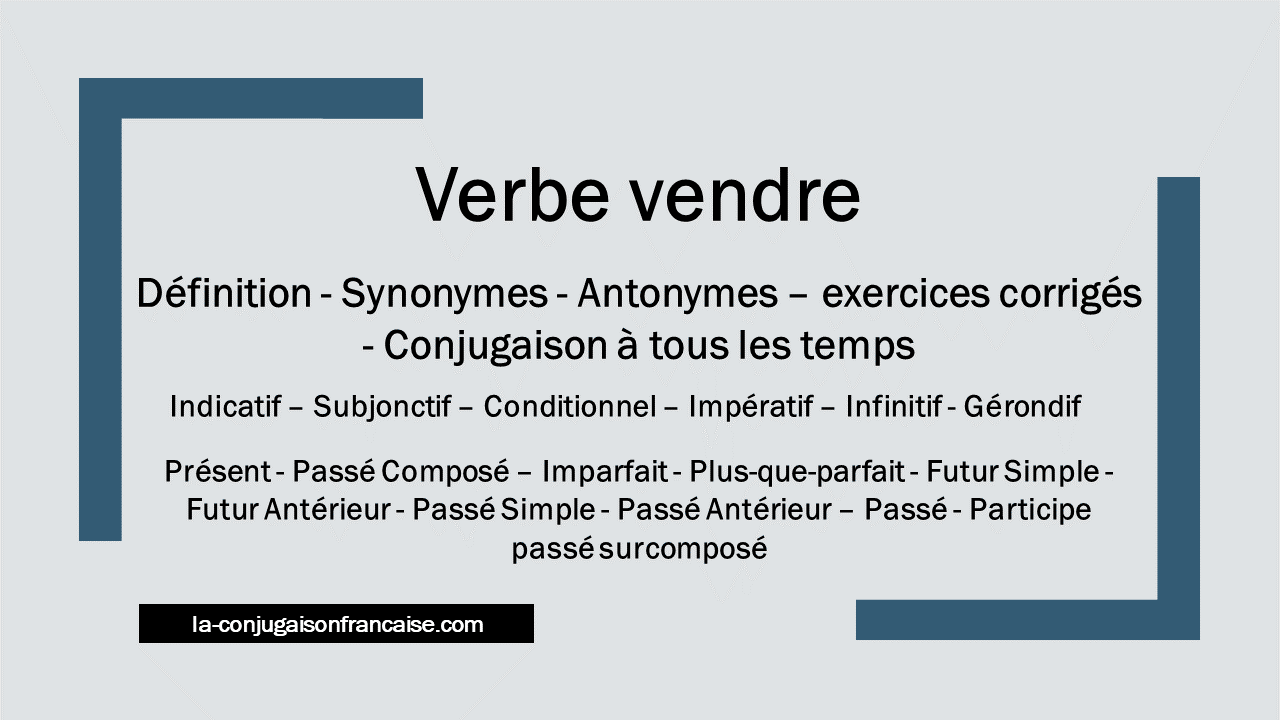
Examples in Real Life: Vendre in Action
Okay, enough grammar. Let's see how we can use this in everyday conversations. Imagine these scenarios:
- J'ai vendu ma vieille voiture. – I sold my old car. (Finally got rid of that lemon!)
- Tu as vendu tes actions hier? – Did you sell your stocks yesterday? (Someone's getting financially savvy!)
- Elle a vendu ses créations sur Etsy. – She sold her creations on Etsy. (Go, girl boss!)
- Nous avons vendu tous nos billets pour le concert. – We sold all our tickets for the concert. (Score!)
- Vous avez vendu votre maison à Paris? – Did you sell your house in Paris? (Big changes are happening!)
- Ils ont vendu leurs jouets pour une bonne cause. – They sold their toys for a good cause. (So sweet!)
Notice how each sentence uses the correct conjugation of avoir followed by the past participle vendu? That's the magic formula!
Common Mistakes to Avoid: A Little Avertissement
Even seasoned French speakers sometimes trip up. Here are a few common mistakes to watch out for:
- Forgetting to conjugate avoir correctly. Make sure you use the correct form for each pronoun.
- Using être instead of avoir. Remember, vendre always takes avoir.
- Misspelling vendu. It's a simple one, but easy to overlook!
Practice makes perfect! The more you use vendre in the passé composé, the more natural it will become.
Cultural Moment: Les Soldes and the Art of Selling in France
Let's talk about les soldes (sales) in France. These are highly anticipated events that happen twice a year, in January and June/July. During les soldes, stores offer massive discounts, and people go crazy trying to snag a bargain. It’s a true cultural phenomenon! Imagine the conversations: "J'ai vendu tous mes manteaux d'hiver pendant les soldes!" (I sold all my winter coats during the sales!).
And let's not forget the French art of selling. It's not just about pushing products; it's about creating an experience. Think of the charming boutique owner who knows just the right accessory to complement your outfit, or the persuasive wine merchant who can convince you that you absolutely need that expensive bottle of Bordeaux. The French understand that selling is an art form – a dance between the seller and the buyer.
Fun Fact: The Word Vendre and its Roots
Did you know that the word vendre comes from the Latin word vendere? Words travel through time and across cultures, enriching our languages and connecting us to the past. Knowing the etymology of words can actually help you remember them!

Practical Tips for Mastering the Passé Composé with Vendre
Ready to take your French to the next level? Here are some practical tips:
- Practice writing sentences using vendre in the passé composé. Start with simple sentences and gradually increase the complexity.
- Listen to French conversations and identify instances where vendre is used. Pay attention to the context and how it's being used.
- Watch French films and TV shows. Immerse yourself in the language and observe how native speakers use vendre in different situations.
- Use language learning apps and websites. Many offer exercises specifically designed to practice the passé composé.
- Find a language exchange partner. Practice speaking with a native French speaker and get feedback on your pronunciation and grammar.
- Don't be afraid to make mistakes! Mistakes are a natural part of the learning process. The important thing is to learn from them and keep practicing.
A Little Reflection: Vendre and Our Daily Lives
Think about it: we're all selling something, in a way. Maybe you’re selling your skills in a job interview ("J'ai vendu mes compétences en gestion de projet."), or selling an idea to your colleagues ("J'ai vendu mon concept innovant à l'équipe."). Even when you’re trying to convince your friend to watch a certain movie ("Je lui ai vendu ce film comme le meilleur de l'année!"), you're essentially selling. Understanding the verb vendre, and mastering its passé composé, isn’t just about grammar; it's about understanding the art of persuasion and exchange in all aspects of life. So, go out there and vendez with confidence!
À bientôt!






.jpg)