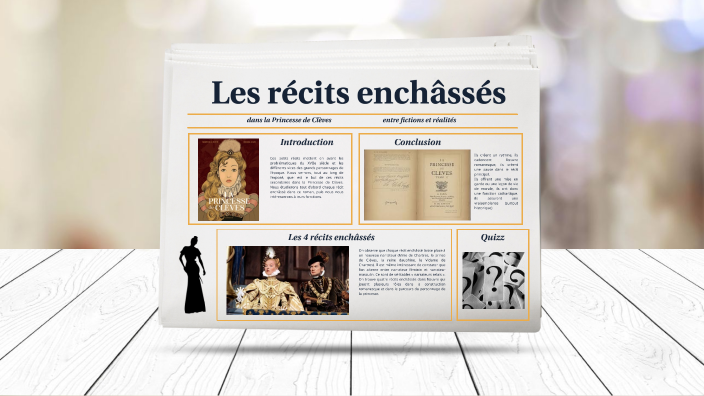
Okay, so you've heard of La Princesse de Clèves, right? That super-famous French novel everyone pretends to have read in high school? Well, get this: it's not just about a princess and her, shall we say, complicated love life. It's like a literary Russian doll! Filled with stories within stories.
Les Récits Enchâssés: Stories Nestled Inside Stories!
Yep, that's what we're talking about. Récits enchâssés - embedded narratives! Fancy, huh? Think of it as Madame de La Fayette (the author) being a master storyteller, but also a total gossip. She's like that friend who tells you a story, but then throws in a million side stories about everyone involved.
Why did she do it? Well, that's the fun part! It wasn't just to fill pages. It was all about revealing character, showing the complexity of court life, and subtly commenting on the drama. Basically, it's a super juicy historical soap opera disguised as high literature.
So, What are these Embedded Stories?
They're mini-dramas! Think scandals, forbidden loves, political intrigues – all the good stuff. Each little story provides a mirror, reflecting the themes of the main plot, especially the main theme of courtly love!
Let's break down a couple of examples, shall we?
First, we have the story of Anne de Boulen (aka Anne Boleyn). Remember her? The one who lost her head (literally!) for Henry VIII? Madame de La Fayette weaves her tragic tale into the narrative. Why? Well, Anne's story is a cautionary one. It shows the dangers of ambition, the fickleness of royal favor, and the devastating consequences of love and power mixed together. Sound familiar? Think of the Princesse and her own, fraught, situation.

Then there’s the story of Diane de Poitiers and Henri II. Ah, another scandalous love affair! Diane, a much older woman, was Henri's mistress and wielded considerable influence at court. This story highlights the power dynamics between men and women, the impact of reputation, and the ways in which love can be used as a tool for political gain. This tale underlines the corrupt nature of court and the need to protect one's honour.
The story of Madame de Tournon serves as a warning. This story depicts a relationship based on false pretense and deception, exposing the fragility of relationships and the importance of honest and true communication. And you thought your love life was complicated!
And let's not forget the various anecdotes and rumors floating around the court. It’s like Page Six, but in 16th-century France! Each whispered secret, each scandalous affair, adds another layer to the already complex picture of court life. They all amplify the themes of jealousy, betrayal, and the constant pressure to maintain appearances.

Why Should We Care? It's Just Gossip, Right?
Nope! It's way more than just idle chatter. These récits enchâssés are clever devices. They help us understand the Princesse's motivations and the constraints she faces. They highlight the moral dilemmas of the time, the suffocating atmosphere of the court, and the impossibility of finding true happiness in a world obsessed with appearances.
Think about it. The court is a minefield of secrets and dangers. People are constantly scheming, plotting, and trying to get ahead. The Princesse, in her innocence and honesty, is completely out of place. The embedded stories illustrate the very world that she is trying to escape.
By understanding these mini-stories, we gain a deeper understanding of the Princesse’s inner turmoil. We see why she makes the choices she does, and why she ultimately chooses to withdraw from the court altogether. It's like the embedded stories are the secret language of the novel, helping us decode the Princesse's behavior.
The Fun Part: Spotting the Connections!
This is where it gets really fun! Once you start looking for them, you'll see these embedded narratives everywhere. Madame de La Fayette is constantly dropping hints, making allusions, and drawing parallels between the main plot and these side stories. It's like a literary treasure hunt!

For example, think about the story of Anne de Boulen again. Just as Anne's ambition led to her downfall, the Princesse is also warned against succumbing to ambition and the allure of power. Both women face impossible choices and ultimately pay a heavy price for their desires.
Similarly, the story of Diane de Poitiers highlights the dangers of using love as a weapon. The Princesse, too, is aware that her own feelings can be manipulated and used against her. This awareness contributes to her decision to confess her feelings to her husband, a decision that shocks the court but ultimately reflects her commitment to honesty and integrity.
It's all connected! Madame de La Fayette is a literary genius! She isn't just telling us a story; she's creating a whole world with its own rules, its own history, and its own set of moral challenges.

So, Next Time You're Reading La Princesse de Clèves…
Don't just skip over those "boring" side stories! Pay attention to them! They're the key to understanding the novel's deeper themes and the Princesse's complex character. Think of them as mini-dramas adding flavor and richness to the main course!
Look for the connections! How do these stories relate to the main plot? What do they reveal about the characters and their motivations? How do they contribute to the overall message of the novel?
Have fun with it! La Princesse de Clèves isn't just a stuffy old classic. It's a juicy historical drama filled with scandalous secrets, forbidden loves, and power struggles. The embedded narratives are just another layer of intrigue, making this novel a truly captivating read. The book is actually super fun!
Ultimately, "Les Récits Enchâssés" in La Princesse de Clèves is a literary technique that elevates the novel from a simple love story to a profound exploration of human nature, societal constraints, and the complexities of love, honor, and duty. It's a testament to Madame de La Fayette's skill as a writer and her ability to create a world that is both historically accurate and emotionally resonant. Happy reading! Go get your gossip on!