Okay, imagine this: you're sipping a café crème, maybe in a tiny Parisian bistro, dreaming up the next big thing. You've got a killer app idea, a revolutionary vegan croissant recipe, whatever! You’re ready to launch. But… uh oh. Someone whispers, "T'as pensé au Livre VI du Code de Commerce?" Suddenly, your entrepreneurial spirit wilts faster than day-old lettuce. Don’t panic! Most people haven't thought about it...until they need to. Which is why we're here.
Basically, this "Livre VI" business is all about what happens when things go south. Really south. Think bankruptcy, restructuring, those not-so-fun financial realities that entrepreneurs (and big corporations, for that matter) often try to avoid. It's the legal safety net (or, let’s be honest, the legal minefield) surrounding companies in financial distress. Trust me, understanding this stuff before you're knee-deep in debt is a very, very good idea. Like, order-another-café-crème-and-pay-attention good idea.
So, what is Livre VI, exactly?
Alright, let’s break it down. Livre VI of the French Commercial Code (Code de Commerce) is dedicated to "Les difficultés des entreprises" – roughly translated, "companies facing difficulties." See? Even the name sounds ominous. It lays out the legal framework for dealing with financially troubled businesses, aiming to find solutions to prevent total collapse and, if possible, preserve jobs and assets. It’s like the ambulance crew of the business world, arriving (hopefully) before it's too late.
Think of it this way: it's not just about punishing failing businesses. It's about trying to rescue them, reorganise them, and give them a second chance. Sometimes it works, sometimes it doesn’t, but that’s the goal. The French legal system, in this context, aims to sanctionner et redresser, to punish and rehabilitate.
The Different Procedures: A Quick Tour
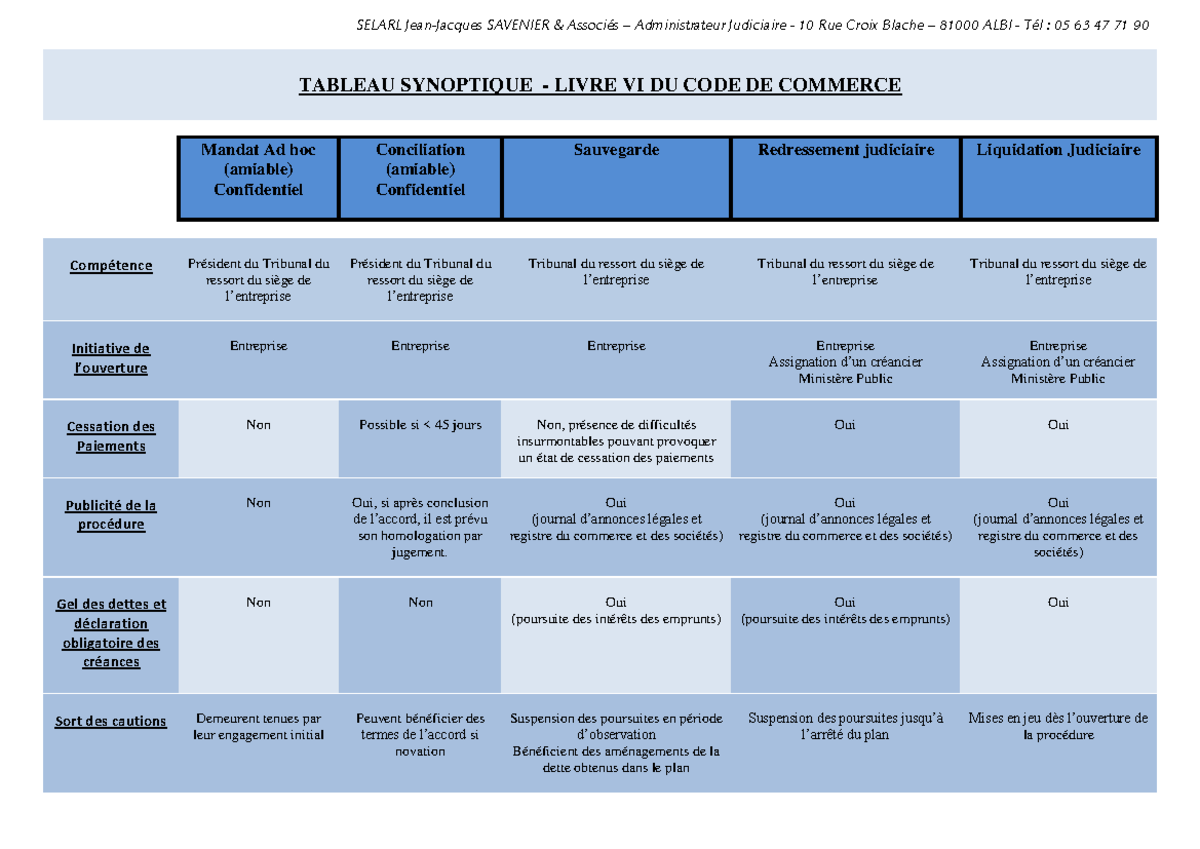
Livre VI isn’t a one-size-fits-all solution. It offers a range of procedures, each designed for different situations and levels of financial distress. Let's go through some of the most common ones, shall we? Think of this as your survival guide to the world of failing businesses.
1. La Sauvegarde: Prevention is Key!
This is the "early warning system." La Sauvegarde (safeguarding) is designed for companies that are experiencing financial difficulties but are not yet in a state of cessation of payments (état de cessation des paiements – basically, unable to pay their debts). It's like going to the doctor for a check-up before you end up in the ER. Smart, right?

The goal is to allow the company to negotiate with its creditors and develop a plan to restructure its debts and operations. It's all about preventing the situation from getting worse. Basically, you admit you have a problem (which, let's be honest, is half the battle) and try to find a way to fix it before it explodes. The court appoints a mandataire judiciaire, who acts as a mediator between the company and its creditors. They help to draw up a plan de sauvegarde (safeguarding plan) that everyone can agree on.
Side note: It's worth mentioning that the sauvegarde accélérée (accelerated safeguarding) and sauvegarde financière accélérée (accelerated financial safeguarding) are faster versions of this procedure, designed for companies with more urgent needs. It’s like having a VIP pass at the ER.
2. Le Redressement Judiciaire: A More Serious Intervention
Now we’re getting into more serious territory. Le Redressement Judiciaire (judicial reorganisation) is for companies that are in a state of cessation of payments but still have a chance of being saved. The court appoints a administrateur judiciaire (judicial administrator) to oversee the company's operations and develop a plan for its recovery.
This plan can involve anything from renegotiating debts to selling assets to laying off employees (ouch!). The aim is to find a way to make the company profitable again and allow it to continue operating. It's a bit like intensive care for a struggling business. The company is on life support, and the administrator is trying to figure out how to get it back on its feet.
But here's the catch: the creditors also have a say. They get to vote on the plan, and if they don't approve it, the company could end up in liquidation (which we'll get to in a moment).
3. La Liquidation Judiciaire: The Last Resort
This is the procedure no business owner wants to hear about. La Liquidation Judiciaire (judicial liquidation) is for companies that are beyond saving. They're in a state of cessation of payments, and there's no realistic chance of recovery. The court appoints a liquidateur judiciaire (judicial liquidator) to sell off the company's assets and use the proceeds to pay its creditors. It's basically the business equivalent of a garage sale, except on a much larger (and sadder) scale.

Once the assets are sold and the creditors are paid (as much as possible), the company is dissolved and ceases to exist. It's the end of the road. A sobering thought, I know. But it’s important to understand the full spectrum of possibilities when dealing with failing businesses.
Why Should You Care? (Even If You're Not Planning to Fail)
Okay, so maybe you're thinking, "This all sounds terrible. I'm starting a business to succeed, not to fail! Why should I bother learning about Livre VI?" Fair point. But here’s why:
- Knowledge is Power: Understanding the potential pitfalls can help you avoid them. Knowing the warning signs of financial distress can allow you to take corrective action before it's too late.
- Protecting Your Interests: You might be a creditor of a company that's in trouble. Knowing your rights under Livre VI can help you recover as much of your money as possible.
- Informed Decision-Making: Even if you're not directly involved in a struggling business, understanding the legal framework can help you make more informed decisions about investments, partnerships, and other business relationships.
- It’s Part of the Business Landscape: Even if you think you have the most bulletproof plan and the strongest product-market fit, stuff happens. Having some awareness of the legal landscape can help you navigate any unforeseen circumstances.
In short, ignorance isn't bliss when it comes to business. Being aware of Livre VI is like having a fire extinguisher in your kitchen. You hope you'll never need it, but you'll be very glad it's there if a fire breaks out. It is part of French commercial law, and you really don't want to learn about this in retrospect.

Key Takeaways: A TL;DR Version
Okay, you've made it this far! Here's a quick recap of the key things to remember about Livre VI:
- It's all about dealing with companies in financial distress.
- It aims to prevent total collapse and, if possible, preserve jobs and assets.
- There are different procedures, each designed for different situations: Sauvegarde, Redressement Judiciaire, and Liquidation Judiciaire.
- Understanding Livre VI can help you protect your interests, make informed decisions, and avoid potential pitfalls.
So, next time someone whispers "Livre VI du Code de Commerce," you won't break out in a cold sweat. You'll simply smile knowingly and say, "Ah yes, les difficultés des entreprises. I'm familiar with that." And then you'll confidently order another café crème. You've earned it!
Disclaimer: This article is for informational purposes only and does not constitute legal advice. If you're facing a specific legal issue, it’s always best to consult with a qualified legal professional.





![Les 10 Meilleurs Livres E-commerce à Lire pour Réussir [2025]](https://www.wizishop.fr/media/627cbcf2ebdf863f5e076824/v1/livres-ecommerce-wizishop.jpg)

![[Extrait] Code du commerce - Statut de commerçant - Tendance Droit](https://www.tendancedroit.fr/wp-content/uploads/2018/08/code-commerce.png)
![CAP Équipier Polyvalent du Commerce [1re et 2e années] | Éditions Nathan](https://cap-epc.nathan.fr/media/cache/book_share/images/books/6050d8761e17f.jpeg)
+(Articles+239+à+333).jpg)