Salut toi! Ever feel like you're drowning in options, overwhelmed by possibilities? Like you're staring into a closet bursting with clothes and still can't find anything to wear? Well, grab a café au lait (virtual one, of course!) because we're about to tackle a concept that'll bring order and joy to your life: Mutually Exclusive and Collectively Exhaustive, or MECE. Don't let the fancy name scare you; it's easier than pronouncing "croissant" perfectly the first time.
Now, you might be thinking, "Ugh, math jargon. Why subject me to this?" But trust me, this isn’t about complex equations or dusty textbooks. It’s about a way of thinking, a way of organizing, and a way of making your life smoother, more efficient, and, dare I say, more fun! So, stay with me, okay? You won't regret it!
What Exactly IS Mutually Exclusive and Collectively Exhaustive (MECE)?
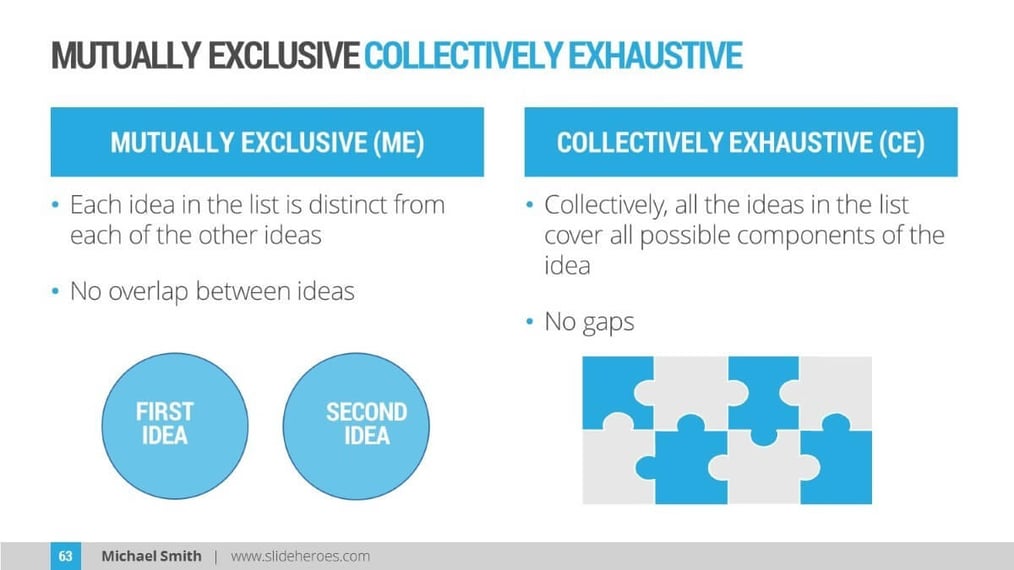
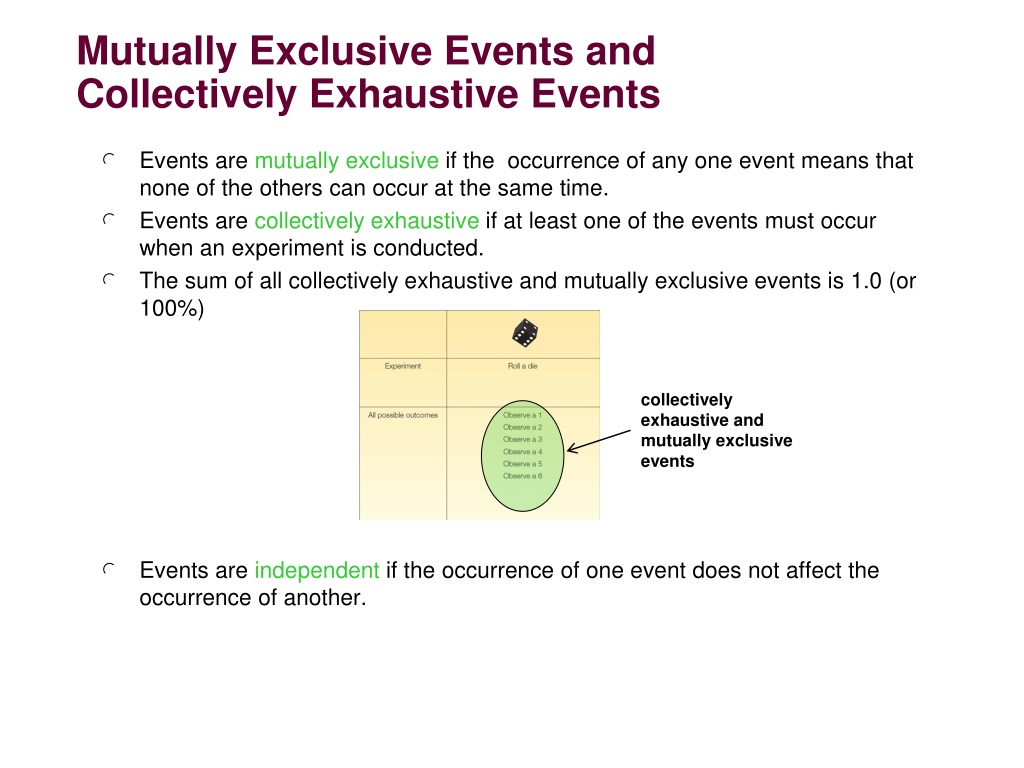
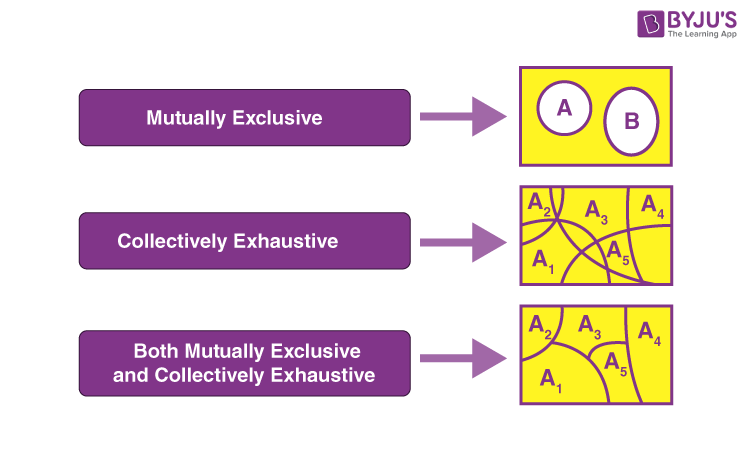
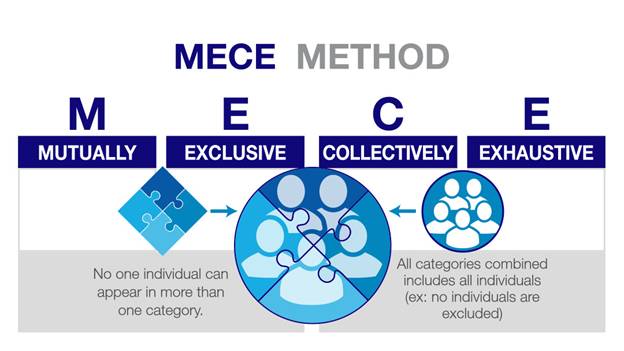
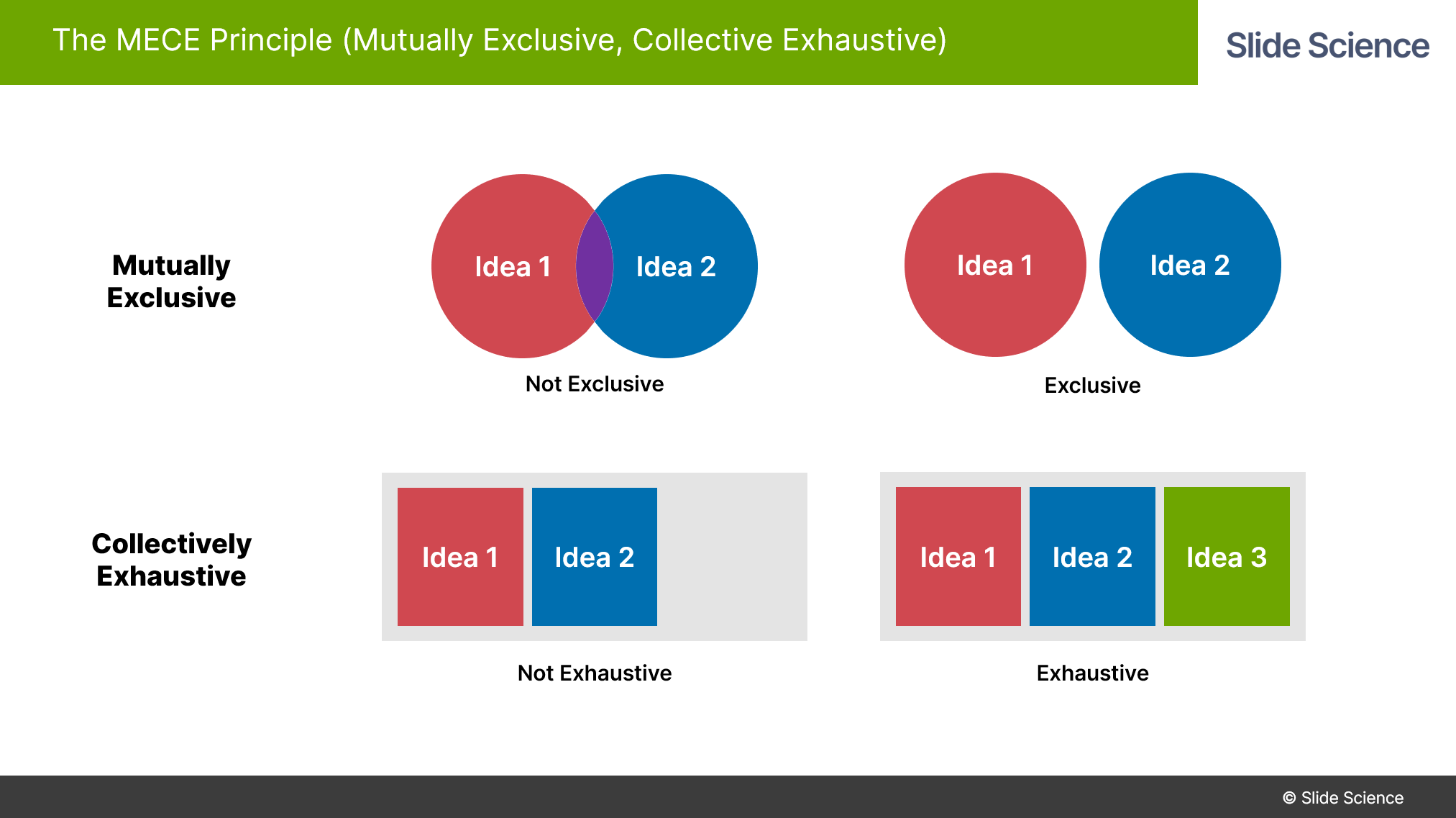
Let's break it down. Imagine you're planning a picnic. You need to decide what to bring. MECE simply means that you categorize your potential picnic items so that each item fits into one and only one category (mutually exclusive) and that all possible picnic items are covered by your categories (collectively exhaustive).
Think of it like this:
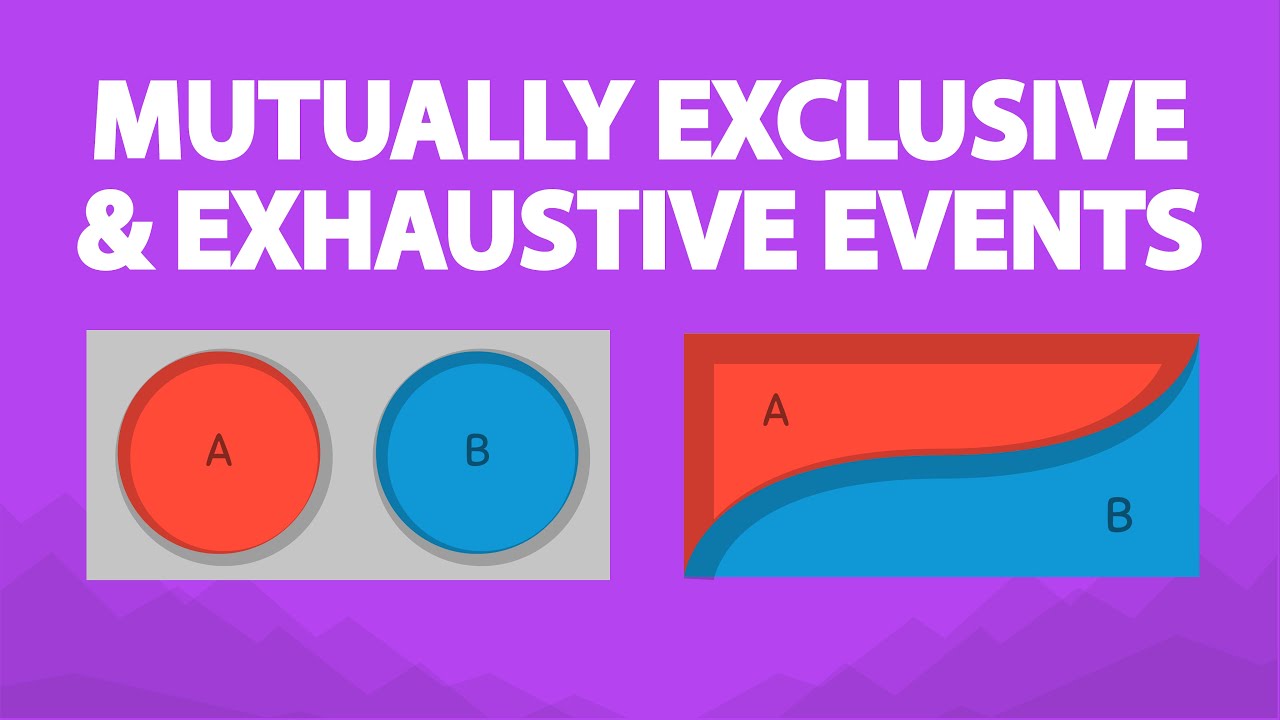
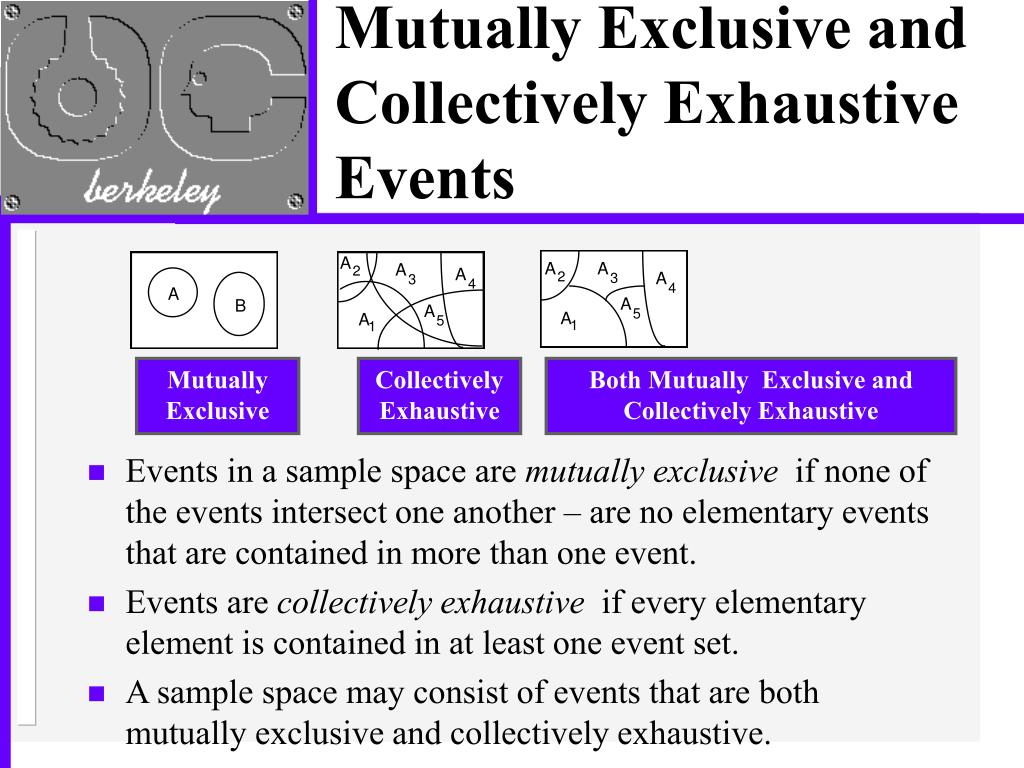
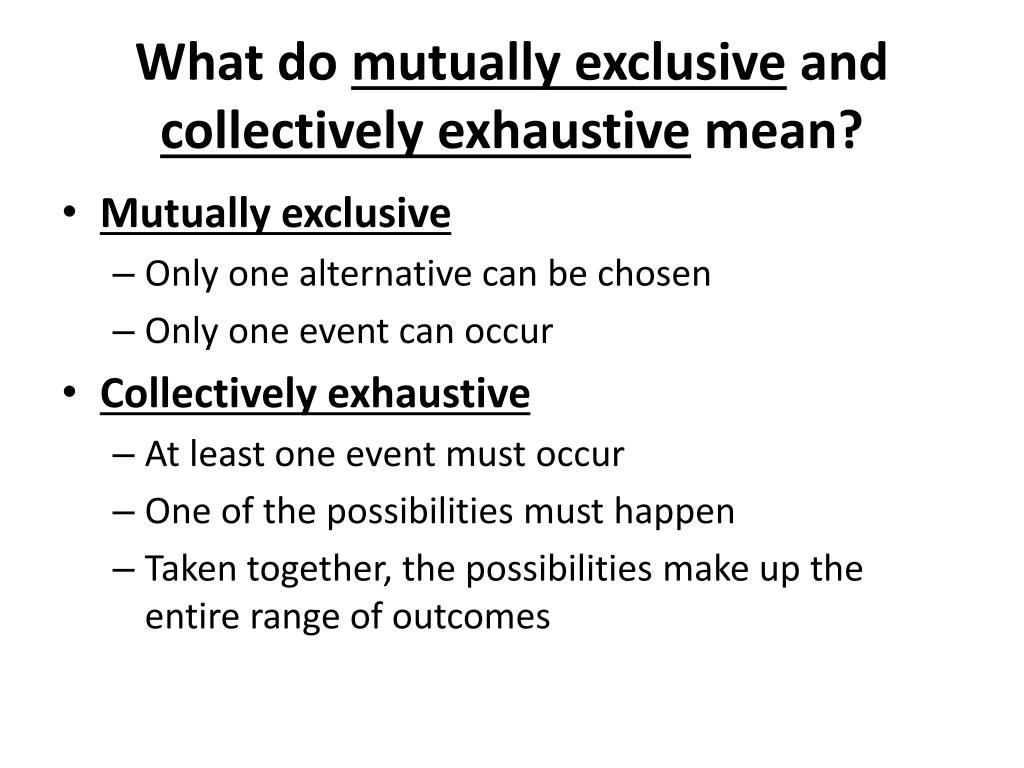
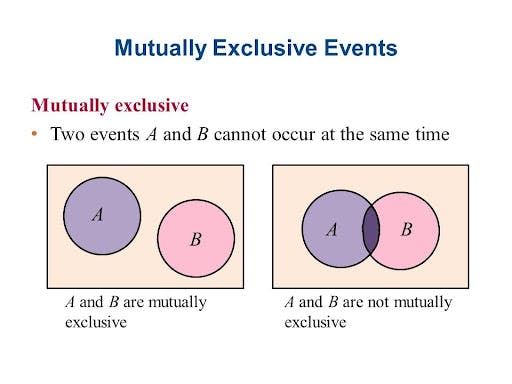
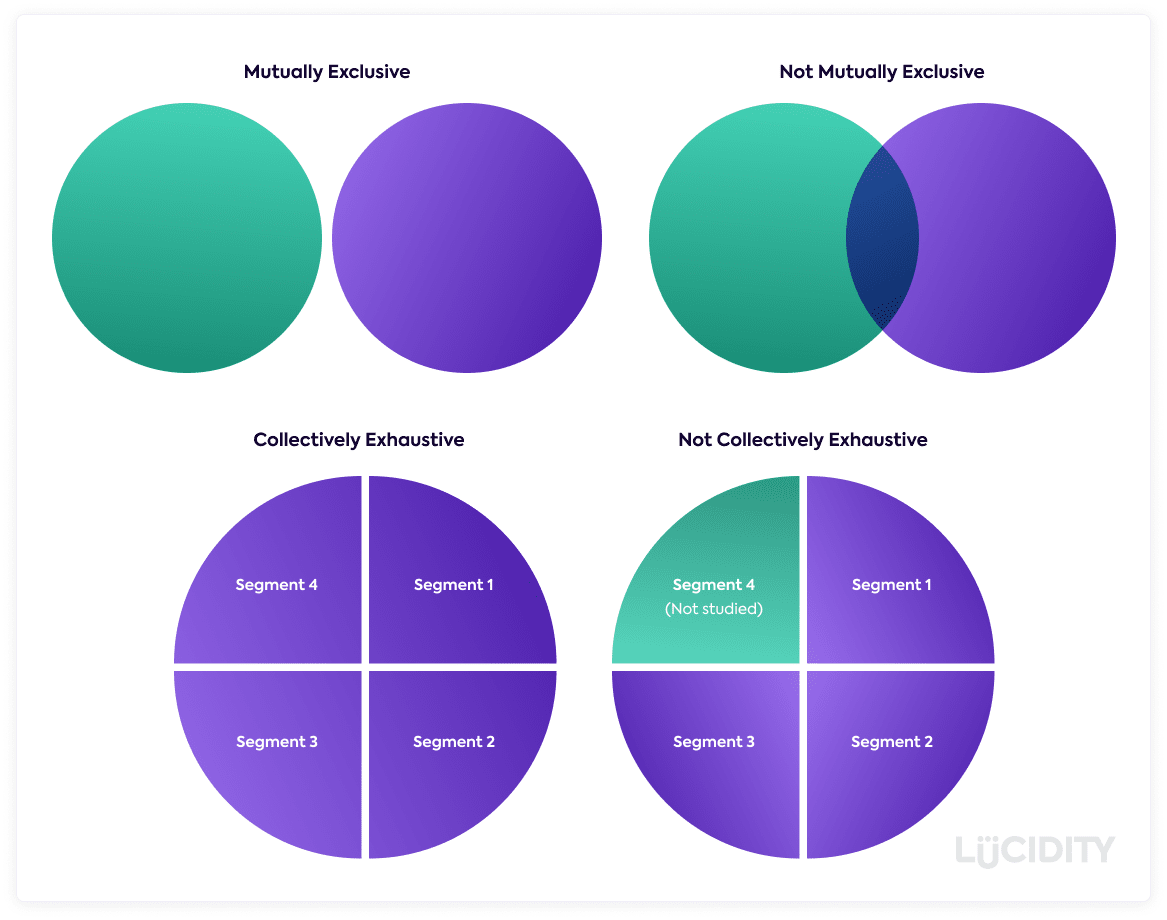
Mutually Exclusive: No Overlap!
Imagine dividing your closet (back to that overflowing closet!) into "shirts," "pants," and "shoes." A shirt can't also be a pair of pants, right? And a shoe can't magically transform into a shirt (although, fashion is pretty wild these days…). That's mutually exclusive. Each item belongs to only one category. There's no overlap, no confusion. Think of it as creating neat, tidy little boxes where everything has its place.

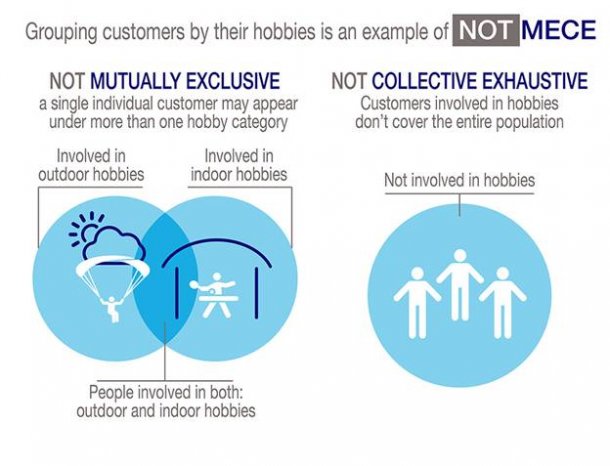
Bad example? "Things that are blue," "Things that are made of cotton," "Things you can wear." A blue cotton shirt fits into all those categories! Not MECE! We need categories that don't overlap. For example, "Tops," "Bottoms," "Outerwear," and "Shoes".
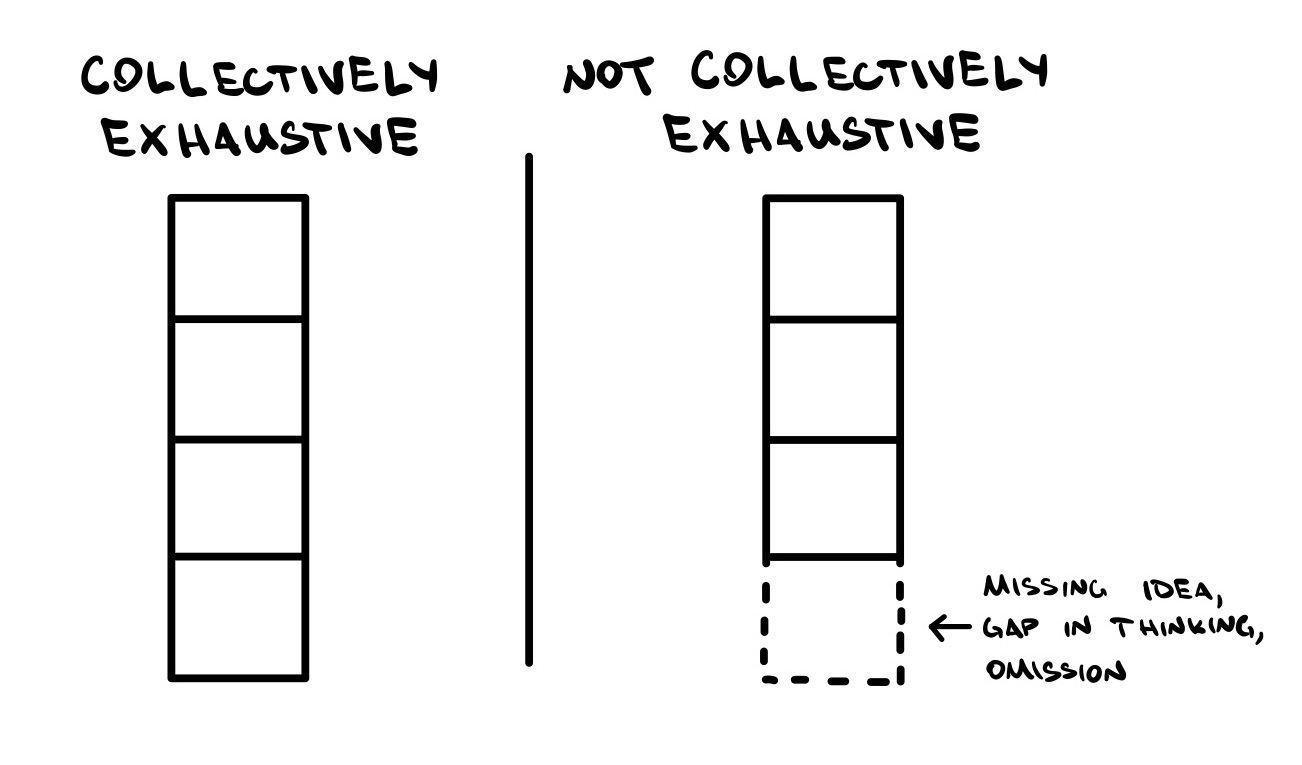
Collectively Exhaustive: Nothing Left Out!
Now, collectively exhaustive means that your categories cover everything. Back to the picnic. You’ve got categories like "Sandwiches," "Drinks," and "Desserts." But wait! What about plates and cutlery? And a blanket to sit on? Uh oh! You forgot some essential picnic items. Your categories aren’t collectively exhaustive. You need to add more categories (like "Utensils" and "Seating") until you've accounted for everything you might need for the perfect picnic. Leaving nothing to chance, n'est-ce pas?
So, a MECE approach to your picnic planning would involve creating categories that are distinct (mutually exclusive) and that cover every possible picnic item (collectively exhaustive). Something like: Food, Drinks, Utensils, Comfort (blanket, pillows), Entertainment (books, games), Cleaning Supplies (wipes, trash bags).
Why is MECE Your New Best Friend?
Okay, okay, you get the definition. But why should you care? Let me tell you, this seemingly simple concept can revolutionize your life in surprisingly powerful ways!
- Problem Solving Pro: Got a tough problem to solve? MECE helps you break it down into smaller, more manageable pieces. By ensuring that you've covered all the angles and that your categories don't overlap, you can avoid overlooking crucial details and arrive at a more comprehensive and effective solution.
- Decision-Making Dynamo: Overwhelmed by choices? MECE can help you organize your options and evaluate them more clearly. By creating mutually exclusive and collectively exhaustive categories for your potential decisions, you can ensure that you've considered all the possibilities and that you're making a well-informed choice.
- Communication Champ: Trying to explain a complex idea to someone else? MECE can help you structure your thoughts and present them in a clear and logical way. By using mutually exclusive and collectively exhaustive categories, you can ensure that your audience understands the key points and that you haven't left anything out.
- Stress-Busting Superhero: Simply put, MECE brings order to chaos. By organizing your thoughts and information in a clear and structured way, you can reduce stress and anxiety and feel more in control of your life. Seriously, who doesn't want that?
Imagine you're planning a party. Instead of a vague list of "things to do," you could use MECE to create the following categories: Invitations, Decorations, Food & Drinks, Entertainment, Setup, Cleanup. Suddenly, the overwhelming task of planning a party becomes a series of smaller, more manageable tasks. You've covered everything, and you know exactly what needs to be done. Stress? Au revoir!
MECE in Action: Real-Life Examples
MECE isn't just some abstract concept. It's used everywhere, from business strategy to everyday decision-making. Here are a few examples:

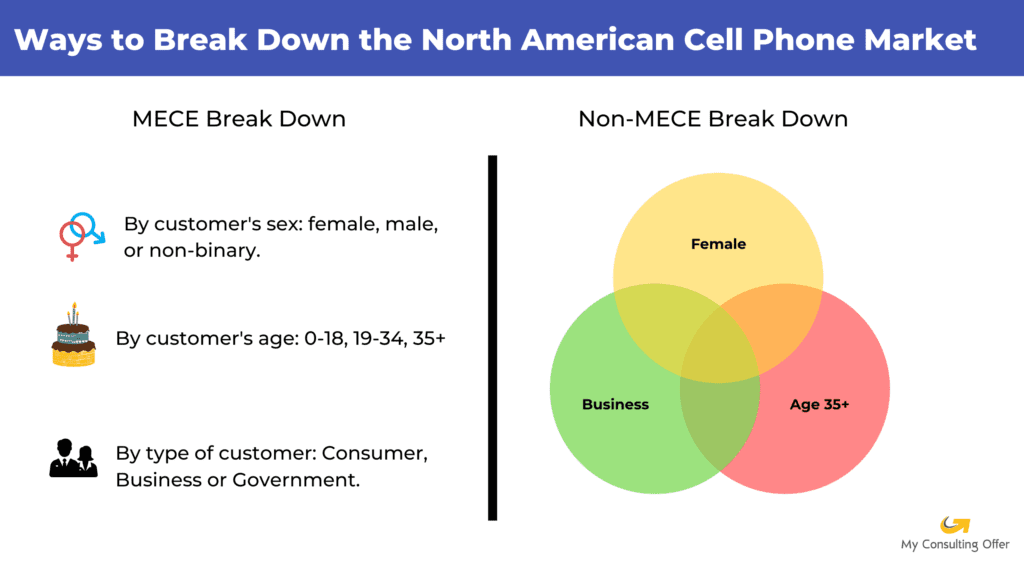
- Marketing Segmentation: Companies use MECE to divide their target market into different segments based on demographics, psychographics, and behavior. This allows them to tailor their marketing efforts to each segment and maximize their impact.
- Project Management: Project managers use MECE to break down large projects into smaller, more manageable tasks. This helps them to track progress, identify potential problems, and ensure that the project is completed on time and within budget.
- Medical Diagnosis: Doctors use MECE to diagnose illnesses by systematically ruling out different possibilities. They consider all possible causes of the patient's symptoms and then use tests and examinations to narrow down the list until they arrive at the correct diagnosis.
See? It's not just some stuffy business term. It's a fundamental way of thinking that can be applied to virtually any situation!
Common MECE Mistakes to Avoid
While the concept is simple, applying MECE flawlessly can be tricky. Here are a few common pitfalls to watch out for:
- Overlapping Categories: This is the most common mistake. Make sure your categories are truly distinct and that no item can fit into more than one category.
- Leaving Things Out: Ensure that your categories cover everything. Brainstorm and think creatively to identify any potential gaps.
- Categories That Aren't Useful: Sometimes, even if categories are MECE, they don't help you. "Things that are red", "Things that are not red" is MECE, but is unlikely to be useful!
- Ignoring the Context: The best MECE framework depends on the specific situation. Tailor your categories to the problem you're trying to solve or the decision you're trying to make.
Think of it like this: you're organizing a library. You wouldn't put a novel in the biography section, would you? And you wouldn't forget to label the children's section, right? Attention to detail is key!
Ready to Embrace the MECE Magic?
So, there you have it! Mutually Exclusive and Collectively Exhaustive – a simple yet powerful concept that can transform the way you think, solve problems, and make decisions. It's about bringing order to chaos, clarity to confusion, and a little bit of joie de vivre to your everyday life. I hope you found this article helpful!
Don’t be afraid to experiment with MECE in different areas of your life. Start small, practice regularly, and you'll be amazed at the results. And who knows, maybe you'll even impress your friends and colleagues with your newfound organizational superpowers! C'est magnifique!
This is just the beginning of your MECE journey. There are countless resources available online and in libraries that can help you deepen your understanding of this concept and apply it to even more complex situations. So, go forth, explore, and discover the power of MECE for yourself! You've got this! Allez, allez, allez!