Ah, Paul et Virginie! A name that conjures images of palm trees, star-crossed lovers, and enough naiveté to power a small island nation. You know, the kind of book your French teacher assigned, promising it was a cornerstone of French literature, and you secretly suspected it was just a plot to bore you into submission. Well, mes amis, let's unpack this tropical fruit salad of sentimentality and see what's really going on.
Le Contexte: Rousseau's Revenge?
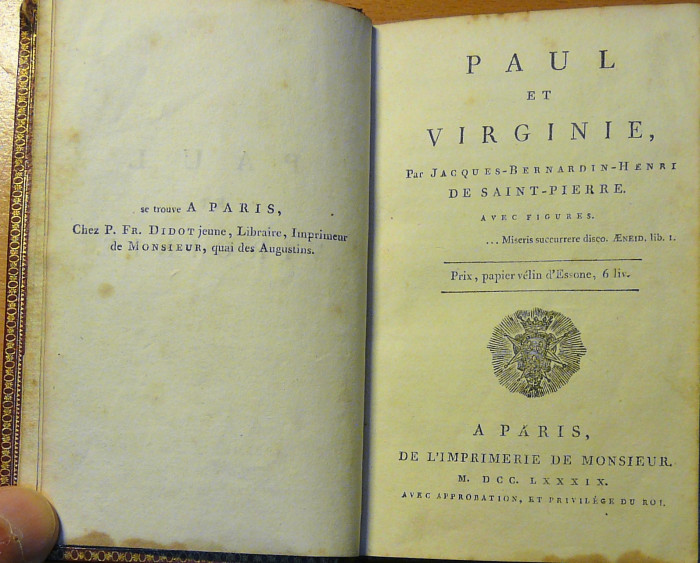
First, a little historical housekeeping. Jacques-Henri Bernardin de Saint-Pierre (quite a mouthful, isn't it?) wrote Paul et Virginie in 1788. Think pre-Revolutionary France, powdered wigs, and the general feeling that everything was about to go spectacularly wrong. Saint-Pierre was a disciple of Jean-Jacques Rousseau, and if you know anything about Rousseau, you know that means nature is good, society is bad, and everyone should live in a log cabin. Saint-Pierre took that philosophy, sprinkled it with a generous helping of tropical sunshine, and voilà! Paul et Virginie was born.
Basically, it's Rousseau's Social Contract, but with fewer legal arguments and more mangoes.
The Island Paradise (or Lack Thereof)
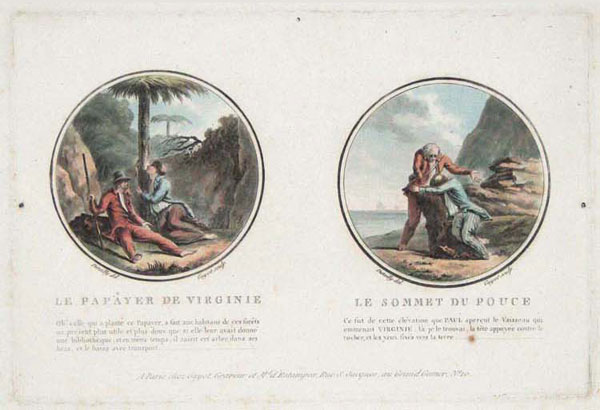
The story is set on the Île de France, now known as Mauritius. Saint-Pierre paints a picture of idyllic natural beauty, where everything is lush, green, and conveniently arranged for romantic picnics. Of course, he conveniently glosses over the fact that this "paradise" was built on the backs of slaves and involved a fair amount of colonial exploitation. But hey, who needs historical accuracy when you've got allegory?
Think of it as a very, very early version of a tourism ad... with added tragedy. Don't expect to find any accurate depictions of the island's ecosystem, either. More likely, expect a romanticized and artificial version of it.
Les Personnages: Naïveté in Overdrive
Now, let's meet our protagonists, Paul and Virginie. Brace yourselves; they're... special.
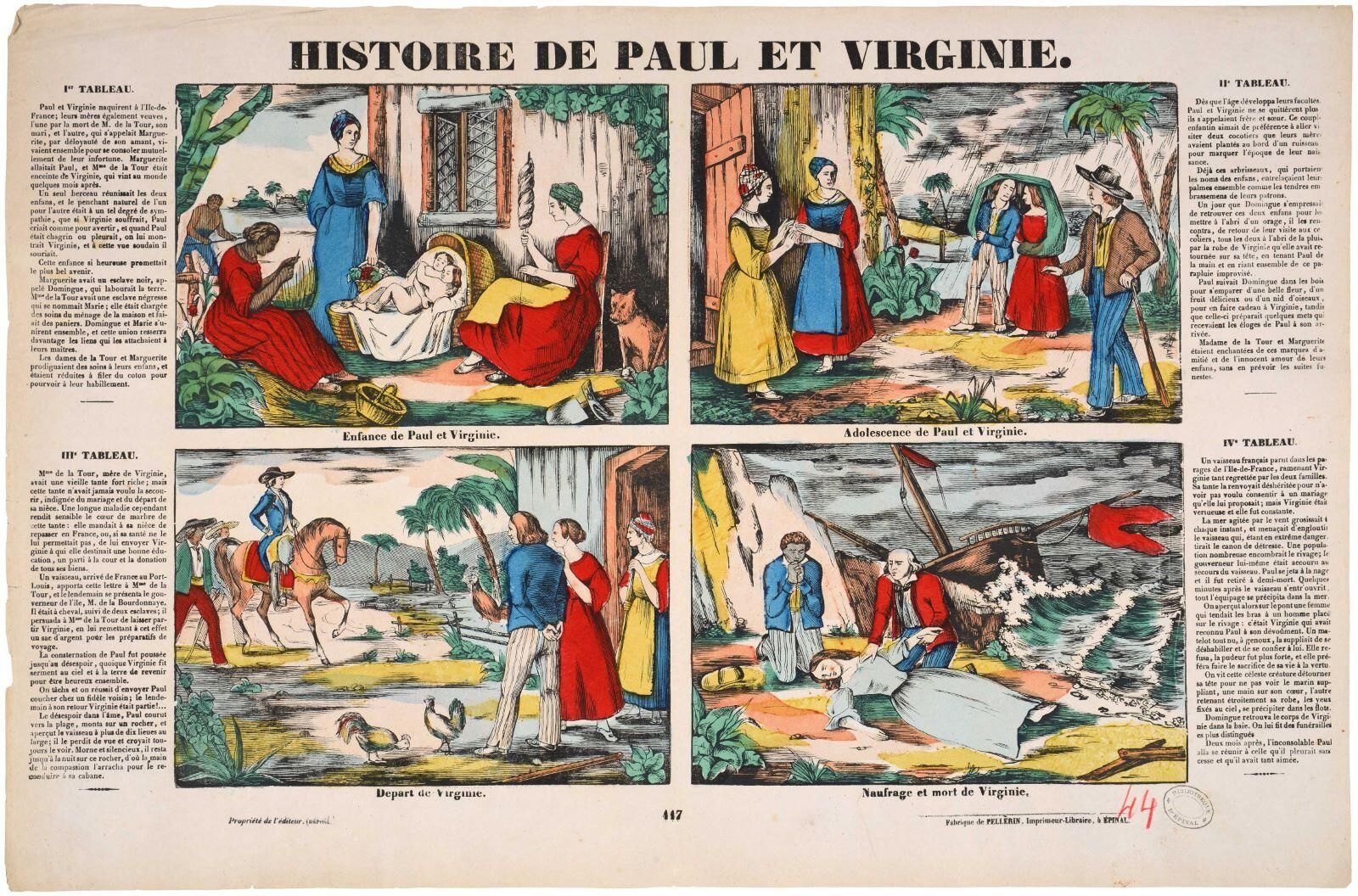
- Paul: The noble savage, raised in harmony with nature. He's strong, handsome, and completely oblivious to the complexities of human society. Think Tarzan, but French, and significantly less likely to swing from vines. He's essentially a walking, talking embodiment of Rousseau's "noble savage" concept, minus the actual savagery and plus an alarming amount of good intentions. He loves Virginie, nature, and probably polishing rocks in his spare time.
- Virginie: The innocent maiden, virtuous and beautiful. She's the embodiment of feminine purity, always blushing, always modest, and always ready to faint dramatically at the slightest provocation. She's practically allergic to anything remotely resembling worldly experience. Think of her as a Disney princess, but without the agency or the catchy musical numbers. Her life revolves around Paul, her mother, and avoiding anything that might tarnish her spotless reputation. She would sooner die than reveal an ankle. (Spoiler alert: she practically does.)
Their mothers, Madame de la Tour and Marguerite, are equally virtuous and devoted. They raised their children in complete isolation, shielding them from the corrupting influences of society. Which, in retrospect, might have been a slight overreaction. They're basically the tiger moms of the 18th century, but instead of pushing their kids to get into Harvard, they're pushing them to be perfectly innocent and perpetually childlike. Which, you know, has its own drawbacks.
The Love Story: A Slow Burn (Literally)
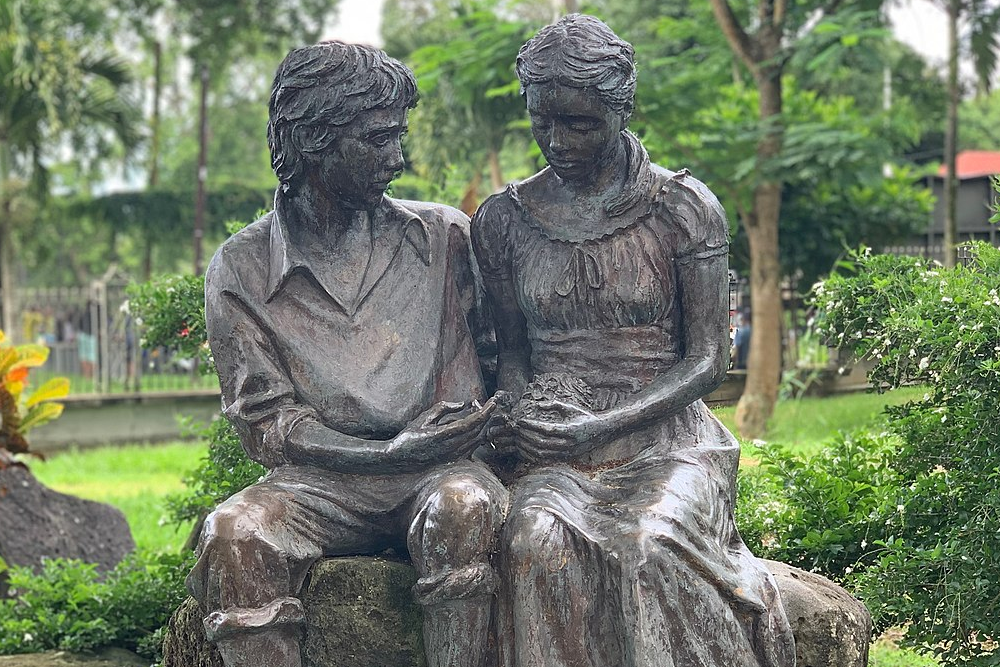
Paul and Virginie grow up together, completely isolated from the outside world. They're practically siblings, but, well, not really. Their bond is presented as pure, innocent, and completely natural. It's the kind of love that poets write about, and cynics roll their eyes at. They frolic in the fields, climb trees (probably not very high, in Virginie's case), and generally live a life of pastoral bliss. It's all very idyllic... until puberty hits.
The budding romance between Paul and Virginie is less a fiery inferno and more a gently smoldering campfire. It's fueled by shared experiences, mutual admiration, and a complete lack of anyone else to talk to. They're each other's best friends, confidantes, and the only person who understands their deeply ingrained sense of moral purity. So, yeah, it's complicated.
Les Thèmes: Virtue, Nature, and a Whole Lot of Tears
Paul et Virginie is a novel brimming with themes, most of them as subtle as a foghorn. Here are a few of the big ones:

- The Corrupting Influence of Society: This is the big one. Saint-Pierre, channeling his inner Rousseau, argues that society is inherently evil and corrupts the natural goodness of humanity. Paul and Virginie, raised in isolation, are presented as paragons of virtue precisely because they haven't been exposed to the wickedness of the world. Think of it as the 18th-century equivalent of blaming video games for everything.
- The Idealization of Nature: Nature is presented as a source of solace, beauty, and moral guidance. Paul and Virginie find comfort and inspiration in the natural world, which stands in stark contrast to the artificiality and decadence of society. It's all very romantic, but also completely divorced from the realities of, you know, actual nature. Mosquitoes, anyone?
- The Power of Virtue: Virtue is the ultimate good in Paul et Virginie. Paul and Virginie are virtuous to a fault, and their virtue is ultimately what leads to their downfall. It's a bit of a mixed message, really. Like, is virtue good or bad? Saint-Pierre seems to be saying that it's good, but also that it's not enough to protect you from the harsh realities of the world. Go figure.
- Love and Sacrifice: Paul and Virginie's love is presented as the purest form of love, characterized by selflessness and sacrifice. They're willing to do anything for each other, even if it means sacrificing their own happiness. It's all very noble, but also a little bit... co-dependent?
Essentially, the whole book is a giant morality play dressed up in tropical clothing. Don't go expecting deep psychological insights or nuanced character development. Instead, prepare for a heavy dose of sentimentality and a whole lot of moralizing.
The Plot Thickens (and Then Disaster Strikes)
So, what happens? Well, things start to get complicated when Virginie is summoned to France by a wealthy aunt. The aunt offers to educate her and provide her with a comfortable life. Paul is heartbroken, but Virginie, ever the dutiful daughter, agrees to go. It's the ultimate test of their love: can it survive the corrupting influence of Parisian society? (Spoiler alert: no.)
While in France, Virginie is bombarded with temptation. Fancy clothes, lavish parties, and the advances of handsome suitors. But she remains steadfast in her virtue, resisting all the allure of Parisian society. She misses Paul terribly and longs to return to the Île de France. But her aunt, convinced that she's doing what's best for Virginie, keeps her in France. Because, you know, who needs happiness when you can have social status?

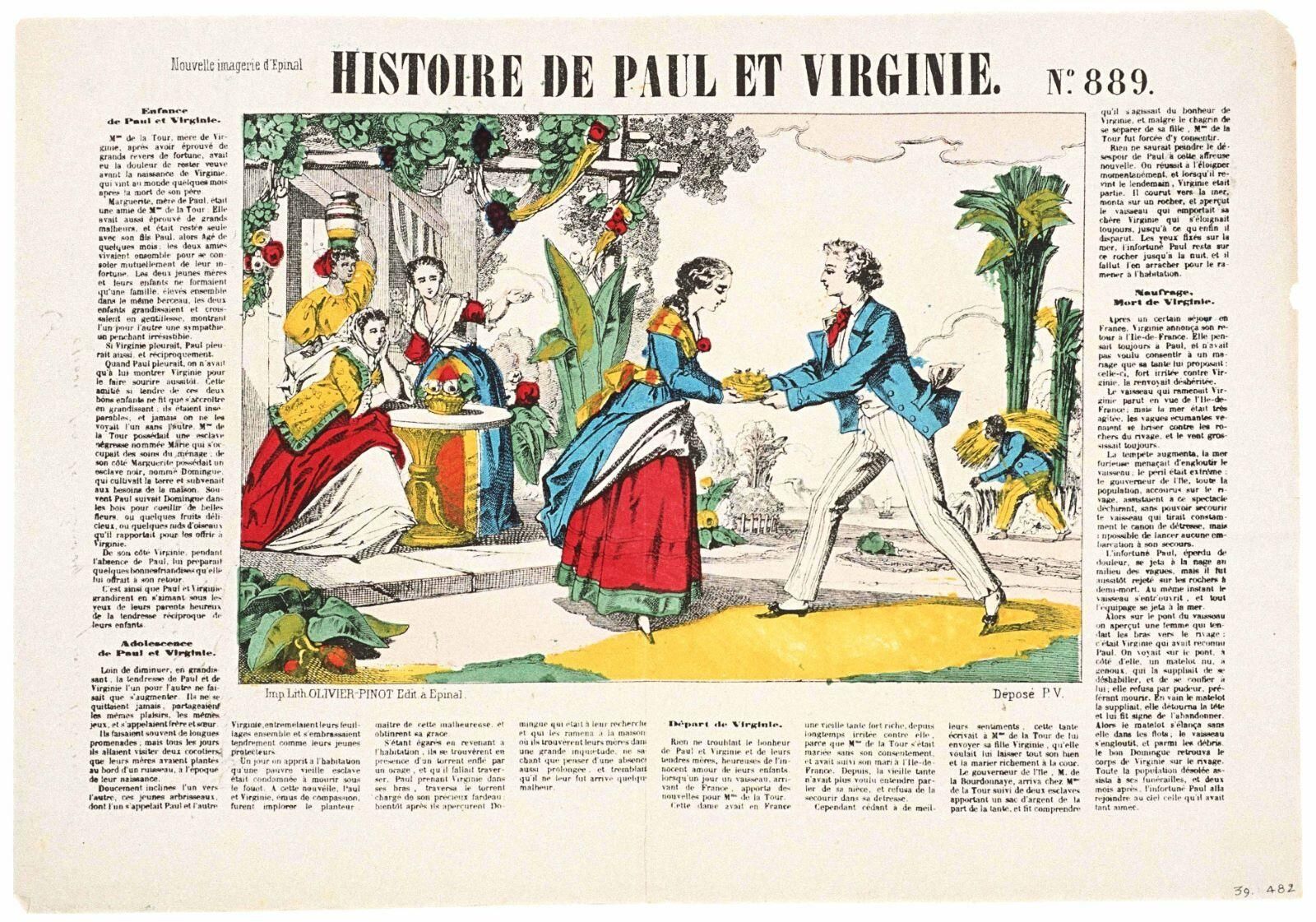
Eventually, Virginie gets homesick (and presumably tired of all the fancy clothes) and decides to return to the Île de France. But tragedy strikes when her ship is caught in a storm. As the ship breaks apart, Virginie refuses to disrobe to swim to shore, fearing that she would be seen naked. She drowns, a martyr to modesty. And Paul, upon hearing the news, dies of grief. The end. (Seriously.)
Yes, you read that right. Virginie chooses death over indecency. It's a pretty dramatic moment, and one that has been debated by critics for centuries. Is it a testament to her unwavering virtue, or a sign of her crippling naiveté? You be the judge.
Analyse: Deeper than a Shallow Puddle?
Now for the juicy bit - the analyse. On the surface, Paul et Virginie seems like a straightforward tale of love, loss, and the corrupting influence of society. But beneath the surface, there are some more interesting things going on.
- Colonialism and Exoticism: The novel is deeply embedded in the colonial context of its time. The Île de France is presented as a tropical paradise, but the realities of colonial exploitation are largely ignored. The novel perpetuates the idea of the "noble savage," romanticizing the lives of the indigenous people while simultaneously ignoring their struggles.
- Gender Roles: The novel reinforces traditional gender roles. Paul is the strong, active protector, while Virginie is the passive, virtuous object of his affection. Virginie's virtue is inextricably linked to her modesty and her willingness to sacrifice herself for the sake of her reputation.
- The Critique of Enlightenment: While Saint-Pierre was a disciple of Rousseau, his novel also contains a subtle critique of Enlightenment ideals. The emphasis on reason and progress is contrasted with the simple, natural wisdom of Paul and Virginie. The novel suggests that true happiness can only be found in harmony with nature, not in the pursuit of knowledge or social advancement.
- The Power of Sentimentality: Saint-Pierre was a master of sentimentality, and he uses it to great effect in Paul et Virginie. The novel is designed to evoke strong emotions in the reader, from joy and admiration to sorrow and pity. But the sentimentality can also be seen as a way of masking the deeper contradictions and complexities of the story.
In a way, Paul et Virginie is a fascinating snapshot of the contradictions and anxieties of its time. It's a novel that celebrates nature and simplicity while simultaneously perpetuating colonial stereotypes and reinforcing traditional gender roles. It's a novel that's both deeply moving and deeply problematic. And that's what makes it so interesting to analyze.

Why is it Still Read?
So, why are we still talking about Paul et Virginie? Well, despite its flaws, the novel has had a lasting impact on French literature and culture. It's a classic example of the Romantic movement, and it explores themes that are still relevant today, such as the relationship between humanity and nature, the corrupting influence of society, and the power of love.
Plus, it's a great source of literary schadenfreude. There's something undeniably entertaining about watching these two ridiculously virtuous characters stumble their way to a tragic end. It's like a train wreck in slow motion, but with more palm trees.
En Conclusion: A Cautionary Tale with Coconuts
So, there you have it: Paul et Virginie, a tropical tragedy filled with virtue, naiveté, and enough tears to fill the Indian Ocean. Is it a masterpiece? Maybe. Is it a problematic relic of a bygone era? Definitely. Is it worth reading? That's up to you. Just be prepared for a heavy dose of sentimentality and a plot that makes Romeo and Juliet look like a comedy.
Ultimately, Paul et Virginie is a cautionary tale. A tale about the dangers of excessive virtue, the perils of societal corruption, and the importance of learning how to swim, even if it means showing a little ankle. And if you ever find yourself stranded on a desert island with only one book, maybe pick something a little more practical. Like a survival guide. Or a dictionary. Anything but Paul et Virginie. Unless, of course, you're really into crying.