Salut tout le monde! Ever found yourself staring blankly at a math problem involving, well, anything more complicated than counting on your fingers? Don't worry, you're not alone! Today, we're going to tackle something that sounds intimidating but is actually super useful, even in everyday life: les multiples. And trust me, once you understand them, you'll be seeing them everywhere! It's like unlocking a secret code to the universe... okay, maybe that's a bit dramatic. But still, pretty cool!
Mais, Qu'est-ce Qu'un Multiple, Exactement?
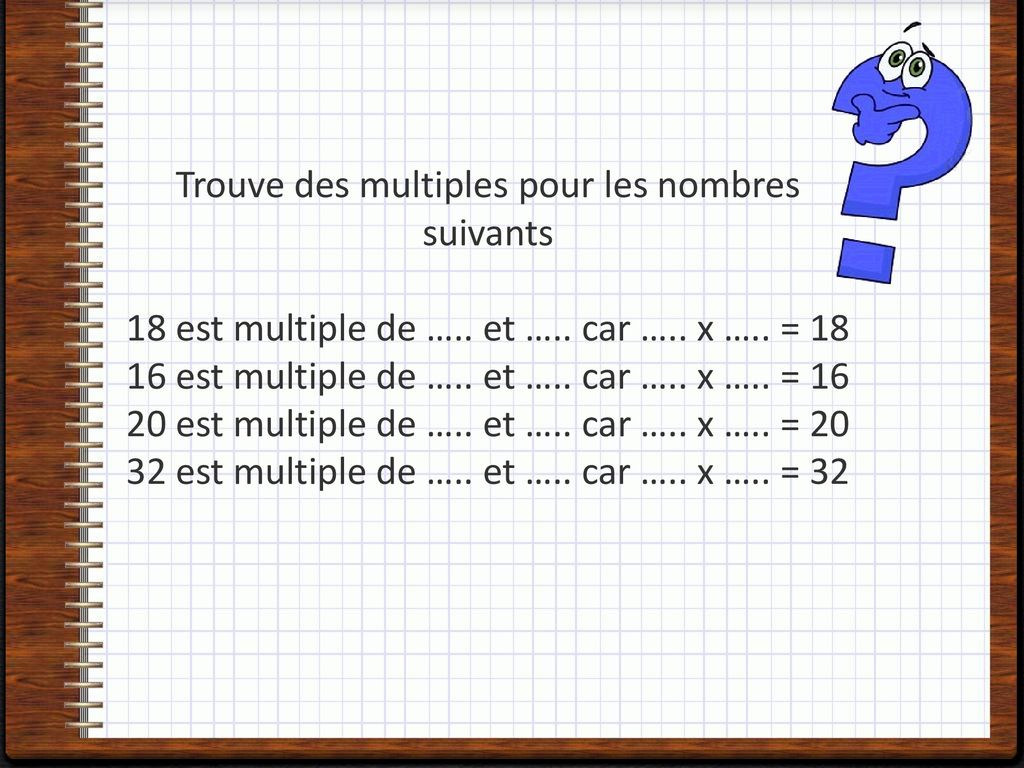
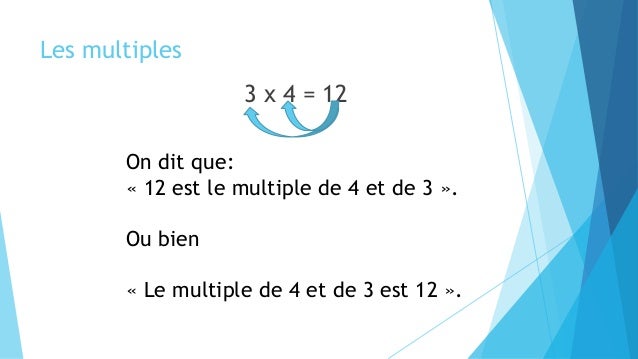
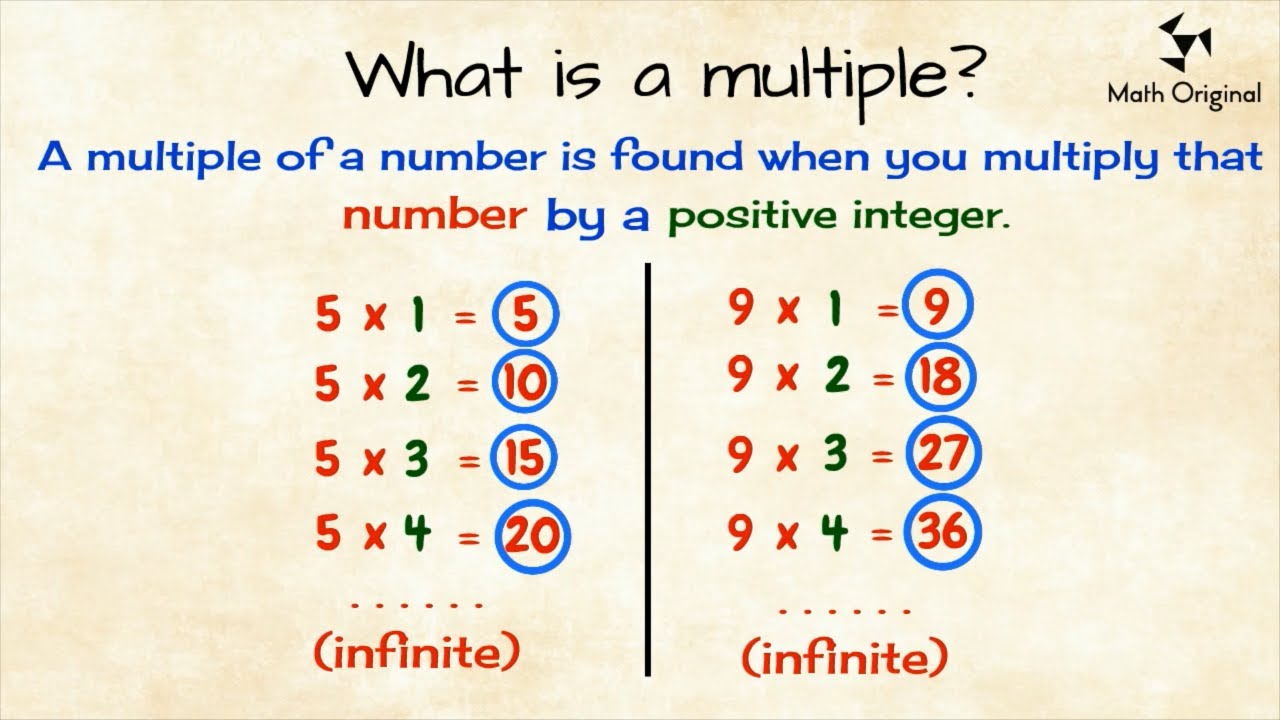
Okay, let's get down to brass tacks. Qu'est-ce qu'un multiple? Simply put, a multiple is the result of multiplying a number by an integer (a whole number, positive, negative, or zero). Think of it like this: you're skipping along a number line, taking equal-sized jumps. Where you land after each jump? Those are your multiples!
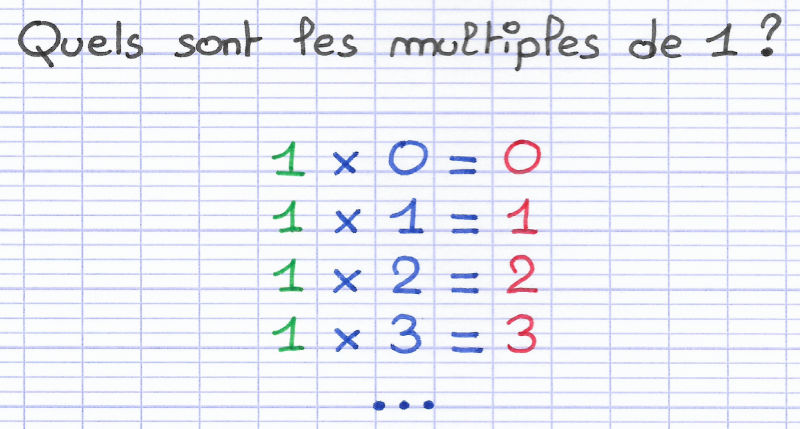
For example, let's take the number 3. Its multiples are: 3 (3 x 1), 6 (3 x 2), 9 (3 x 3), 12 (3 x 4), 15 (3 x 5), and so on, ad infinitum. You just keep adding 3 each time. See? Easy peasy! We can keep going forever! It's a multiples party, and everyone's invited (except fractions... they get a little messy at these parties).
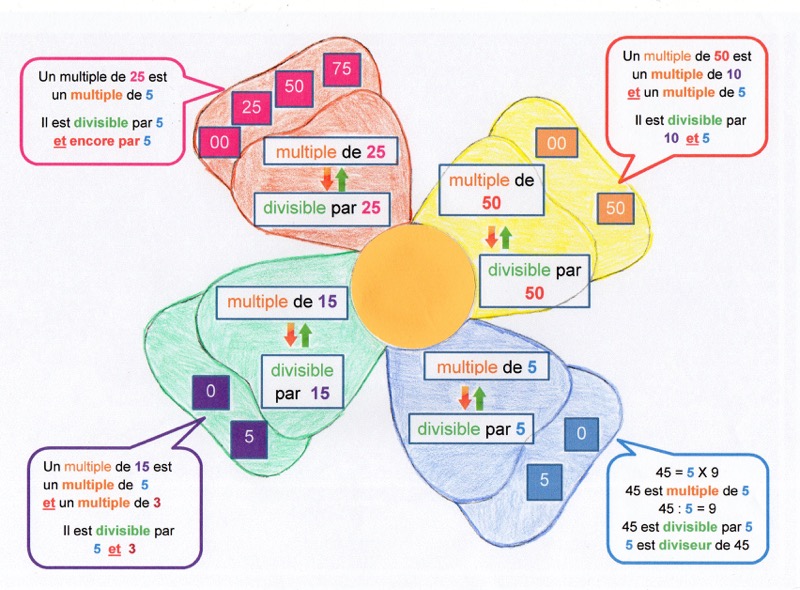
Another way to think about it: a number is a multiple of another if it's divisible by that number without leaving a remainder. So, 12 is a multiple of 3 because 12 ÷ 3 = 4 (no remainder!). But 10 isn't a multiple of 3, because 10 ÷ 3 = 3 with a remainder of 1. (That little 1 is cramping our style!)
Un Petit Jeu de Multiples
Alright, let's play a quick game to make sure we're on the same page. Is 20 a multiple of 5? Think about it... can you divide 20 by 5 without a remainder? Yep! 20 ÷ 5 = 4. So, yes, 20 is a multiple of 5. You're getting good at this!
How about 27 a multiple of 4? Hmm... If you try to divide 27 by 4, you get 6 with a remainder of 3. So, no, 27 is not a multiple of 4. Don't worry, you'll get 'em next time! The important thing is to understand the concept.
Pourquoi les Multiples Sont-ils Utiles?
Okay, so now you know what a multiple is. But you might be thinking, "So what? Why should I care?" Well, my friend, let me tell you, multiples are incredibly useful!
Real-World Applications: Think about splitting a pizza evenly. If you have a pizza cut into 8 slices and 4 people, each person gets 2 slices (8 is a multiple of 4). Planning a road trip? If you're driving 300 miles and want to stop every 50 miles, multiples help you figure out how many stops you'll need (300 is a multiple of 50). Baking a cake? You might need to double or triple a recipe. Multiples! Shopping? Calculating discounts often involves multiples (a 25% discount... that's basically dividing by 4!).
Math Superpowers: Multiples are essential for more advanced math. They're crucial for finding common denominators when adding fractions (yikes, fractions!). They play a big role in algebra and calculus. Basically, understanding multiples lays the foundation for tackling more complex mathematical concepts. It's like building the first level of a video game so you can unlock the awesome powers later!
Organization and Patterns: Multiples help us see patterns in numbers. They're the building blocks of multiplication tables (remember those?!). They help us understand how numbers relate to each other. It's like finding the underlying rhythm in a piece of music; multiples are the beat that keeps the numbers in time.
Comment Trouver les Multiples Facilement?
Alright, so you're convinced that multiples are useful (hooray!). But how do you actually find them quickly and easily?
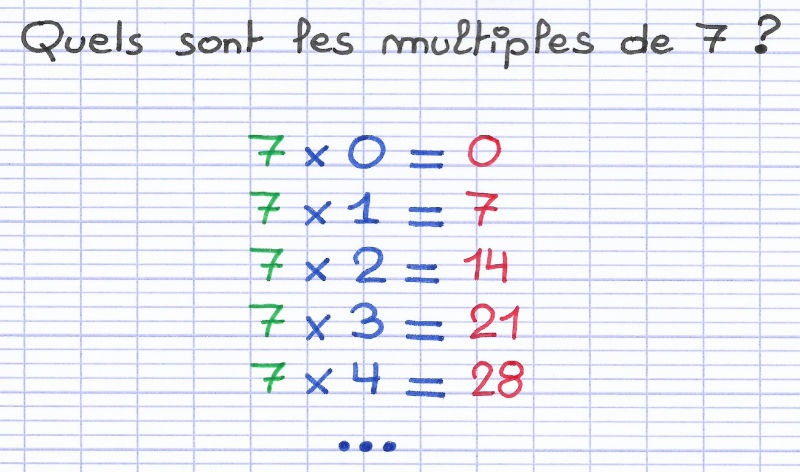
Multiplication Tables: The most obvious answer? Multiplication tables! If you know your multiplication tables well (or have them handy!), you can quickly identify multiples of a number. Knowing your times tables really is like having a superpower!
Repeated Addition: As we mentioned earlier, you can find multiples by repeatedly adding the number to itself. Starting with the number itself, add it to get the next multiple, and so on. This is a good technique, especially if you’re not comfortable with multiplication tables, or if you need to find multiples of a larger number. Imagine you need to find multiples of 17, you can keep adding 17.
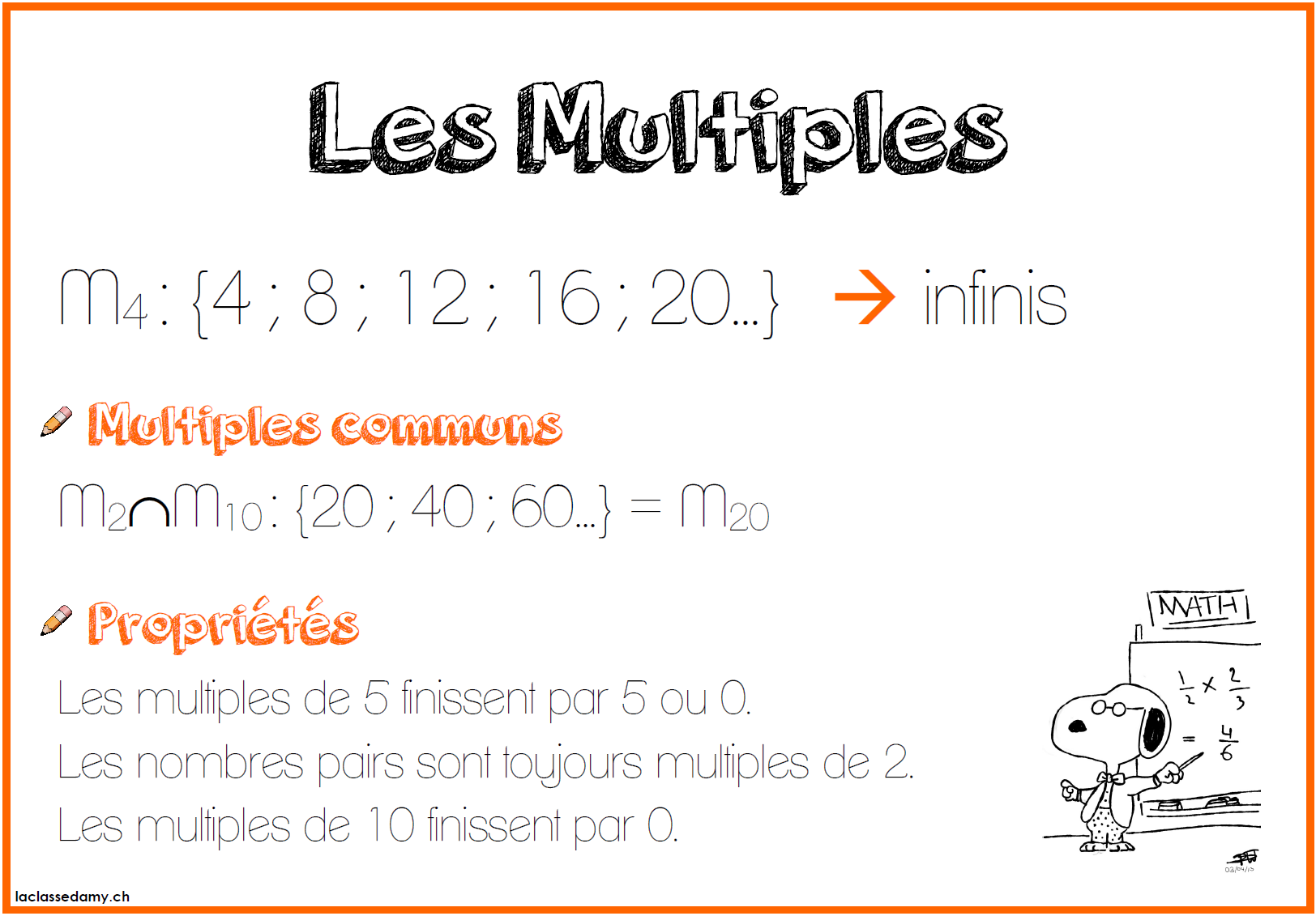
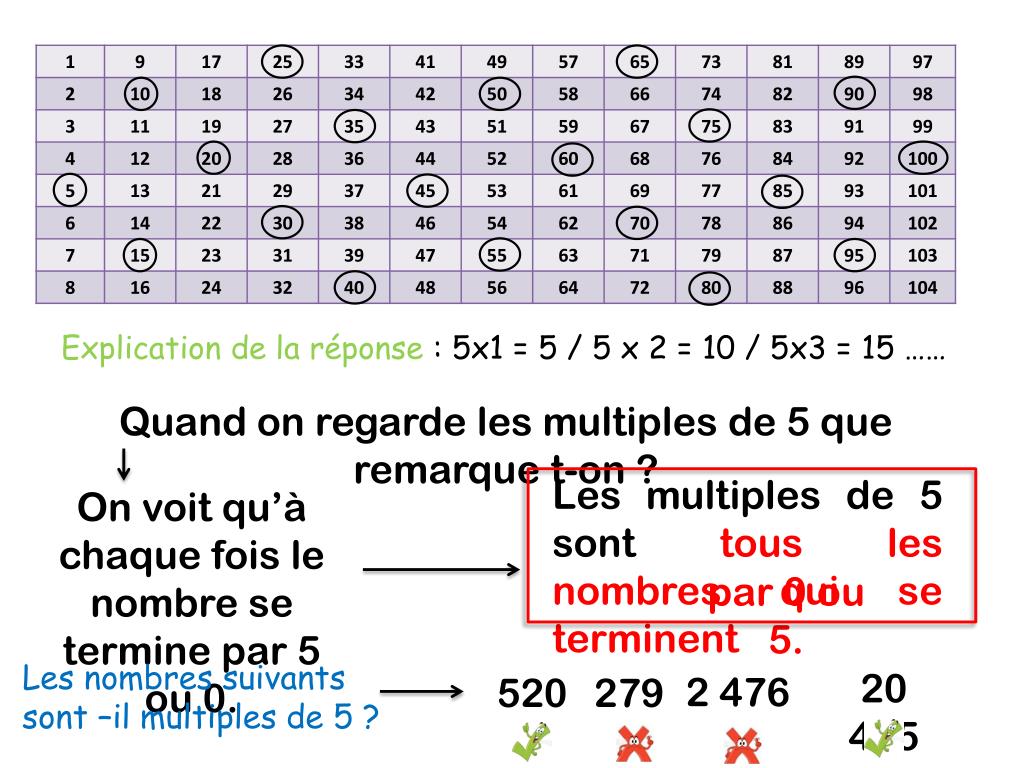
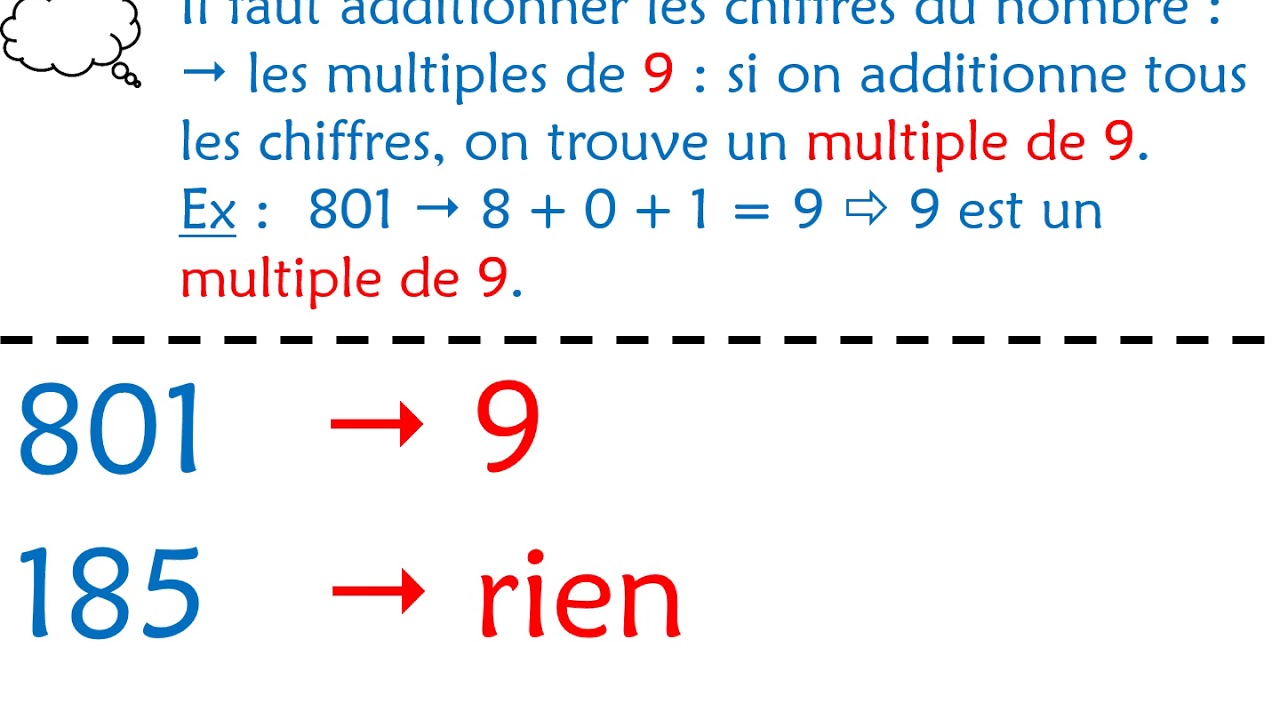
Divisibility Rules: Divisibility rules are handy shortcuts for determining if a number is a multiple of another. For example, a number is a multiple of 2 if it's even (ends in 0, 2, 4, 6, or 8). A number is a multiple of 5 if it ends in 0 or 5. A number is a multiple of 3 if the sum of its digits is a multiple of 3 (try it!). Knowing these rules can save you a lot of time and effort.
Practice, Practice, Practice!: The best way to master multiples is to practice. Do some exercises, solve some problems, and play some games. The more you work with multiples, the more familiar you'll become with them. Soon, you'll be spotting them everywhere without even thinking about it!
Un Exemple Concret (avec un peu d'humour)
Let's say you're planning a party, and you're inviting 7 friends. You want to make sure you have enough cookies for everyone, and you want each person to get at least 3 cookies. How many cookies do you need to bake? (Or, you know, buy from the store... no judgment here!).

Well, you have 7 friends + yourself, so that's 8 people in total. You want each person to get 3 cookies. So, you need to find the multiple of 3 that's big enough to feed everyone. 3 x 8 = 24. So, you need at least 24 cookies! (And maybe bake a few extra... just in case! You know how those cookie monsters can be!).
Ne Pas Confondre: Multiples vs. Facteurs
It's easy to get multiples confused with factors. Don't worry, it happens to the best of us! Let's clear that up right now.
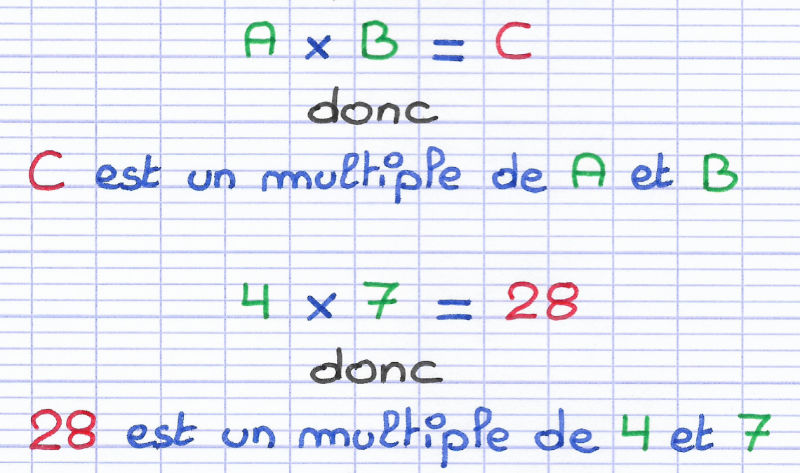
A multiple is the result of multiplying a number by another number. A factor is a number that divides evenly into another number. They're two sides of the same coin!
For example, the multiples of 4 are 4, 8, 12, 16, 20... The factors of 12 are 1, 2, 3, 4, 6, and 12. Notice that 4 is both a factor of 12 and a multiple of 4!
The easiest way to remember the difference: Multiples are bigger or equal to the original number, and Factors are smaller or equal to the original number.
En Conclusion: Embrassez les Multiples!
So, there you have it! Multiples, demystified. They're not as scary as they might seem at first. They're actually quite friendly, and they can make your life a lot easier (and maybe even a little bit more fun!).
Understanding multiples isn't just about passing math tests. It's about developing your problem-solving skills, your logical thinking, and your ability to see patterns in the world around you. It's about unlocking a new level of understanding. So embrace the multiples! Explore them, experiment with them, and see what you can discover. You might be surprised at what you find.
And who knows, maybe one day you'll be the one teaching others about the wonders of multiples. Because knowledge, like multiples, multiplies when it's shared!
Now go forth and multiply... your knowledge, that is! There are tons of resources available online and in libraries to help you learn more about multiples and other fascinating mathematical concepts. Don't be afraid to explore, to ask questions, and to keep learning. The world of math is waiting to be discovered, and you've just taken the first step on a very exciting journey!