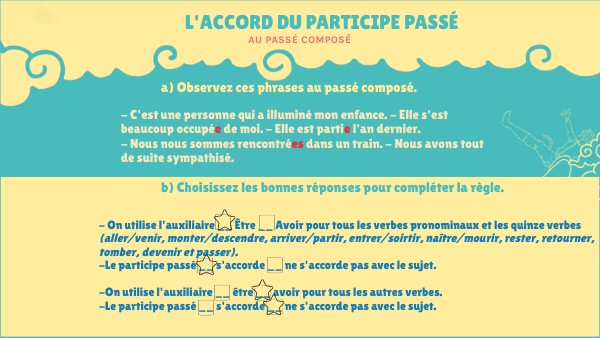
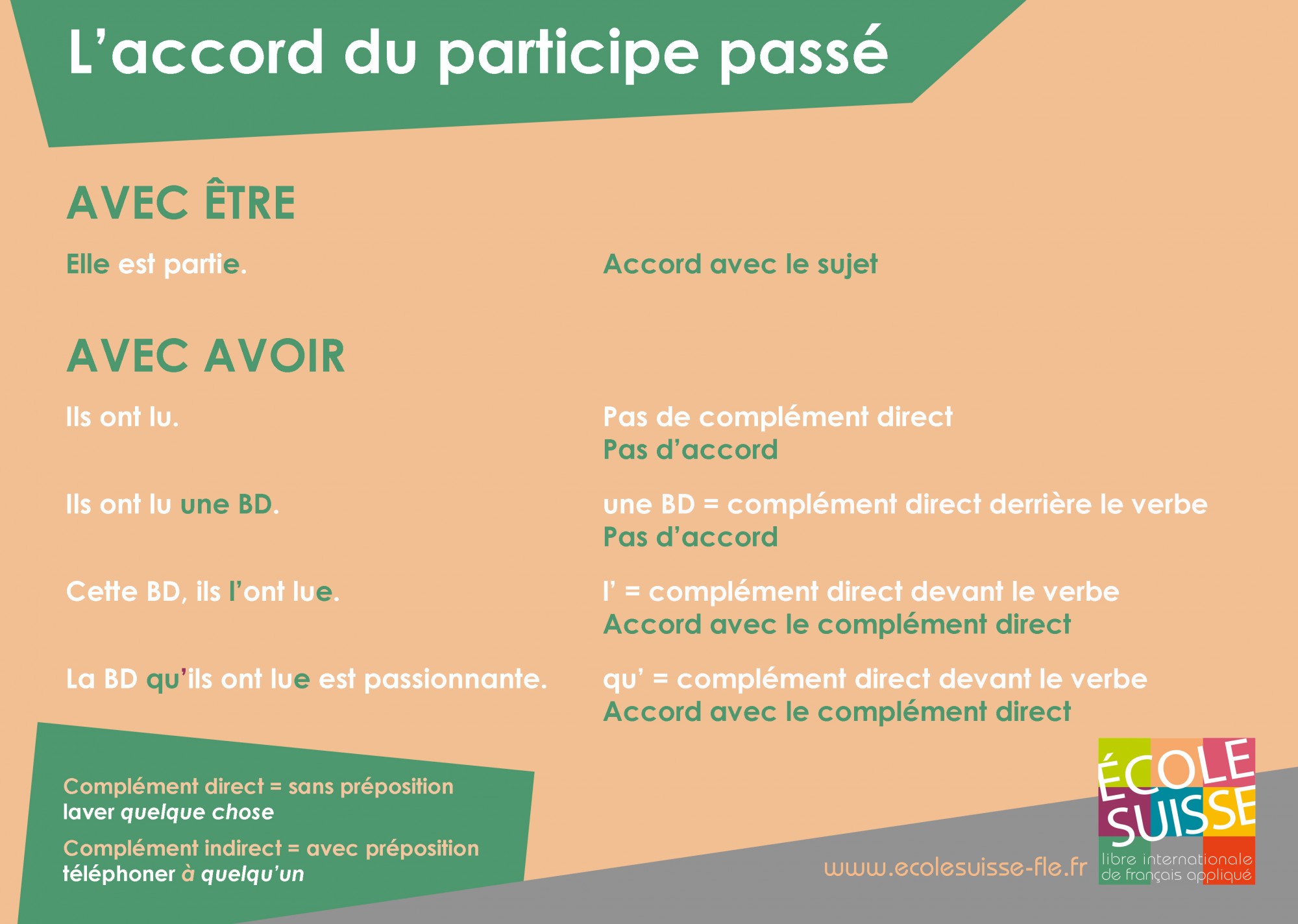
Salut toi! Ever feel like French grammar is a wild, untamed beast? Don't worry, you're not alone! And guess what? We're about to tame one little corner of that beast today: l'accord du participe passé. Sounds scary? Nah, it's more like a fun puzzle! We'll break down the three most important rules, and you'll be saying "C'est facile!" in no time. 😉
Rule #1: The Helper Verb Être – Your New Best Friend!
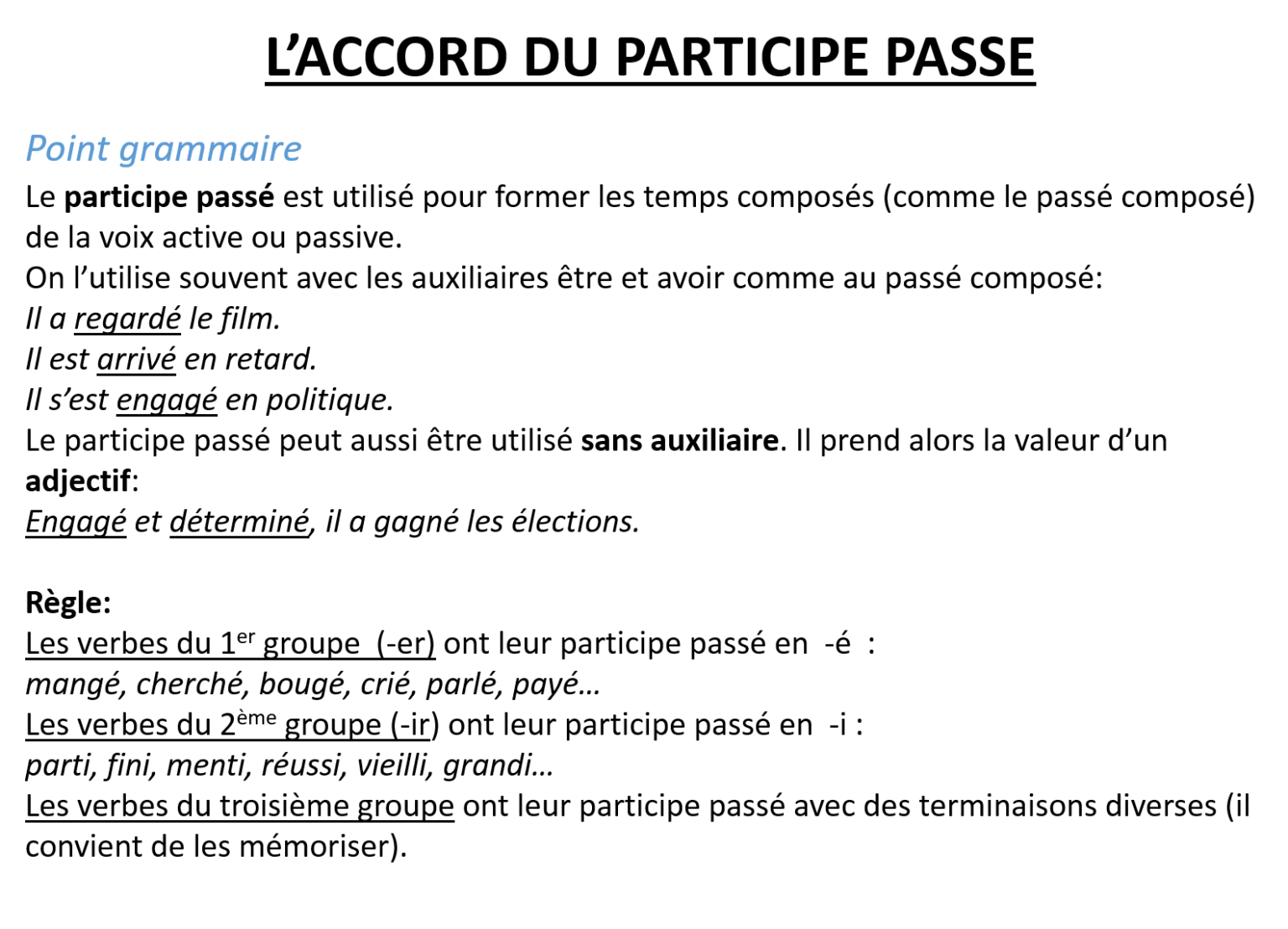
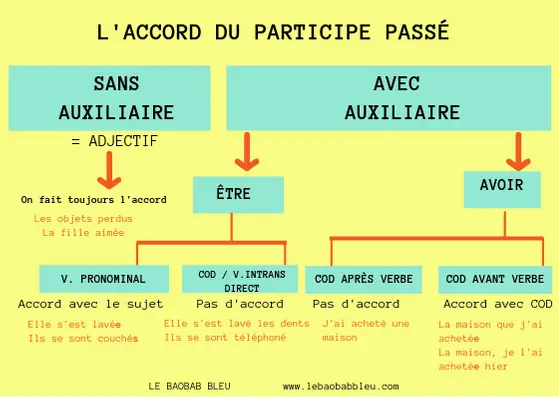
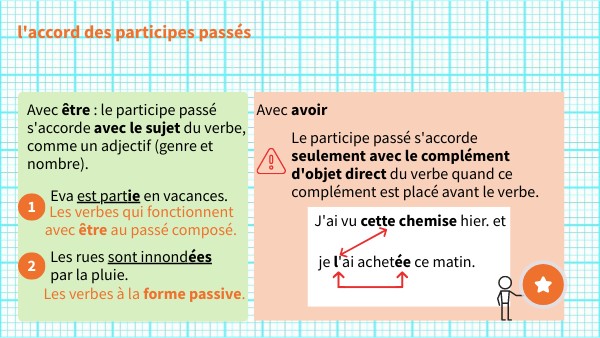
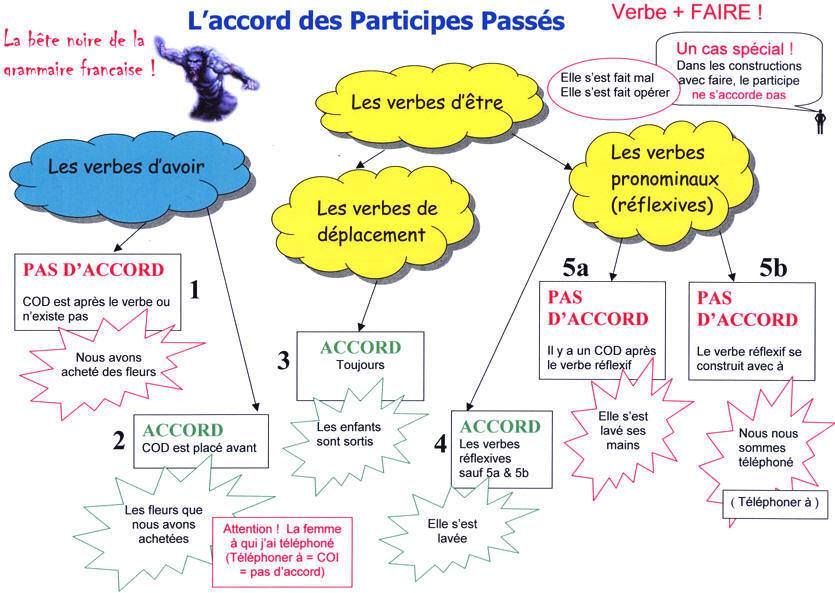
Okay, so when you use the auxiliary verb être (to be) to conjugate a verb in a past tense (like passé composé), the past participle agrees in gender and number with the subject. Think of it like this: they're holding hands and have to dress alike! For example:
Elle est allée au cinéma. (She went to the cinema.) See? Allée agrees with elle (feminine, singular) so it gets that extra "e." Cute, right?
Ils sont partis en vacances. (They went on vacation.) Here, partis agrees with ils (masculine, plural) so it gets an "s." Voila!
Rule #2: With Avoir? It's Complicated... But We Got This!
Now, when you use avoir (to have), things get a little more...interesting. Generally, the past participle doesn't agree with the subject. It's a bit of a rebel!

J'ai mangé une pomme. (I ate an apple.) Mangé stays the same, no matter if you're male or female. Cool?
But wait! (There's always a "but," isn't there?). If the direct object pronoun comes before the verb, then BAM! Agreement is back on. Think of it as the pronoun influencing the past participle.
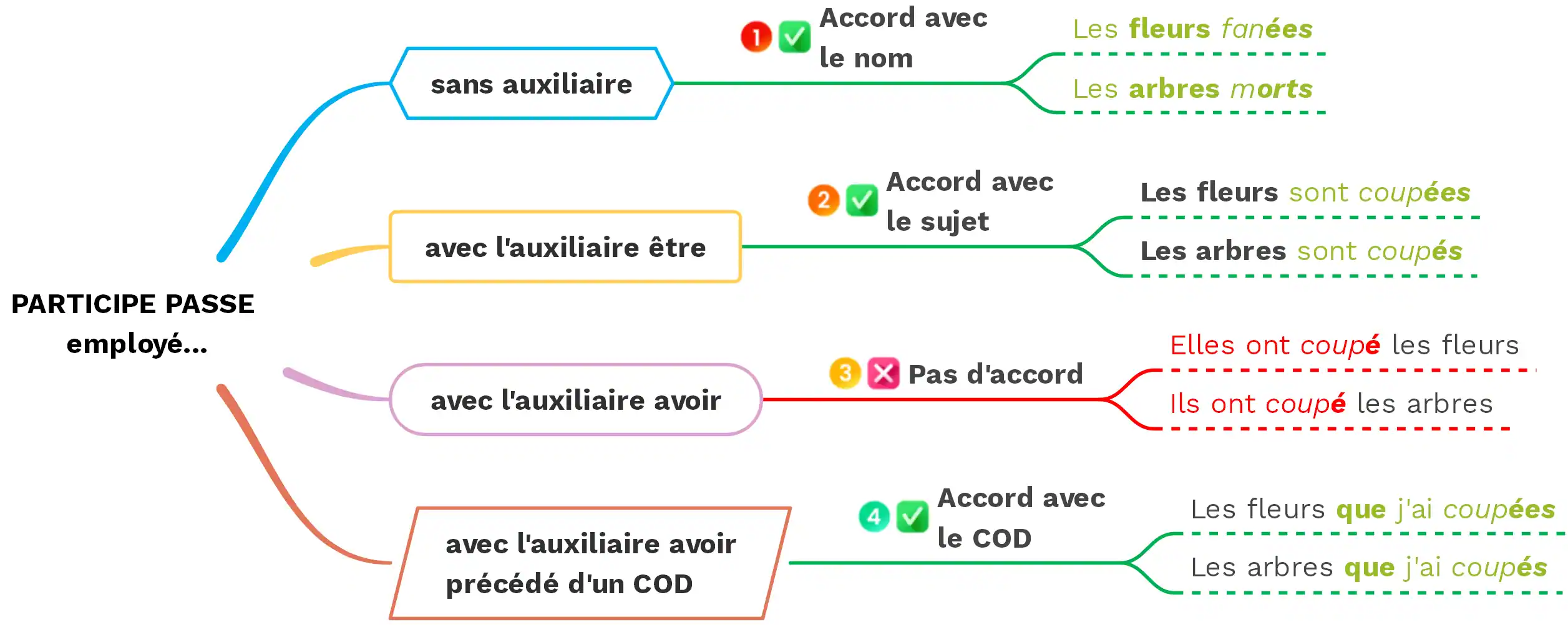
La pomme que j'ai mangée était délicieuse. (The apple that I ate was delicious.) Because "que" (which refers to "la pomme") comes before "ai mangée," we add an "e" to mangé to agree with pomme (feminine, singular).
Rule #3: Pronoun En – Avoid the Trap!
This one's a sneaky little trap! If you see the pronoun en, and it's the direct object of the verb, the past participle generally doesn't agree.
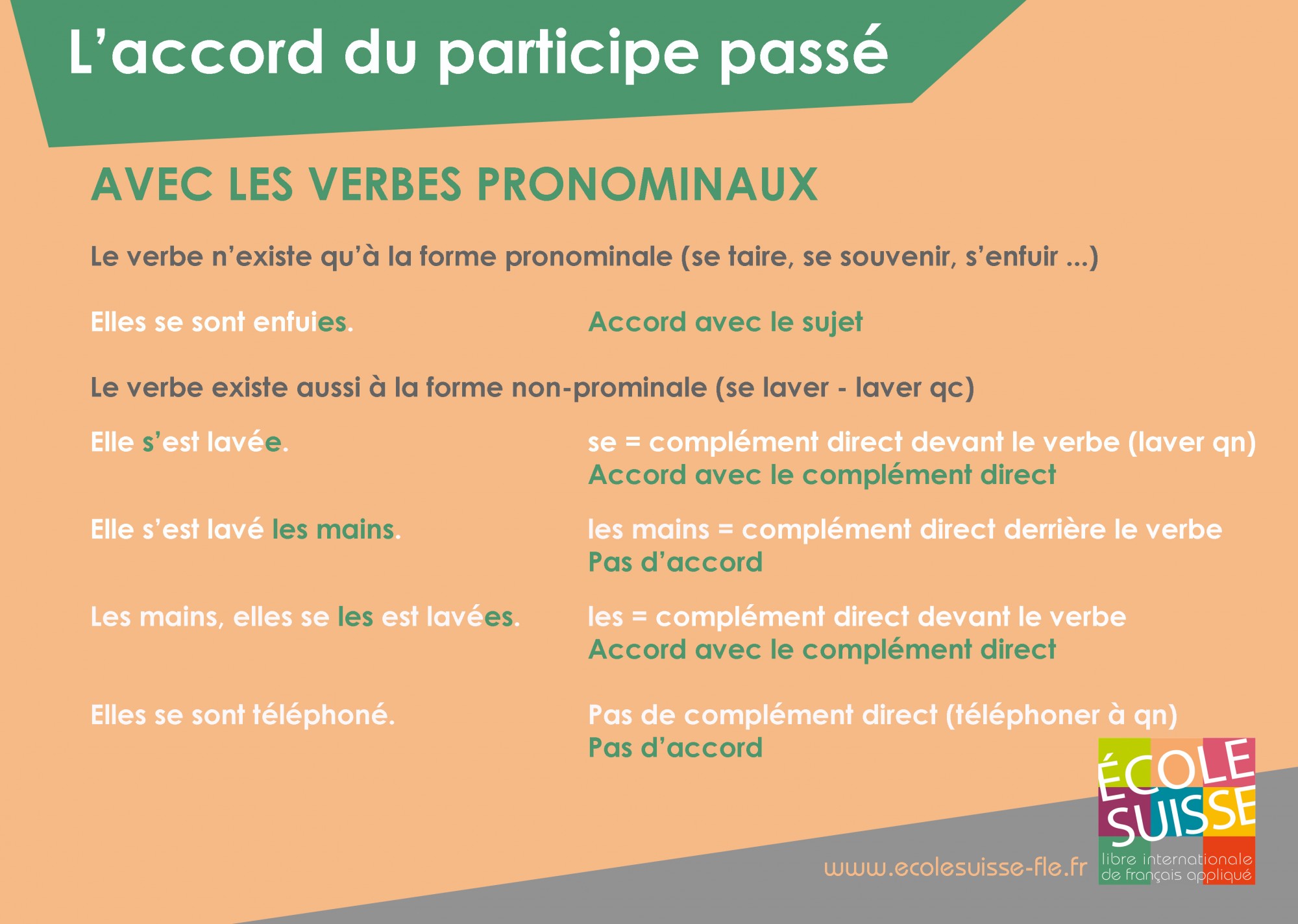
Des pommes? J'en ai mangé. (Apples? I ate some.) Mangé doesn't agree, even though "en" is replacing "des pommes."
So there you have it! The three main rules of l'accord du participe passé, demystified. Now go forth and conquer! Remember, practice makes perfect. Don't be afraid to make mistakes – that's how you learn! And who knows, maybe mastering this little corner of French grammar will inspire you to explore even more of this beautiful language. À bientôt!

![[Carte mentale] L'accord du participe passé | Participe passé, Carte](https://i.pinimg.com/originals/12/84/41/12844169ab044da334f4f1375f0735bf.png)


.jpg)