Salut tout le monde! Ever stumbled upon a French sentence and thought, "Whoa, who owns that?" Well, today, we're diving into the wonderful world of déterminants possessifs, or as we might casually say, French possessive adjectives. Sounds intimidating? Trust me, it's way cooler than it seems.
Think of them as tiny, stylish flags that plant themselves right before a noun to declare ownership. They’re like the "my," "your," "his," "her," "its," "our," and "their" of the French language. Simple enough, right?
Pourquoi c'est cool? (Why is it cool?)
Okay, so why should you care about these little guys? Because they unlock a whole new level of expression! Imagine trying to describe your family, your belongings, or your feelings without being able to say "mon chien" (my dog) or "ma maison" (my house). It would be like trying to paint a masterpiece with only two colors. Boring!
Also, understanding possessive adjectives helps you understand French culture a little better. Think about how people talk about their families, their country, or even their favorite pain au chocolat. It all comes down to possessive adjectives!
The Basics: Mine, Yours, and Ours
Let's break down the main characters:
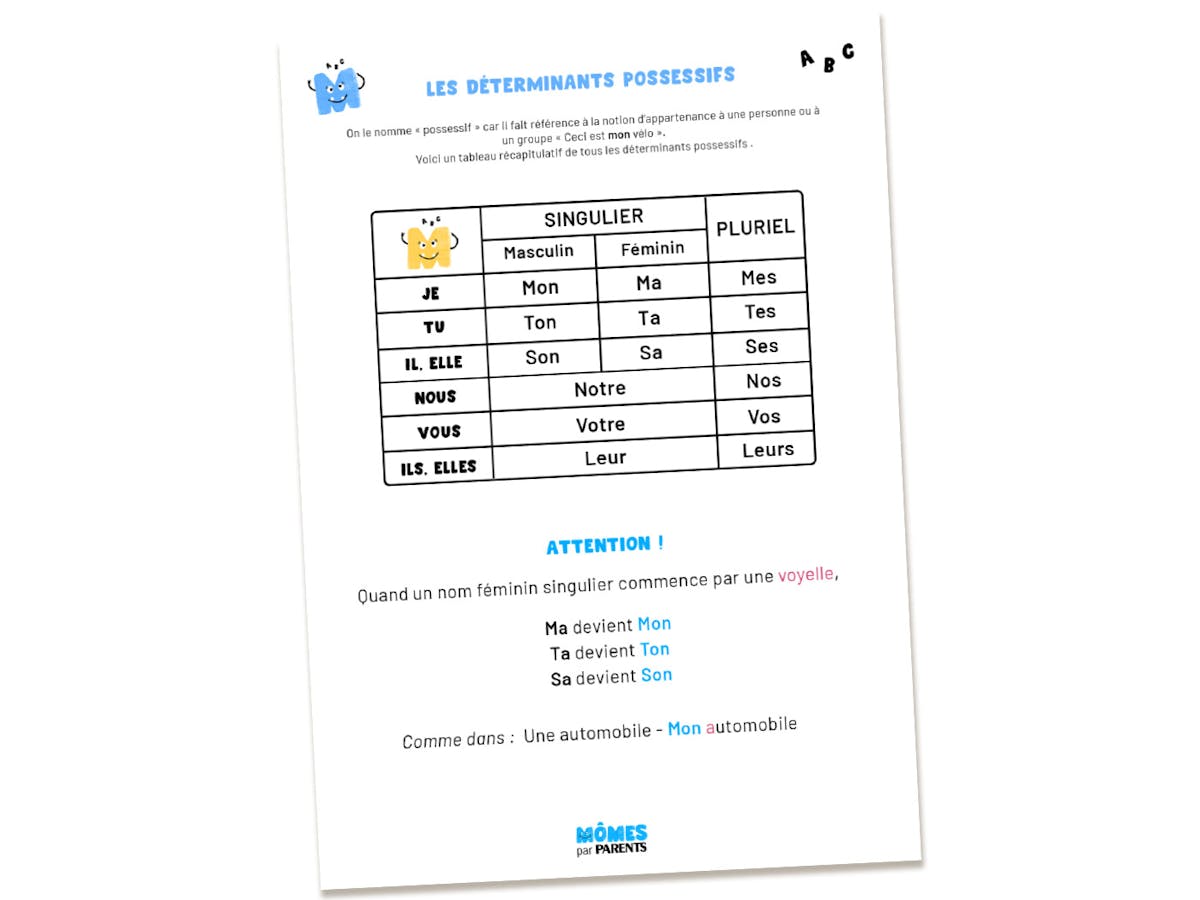
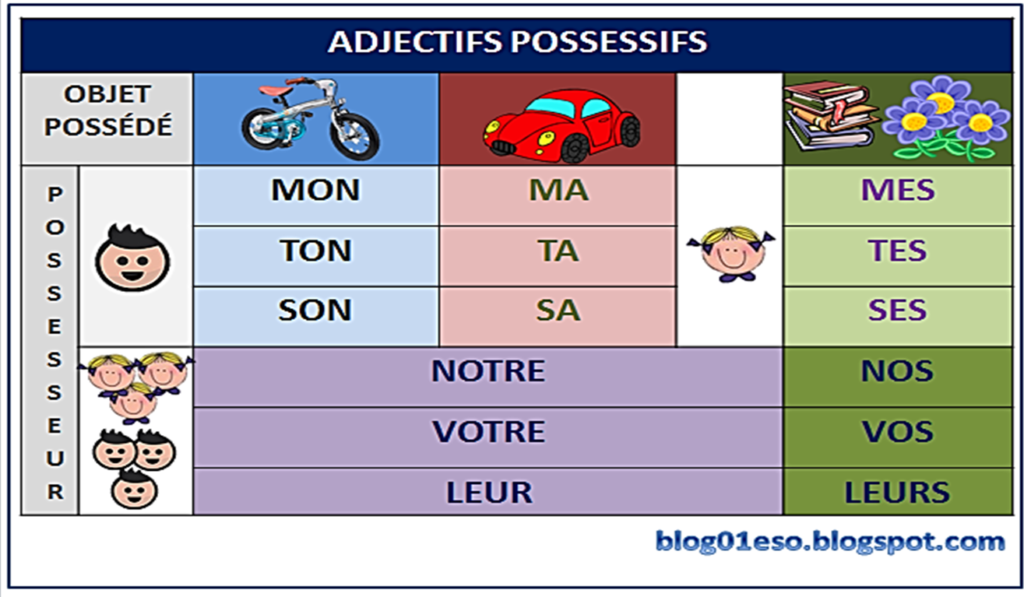
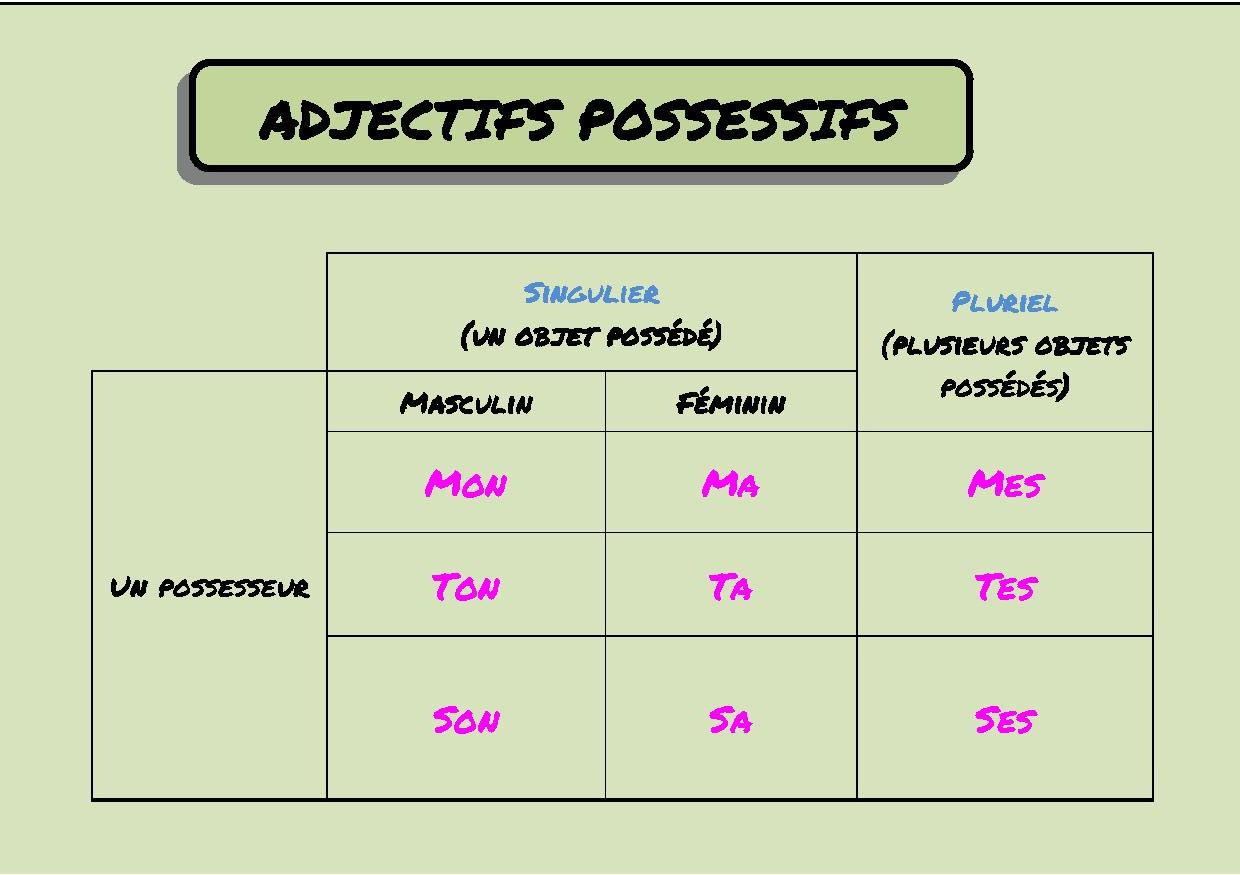
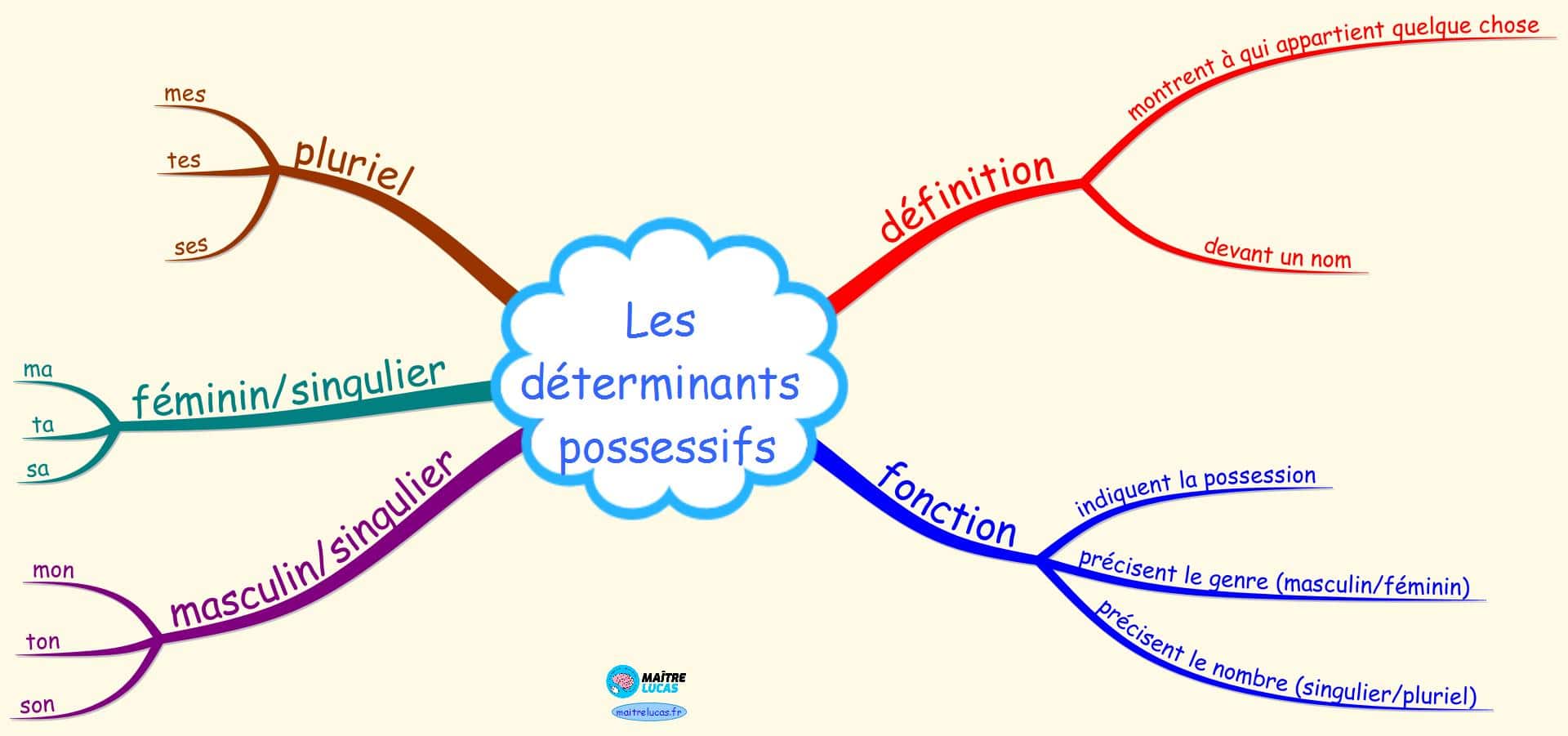
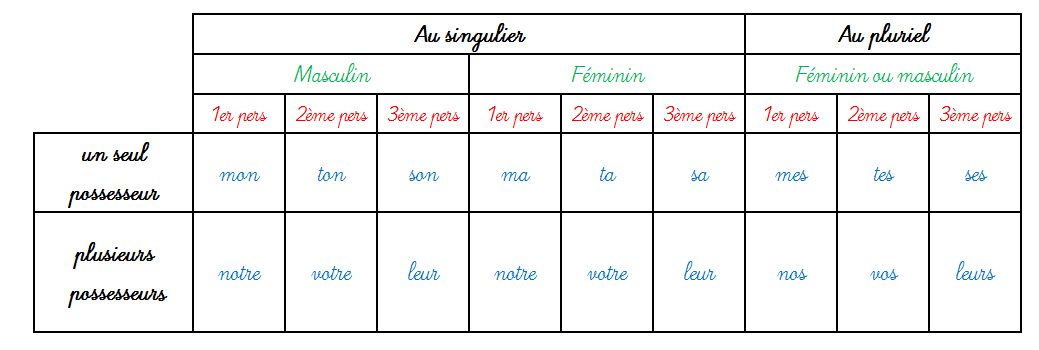
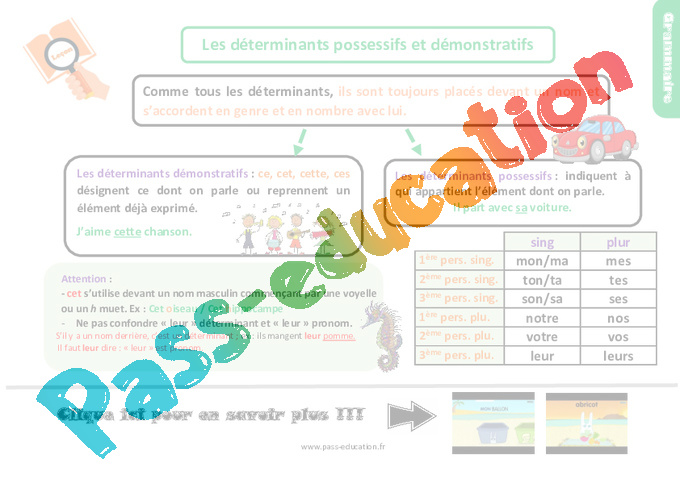
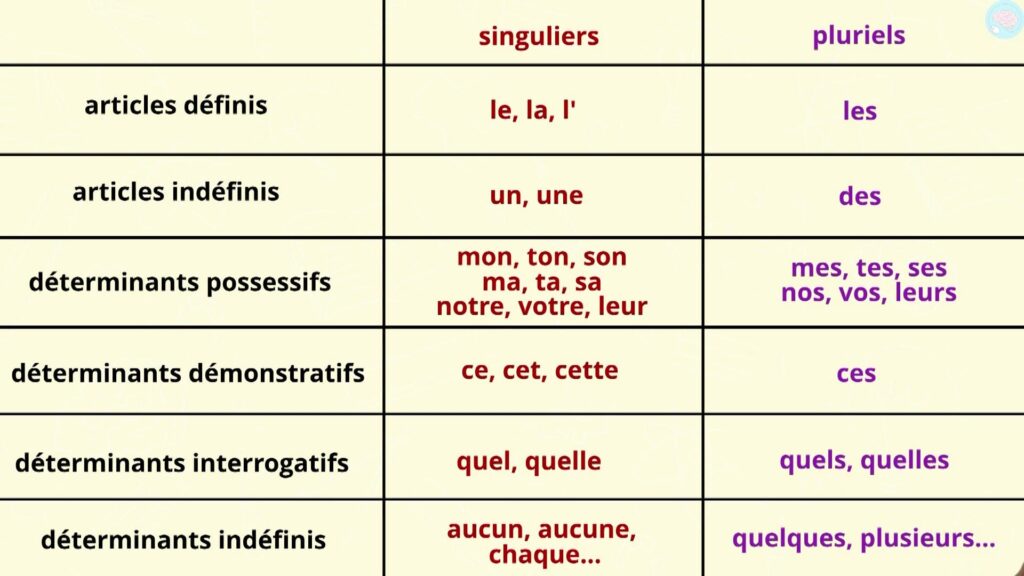
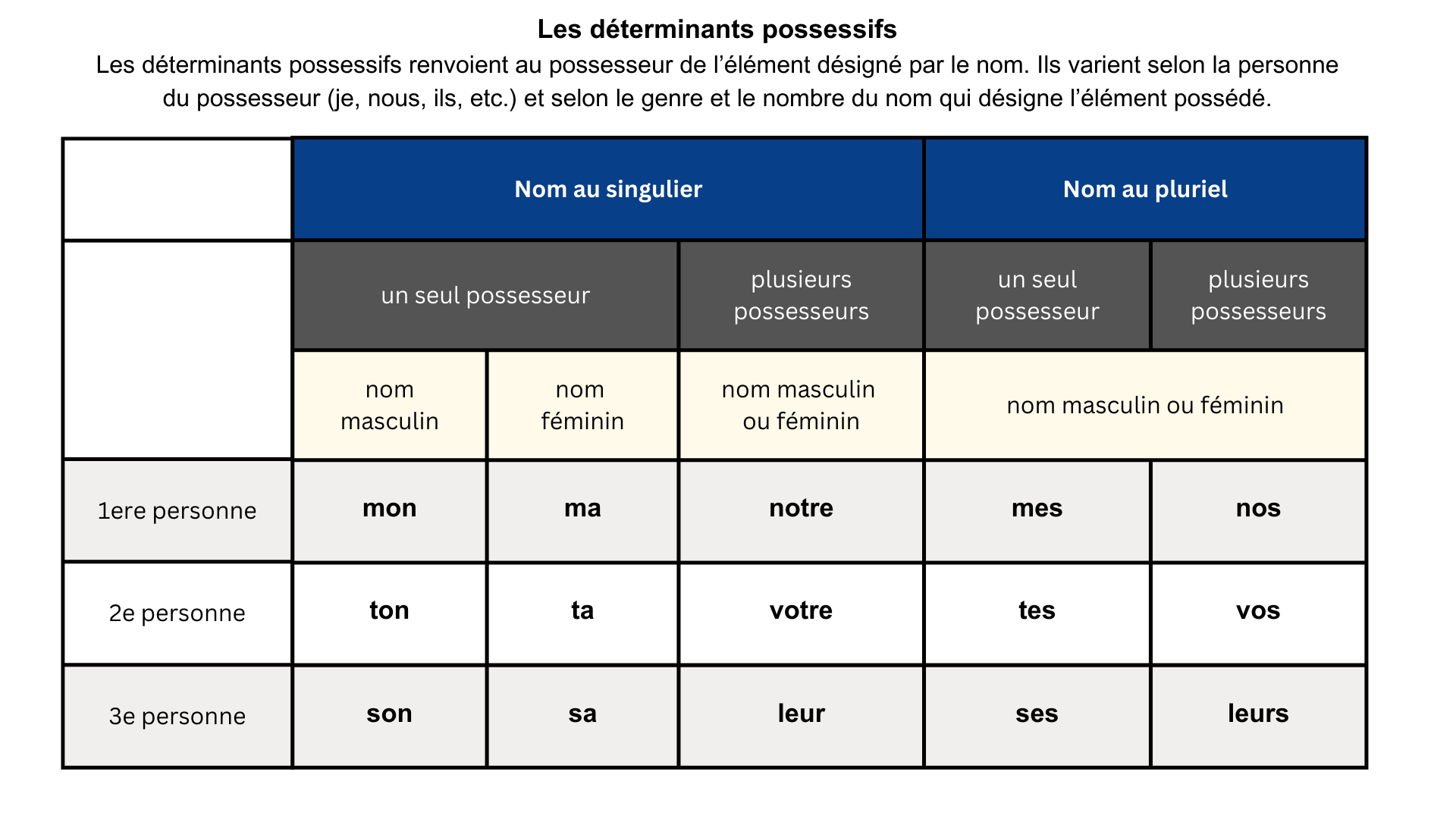
- Mon/Ma/Mes: My. Think of it as your personal brand. "Mon livre" (my book), "Ma voiture" (my car), "Mes amis" (my friends). Notice how it changes depending on the gender and number of the noun? We'll get there!
- Ton/Ta/Tes: Your (singular, informal). This is for talking to your buddies! "Ton vélo" (your bike), "Ta sœur" (your sister), "Tes parents" (your parents).
- Son/Sa/Ses: His/Her/Its. This one’s a bit tricky, because it doesn’t depend on who owns the thing, but on the gender of the thing itself! "Son chat" (his/her/its cat), "Sa mère" (his/her/its mother), "Ses idées" (his/her/its ideas).
- Notre/Nos: Our. It unites us! "Notre équipe" (our team), "Nos vacances" (our vacation).
- Votre/Vos: Your (formal, plural). Use this when talking to someone respectfully, or when addressing multiple people. "Votre attention" (your attention), "Vos billets" (your tickets).
- Leur/Leurs: Their. All together now! "Leur maison" (their house), "Leurs enfants" (their children).

Gender Bender! (Sort Of)
One of the little quirks of French is that nouns have genders – masculine or feminine. Why? Who knows! But it affects which possessive adjective you use, except with "notre," "votre," and "leur." It also gets interesting when a feminine noun starts with a vowel. For instance, you'd say "mon amie" (my friend - if 'friend' is feminine) instead of "ma amie" to avoid that awkward vowel collision. It sounds smoother, n'est-ce pas?
Why Learn Them?
Think of learning possessive adjectives like learning the chords on a guitar. Sure, you can strum a few basic tunes without them, but once you master them, you can play a symphony of expressive language! Learning this grammatical piece allows you to paint a richer portrait of your experiences and deepen your connection with the French language. And honestly, who doesn’t want to sound more sophisticated when ordering a croissant? Voilà! Go forth and conquer those possessive adjectives!