Okay, imagine this. You're making a cup of tea. You pour hot water over the tea bag, and BAM! The water slowly turns brown. Did you force the water to change color? No way! It just…happened. That's kind of the whole idea behind the "sens d'évolution spontanée" of a chemical system. It's the direction things naturally want to go.
We're not talking about some grand conspiracy of molecules deciding to dye your tea brown, though. It's all about thermodynamics, entropy, and a bunch of other words that probably made you sweat in high school chemistry. But fear not! We're going to break it down, nice and easy, like a perfectly steeped cup of Earl Grey.
What's Spontaneity All About? (It's Not Just Being Impulsive)
So, what is a spontaneous process in chemistry? It's basically a process that occurs without the need for continuous external energy input. Think of it like rolling a ball downhill – it just goes! No need to keep pushing it (unless there's a sneaky uphill section, which, let's be honest, life sometimes throws at you).
Contrast that with pushing a ball uphill. That requires effort, right? You have to put energy in. That's a non-spontaneous process. And yes, you guessed it, a non-spontaneous reaction requires a continuous supply of energy to keep going. Like, forever. Or at least until your arms give out.
Important note: Spontaneous doesn't mean fast. Rusting iron is spontaneous, but it takes ages. Meanwhile, an explosion is also spontaneous, but it happens in a flash. Spontaneity just tells you if the reaction can happen naturally, not how quickly it will happen. Got it? Good!
The Thermodynamics Tango: Enthalpy and Entropy
Okay, so how do we predict if a reaction will be spontaneous? That's where our thermodynamic partners come in: enthalpy (H) and entropy (S).
Enthalpy (ΔH): The Heat Seeker
Enthalpy is all about heat. More specifically, it's the heat absorbed or released during a reaction at constant pressure. A reaction that releases heat (gets hotter) is called exothermic, and it has a negative ΔH. A reaction that absorbs heat (gets colder) is called endothermic, and it has a positive ΔH.

Generally speaking, systems tend to favor lower energy states. So, exothermic reactions (negative ΔH) are often, but not always, spontaneous. Why "not always"? Because entropy exists and throws a wrench into everything.
Entropy (ΔS): The Chaos Coordinator
Entropy is a measure of disorder or randomness. Think of it like this: your clean room has low entropy. Your room after a week of neglecting chores? High entropy. Systems tend to move towards states of higher disorder (because, let's be real, who actually enjoys cleaning?).
Reactions that increase disorder (like a solid breaking into gas molecules) have a positive ΔS. Reactions that decrease disorder (like gas molecules combining to form a solid) have a negative ΔS.
Generally, reactions with a positive ΔS are more likely to be spontaneous. But, again, it's not the whole story!
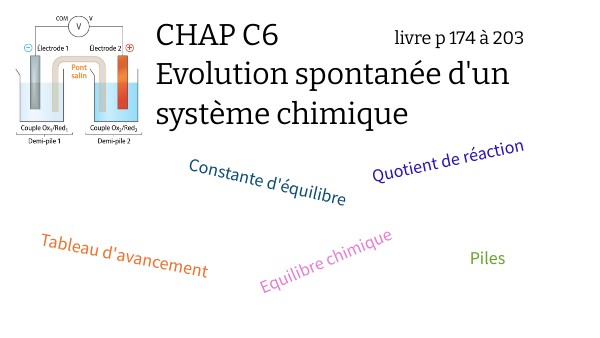
Gibbs Free Energy (ΔG): The Verdict
Finally, we arrive at the judge of spontaneity: Gibbs Free Energy (ΔG). This is where enthalpy and entropy have their showdown.
The equation for Gibbs Free Energy is:
ΔG = ΔH - TΔS
Where:
- ΔG is the Gibbs Free Energy change
- ΔH is the enthalpy change
- T is the temperature (in Kelvin!) – don't forget that!
- ΔS is the entropy change
The key here is the sign of ΔG:

- ΔG < 0: The reaction is spontaneous (or thermodynamically favorable) at that temperature.
- ΔG > 0: The reaction is non-spontaneous at that temperature. You need to put energy in to make it happen.
- ΔG = 0: The reaction is at equilibrium. The forward and reverse reactions are happening at the same rate. It's a stalemate!
See how both enthalpy and entropy play a role? An exothermic reaction (negative ΔH) and an increase in entropy (positive ΔS) will always result in a negative ΔG, making the reaction spontaneous. But what if they "disagree"? That's where temperature comes in!
Temperature's Two Cents: Flipping the Switch on Spontaneity
Temperature (T) is the great influencer. It amplifies the effect of entropy. Look back at the ΔG equation: ΔG = ΔH - TΔS. See how T multiplies ΔS? If ΔS is positive (increasing disorder), increasing the temperature will make the -TΔS term more negative, favoring spontaneity.
Let's look at some scenarios:
- ΔH is negative, ΔS is positive: ΔG is always negative, so the reaction is spontaneous at all temperatures. Hooray!
- ΔH is positive, ΔS is negative: ΔG is always positive, so the reaction is non-spontaneous at all temperatures. Bummer.
- ΔH is negative, ΔS is negative: ΔG can be negative at low temperatures. Lowering the temperature minimizes the impact of the negative ΔS term, making the overall ΔG negative.
- ΔH is positive, ΔS is positive: ΔG can be negative at high temperatures. Increasing the temperature amplifies the positive ΔS term, making the overall ΔG negative.
So, sometimes you can "force" a reaction to become spontaneous by tweaking the temperature! It's like bribing the molecules with thermal energy. Pretty neat, huh?

Practical Applications: More Than Just Academics!
Okay, so why should you care about all this? Well, understanding spontaneity is crucial in all sorts of real-world applications:
- Designing chemical reactions: Chemists use these principles to design reactions that are efficient and yield the desired products. Want to make a new drug? You better make sure the reaction that synthesizes it is spontaneous (or at least can be made spontaneous with a little temperature trickery!).
- Understanding biological processes: Many biological processes, like enzyme catalysis, are governed by thermodynamic principles. Understanding ΔG helps us understand how these processes work.
- Developing new technologies: From batteries to fuel cells, understanding spontaneity is essential for developing new energy technologies.
- Predicting the stability of materials: Knowing whether a material will spontaneously decompose or react with its environment is crucial for ensuring its long-term durability. Think about bridges, buildings, or even your phone.
Essentially, it's about understanding why things happen and how to control them. And who doesn't want a little more control, right?
In Conclusion: Spontaneity, A Dance of Energy and Disorder
The spontaneous evolution of a chemical system is a complex dance between enthalpy and entropy, with temperature acting as the choreographer. It's not just about things "happening" randomly; it's about the fundamental drive of systems to reach states of lower energy and higher disorder.
So, the next time you see something happen spontaneously – a sugar cube dissolving in water, ice melting on a warm day – remember that there's a whole world of thermodynamic principles at play, guiding the molecules along their natural course. And maybe, just maybe, you'll appreciate that cup of tea a little bit more.
Now go forth and ponder the mysteries of the universe (and maybe do the dishes, because entropy waits for no one)!




.jpg)