Okay, imagine this: I'm attempting to make crêpes. Crêpes! You know, the thin, delicate French pancakes that look so effortlessly chic on Instagram. I diligently follow the recipe, whisking and pouring, but no matter what I do, the batter stubbornly refuses to spread evenly on the pan. It just… clumps. Turns out, my pan wasn't hot enough. The batter needed that little oomph, that extra energy, to get moving. That's kind of like transport actif. It needs a little push, a little investment to get things where they need to be. But hold that thought, we'll circle back to my culinary struggles later (maybe with pictures of my inevitably disastrous crêpes!).
What are we even talking about?
So, transport actif and passif. Sounds intimidating, right? Like something you'd find in a dusty old biology textbook. But honestly, it's just a fancy way of describing how stuff moves across membranes in our bodies – and in, well, pretty much every living thing. We're talking cells here, folks! The tiny building blocks of life!
Think of it like this: your cells are like little apartments, and the membranes are the walls, complete with doors (and sometimes tiny windows!). Things need to get in and out – nutrients, waste, signals, you name it. And that's where transport actif and passif come into play. It's all about how these molecules get from point A to point B through those cell walls. Important stuff, if you want to, you know, keep living!
But why is this important to you? Well, understanding these basic principles helps you appreciate how your body works. Ever wonder how your medications get absorbed? How your muscles contract? Or even how your nerves send signals? It's all tied to these transport mechanisms. So pay attention – this is your body's user manual, simplified! (Sort of.)
Transport Passif: The Easy Way Out
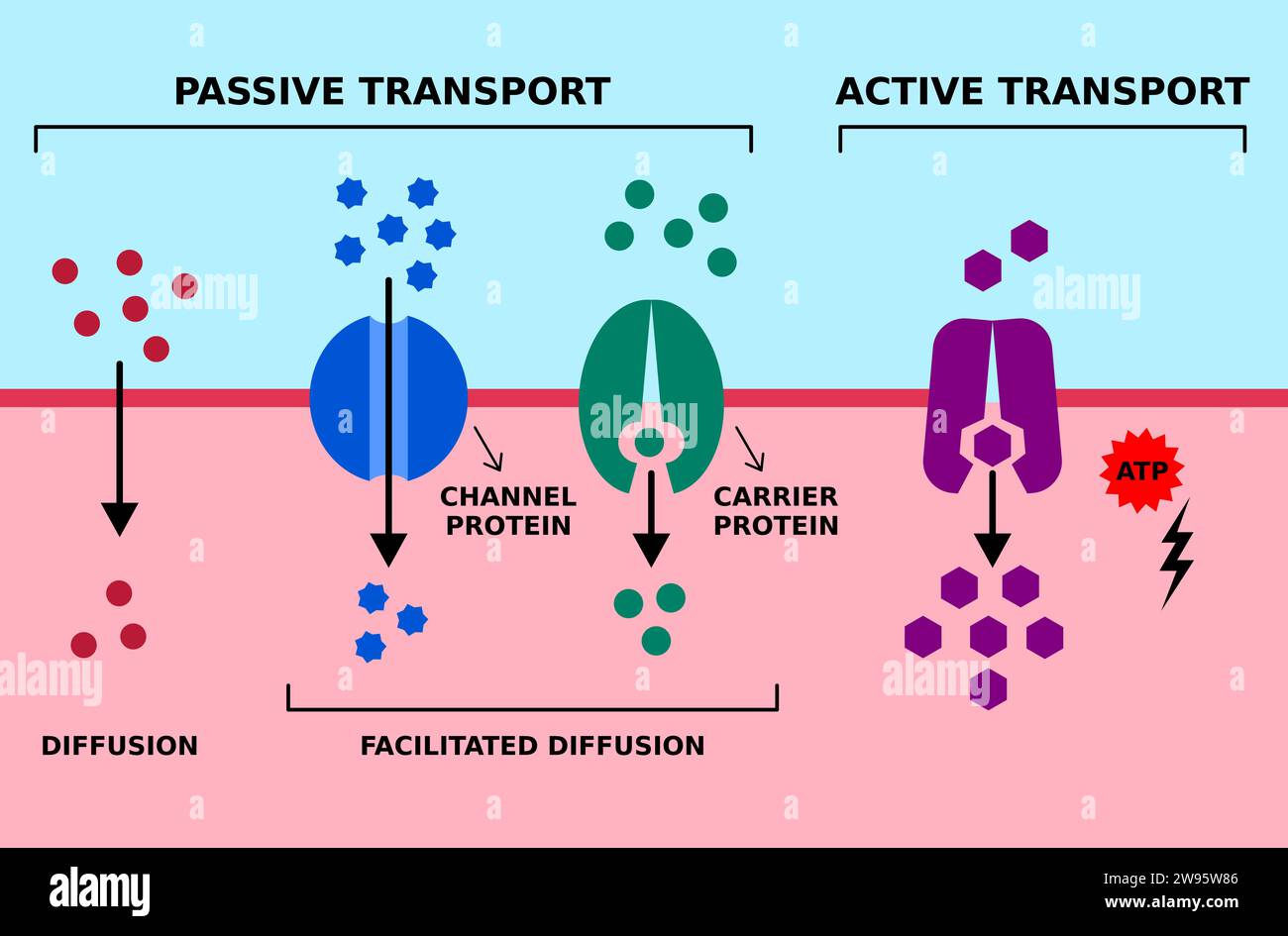
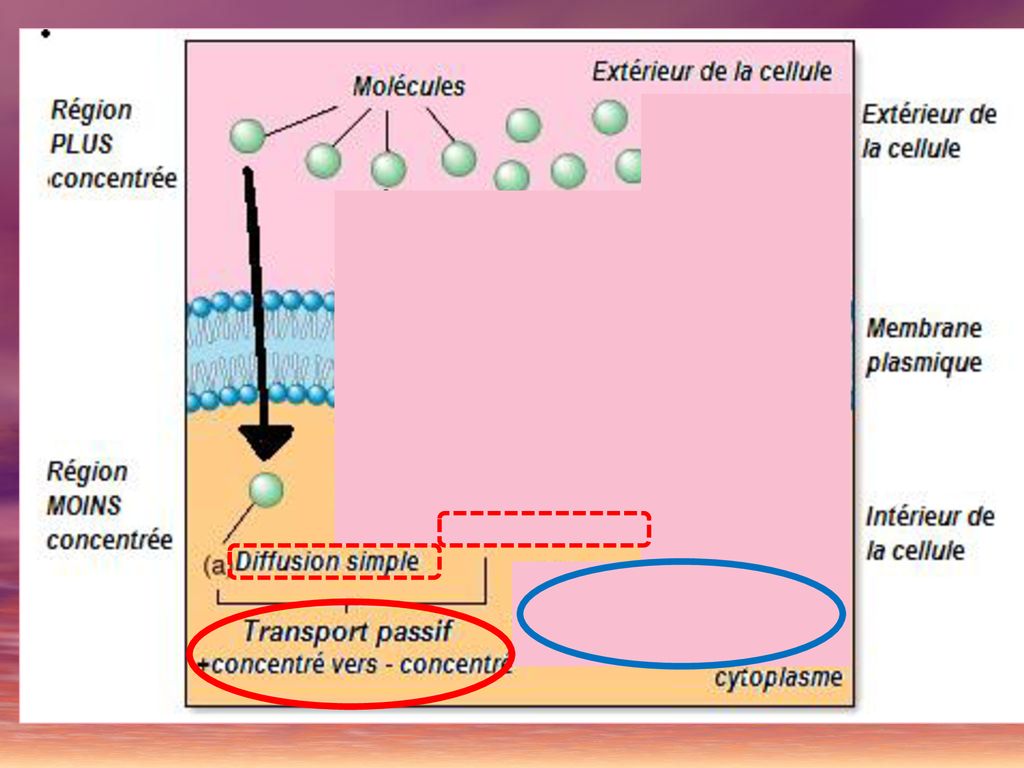
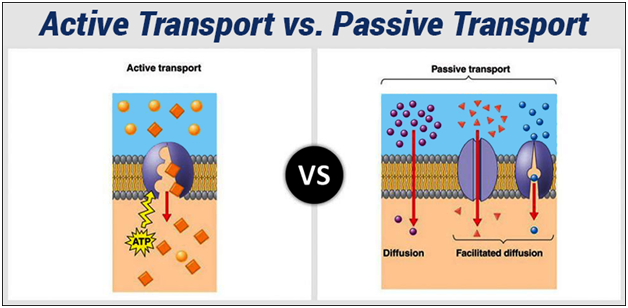
Okay, let's start with the simpler one: transport passif. This is the chill, laid-back method. It's all about going with the flow, like a lazy river ride. No energy required! The molecules just move from an area of high concentration to an area of low concentration. Think of it like perfume: when you spray it, the scent diffuses from where it's concentrated (the spray) to where it's less concentrated (the rest of the room). No effort required on the perfume's part! It just naturally spreads out.

There are a few different types of transport passif:
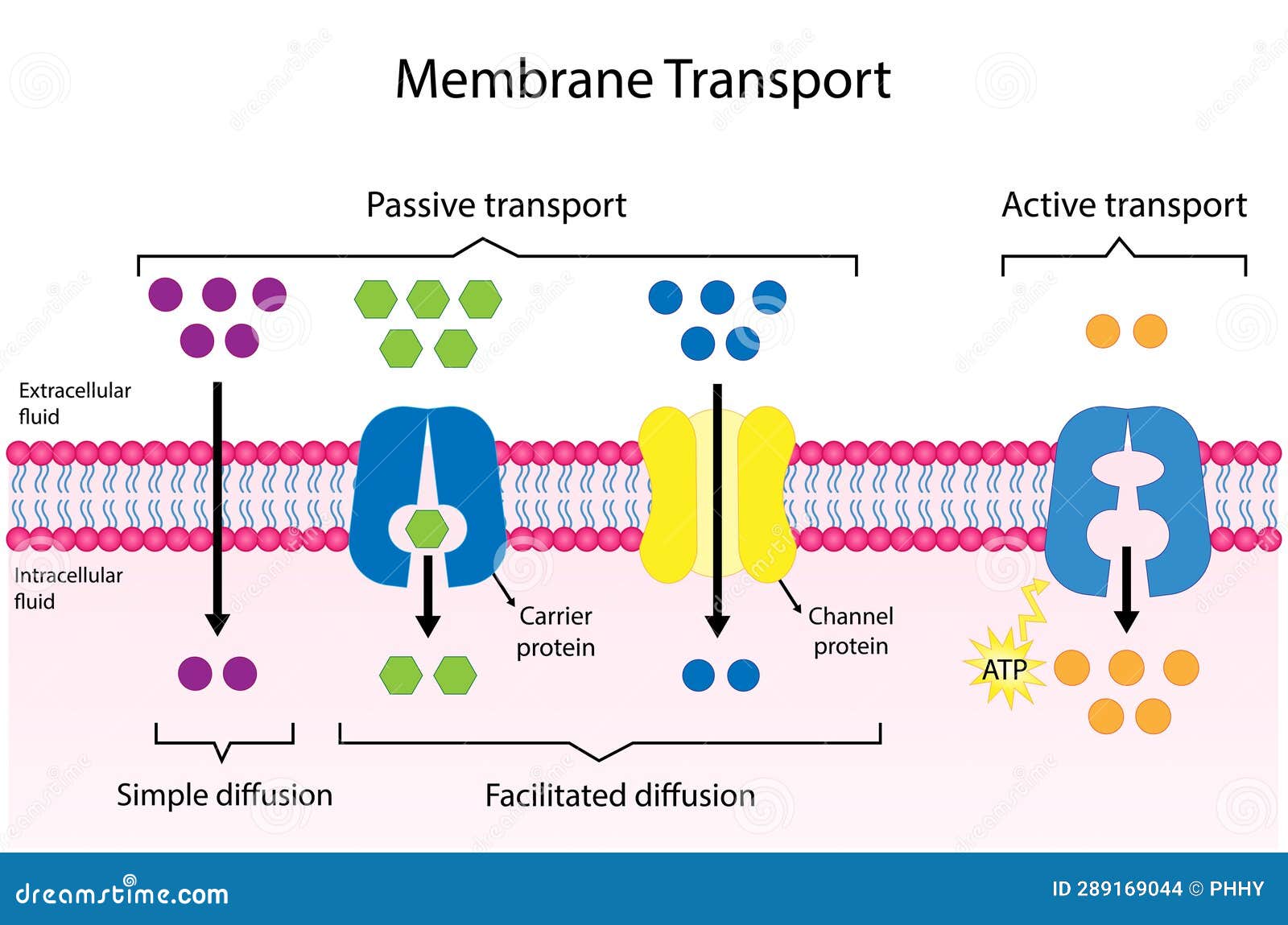
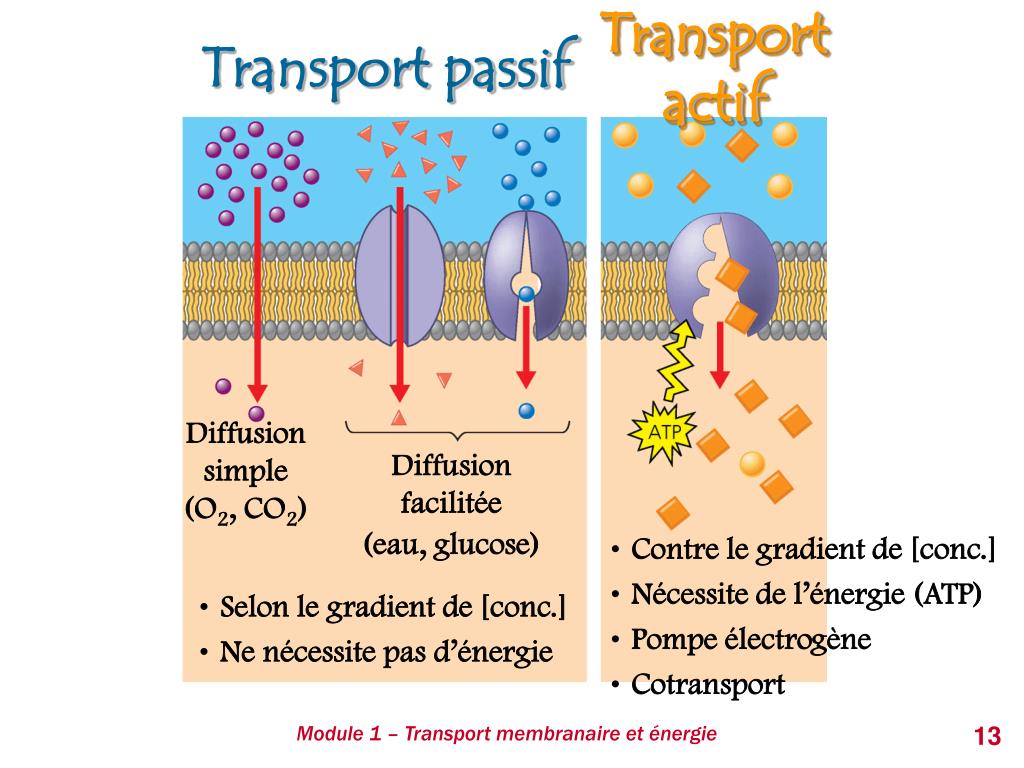
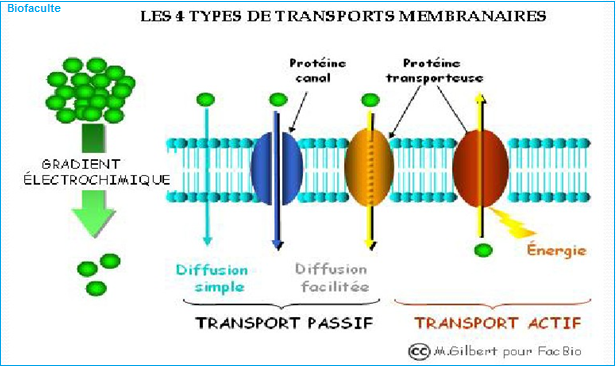
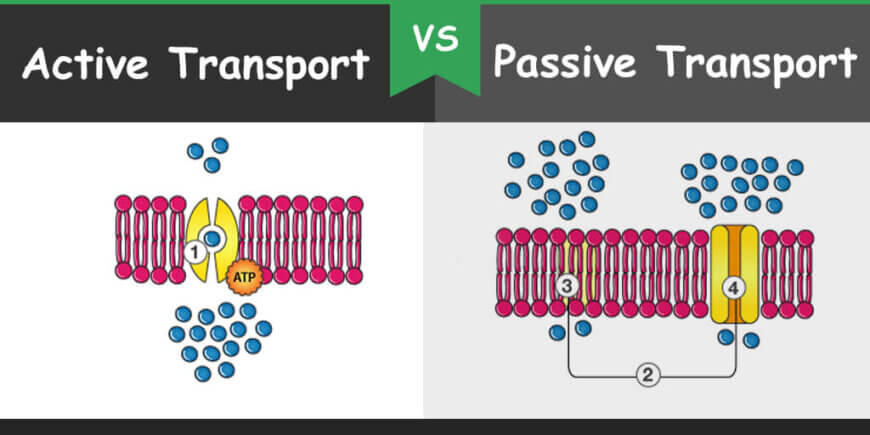
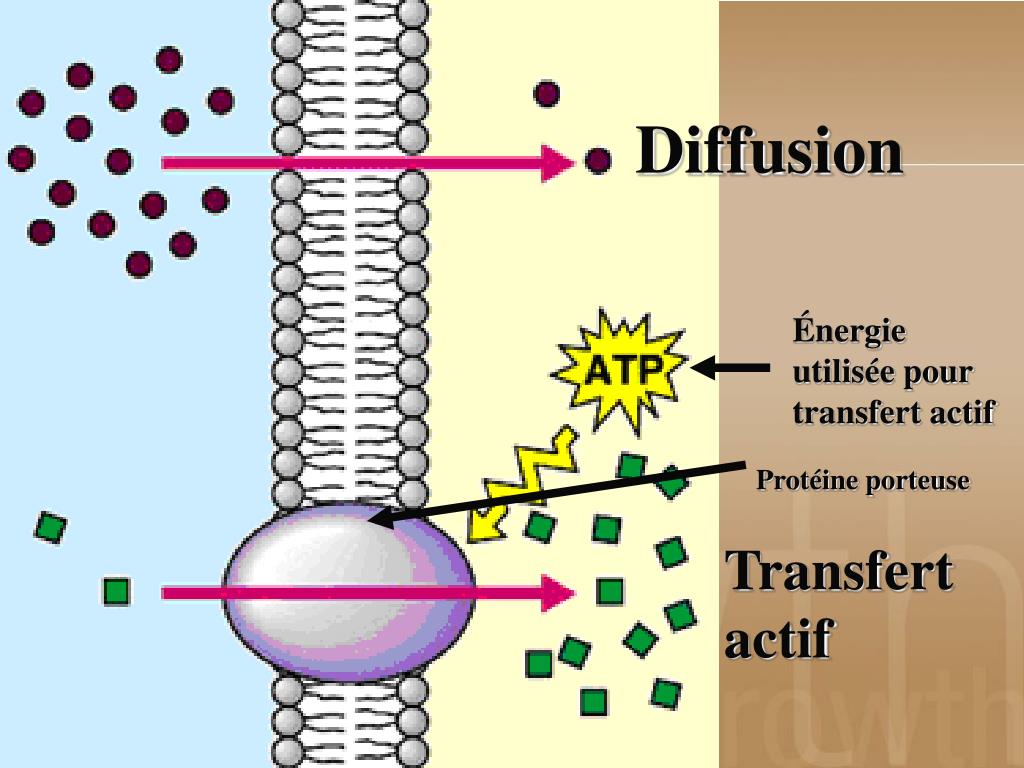
- Diffusion simple: This is the most basic type. Small, non-polar molecules (like oxygen and carbon dioxide) can slip right through the cell membrane without any help. They just squeeze between the phospholipids that make up the membrane. Easy peasy!
- Osmose: This is the diffusion of water across a semi-permeable membrane (like our cell membranes!). Water moves from an area of high water concentration (low solute concentration) to an area of low water concentration (high solute concentration). Think of it like this: water wants to dilute the area with more stuff dissolved in it. It's all about reaching equilibrium!
- Diffusion facilitée: Now, this is where things get a little more interesting. Some molecules are too big or too polar to squeeze through the membrane on their own. They need a little help. That's where membrane proteins come in! These proteins act like little "doors" or "channels" that allow specific molecules to pass through. But remember, it's still passive! The molecules are still moving down their concentration gradient, so the protein just facilitates the process, it doesn't require energy to shove them through. Think of it as having a doorman who holds the door open for you – you're still walking in on your own steam!
So, in a nutshell, transport passif is all about movement down the concentration gradient, requiring no energy input from the cell. It's the natural, effortless way of getting things across the membrane. Like rolling downhill, basically.
Transport Actif: Time to Burn Some Calories!
Now, let's talk about transport actif. This is the more demanding, high-energy option. Instead of going with the flow, it's like swimming upstream against the current. It requires the cell to expend energy (usually in the form of ATP) to move molecules against their concentration gradient – that is, from an area of low concentration to an area of high concentration. Imagine trying to shove more and more people into an already crowded elevator. You'd need some serious muscle (or, in the cell's case, ATP) to make that happen!
Why would a cell want to do this? Well, sometimes it needs to. It might need to maintain a high concentration of a certain molecule inside the cell, even if the concentration outside is low. Or it might need to get rid of waste products, even if there's already a lot of them outside. It’s like bailing water out of a leaky boat, even though it's raining – you have to do it to stay afloat!
There are a few different types of transport actif:

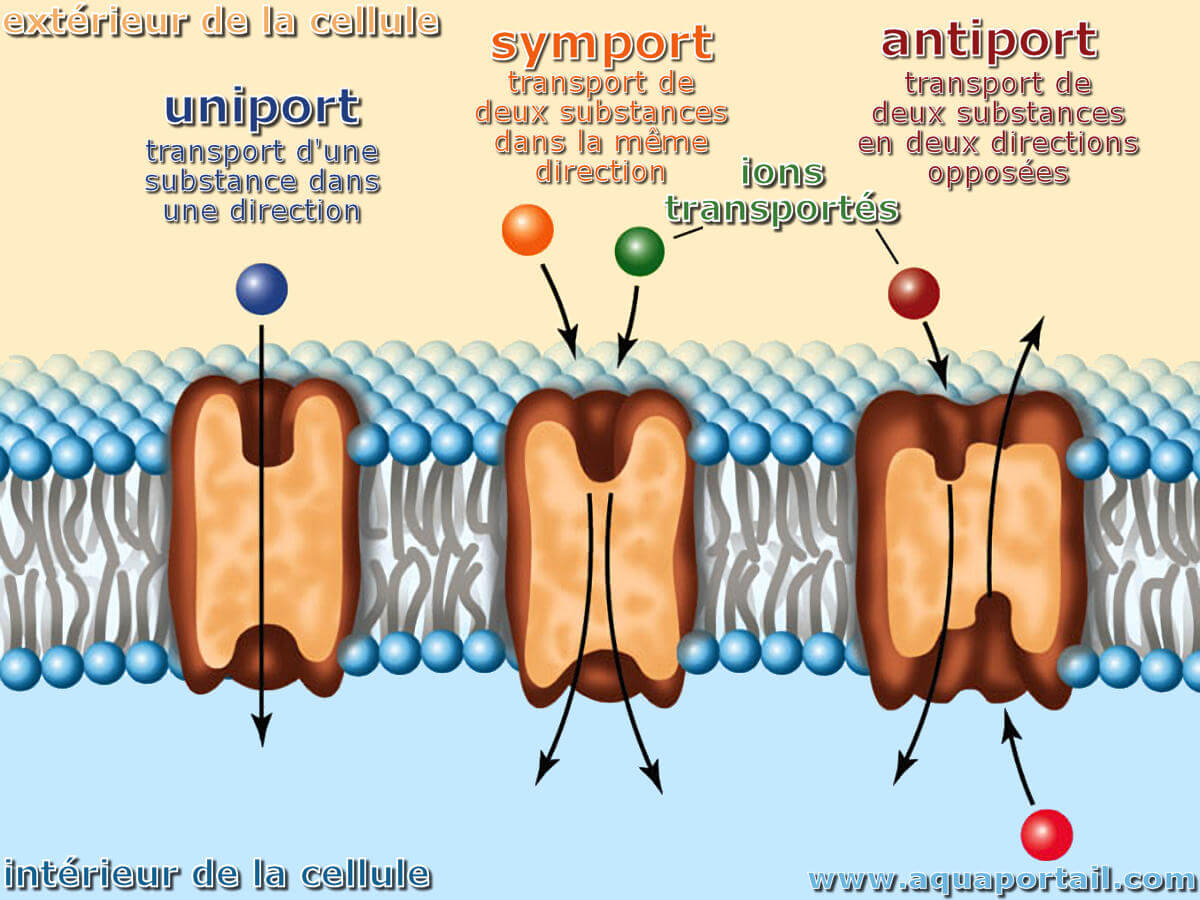
- Transport actif primaire: This is where the cell directly uses ATP to move molecules. Think of it like using a pump to force water uphill. A classic example is the sodium-potassium pump, which is crucial for nerve impulse transmission and maintaining cell volume. This pump uses ATP to move sodium ions out of the cell and potassium ions into the cell, both against their concentration gradients. It’s a real workhorse!
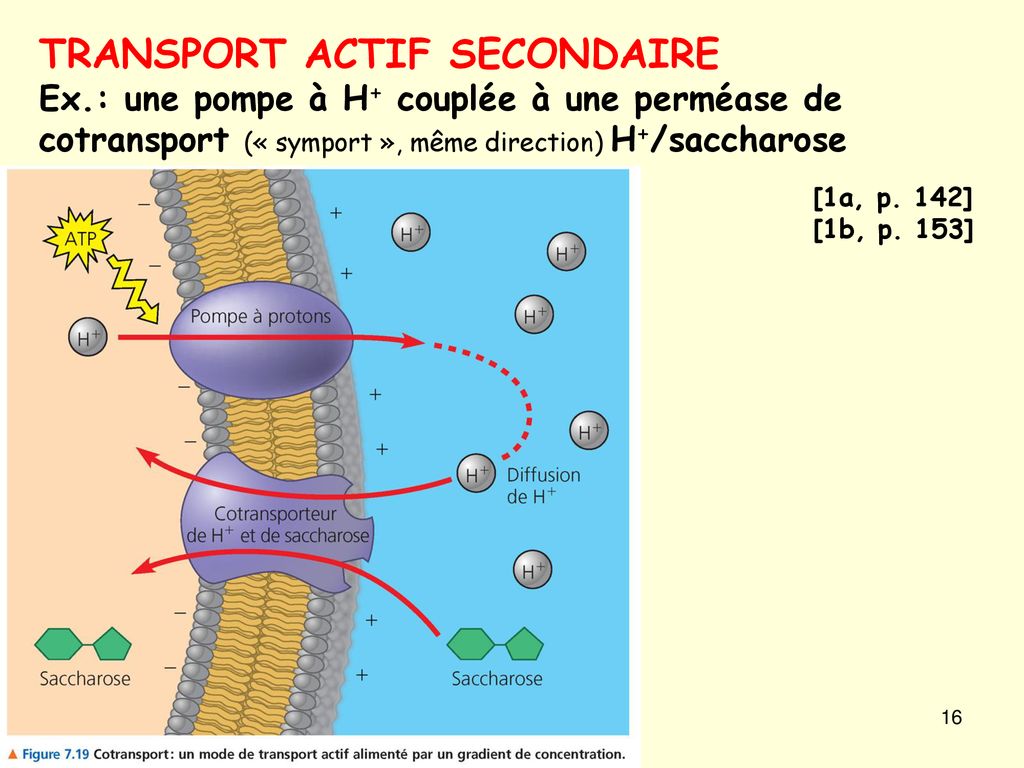
- Transport actif secondaire: This one's a little sneakier. It doesn't directly use ATP, but it indirectly relies on the energy created by another transport process. Think of it like using a seesaw: one side (the primary transport) uses energy to go down, and the other side (the secondary transport) is lifted up as a result. For example, the sodium-glucose cotransporter uses the energy from the movement of sodium ions (down their concentration gradient) to pull glucose into the cell (against its concentration gradient). So, sodium is going where it wants, and essentially drags glucose along with it. Pretty clever, huh?
In short, transport actif is all about moving molecules against their concentration gradient, requiring the cell to expend energy. It's the demanding but necessary way to maintain the right balance inside and outside the cell. Like climbing a mountain, hard work but necessary to see the view from the top!
Back to My Crêpes (and the connection!)
Remember my crêpe debacle? The batter wouldn't spread because the pan wasn't hot enough. The heat (energy!) was needed to make the batter flow properly. That's kind of like transport actif – without the energy (ATP), the molecules just won't move against their concentration gradient. They'll just clump together, refusing to go where they're supposed to go. Just like my crêpe batter! (Okay, maybe it's a slightly stretched analogy, but you get the idea!).
Now, if I'd simply left a bowl of sugar on the counter, and some of it naturally diffused into the air (making the kitchen slightly sweeter over time), that would be like transport passif. The sugar molecules are moving from a high concentration (the bowl) to a low concentration (the air), without any extra energy needed.
So, What's the Big Takeaway?
Ultimately, both transport actif and passif are essential for cell survival. Transport passif is efficient for moving molecules that readily diffuse across the membrane, while transport actif allows cells to maintain specific internal environments and transport molecules against their concentration gradients. They work together to ensure that cells get what they need and get rid of what they don't. Pretty amazing, when you think about it! (And way more complex than making crêpes, apparently.)
Hopefully, this has cleared up the difference between transport actif and passif. It might sound complicated, but once you break it down, it's actually quite logical (even if my crêpe analogy is a bit of a stretch!). Now, if you'll excuse me, I'm going to go try to salvage my crêpe batter. Wish me luck!






![2. Transport membranaire [biologie cellulaire] - 2.3 Le transport des](http://ressources.unisciel.fr/biocell/chap2/res/fig10b_1.jpg)

