Salut, mes amis francophiles! Ever felt like French grammar is this gigantic, imposing fortress? Well, fear not! Today, we're going to scale one of its walls together, and trust me, it's going to be way more fun than you think. We're diving into the murky depths... just kidding! We're actually going to explore the bright and sunny land of the verbe "attendre" (to wait) in the passé simple. Yes, you heard right. The passé simple! Don't run away screaming just yet!
I know, I know, the passé simple has a reputation. It's often described as this literary tense used only in formal writing and dusty old novels. And to some extent, that's true. You probably won’t use it ordering a café au lait. But understanding it unlocks a whole new level of appreciation for French literature and culture. Think of it as a secret decoder ring for understanding classic French stories! And who doesn't want a secret decoder ring?!
Pourquoi "Attendre"? (Why "To Wait"?)
So, why are we focusing on "attendre"? Well, first, it's a super useful verb! We all wait for things, right? The bus, our friends, that online order we desperately need… Second, its passé simple conjugation is fairly regular, making it a great starting point for conquering this tense. Baby steps, my friends, baby steps! Besides, "attendre" evokes a certain… anticipation! And isn't anticipation part of the fun of life?
Conjugating "Attendre" in the Passé Simple
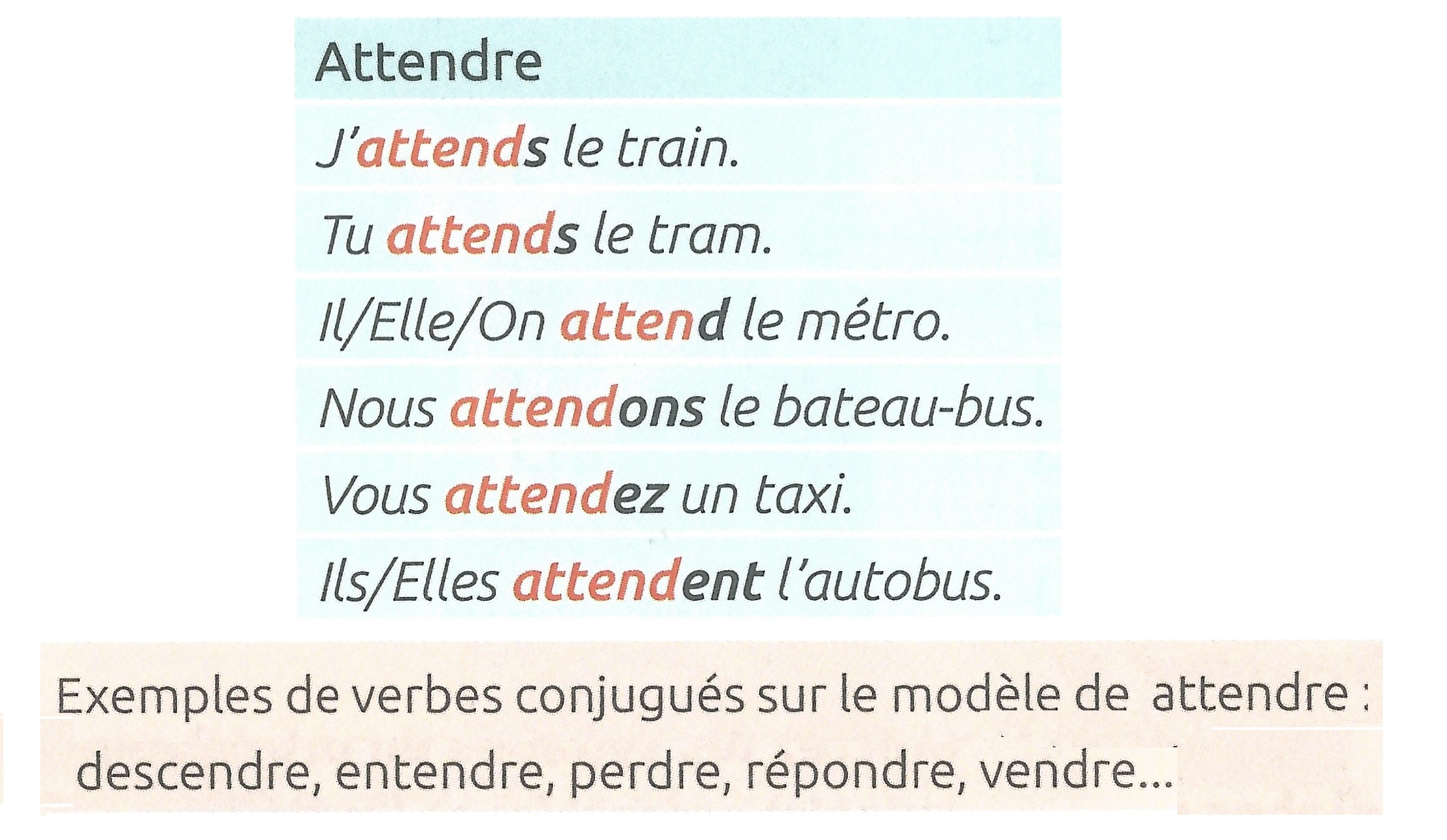
Alright, let's get down to brass tacks. Here’s how "attendre" looks in the passé simple:
- Je attendis (I waited)
- Tu attendis (You waited - singular, informal)
- Il/Elle/On attendit (He/She/One waited)
- Nous attendîmes (We waited)
- Vous attendîtes (You waited - plural or formal)
- Ils/Elles attendirent (They waited)
See? It's not THAT scary! Okay, maybe it looks a little intimidating at first glance, especially those little hats (circonflexes) over the 'i's in attendîmes and attendîtes. But trust me, with a little practice, it will become second nature.
Putting it into Practice: Examples Galore!
Now, the fun part! Let's see "attendre" in the passé simple in action. Imagine you're writing a dramatic historical novel (because why not?!). Here are some examples:

- "Je l'attendis pendant des heures sous la pluie battante," (I waited for him for hours in the pouring rain). Dramatic, right?
- "Elle attendit le signal avec impatience," (She waited for the signal impatiently). Tension building!
- "Nous attendîmes le verdict du roi avec appréhension," (We waited for the King's verdict with apprehension). High stakes!
- "Vous attendîtes patiemment votre tour," (You waited patiently for your turn). Good behavior rewarded!
- "Ils attendirent la fin de la tempête," (They waited for the end of the storm). Survival story!
- "Le peuple attendit l'arrivée du héros," (The people waited for the arrival of the hero). Classic!
Notice how the passé simple adds a certain weight and finality to the action? It's perfect for describing completed actions in the past, especially in narrative writing.
Passé Simple vs. Passé Composé: What's the Difference?
Okay, this is the big question, isn't it? "But wait!" you might be saying, "Isn't the passé composé (the 'I have waited' tense) already the past tense?" And you'd be right! The passé composé is the most common way to talk about the past in French. So, why bother with the passé simple at all?
Think of it this way: The passé composé is like telling a story to a friend over coffee – casual and conversational. The passé simple, on the other hand, is like writing that story down in a beautifully bound book – more formal and literary.

Generally, the passé composé emphasizes the result of the action, while the passé simple focuses on the action itself. It often describes a series of completed actions that advance the plot in a story. But the best way to recognize it? Most modern speakers of French, especially in conversational French, tend to use the passé composé for most past events.
For example:
- Passé Composé : "J'ai attendu le bus pendant 20 minutes." (I waited for the bus for 20 minutes.) - Focus is on the fact that you waited.
- Passé Simple : "J'attendis patiemment le bus, puis il arriva enfin." (I waited patiently for the bus, then it finally arrived.) - Focus is on the sequence of events in a story.
Little Tricks and Tips
Learning the passé simple can feel like memorizing a bunch of random endings, but there are a few tricks that can help:
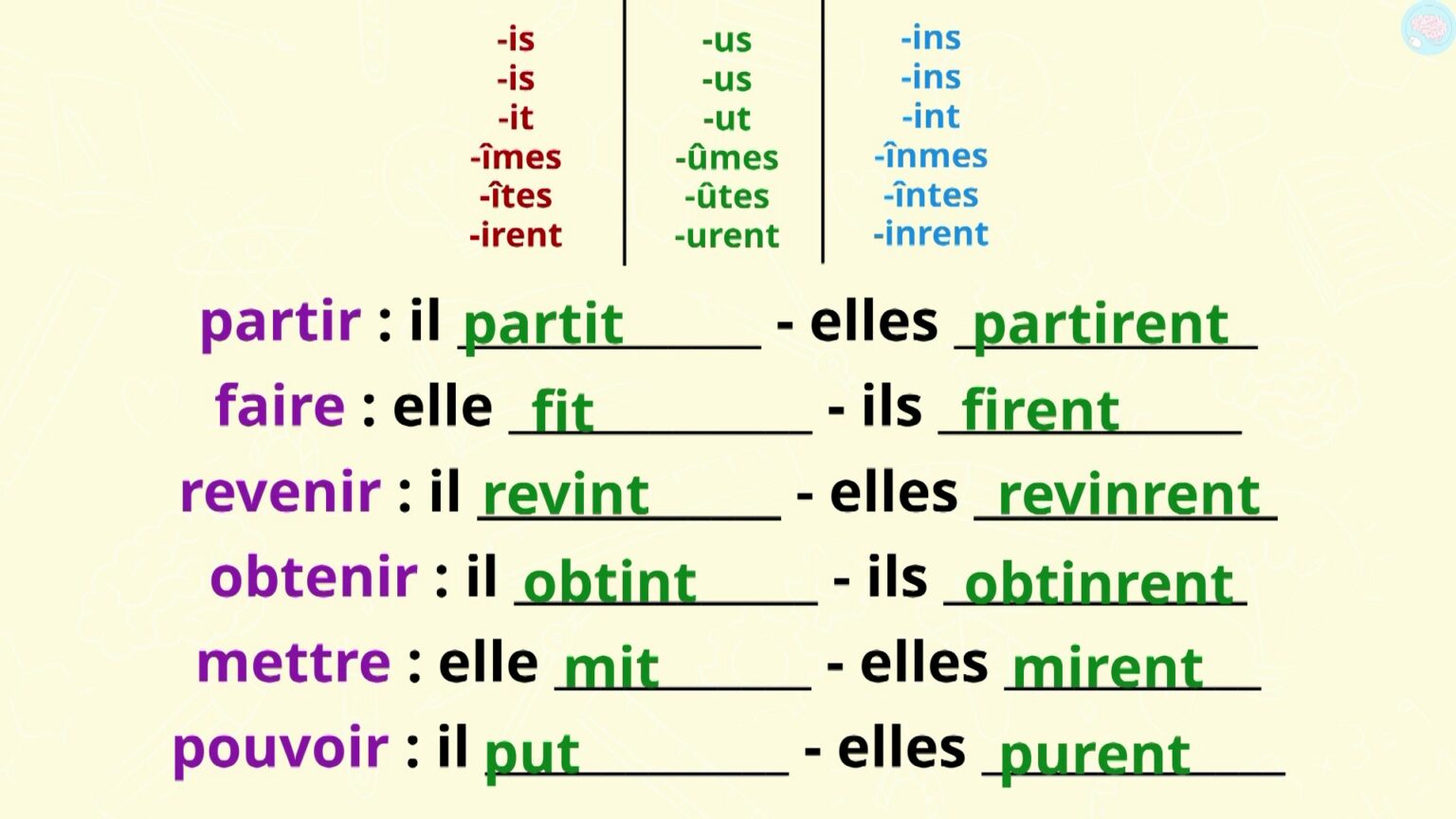
- Look for Patterns: Notice how many of the endings are similar to other verb conjugations. This can help you remember them more easily.
- Read, Read, Read: The more you read French literature, the more you'll encounter the passé simple and the more familiar it will become.
- Don't Stress: The passé simple is not something you need to master overnight. Be patient with yourself and celebrate your progress!
- Flashcards are your friend! Old-school perhaps, but they work. Write the infinitive on one side and the passé simple conjugations on the other.
Why Bother? The Payoff
So, why should you even bother with this seemingly archaic tense? Because understanding the passé simple unlocks a deeper appreciation for French literature and culture. It allows you to read classic novels and poems with greater understanding and nuance. It gives you a sense of the history and evolution of the French language. And, let's be honest, it makes you sound incredibly sophisticated! Imagine casually dropping a passé simple conjugation into a conversation… people will be impressed!
Furthermore, the passé simple helps you grasp the overall structure of the French language. If you can successfully navigate the passé simple, other aspects of French grammar will feel much less daunting. It's like conquering a tough level in a video game – it gives you the confidence to tackle the next challenge!
Also, seriously, being able to understand the passé simple helps you understand a LOT of French literature! Without it, you miss half the story – so to speak.
Allez-y! (Go for It!)
The passé simple might seem intimidating at first, but it's totally conquerable. By focusing on one verb at a time, like "attendre," and practicing regularly, you can master this important aspect of French grammar and unlock a whole new world of literary enjoyment. Don't be afraid to make mistakes – that's how we learn! Embrace the challenge, have fun with it, and remember that every step you take, no matter how small, brings you closer to fluency.
Now, go forth and attendez… oops! I mean, go forth and learn! The world of French literature awaits you, and it's filled with stories just waiting to be discovered. And who knows, maybe you'll even write your own dramatic historical novel one day! Bonne chance! (Good luck!)
Feeling inspired? Excellent! Now, go find another verb and conquer its passé simple. The journey of a thousand miles begins with a single step… or in this case, a single conjugated verb!




.jpg)