Alright, mes amis! Let's talk about something super important in French – the verbs avoir and être. Think of them as the Beyoncé and Jay-Z of the French language; they're everywhere, powerful on their own, and even more impactful together. If you want to truly unlock your French speaking potential, understanding these two is key. Don't worry, we'll break it down in a chill, no-stress way, perfect for sipping your café au lait while you learn.
Avoir: To Have and So Much More
Avoir, meaning "to have," is your go-to verb for possession, of course. "J'ai une voiture" – I have a car. Easy peasy! But it's way more versatile than just owning stuff. Avoir helps express age, feelings, and even physical sensations. Ready for some examples?
- Age: J'ai 30 ans (I am 30 years old – literally, "I have 30 years").
- Feelings: J'ai peur (I am scared – literally, "I have fear"). Think about it, you possess the feeling!
- Physical sensations: J'ai faim (I am hungry – "I have hunger") or J'ai soif (I am thirsty – "I have thirst").
See how it works? It might feel a little strange at first, especially if you're used to English, but trust me, it becomes second nature. Just embrace the French way of expressing these things, and you'll sound like a pro in no time.
Conjugating Avoir: Your Cheat Sheet
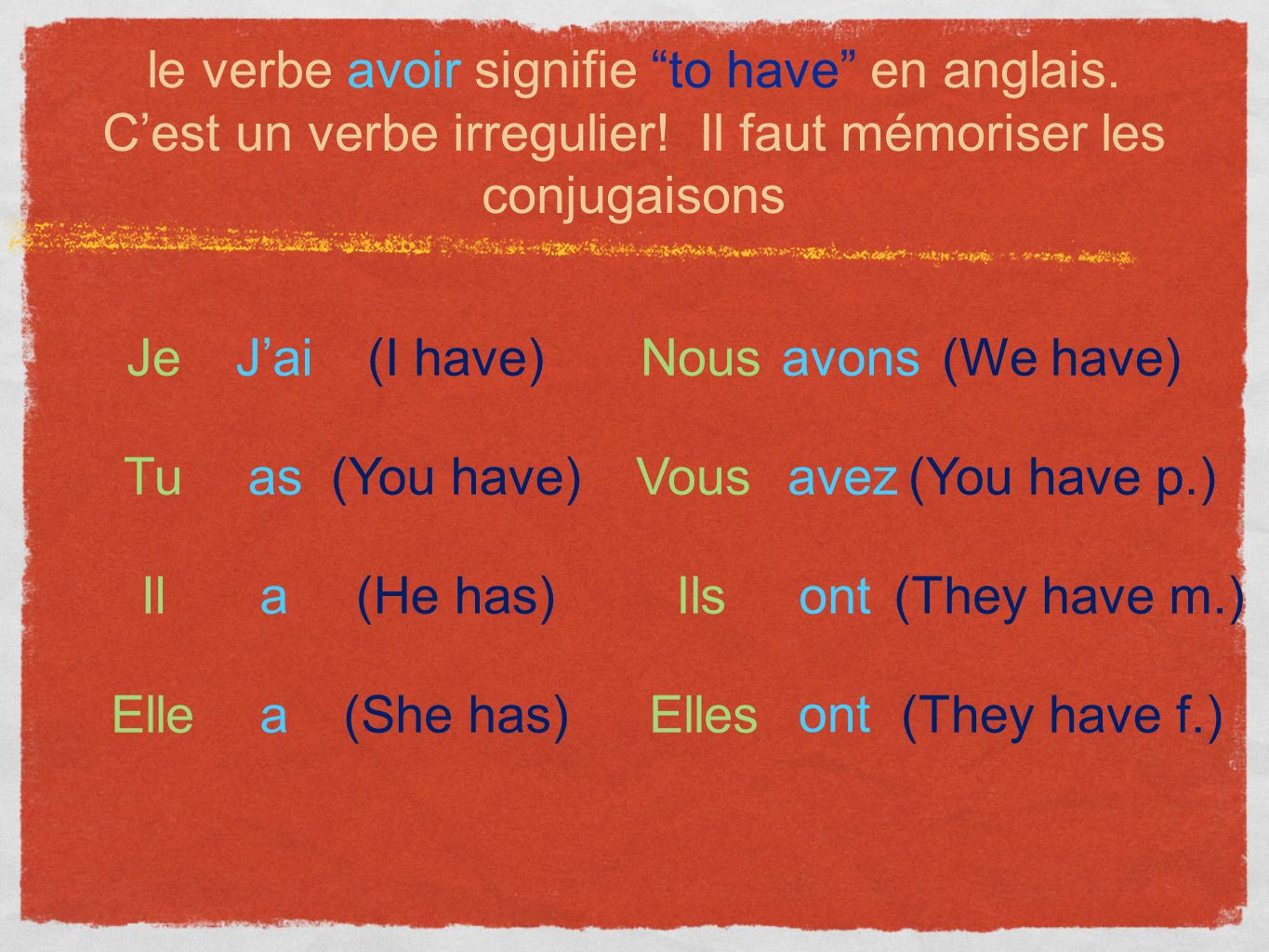
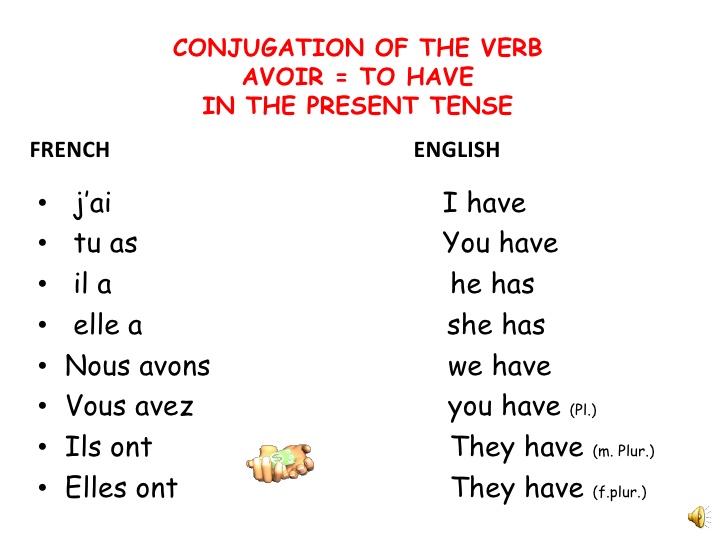
Now, the slightly less thrilling, but equally essential part: conjugation! Here's a quick rundown:
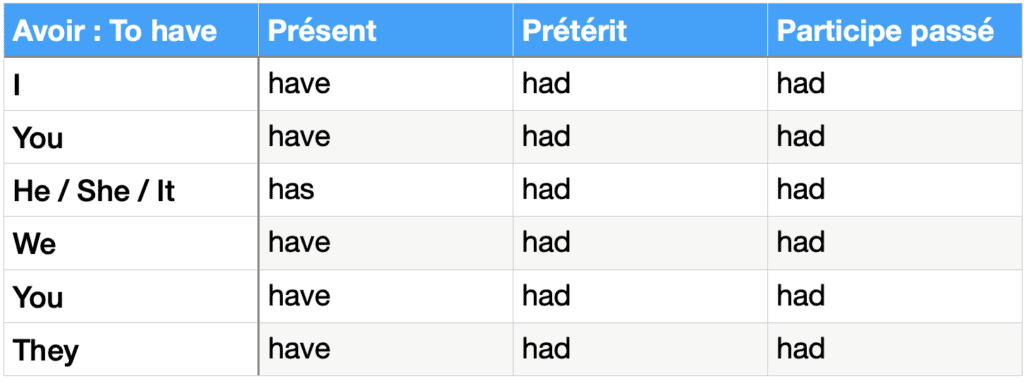
- J'ai (I have)
- Tu as (You have - informal)
- Il/Elle/On a (He/She/One has)
- Nous avons (We have)
- Vous avez (You have - formal/plural)
- Ils/Elles ont (They have)
Practice makes perfect, so try plugging in different nouns after each form. J'ai un chat, tu as un livre, elle a un sourire... Get creative!
Avoir in the Passé Composé: A Power Player
Avoir is a key auxiliary verb in the passé composé (past perfect tense), one of the most common ways to express past actions in French. It's used with most verbs to indicate that something happened in the past.
Example: J'ai mangé une baguette (I ate a baguette). "Mangé" is the past participle of "manger" (to eat), and avoir helps us put it in the past. Think of avoir as giving the action a timestamp. You'll find yourself using this tense all the time, so getting comfy with avoir here is crucial.
Être: To Be and Beyond
Next up, the equally indispensable être, meaning "to be." This verb is all about states of being, descriptions, and identity. Think of it as the verb of existence – it tells you what something is or how something is.
- Identity: Je suis Américain(e) (I am American).
- Description: Il est grand (He is tall).
- State of Being: Elle est fatiguée (She is tired).
Just like avoir, être has a few tricks up its sleeve. It's not just about being; it's about defining.
Conjugating Être: The Breakdown
Time for conjugation! This one is arguably even more important than avoir, so pay close attention:

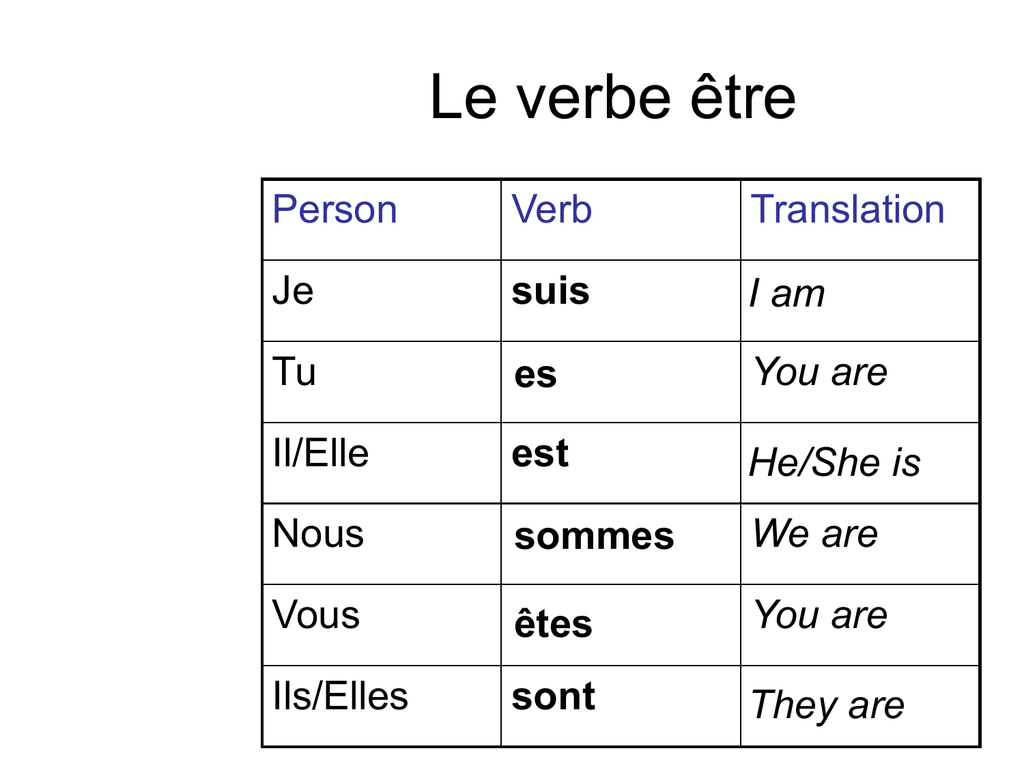
- Je suis (I am)
- Tu es (You are - informal)
- Il/Elle/On est (He/She/One is)
- Nous sommes (We are)
- Vous êtes (You are - formal/plural)
- Ils/Elles sont (They are)
Memorize this like you memorize your favorite Netflix password! You'll thank yourself later.
Être and the Passé Composé: Teamwork Makes the Dream Work
Just like avoir, être also plays a vital role in the passé composé. However, it partners with a specific group of verbs, often relating to movement or a change of state. This group is often remembered with the acronym "DR & MRS VANDERTRAMP" (though don't worry too much about the acronym itself, just understand the concept).
Examples:
- Je suis allé(e) au cinéma (I went to the cinema). "Aller" (to go) uses être in the past tense. Note the "(e)" – if you're female, you add an "e" to agree with the subject. French grammar loves agreement!
- Elle est née en France (She was born in France). "Naître" (to be born) also uses être.
Mastering which verbs take être in the passé composé takes practice, but it's a crucial step in fluent French.

Avoir vs. Être: When to Use Which?
This is the million-dollar question, isn't it? Here's a simplified guide:
- Avoir: Possession, age, feelings, physical sensations, and as the auxiliary verb for most verbs in the passé composé.
- Être: Identity, descriptions, state of being, and as the auxiliary verb for "DR & MRS VANDERTRAMP" verbs in the passé composé.
A great tip is to think, does this action describe a state? Then it's more likely to be être, if the action is something you do or possess it's likely to be avoir.
Pro Tip: When in doubt, look up the verb conjugation in a dictionary. It will tell you which auxiliary verb to use in the passé composé.
Little French Fun Facts
Did you know that the French are incredibly particular about grammar? While English speakers might be more forgiving of minor errors, the French value precision and accuracy. This isn't about being snobby; it's about a deep appreciation for the language's elegance and clarity. So, put in the effort, and your French friends will appreciate it!

Also, the phrases "J'ai le cafard" (I have the cockroach) is a fun idiom that means "I'm feeling down" or "I have the blues." See? Even in moments of sadness, there's a bit of French humor!
One last thing - French people love being complimented on their language skills (even if you're just starting out!) A simple "Votre français est très bon" (Your French is very good) can go a long way.
Putting it All Together: A Little Reflection
Learning avoir and être might seem like a daunting task, but it's truly the foundation upon which your French language skills will be built. It's like learning the basic chords on a guitar – once you have them down, you can play countless songs.
Think about how often you use "to have" and "to be" in your native language. These verbs are the building blocks of communication, and their French counterparts are no different. The more you practice, the more natural they will become. Don't be afraid to make mistakes; that's part of the learning process! Embrace the challenge, and enjoy the journey of mastering these essential verbs. Soon, you'll be chatting with Parisians like a true local. Bon courage! (Good luck!)