Ah, l’imparfait. This tense, a gentle echo from the past, often feels like a cozy armchair in the otherwise fast-paced living room of French grammar. It's not about doing something definitively, but about being in a state of doing something. Think of it less as a destination and more as a beautiful, meandering journey. Let's unpack this delicieux tense together, shall we?
Un Petit Voyage dans le Temps: Why Use the Imparfait?
Imagine you're telling a story. Not a quick anecdote, but a real, fleshed-out narrative. You need to set the scene, to paint a picture of what things used to be like. That's where the imparfait shines.
Describing Past Habits and Repeated Actions
The most common use of the imparfait is to describe habits or repeated actions in the past. Things you regularly did, not just once.
- Quand j'étais petit, je regardais toujours des dessins animés le samedi matin. (When I was little, I always watched cartoons on Saturday mornings.)
- Avant, elle allait tous les jours à la bibliothèque. (Before, she went to the library every day.)
- Nous jouions souvent au foot dans le parc. (We often played soccer in the park.)
Setting the Scene and Describing Background Information
Think of the opening scenes of a movie. Before the plot kicks in, we see the setting, the atmosphere, the general vibe. The imparfait helps you do that in French.
- Il faisait beau et le soleil brillait. (It was beautiful and the sun was shining.)
- La musique était douce et les lumières étaient tamisées. (The music was soft and the lights were dim.)
- La maison avait un grand jardin et une piscine. (The house had a large garden and a swimming pool.)
Describing Physical and Emotional States
How someone felt or looked in the past is perfectly described with the imparfait. It's about painting a picture of their internal and external state.
- Elle était triste et elle avait envie de pleurer. (She was sad and she felt like crying.)
- Il avait l'air fatigué et il ne disait rien. (He looked tired and he wasn't saying anything.)
- Nous étions heureux d'être ensemble. (We were happy to be together.)
Getting Down to Business: How to Form the Imparfait
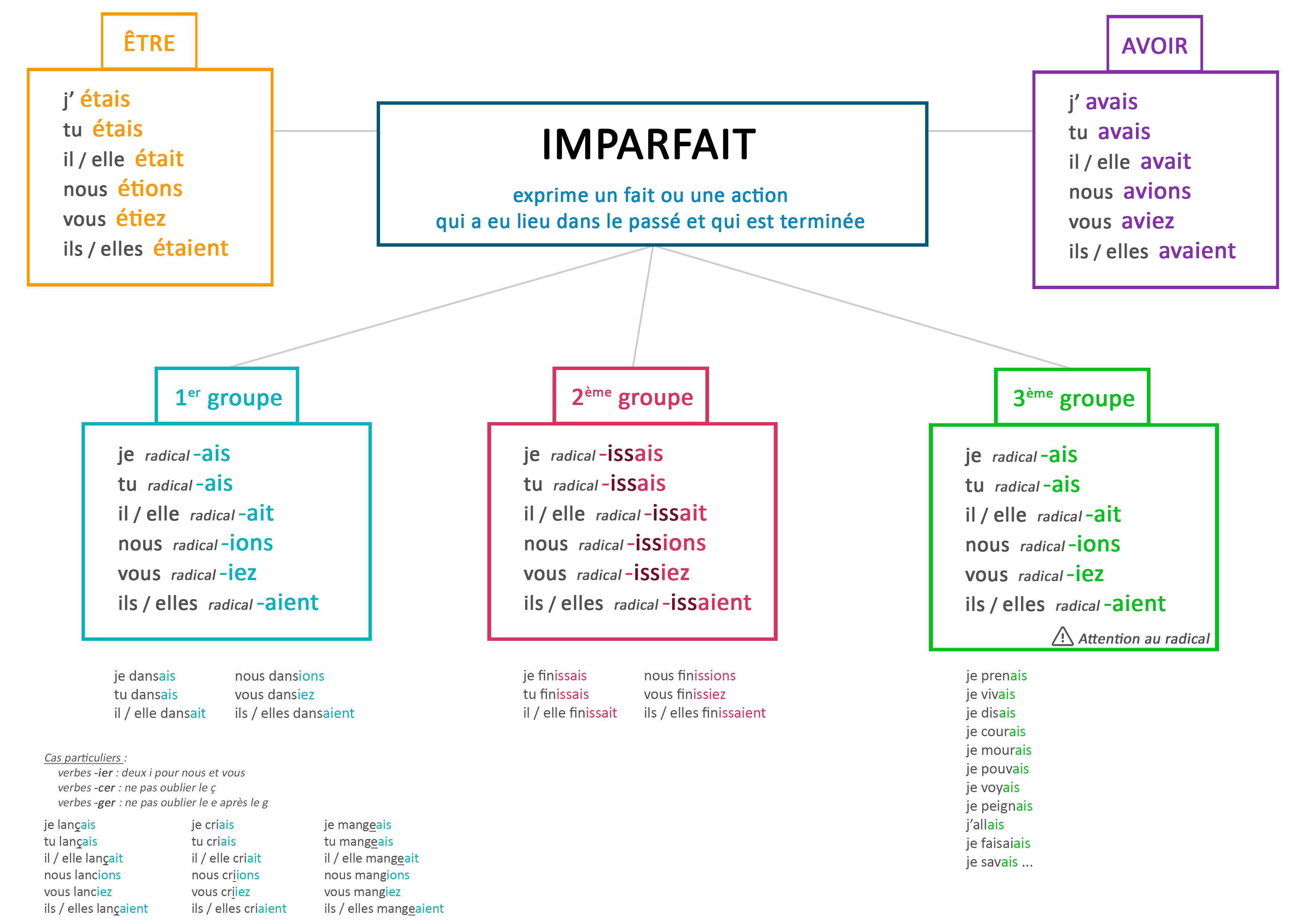
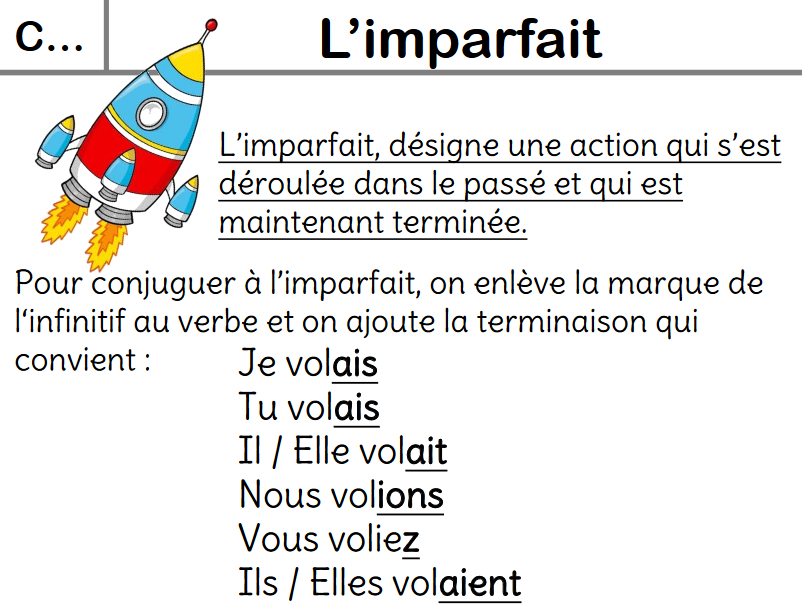
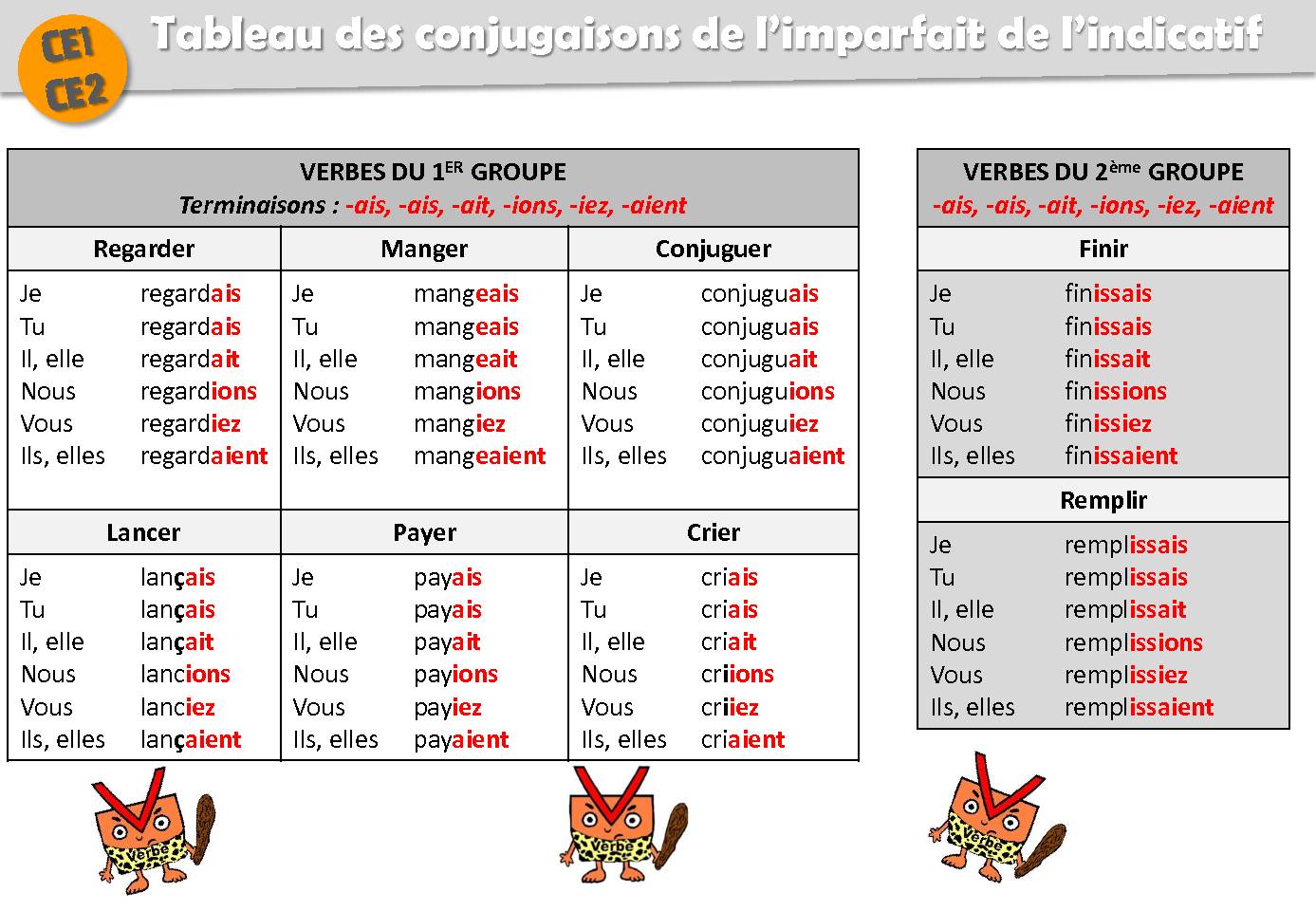
Now for the practical part! Forming the imparfait is surprisingly straightforward. It all revolves around the nous form of the present tense.
- Find the nous form of the present tense. For example, for parler, it's nous parlons.
- Drop the -ons ending. This leaves you with the stem: parl-
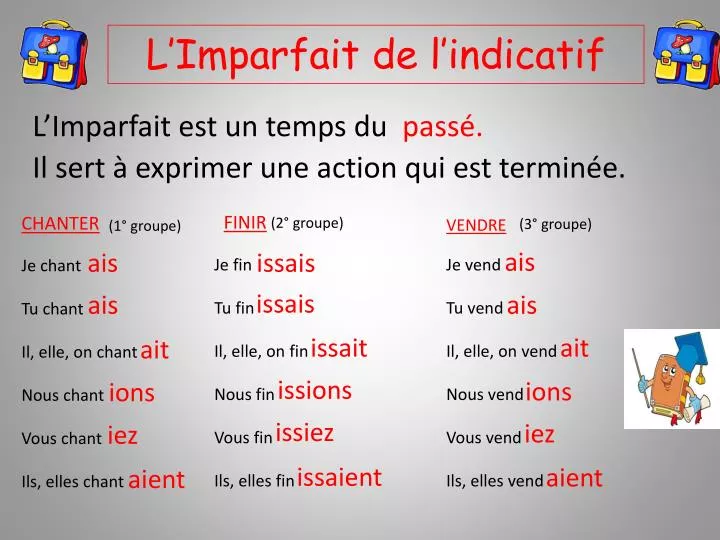
- Add the imparfait endings:
- -ais
- -ais
- -ait
- -ions
- -iez
- -aient
So, parler becomes:
- Je parlais
- Tu parlais
- Il/Elle/On parlait
- Nous parlions
- Vous parliez
- Ils/Elles parlaient
A Few Irregular Verbs to Watch Out For
Of course, there are always exceptions. The most common irregular verb in the imparfait is être:
- J'étais
- Tu étais
- Il/Elle/On était
- Nous étions
- Vous étiez
- Ils/Elles étaient
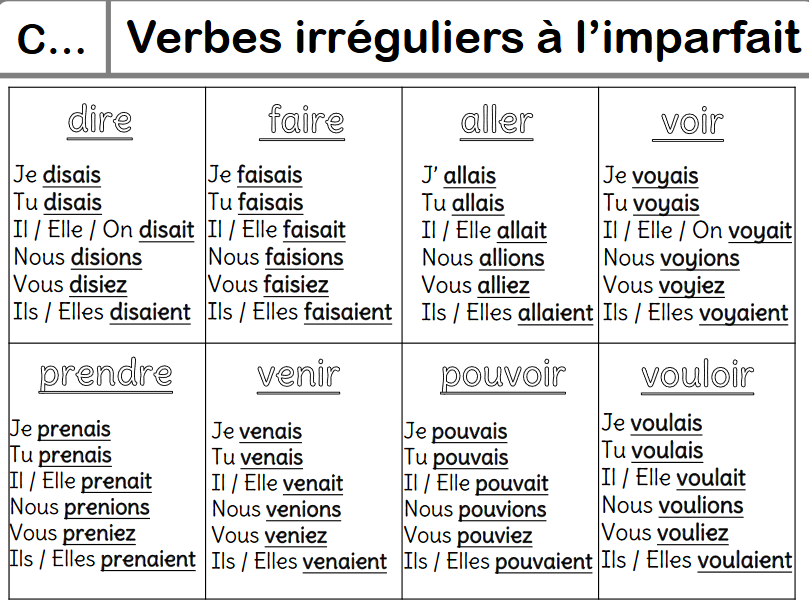
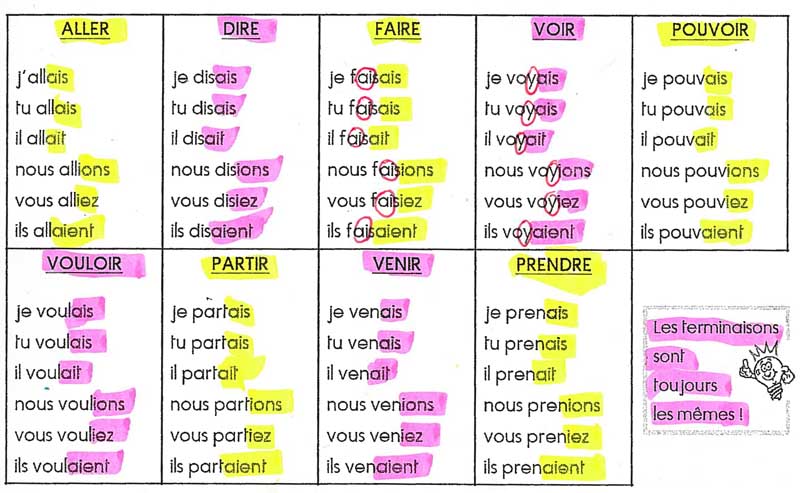
The verbs derived from être (like renaître, apparaître) also follow this irregular pattern. Also, verbs like avoir, faire, aller, vouloir, pouvoir, devoir all form their imparfait regularly after taking their nous stem. For example:
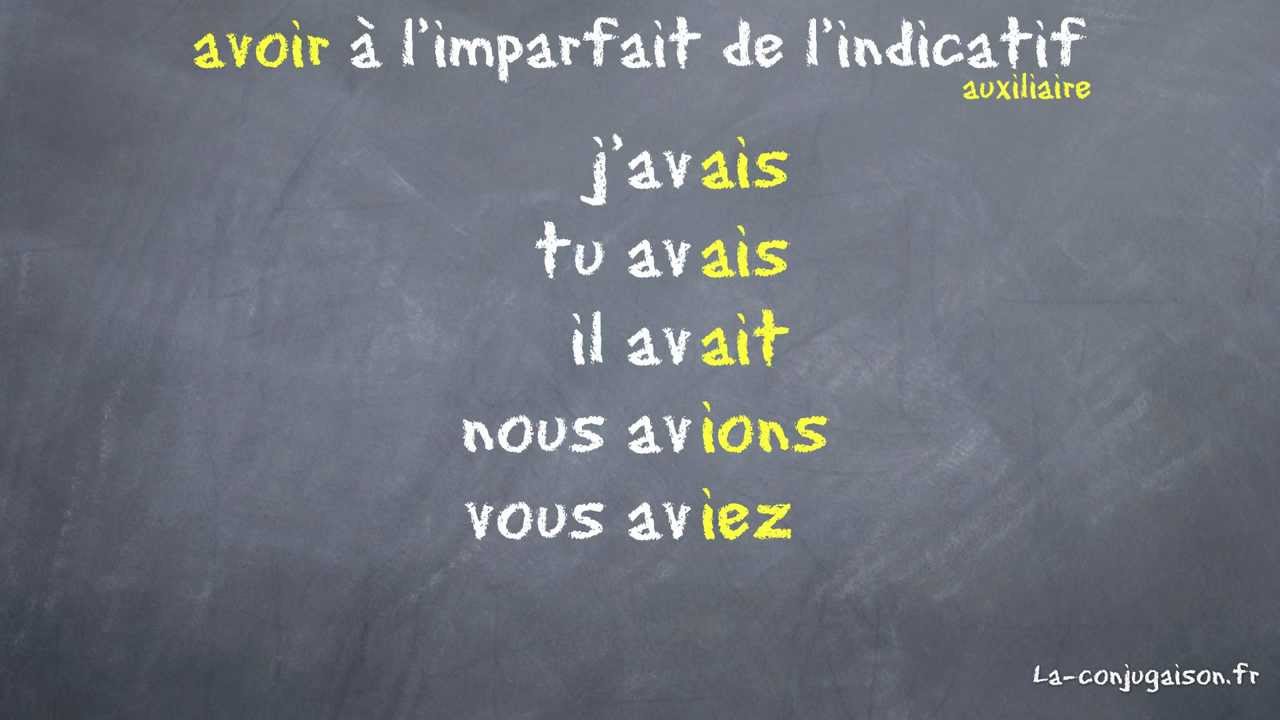
- Avoir: Nous avons -> J'avais
- Faire: Nous faisons -> Je faisais
- Aller: Nous allons -> J'allais
Verbs Ending in -GER and -CER
Be careful with verbs ending in -GER and -CER! These need a little tweak to maintain their pronunciation.
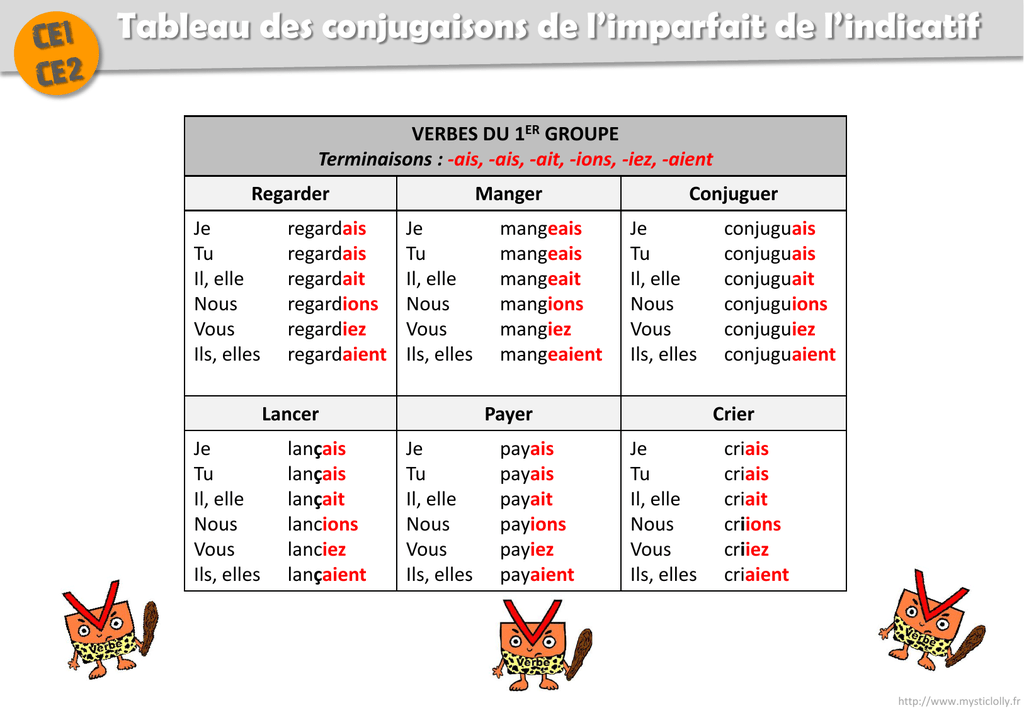
- -GER verbs: Add an "e" before the -ions and -iez endings. (e.g., manger: Nous mangeions, Vous mangeiez).
- -CER verbs: Change the "c" to a "ç" before the -ais, -ais, -ait, and -aient endings. (e.g., commencer: Je commençais, Tu commençais, Il commençait, Ils commençaient).
Imparfait vs. Passé Composé: The Eternal Question
Ah, the classic dilemma! When do you use the imparfait, and when do you use the passé composé? Here's a simplified breakdown:
- Imparfait: Describes ongoing actions, habits, states of being, or provides background information in the past. Think of it as painting the scenery.
- Passé Composé: Describes completed actions, specific events, or changes of state in the past. Think of it as the plot points.
Consider these examples:
- Imparfait: Il pleuvait quand je suis sorti. (It was raining when I went out.) (pleuvait sets the scene)
- Passé Composé: Je suis sorti. (I went out.) (a completed action)
Often, the two tenses are used together in the same sentence to tell a more complete story. The imparfait sets the stage, and the passé composé describes the events that unfolded on that stage.

Imagine: "Il faisait froid et je portais un manteau rouge quand j'ai vu Marie." (It was cold and I was wearing a red coat when I saw Marie.) See how the imparfait sets the scene (it was cold, I was wearing a coat) and the passé composé describes the event (I saw Marie)?
The Imparfait in Culture: A Nostalgic Touch
The imparfait isn't just a grammatical tool; it's a way of conveying a particular feeling. It often evokes a sense of nostalgia, of remembering a time gone by. Think of old French films, like those by Truffaut or Godard, which often use the imparfait extensively to create a wistful, reflective mood. It's the linguistic equivalent of a sepia-toned photograph.
Even in modern French, the imparfait adds a certain elegance and depth to your language. It shows you're not just recounting facts, but you're also understanding the nuances of time and memory.

Petit Exercice: Putting it into Practice
Let's try a little exercise. Fill in the blanks with the imparfait form of the verb in parentheses:
- Quand j'étais enfant, je _________ (adorer) les histoires de pirates.
- Avant, nous _________ (habiter) dans une petite maison à la campagne.
- Il _________ (faire) du vélo tous les jours après l'école.
- Elle _________ (être) toujours en retard.
- Vous _________ (vouloir) devenir médecin.
(Answers: 1. adorais, 2. habitions, 3. faisait, 4. était, 5. vouliez)
Imparfait in Daily Life: A Reflection
The imparfait might seem like a relic of the past, but it's surprisingly relevant to our daily lives. We constantly think about the past, reminiscing about old times, reflecting on what used to be. Understanding the imparfait allows us to express these thoughts and feelings with greater precision and nuance.
Think about your own life. What are the things you used to do? What was your childhood like? What were your dreams? The imparfait is the key to unlocking these memories and sharing them with others. It's a way to connect with the past, to understand the present, and to shape the future. So, embrace the imparfait, and let it help you tell your story.