Salut tout le monde! Ever feel like you're just a little stuck in your French? Like you're repeating the same phrases over and over? Well, pull up a chair, grab a café (or a chocolat chaud if you're feeling fancy!), because we're about to dive into something super useful: le verbe "dire" au présent!
Now, I know what you might be thinking: "Oh no, not another verb conjugation!" But trust me, this one's a game-changer. The verb "dire" (to say, to tell) is used constantly in French. Mastering it is like unlocking a secret level in your language learning journey.
Why "Dire" is Your New Best Friend
Seriously, think about it. How often do you "say" things in a day? Probably more than you realize. "I say hello." "She says goodbye." "We say thank you." "They say it's going to rain." (Spoiler alert: it probably is, especially if you live in certain parts of the world!).
Dire is the linguistic glue that holds so many conversations together. Without it, you'd be stuck pointing and miming. (Which, let's be honest, can be pretty entertaining, but not always practical!).
The Magical Present Tense Conjugation
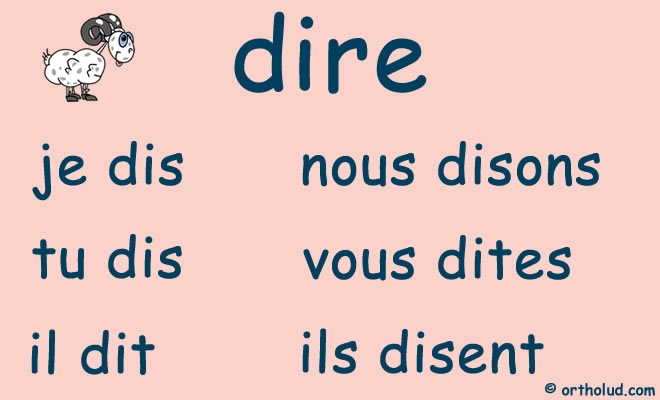
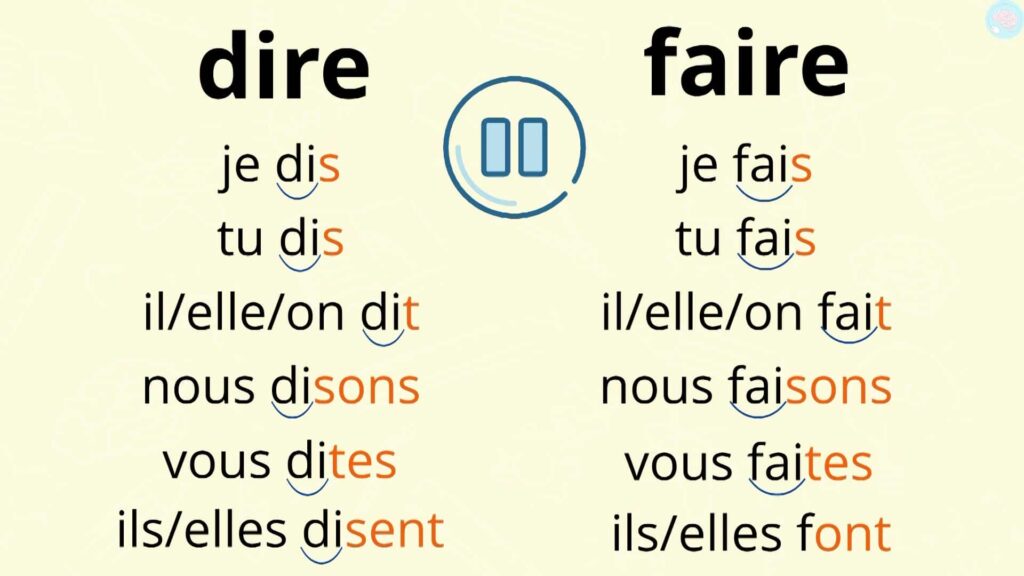
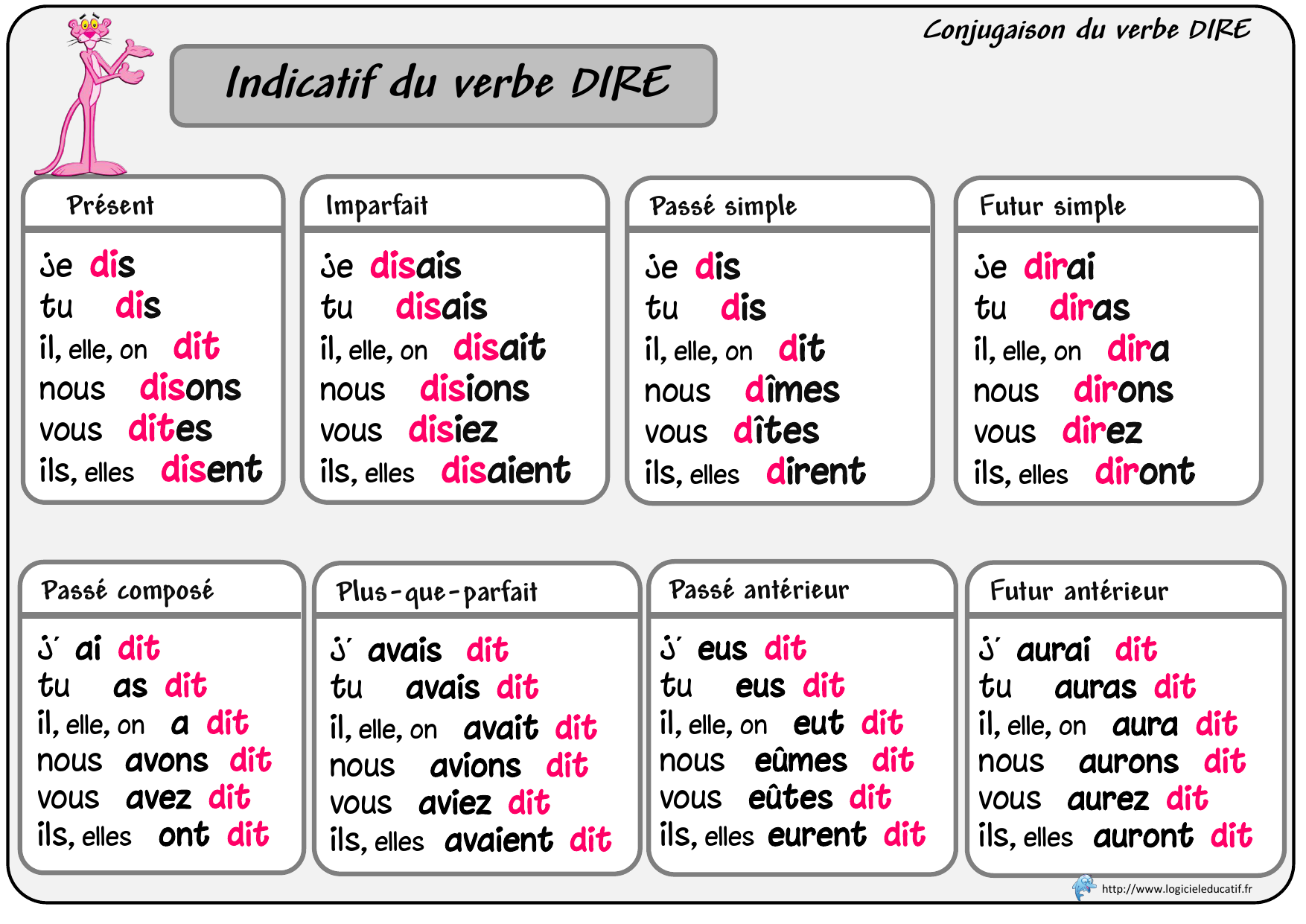
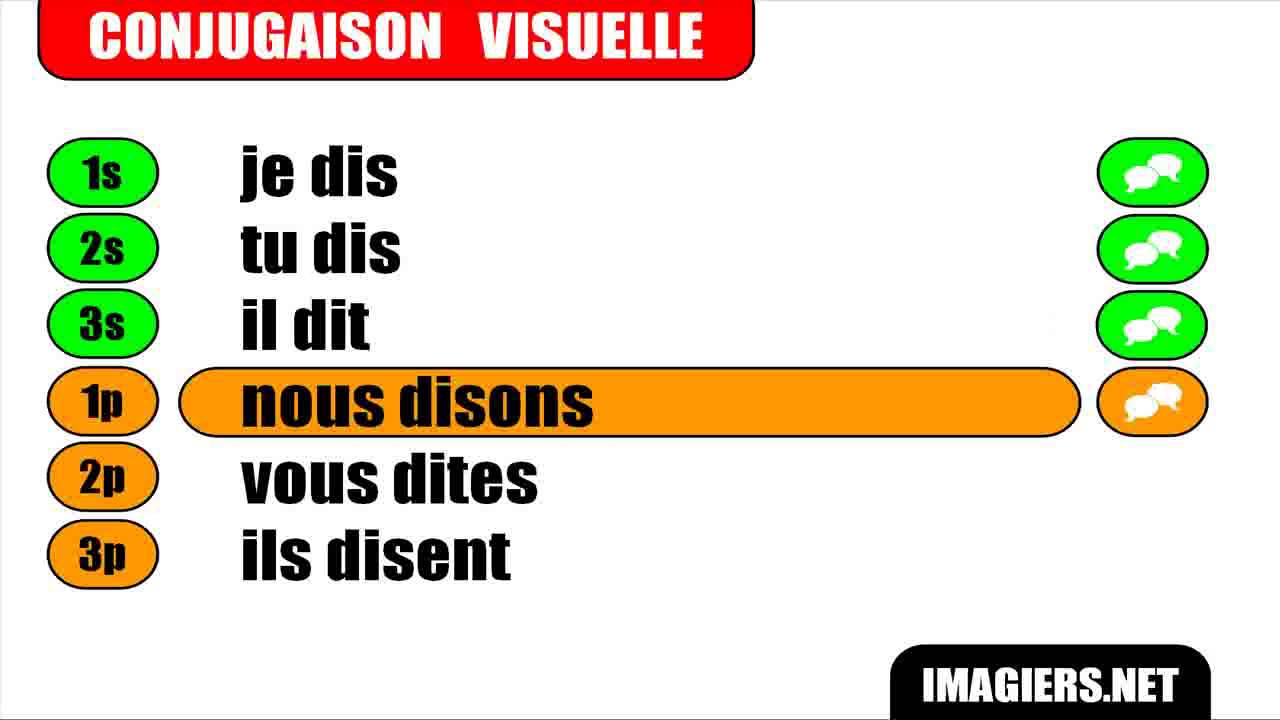
Okay, let's get down to the nitty-gritty. Here's the present tense conjugation of dire:
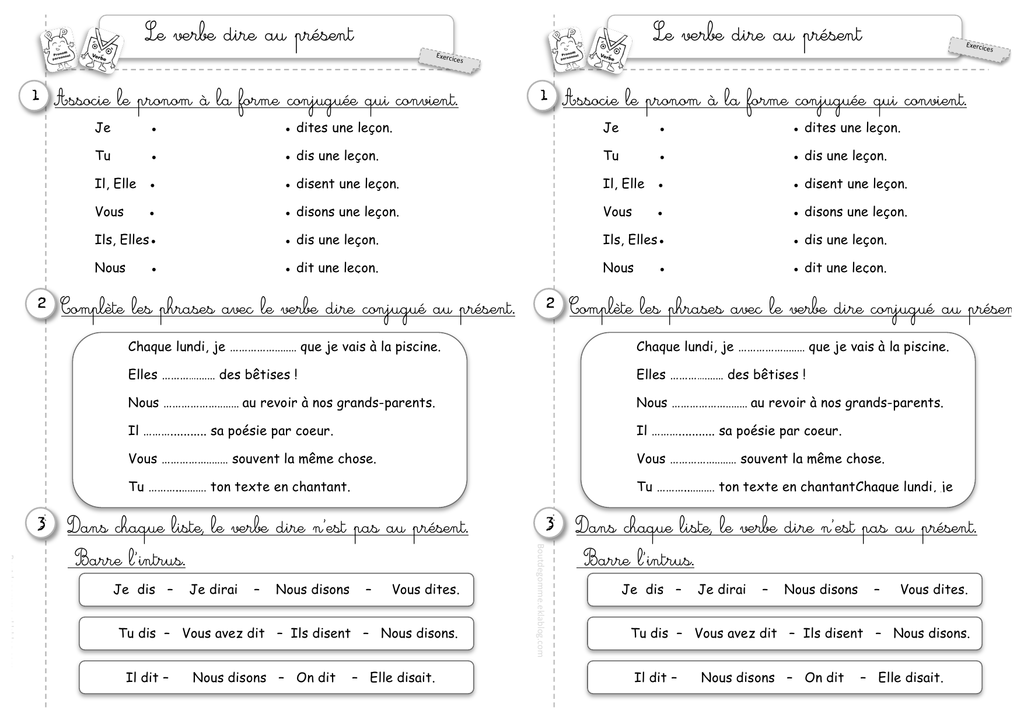
- Je dis (I say/tell)
- Tu dis (You say/tell - informal)
- Il/Elle/On dit (He/She/One says/tells)
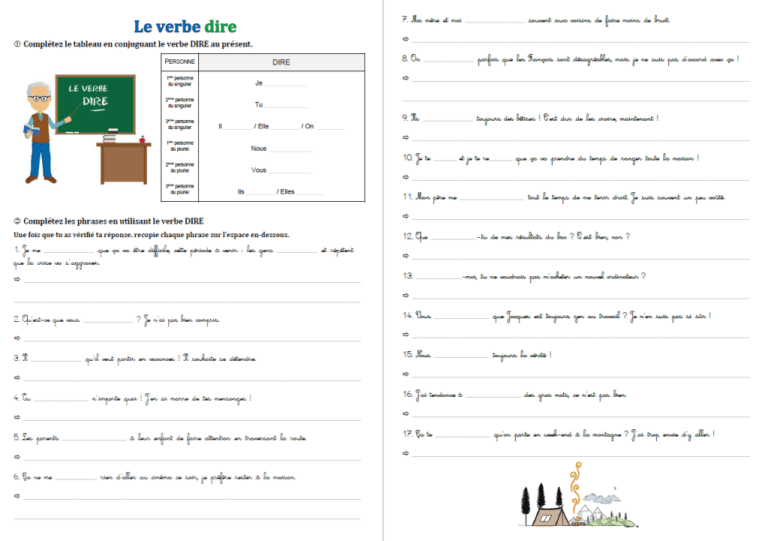
- Nous disons (We say/tell)
- Vous dites (You say/tell - formal or plural)
- Ils/Elles disent (They say/tell)
Notice anything a little…unusual? Yeah, it’s a bit of an irregular verb. But don’t panic! Just memorize it. Think of it as a secret code. Once you crack it, you're in the club!
And hey, even native speakers stumble over verb conjugations sometimes. The important thing is to try. And to have fun with it!
Let's Practice! (Parce que la pratique rend parfait!)
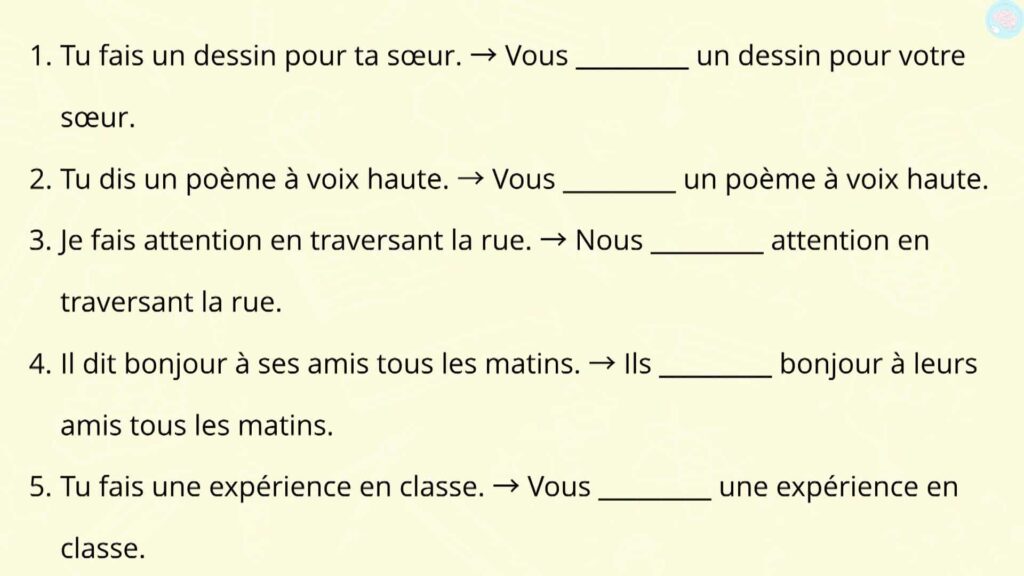
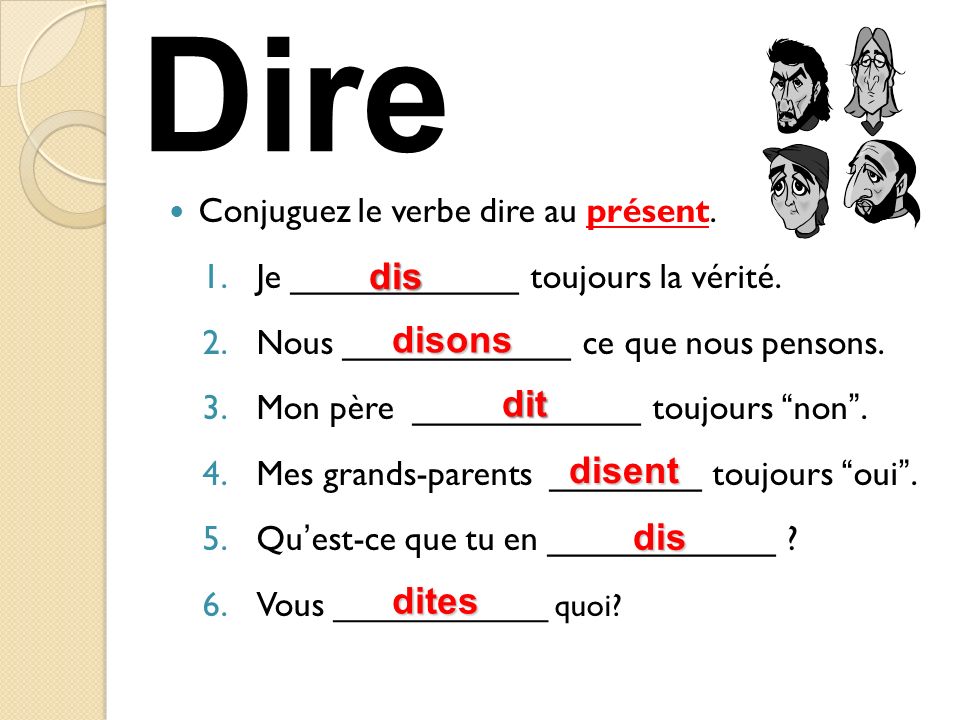
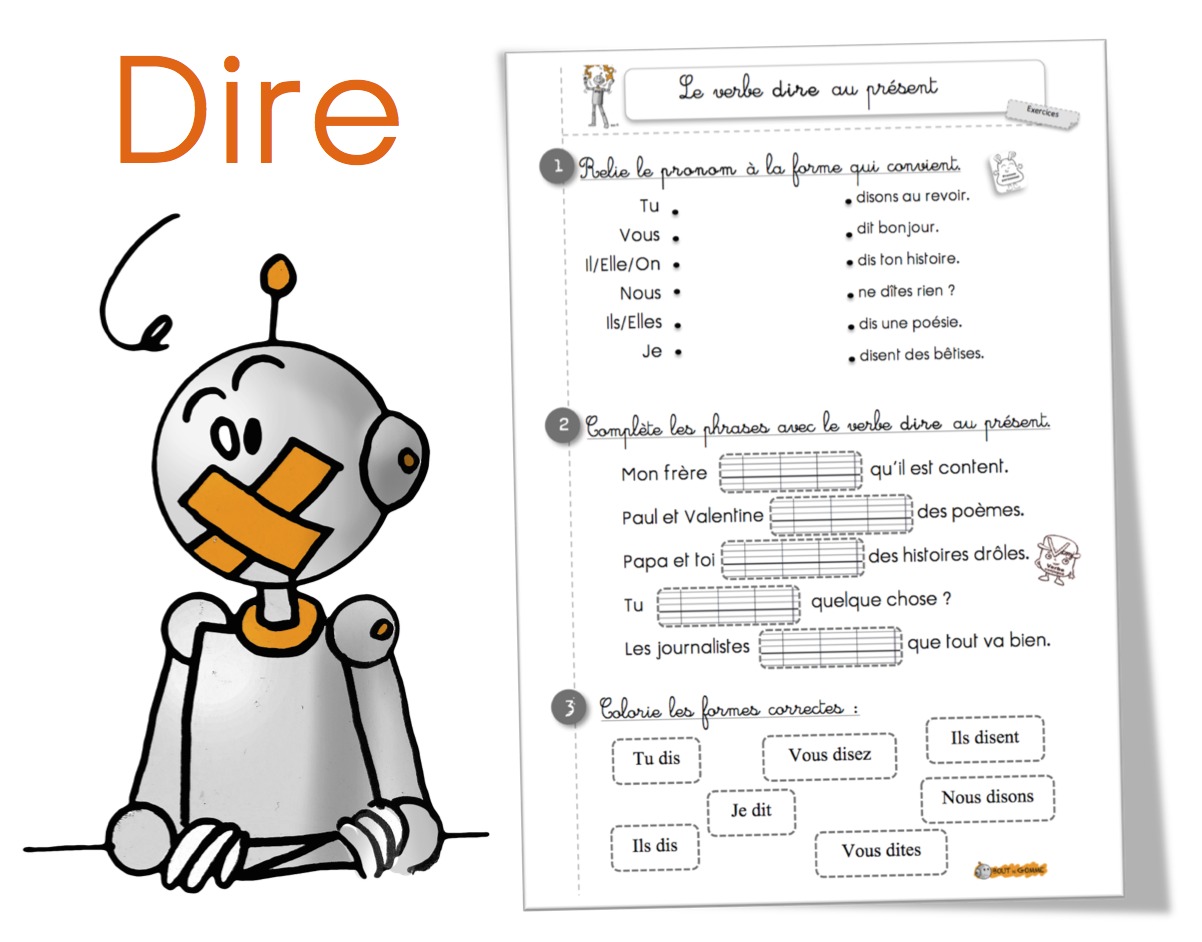
Now for the fun part: putting dire into action! Let’s imagine some scenarios. Try to fill in the blanks with the correct form of the verb.
Scenario 1: You're chatting with a friend about the weather.
You: "Qu'est-ce que tu _____?" (What do you say?)
Your friend: "Je _____ qu'il va pleuvoir." (I say it's going to rain.)
(Answer: dis, dis)
Scenario 2: You're introducing yourself to a group.
You: "Bonjour, je m'appelle [Your Name] et je _____ que j'adore la langue française!" (Hello, my name is [Your Name] and I say that I love the French language!)
(Answer: dis)
Scenario 3: You're talking about what your family says.
You: "Mes parents _____ toujours 'mange tes légumes!'" (My parents always say 'eat your vegetables!')
(Answer: disent)
Scenario 4: You are asking for directions.
Vous: "Excusez-moi, vous _____ comment aller à la gare?" (Excuse me, do you say how to get to the station?)
(Answer: dites)
See? It's not so scary after all! And the more you practice, the more natural it will become. C'est promis!
Spice Things Up! "Dire" with Prepositions
Now, let's add another layer of awesome. "Dire" often hangs out with prepositions like à and de, changing its meaning slightly. This is where things get really interesting.
Dire à quelqu'un (to tell someone): "Je dis à Marie que j'aime son chat." (I tell Marie that I like her cat.) N'oubliez pas le "à"!

Dire de faire quelque chose (to tell someone to do something): "Mon père dit de faire mes devoirs." (My father tells me to do my homework.) Ah, the joys of homework! (Okay, maybe not so much…).
Pay close attention to these prepositions! They're crucial for expressing yourself correctly and avoiding awkward (or hilarious!) misunderstandings.
Beyond the Basics: Idiomatic Expressions with "Dire"
And because French is all about adding a little flair, let's explore some fun idiomatic expressions with "dire":
Ça va sans dire: This means "it goes without saying" or "it's obvious." For example: "Il est important d'étudier, ça va sans dire!" (It's important to study, it goes without saying!)
Autant dire que...: This translates to "you might as well say that..." or "it's as good as saying that..." For example: "Autant dire que je suis fatigué après cette journée!" (You might as well say that I'm tired after this day!)
Vouloir dire: This means "to mean." For example: "Qu'est-ce que tu veux dire?" (What do you mean?).
Using these expressions will instantly make your French sound more natural and sophisticated. You'll impress your friends, your teacher, and maybe even that cute barista at the café!
Why Bother with All This Verb Stuff?
Okay, let's be real for a second. Learning verbs can be a bit of a slog. But think about what you're actually doing. You're not just memorizing conjugations; you're building the foundation for real communication.
Every verb you master is another door opening, another connection you can make, another story you can tell. You're unlocking the ability to express yourself, to understand others, and to experience the world in a whole new way.
And that, my friends, is incredibly empowering.
So, the next time you're feeling frustrated with French, remember why you started in the first place. Remember the joy of discovery, the thrill of understanding, and the satisfaction of connecting with people from a different culture.
Dire is a small but mighty verb. Mastering it will not only improve your French, but also boost your confidence and open up a world of possibilities. Embrace the challenge, have fun with it, and n'oubliez pas de pratiquer!
Ready to dive deeper? There are tons of great resources online, in textbooks, and even in French songs and movies! Explore, experiment, and find what works best for you.
Allez, lancez-vous! The French-speaking world is waiting to hear what you have to dire!
![Le français à l'école: Verbe DIRE [6º]](https://1.bp.blogspot.com/-Wm9SoFA34I0/XoHpRi32WwI/AAAAAAAAGvE/HzBxYnOC3HwF5suEkAJ8ZnD5EEKu-zpKQCLcBGAsYHQ/s1600/007507262_1-6857c186ba101cee3c8513e561f53b83.png)