Bonjour mes amis! Let's chat about something wonderfully French, shall we? Something that involves planning, projecting, and yes, the glorious future. We're diving into the future simple tense with the verb "faire" (to do, to make). Think of it as a little glimpse into what "faire" will be up to in your future adventures. Grab your café au lait; it's time for a little French grammar fun!
So, why "faire"? Well, it's one of those incredibly versatile verbs in French. It pops up everywhere! From "faire du sport" (to play sports) to "faire la cuisine" (to cook), it’s truly indispensable. Mastering its future simple form is a key to unlocking so many future conversations. Ready?
The Future Simple: A Quick Refresh
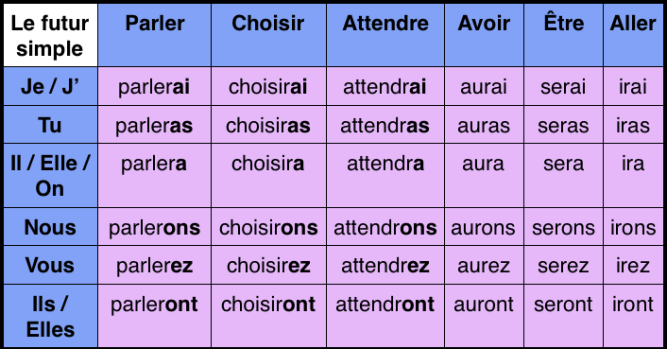
Before we get down to "faire" specifically, let's quickly remember how the future simple is built. It's thankfully quite straightforward! For most verbs, you take the infinitive (the basic form of the verb, like "parler," "manger," or in our case, "faire") and add specific endings.
These endings are: -ai, -as, -a, -ons, -ez, -ont. Easy peasy, lemon squeezy, right? But, as with many things in French, there are always little quirks. And "faire" is one of those verbs with a slightly irregular future stem.
"Faire" in the Future: A Sneak Peek
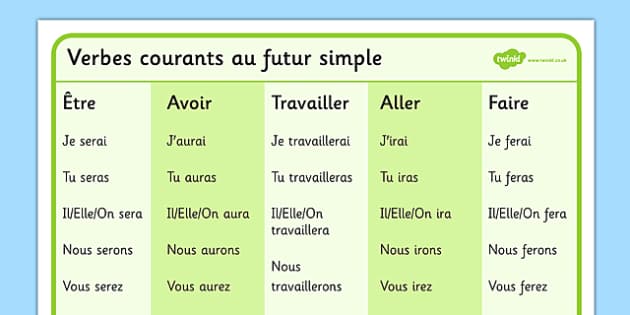
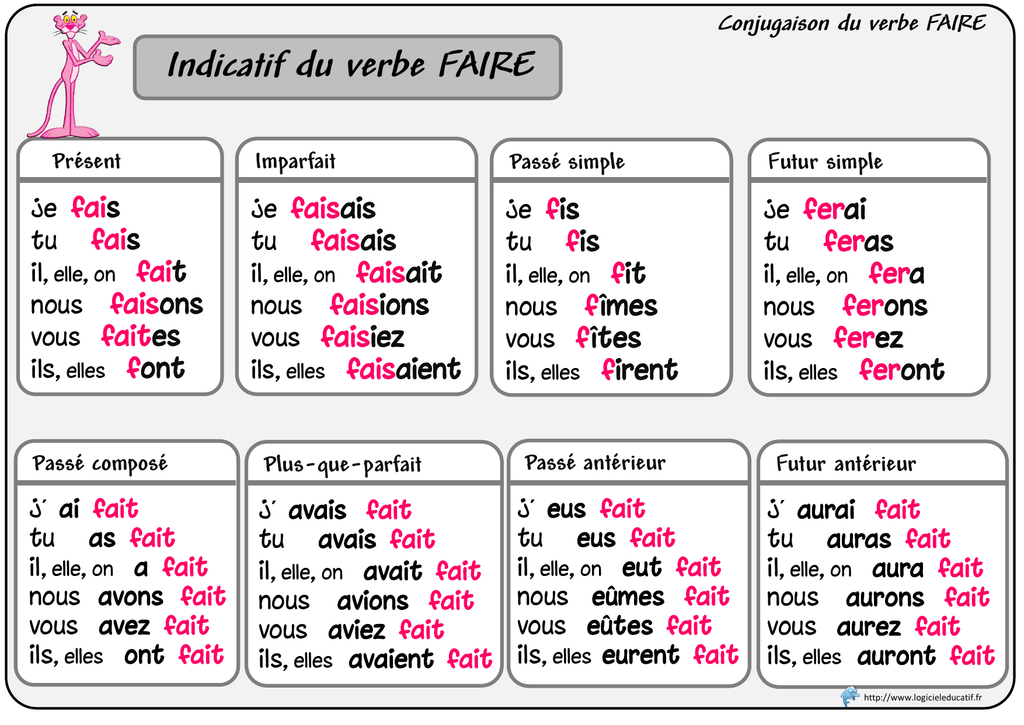
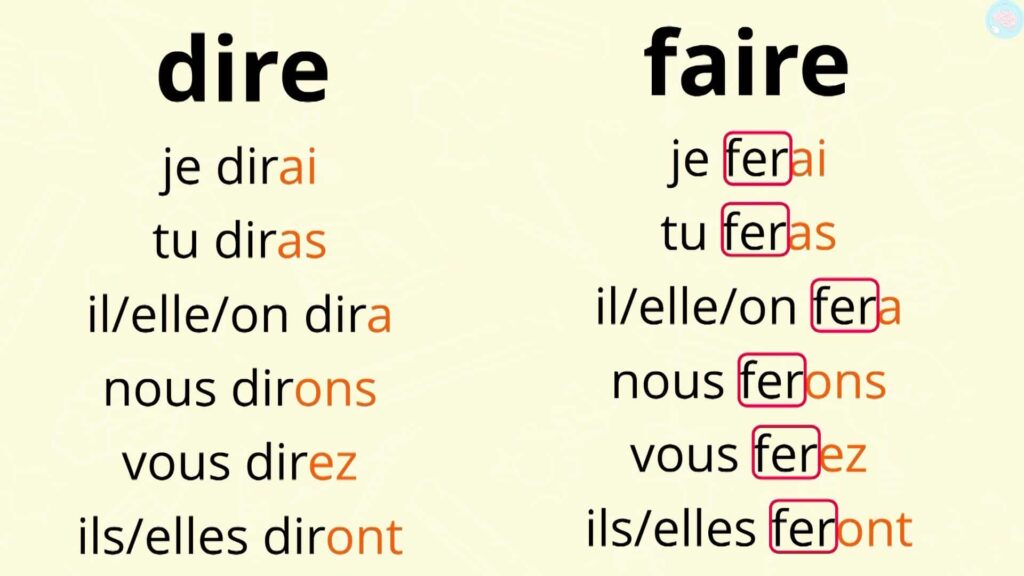
Here's where things get a bit interesting. Instead of simply adding the endings to "faire," the stem changes. "Faire" transforms into "fer-" in the future simple. Intriguing, non? So, the future simple of "faire" looks like this:
Je ferai (I will do/make)
Tu feras (You will do/make)
Il/Elle/On fera (He/She/One will do/make)
Nous ferons (We will do/make)
Vous ferez (You will do/make)
Ils/Elles feront (They will do/make)
Notice the "r" in each form? That's the magic stem! Now, let's put this into practice.

Examples to Inspire Your Future
Let's look at some examples. These should help you see how naturally "faire" fits into future scenarios. And maybe, just maybe, give you some ideas for your next trip to France!
"Je ferai un gâteau pour l'anniversaire de Marie." (I will make a cake for Marie's birthday.) Imagine the delicious aroma of a freshly baked cake! What kind of cake would you make? A rich chocolate one? Perhaps something with berries?
"Tu feras du sport demain matin?" (Will you play sports tomorrow morning?) Are you a morning person? Or do you prefer exercising later in the day? Either way, "faire du sport" is a great way to stay healthy!
"Il fera beau temps demain." (The weather will be nice tomorrow.) Wouldn't that be lovely? Picture yourself strolling through a park under a clear blue sky. What will you do if the weather is nice tomorrow?
"Nous ferons un voyage en France l'année prochaine." (We will take a trip to France next year.) Oh la la! Where in France will you go? Paris? The French Riviera? The possibilities are endless! This one makes me want to start planning right now!
"Vous ferez attention sur la route." (You will be careful on the road.) Safety first! Whether you're driving, cycling, or simply walking, it's always good to be mindful of your surroundings.
"Ils feront de leur mieux." (They will do their best.) A lovely sentiment! It's always reassuring to know that people are putting in their best effort, isn't it?
Notice how "faire" isn't always directly translated as "do" or "make"? It's often used in idiomatic expressions, like "faire beau temps" (to be nice weather) or "faire attention" (to be careful). This is part of what makes French so wonderfully nuanced.
Little Digression: "Aller" vs. "Faire" for the Immediate Future
Okay, quick detour! Sometimes, instead of the future simple, you might hear the "aller + infinitive" construction to express the near future. For example, instead of "Je ferai un gâteau," you could say "Je vais faire un gâteau" (I am going to make a cake). Both are correct, but "aller + infinitive" often implies a more immediate plan.

Think of it this way: "Je vais faire un gâteau" might mean you're heading to the kitchen right now. "Je ferai un gâteau" could mean you'll make one sometime in the future, perhaps later in the week.
Practicing Makes Perfect (La pratique rend parfait!)
Now, let's put your newfound knowledge to the test. How would you say these sentences in French using the future simple of "faire"?
- I will do my homework tonight.
- Will you make dinner tomorrow?
- She will do her best on the exam.
- We will make a reservation at the restaurant.
- They will do the dishes after dinner.
(Answers at the end, but no peeking just yet!)
Remember, the key is to practice! Try writing your own sentences using the future simple of "faire". Think about your plans for the weekend, your goals for the year, or even just what you'll have for dinner. The more you use it, the more natural it will become.
Don't be afraid to make mistakes! That's how we learn. Embrace the errors, laugh at them, and keep going. Learning a language is a journey, not a destination. And every step you take, even if it's a stumble, brings you closer to fluency.

The Beauty of the Future (La beauté de l'avenir)
The future is full of possibilities, isn't it? And mastering the future simple of "faire" allows you to express those possibilities in French with confidence and flair. You can talk about your dreams, your plans, your hopes for what's to come.
So, go forth and "faire" amazing things! Whether you "ferez" a delicious meal, "ferez" new friends, or "ferez" a positive impact on the world, remember that the future is yours to create. And now, you have a little bit more French to help you along the way.
Et voilà! Wasn't that a pleasant little grammar rendezvous? I hope you found it helpful and enjoyable. Now, go out there and make some linguistic magic!
Answers to the practice sentences:
- Je ferai mes devoirs ce soir.
- Feras-tu le dîner demain ?
- Elle fera de son mieux à l'examen.
- Nous ferons une réservation au restaurant.
- Ils feront la vaisselle après le dîner.
Keep practicing, keep learning, and keep exploring the wonderful world of the French language. À bientôt!





![[HD] Conjugaison : Faire - Indicatif Présent - YouTube](https://i.ytimg.com/vi/9x6aWwcNEt4/maxresdefault.jpg)