Salut, mes amis! Ready for a grammatical adventure that's more thrilling than a snail race? Today, we’re plunging headfirst (but safely, I promise!) into the mysterious world of the Futur Antérieur de l'Indicatif. Yes, that's right, the future anterior! Don't let the name intimidate you; it's less scary monster under the bed and more friendly, slightly eccentric uncle who tells mildly embarrassing stories.
What is the Futur Antérieur, Anyway?
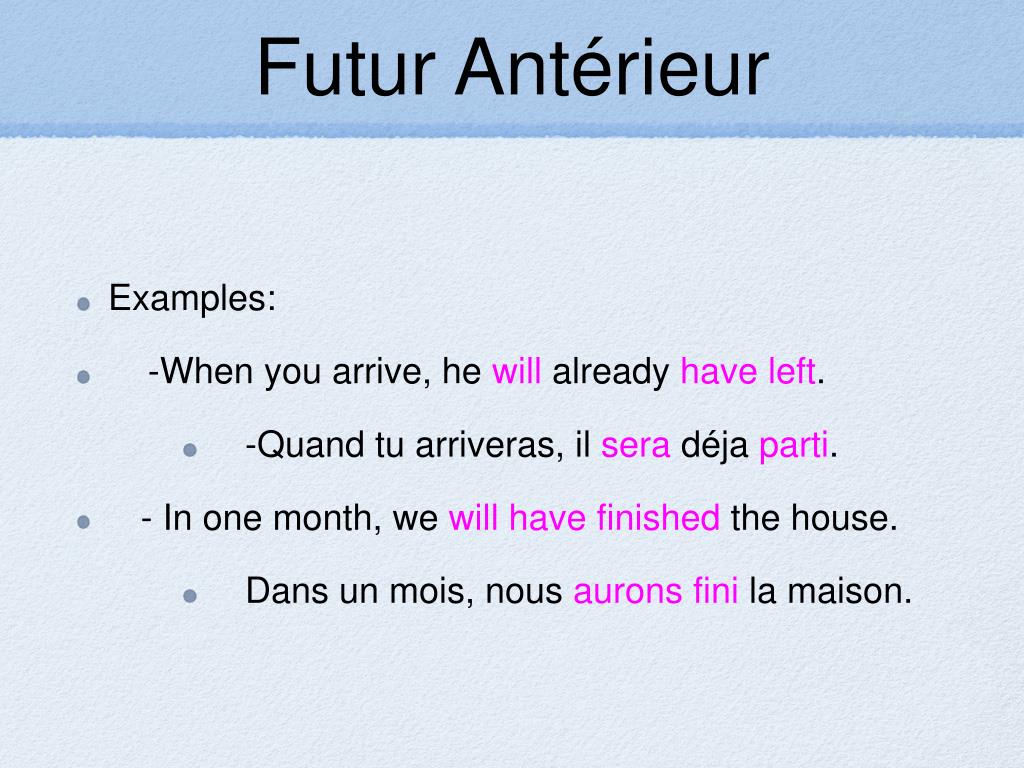
Okay, picture this: you’re planning a surprise party. You’re thinking about what will have happened by the time the guest of honor arrives. "By then, we will have decorated," you might say. That’s the essence of the Futur Antérieur! It's used to express an action that will be completed before another action in the future.
Think of it as the ultimate planner verb tense. It's the Marie Kondo of verb tenses, making sure everything is tidied up and completed before the next event even starts. It’s basically saying, "been there, done that... in the future!" Fancy, right?
The Formula: A Recipe for Grammatical Deliciousness
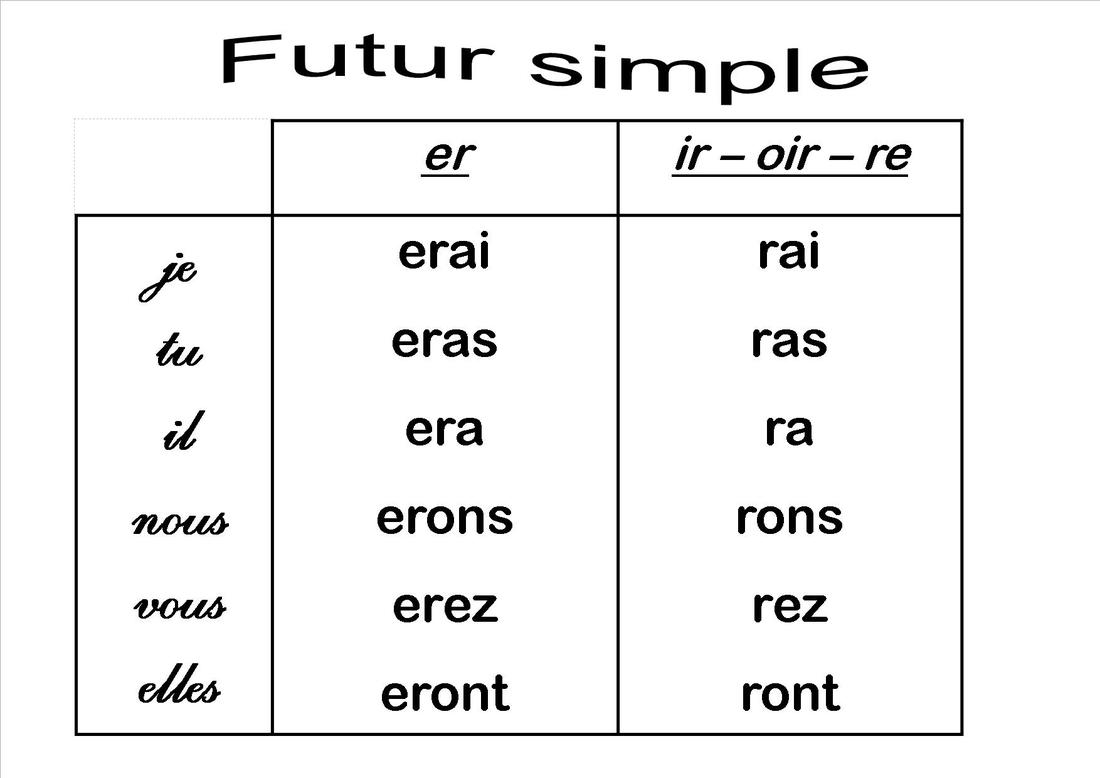
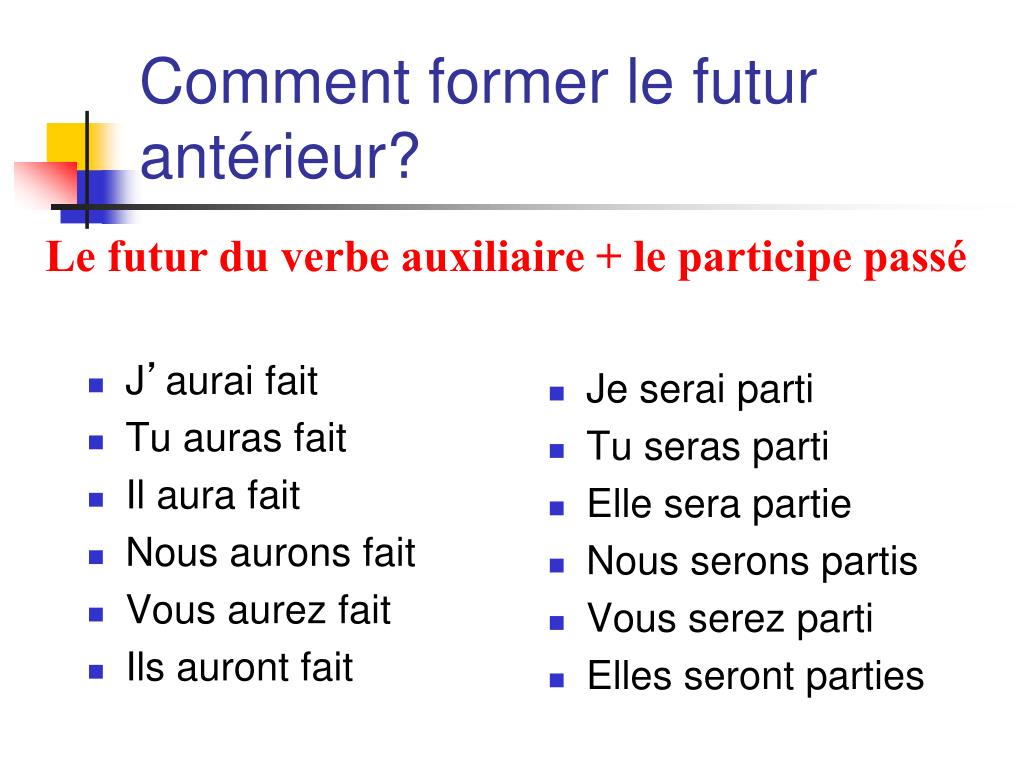
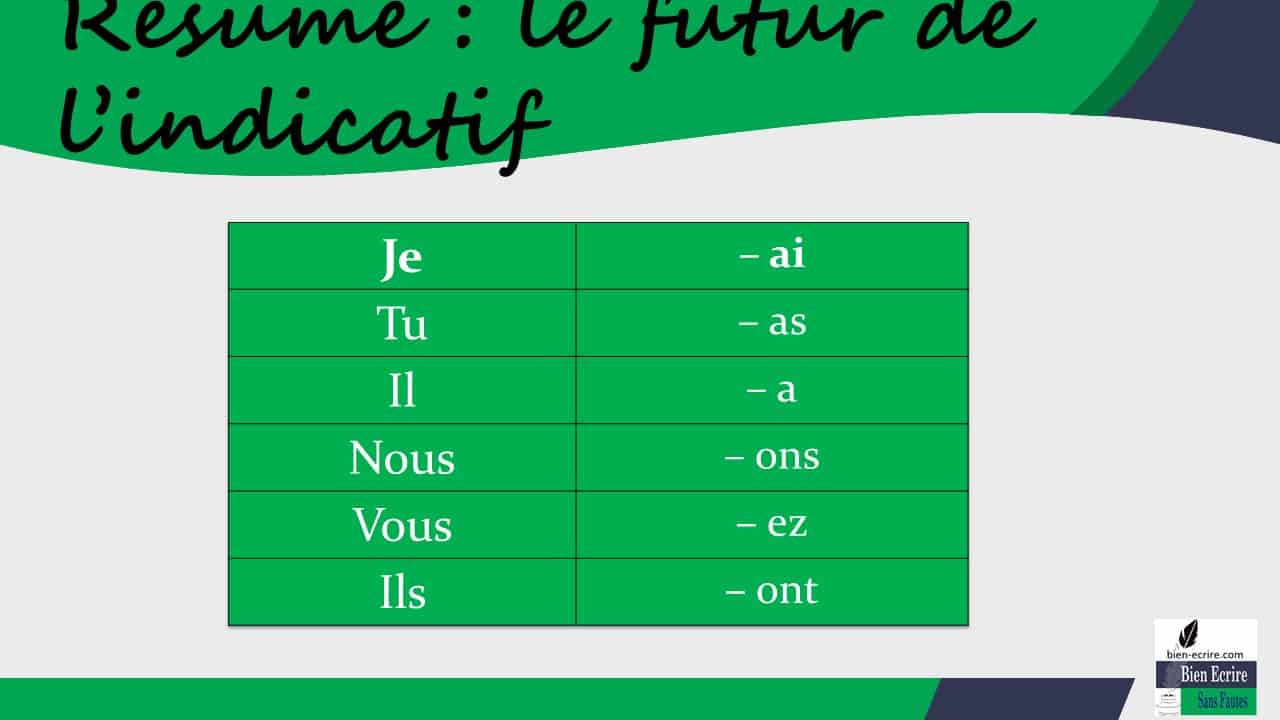
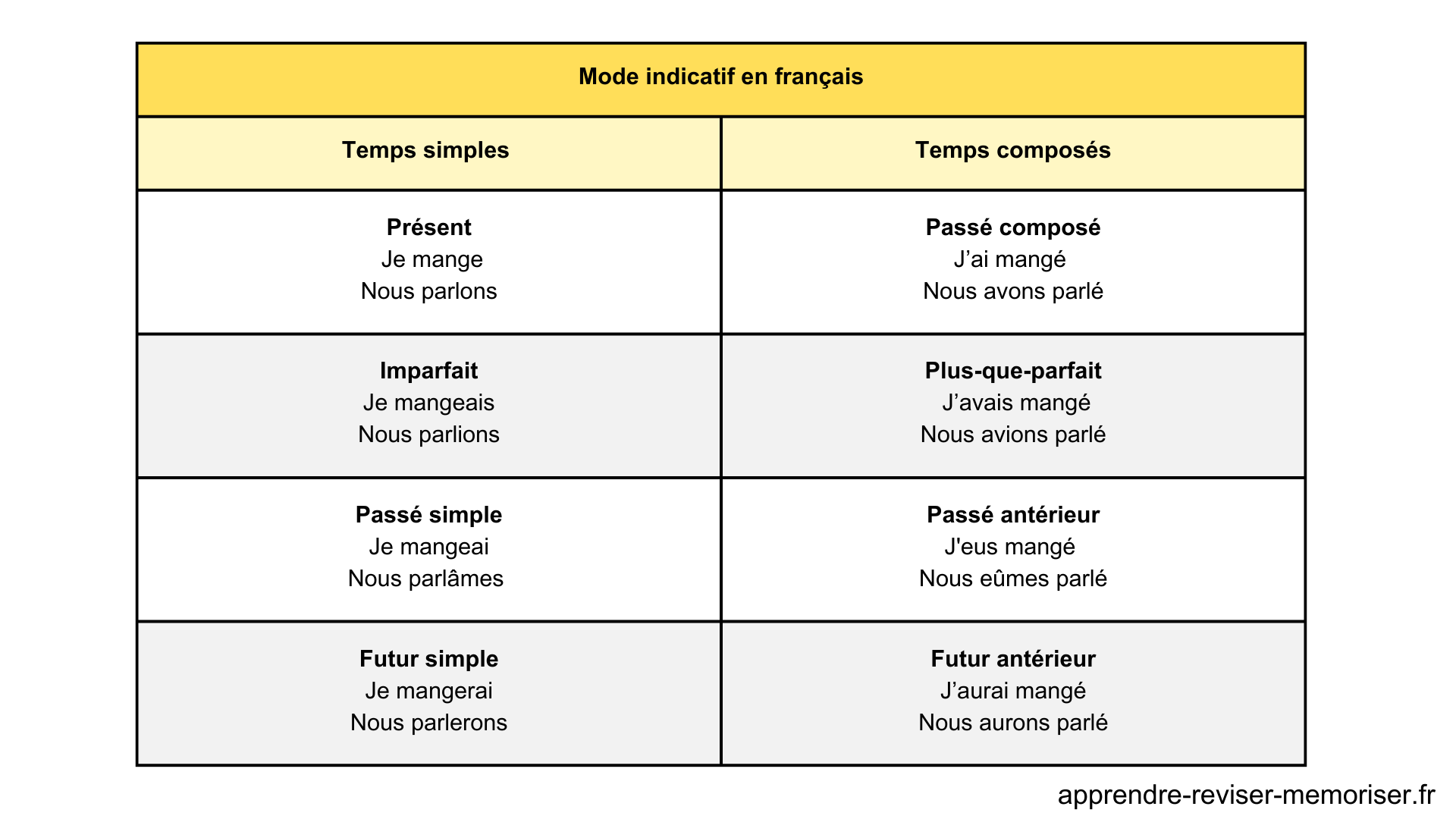
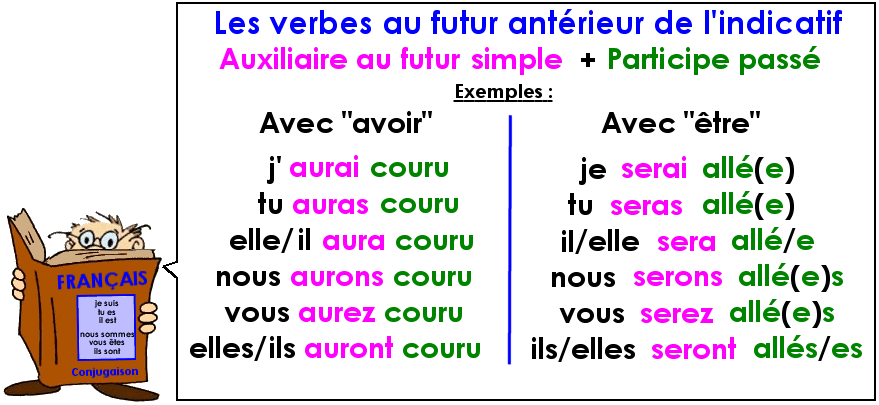
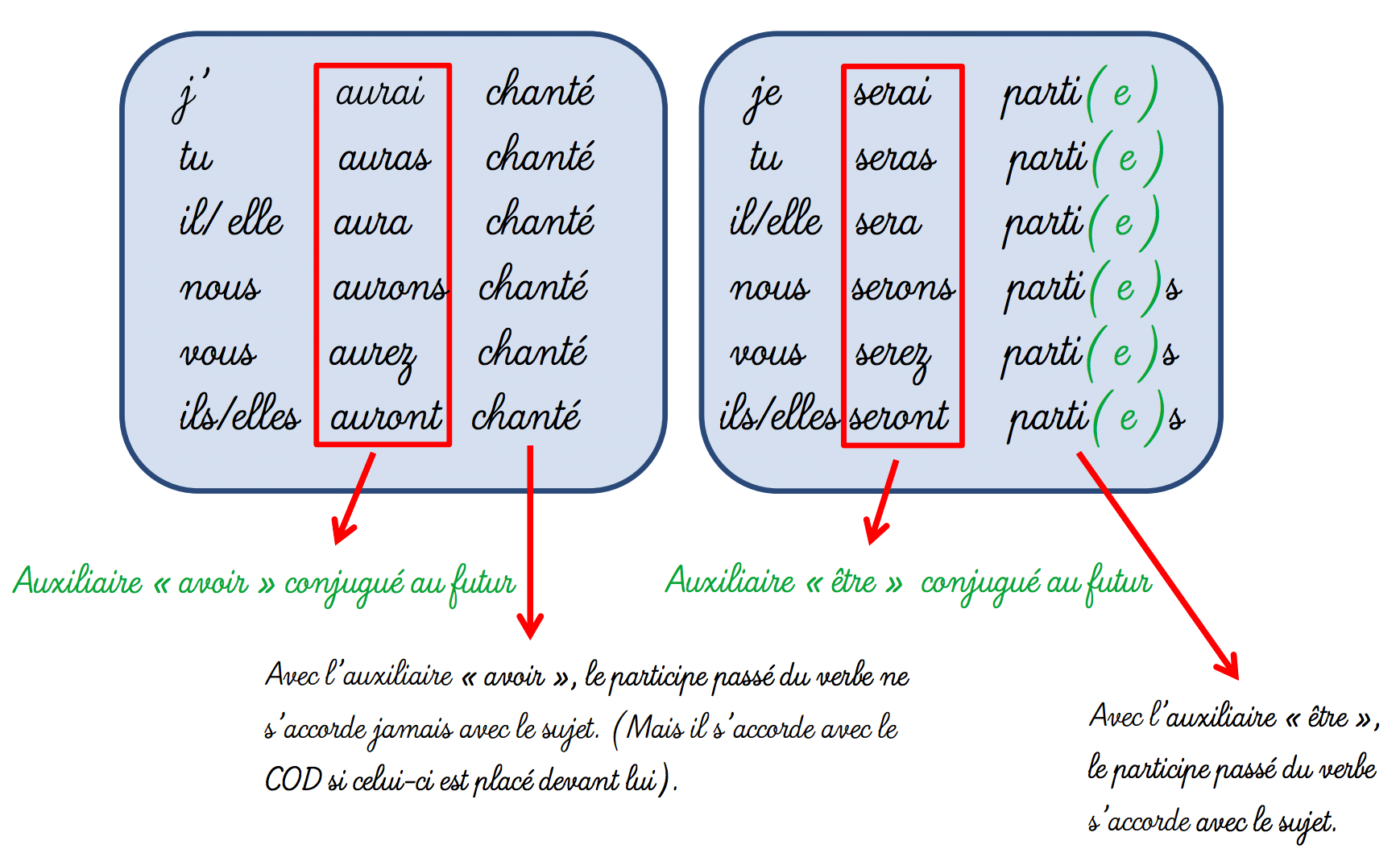
The good news is, forming the Futur Antérieur is surprisingly straightforward. It’s basically the future simple of the auxiliary verb (avoir or être) plus the past participle of the main verb. Think of it like a grammatical sandwich. The future simple is the bread, the past participle is the filling, and you, my friend, are the master chef!
- Auxiliary verb (avoir or être) in the future simple: j'aurai, tu auras, il/elle/on aura, nous aurons, vous aurez, ils/elles auront (for avoir) or je serai, tu seras, il/elle/on sera, nous serons, vous serez, ils/elles seront (for être).
- Past participle of the main verb: This is where your verb conjugation skills come into play! Remember those past participles? Parlé, fini, vendu… they're back!
So, for example, to say "I will have spoken," you'd say: J'aurai parlé.
See? Not so scary after all! It’s like baking a cake. You just need to follow the recipe. And, unlike baking, if you mess up the Futur Antérieur, nobody will complain about a slightly grammatically undercooked croissant.
When Do We Actually Use This Thing?
Now, the burning question: when is this fancy-pants tense actually useful? Here are a few scenarios where the Futur Antérieur shines:
1. Actions Completed Before Another Future Action
This is the classic usage. You want to express that one action will be finished before another one starts. Think of it as grammatical sequencing.
Example: Quand tu arriveras, j'aurai déjà mangé. (When you arrive, I will have already eaten.) Translation: "Don't expect me to be hungry when you get here. I'm a planning machine and my stomach operates on a strict schedule!"
Example: Après qu'il aura fini ses devoirs, il pourra jouer aux jeux vidéo. (After he will have finished his homework, he will be able to play video games.) Translation: "Homework first, fun later! Gotta love those responsible grammar structures!"
2. Expressing a Supposition or Assumption About the Past
The Futur Antérieur can also express a guess or a hypothesis about something that happened in the past. It's like being a grammatical detective!

Example: Il n'est pas là. Il aura oublié notre rendez-vous. (He's not here. He will have forgotten our appointment.) Translation: "Either he's incredibly rude, or his memory is worse than a goldfish. Let's go with forgotten!"
Example: Elle n'a pas répondu au téléphone. Elle sera sortie. (She didn't answer the phone. She will have gone out.) Translation: "Maybe she's avoiding me, or maybe she's just living her life. I choose to believe she's enjoying the sunshine!"
3. In Time Clauses with Quand, Lorsque, Dès que, Aussitôt que
These time conjunctions often team up with the Futur Antérieur to indicate when an action will be completed.
Example: Quand j'aurai gagné à la loterie, je ferai le tour du monde. (When I will have won the lottery, I will travel around the world.) Translation: "Hey, a guy can dream, right? And when that dream miraculously comes true, prepare for some serious postcard spam!"
Example: Dès que tu auras terminé ton travail, tu pourras te reposer. (As soon as you will have finished your work, you can rest.) Translation: "The sweet, sweet relief of finished tasks... it's like a grammatical oasis in the desert of obligations!"
Choosing the Right Auxiliary: Avoir or Être? The Million-Dollar Question!
Ah, the age-old dilemma! This is where things can get a little tricky. But don't worry, I'm here to guide you through the maze.
- Most verbs use avoir: This is the default option. If you're not sure, go with avoir. It's like wearing black; it goes with everything!
- Verbs of motion and reflexive verbs use être: This includes verbs like aller (to go), venir (to come), arriver (to arrive), partir (to leave), monter (to climb), descendre (to descend), naître (to be born), mourir (to die), and all reflexive verbs (verbs that use se). Think of these verbs as drama queens; they need the extra attention of être.
- Agreement with être: When using être, the past participle must agree in gender and number with the subject. This means adding an "-e" for feminine subjects, an "-s" for plural subjects, and "-es" for feminine plural subjects. It’s like adding a little grammatical bling!
Examples with avoir:
- J'aurai mangé. (I will have eaten.)
- Tu auras lu le livre. (You will have read the book.)
- Nous aurons vu le film. (We will have seen the film.)
Examples with être:

- Je serai allé au cinéma. (I will have gone to the cinema.) (Masculine)
- Elle sera allée au cinéma. (She will have gone to the cinema.) (Feminine)
- Nous serons partis. (We will have left.) (Masculine Plural)
- Elles seront parties. (They will have left.) (Feminine Plural)
- Je me serai levé tôt. (I will have gotten up early.) (Masculine)
- Elle s'sera levée tôt. (She will have gotten up early.) (Feminine)
Pro Tip: When in doubt, look up the verb and see if it typically uses être in the passé composé. If it does, it will also use être in the futur antérieur. It's like following a breadcrumb trail of grammatical clues!
Common Mistakes (and How to Avoid Them!)
Even the best French learners stumble occasionally. Here are some common Futur Antérieur pitfalls and how to elegantly sidestep them:
- Forgetting the auxiliary verb: You absolutely need avoir or être! It's the foundation of the tense. Imagine trying to build a house without a foundation. It's just not going to work!
- Using the wrong auxiliary: Remember the rules! Verbs of motion and reflexive verbs need être. Don't let those verbs trick you!
- Forgetting agreement with être: This is a classic mistake. Double-check your past participle and make sure it agrees with the subject in gender and number. It's like making sure your outfit is coordinated before you leave the house!
- Confusing it with the Future Simple: The Future Simple describes an action that will happen in the future. The Futur Antérieur describes an action that will be completed before another action in the future. It's all about timing! Think of the Futur Antérieur as the punctual friend who always arrives early.
Let's Practice! (Because Practice Makes Perfect… or at Least Pretty Good)
Time for some exercises! Don't worry, I won't grade you. This is just for fun… grammatical fun, that is!
Complete the following sentences with the Futur Antérieur:
- Quand elle arrivera, nous ____________ (préparer) le dîner.
- Après qu'il ____________ (finir) son travail, il sortira.
- Je suis sûr qu'il ____________ (oublier) son parapluie.
- Dès que tu ____________ (lire) ce livre, tu pourras m'en parler.
- Elle ____________ (devenir) médecin dans quelques années.
Answers:
- Quand elle arrivera, nous aurons préparé le dîner.
- Après qu'il aura fini son travail, il sortira.
- Je suis sûr qu'il aura oublié son parapluie.
- Dès que tu auras lu ce livre, tu pourras m'en parler.
- Elle sera devenue médecin dans quelques années.
How did you do? Don't worry if you didn't get them all right. The important thing is that you're practicing and learning. Every mistake is a step closer to grammatical mastery!
The Futur Antérieur in Everyday Life (Seriously!)
Okay, I know what you're thinking: "When am I ever going to use this in real life?" Well, surprisingly, the Futur Antérieur can pop up in everyday conversations. Here are a few examples:
- Making plans: "I'll call you after I've finished my meeting." (Je t'appellerai après que j'aurai fini ma réunion.)
- Expressing assumptions: "He must have left already." (Il sera déjà parti.)
- Talking about future achievements: "By the time I'm 40, I'll have traveled to every continent!" (Quand j'aurai 40 ans, j'aurai voyagé sur tous les continents !) Okay, maybe that's a bit ambitious... but you get the idea!
So, keep an ear out for the Futur Antérieur in movies, books, and conversations. You might be surprised at how often it appears. And when you hear it, you can smugly think to yourself, "Aha! I know exactly what's going on here!" (Just don't say it out loud. People might think you're a little strange.)
Beyond the Basics: Nuances and Subtleties
Ready to delve even deeper into the Futur Antérieur rabbit hole? Here are a few more advanced points to consider:

1. The Subjunctive Mood After Certain Conjunctions
After conjunctions like avant que (before), the verb in the subordinate clause is usually in the subjunctive mood. However, after après que (after), you generally use the indicative mood, and the Futur Antérieur is perfectly acceptable.
Example: Je te téléphonerai avant que tu ne sois parti. (I will call you before you leave.) (Subjunctive)
Example: Je te téléphonerai après que tu seras parti. (I will call you after you leave.) (Futur Antérieur)
It's a subtle distinction, but it's important to be aware of it. Think of it as the difference between wearing a tuxedo and wearing a suit. Both are formal, but one is just a little bit fancier.
2. Emphasis and Style
The Futur Antérieur can add a certain level of sophistication to your writing and speaking. It shows that you're thinking about the sequence of events and expressing yourself with precision. It's like adding a dash of gourmet salt to your grammatical dish!
However, it's also important to use it appropriately. Overusing the Futur Antérieur can make your speech sound stilted and unnatural. Think of it like wearing too much perfume. A little goes a long way!
Famous Quotes (That Would Be Even Better with the Futur Antérieur)
Just for fun, let's imagine some famous quotes rephrased with the Futur Antérieur. Because why not?
- Original: "I have a dream." (Martin Luther King Jr.)
Futur Antérieur Version: "By the time my dream comes true, I will have inspired a generation." (Quand mon rêve se réalisera, j'aurai inspiré une génération.) - Original: "To be or not to be, that is the question." (William Shakespeare)
Futur Antérieur Version: "After I will have contemplated the question of existence, I will decide whether to be or not to be." (Après que j'aurai contemplé la question de l'existence, je déciderai si je dois être ou ne pas être.) (Okay, maybe this one doesn't work so well... but you get the idea!) - Original: "Ask not what your country can do for you; ask what you can do for your country." (John F. Kennedy)
Futur Antérieur Version: "Before you ask what your country can do for you, consider what you will have done for your country." (Avant de demander ce que votre pays peut faire pour vous, considérez ce que vous aurez fait pour votre pays.)
See? Even the most iconic statements can benefit from a touch of Futur Antérieur (or maybe not). The point is, language is flexible and fun! And grammar, believe it or not, can be too.
A Final Word (and a Silly Analogy)
So, there you have it: the Futur Antérieur de l'Indicatif, demystified! It's not as scary as it sounds, right? It's just a way of expressing actions that will be completed before other actions in the future, or of making assumptions about the past. It's like a grammatical time machine!

To summarise, the Futur Antérieur is like a time traveler who's already visited the future and is now telling you what will have happened before the next big event. It's that friend who always knows the spoilers but in a grammatically correct way.
Think of learning the Futur Antérieur as learning to ride a unicycle. It might seem wobbly and intimidating at first, but with practice and perseverance, you'll be gliding along smoothly in no time. And even if you fall, you'll just get back up and try again. (And maybe wear a helmet.)
Now go forth and conquer the Futur Antérieur! Use it in your conversations, your writing, and your internal monologues. Impress your friends, your teachers, and yourself. And remember, grammar is not a prison; it's a playground. So have fun, experiment, and don't be afraid to make mistakes. After all, even the best French speakers occasionally conjugate a verb incorrectly. C'est la vie!
Test Your Knowledge: A Quick Quiz!
Okay, hotshot, time to prove you were actually paying attention! Answer these questions to test your Futur Antérieur prowess:
- What two parts are needed to form the Futur Antérieur?
- Which auxiliary verb (avoir or être) is typically used with verbs of motion?
- What must you do when using être as the auxiliary verb?
- True or False: The Futur Antérieur is always used with the subjunctive mood.
- Give an example of a sentence using the Futur Antérieur to express a supposition about the past.
Don't peek at the answers above! Give it your best shot. You've got this!
Resources for Further Exploration
Want to dive even deeper into the world of French grammar? Here are some helpful resources to explore:
- Online grammar websites: Sites like Lawless French and ThoughtCo offer comprehensive explanations and exercises.
- French textbooks: Look for textbooks that cover advanced grammar topics.
- Language exchange partners: Practice using the Futur Antérieur in real conversations with native speakers.
- French movies and TV shows: Pay attention to how native speakers use the Futur Antérieur in context.
- Your friendly neighborhood French teacher: Don't be afraid to ask for help!
Conclusion: A Grammatical Mic Drop
Well, folks, that’s all she wrote! Or, should I say, aura écrit? I hope this little journey into the land of the Futur Antérieur has been enlightening, entertaining, and maybe even a little bit funny. Remember, grammar doesn't have to be a chore. It can be an adventure! And who knows, maybe one day you'll be using the Futur Antérieur to impress a French-speaking date, write a best-selling novel, or simply understand what's going on in that obscure French film you've been meaning to watch. The possibilities are endless!
Now, if you'll excuse me, I aurai besoin d'une tasse de café après cet effort grammatical. Au revoir, et bonne chance avec vos conjugaisons! (I will have needed a cup of coffee after this grammatical effort. Goodbye, and good luck with your conjugations!) And remember, if you ever get lost in the world of French verbs, just remember my friendly face (or at least my words) and you'll be okay. À bientôt!
P.S. If you ever meet the Futur Antérieur at a party, be sure to say hello. Just don't ask it about the future; it's already seen it all!