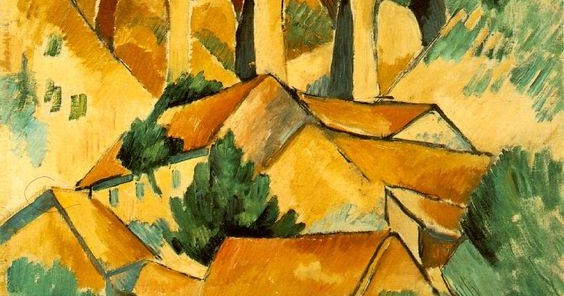
Okay, picture this: you’re scrolling through Instagram, half-asleep, and BAM! You see a picture of… well, it looks like a bunch of brown cubes stacked on top of each other. "Art," someone captioned it. You scoff. "My kid could do that!" But then, something makes you pause. There's something… intriguing about it. That, my friends, is probably how a lot of people reacted (and maybe still react) to early Cubist paintings, including Georges Braque's Le Viaduc à L'Estaque.
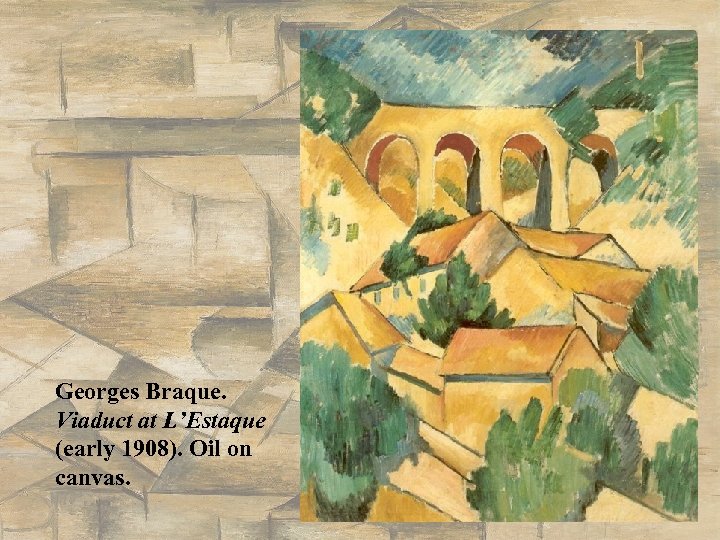
And trust me, I get it. Abstract art can feel like an inside joke you’re not in on. But let's dive into this particular painting and see if we can crack the code, shall we? Le Viaduc à L'Estaque, painted in 1908, isn't just a bunch of random shapes. It's a moment in art history!
What's Going On Here?
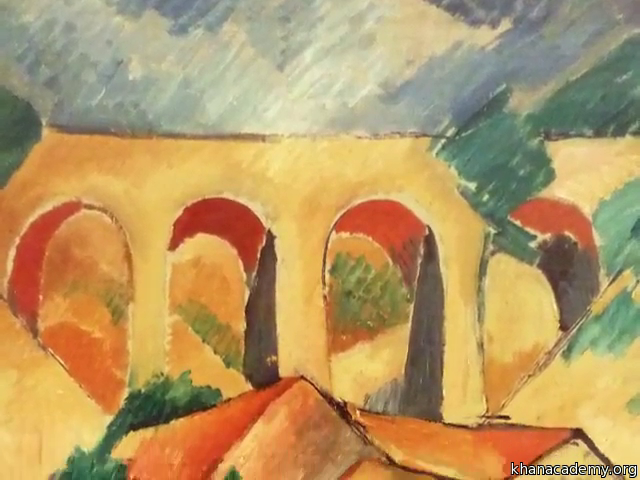
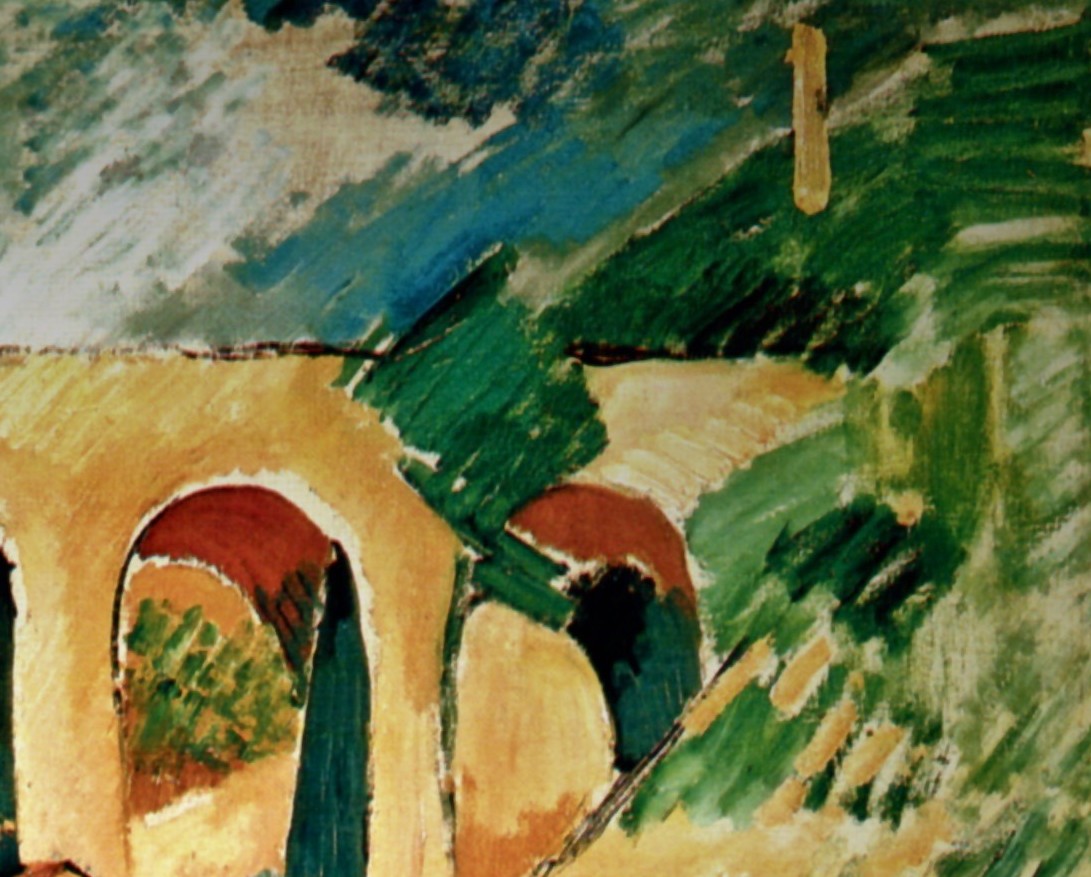
So, what are we actually looking at? The painting depicts the viaduct at L'Estaque, a small town near Marseille in southern France. (Southern France is pretty important when we talk about art, isn't it?). But Braque isn’t painting it literally. He's playing with perspective, breaking down the scene into geometric forms – cubes, mostly – and rearranging them. Think of it like taking apart a Lego set and rebuilding it in a slightly… off-kilter way.
Here’s the breakdown:
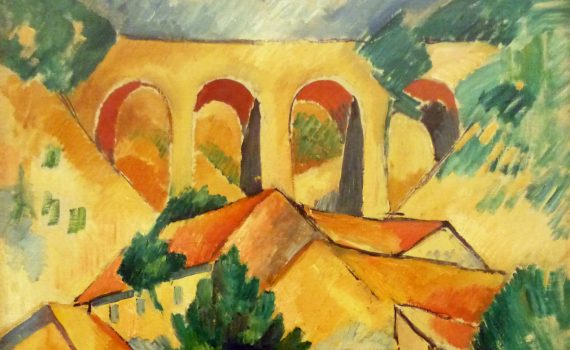
- The Viaduct: You can kind of make out the arches of the viaduct, though they’re definitely not in their "correct" positions.
- The Houses: See those brownish, blocky shapes? Those are supposed to be houses. (Emphasis on supposed to be.)
- The Landscape: The overall feeling is of a sun-drenched Mediterranean landscape, but stylized and simplified.
Le Viaduc à L'Estaque is considered one of the earliest examples of Cubism. (Cue dramatic music!). Now, Cubism is a whole can of worms (a fascinating can of worms!), but the basic idea is that artists wanted to represent objects from multiple viewpoints simultaneously. Basically, they wanted to show you all sides of something at once, even if that's impossible in "real life." (Think about trying to describe a building to someone who's never seen one. You'd probably talk about the front, the sides, the roof… Cubism is like that, but all at the same time!).
Why Should We Care?
Okay, so why is this painting important? Well, it marks a huge shift in the way artists thought about painting. For centuries, artists had been trying to create realistic representations of the world. But Braque (and his buddy Picasso) were like, "Nah, let's do something completely different!" (Imagine the art critics of the time having a collective meltdown!).

Le Viaduc à L'Estaque paved the way for a whole new era of abstract art. It influenced countless artists and movements that came after it. It challenged the idea that art had to be realistic to be meaningful. It’s like Braque and Picasso threw a paint-filled grenade into the art world, and Cubism was the explosion. A beautiful, albeit confusing, explosion.
Final Thoughts
So, the next time you see a Cubist painting that looks like a jumble of geometric shapes, don't just dismiss it as "something my kid could do." Take a closer look. Try to see the world through Braque's eyes. (Or at least squint a little and imagine you're seeing multiple perspectives at once). You might just be surprised at what you discover. And hey, even if you still don't "get it," at least you can say you tried. Plus, you've now got some sweet art history knowledge to drop at your next cocktail party. You’re welcome!




/i.s3.glbimg.com/v1/AUTH_5dfbcf92c1a84b20a5da5024d398ff2f/internal_photos/bs/2022/Q/H/SoxjeHTAGQbpelEw1WDg/2015-11-17-joias-mario-pantalena-2.jpg)