Salut, mes amis! Ever feel like French grammar is a giant puzzle designed to specifically trip you up? Yeah, me too. But fear not! Today, we’re diving into a little corner of French that’s surprisingly…chill. We’re talking about adjectives of color that don’t agree. I know, I know, it sounds too good to be true. But trust me, it's a real thing, and it’s here to make your life a tiny bit easier (and who doesn't want that?).
Why Not Agree? A Rainbow Rebellion!
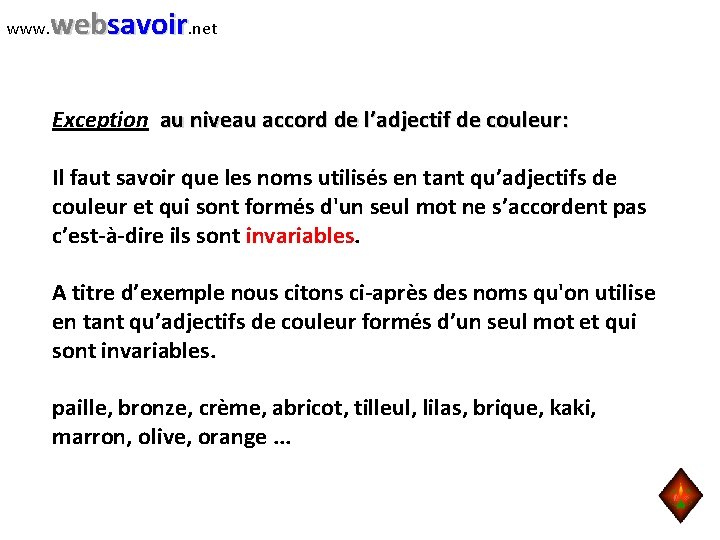
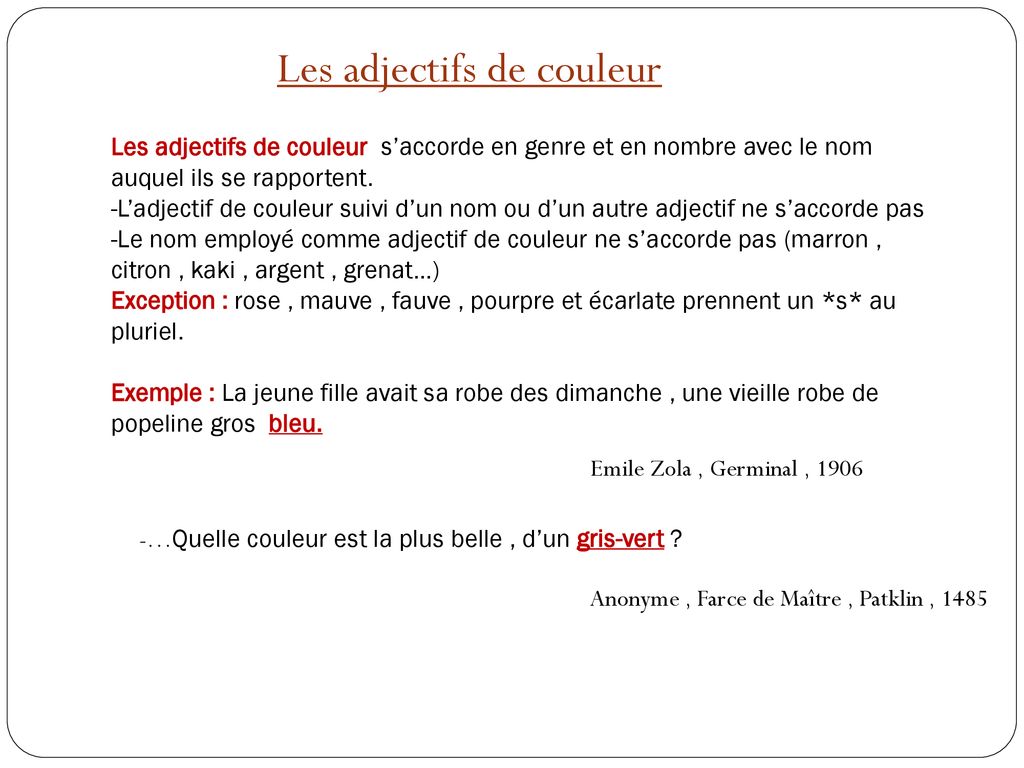
So, the big question: Why the heck don't some color adjectives agree in gender and number with the nouns they modify? Well, buckle up, because here comes a little bit of history. Basically, these rebel adjectives started their lives as nouns. Think of them as color names that got drafted into adjective duty but never quite lost their nouny origins. Because they are essentially nouns, they maintain their original form, no matter what they are describing. Clever, right? It's like they're saying, "I'm a noun, I do what I want!"
Think of it this way: it's as if you named your parrot "Orange". Even though your parrot is male, female, or a flock of parrots, you'd still call them "Orange." The color adjective acts in a similar, stubborn manner.
The Usual Suspects: Color Names Gone Rogue
Okay, so which colors are part of this cool, non-agreement club? Here are some of the most common ones you’ll encounter:
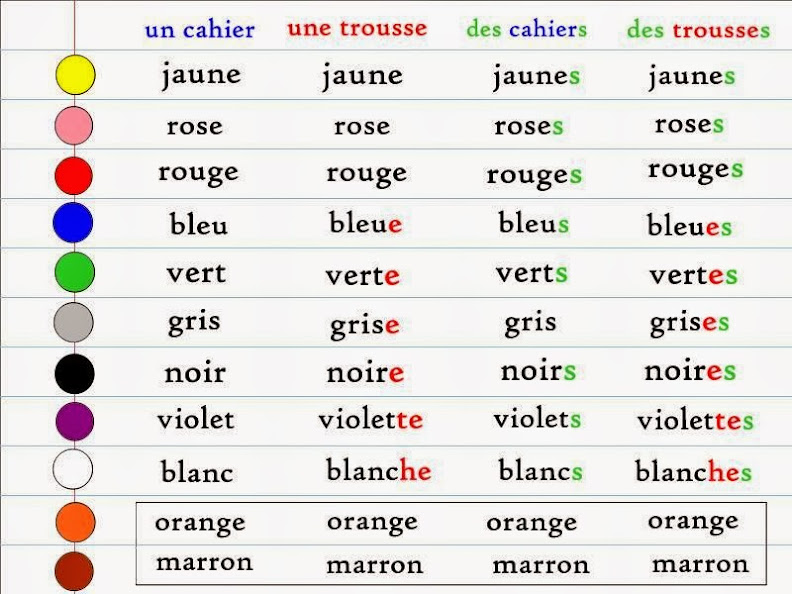
- Orange: Obviously! Une voiture orange (an orange car), des maisons orange (orange houses). Notice anything? Yep, "orange" stays "orange," no matter what.
- Marron: This one’s a classic. Un ours marron (a brown bear), des chaussures marron (brown shoes). Brown brilliance in its simplest form.
- Crème: Mmm, sounds delicious, and easy too! Une robe crème (a cream dress), des murs crème (cream walls).
- Kaki: The color of adventure (or camouflage, depending on your day). Un pantalon kaki (khaki pants), des chemises kaki (khaki shirts).
- Chocolat: Another delicious color and one of the most recognizable words in French. Un gâteau chocolat (a chocolate cake), des glaces chocolat (chocolate ice creams)
See? Not so scary, is it? These colors are your friends. They’re simplifying your French, one non-agreement at a time. Take them as allies in the war against irregular verbs and confusing subjunctive forms!

But Wait! There’s Always a Twist…
Okay, okay, I know what you’re thinking: "This is too easy! There has to be a catch!" And you’re right. (You’re always right, aren’t you?) The catch is that some of these color adjectives can actually agree if they are being used in a more descriptive or literary way. But don't panic! This is usually when they are being used to create more nuanced and descriptive language.
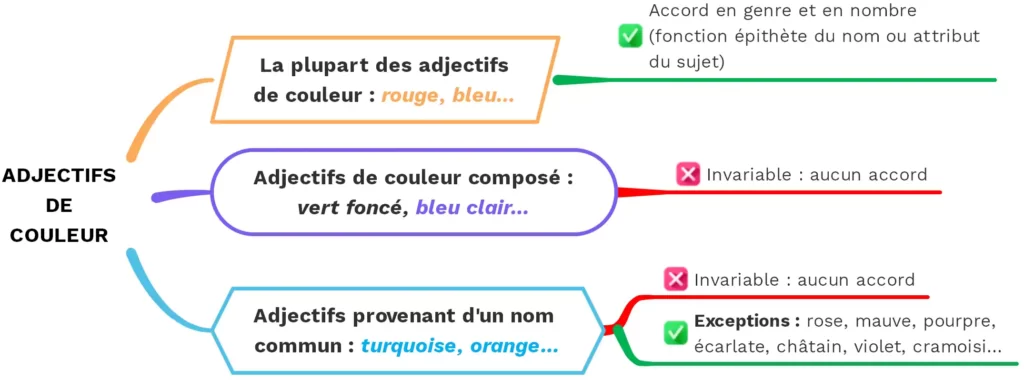
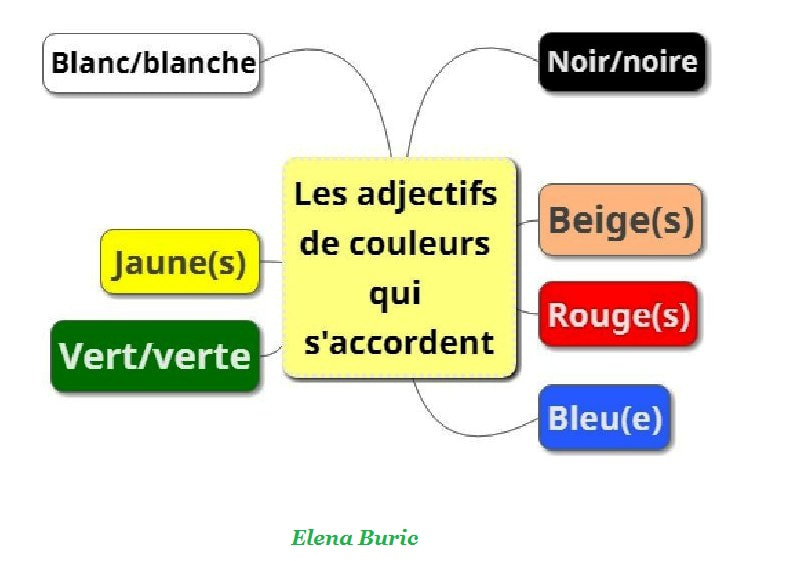
For example, you’ll often see "rose" agree (rose, roses) because it’s a “true” adjective and not just a noun borrowing the adjective job. Similarly, bleu, vert, jaune, rouge - these all agree according to the usual rules.
However, there's another catch! (Yes, I know, grammar is a gift that keeps on giving). If a color adjective is modified by another adjective, even the usually unyielding ones will bend to the rules of agreement. For instance:

- Des fleurs orange foncé (dark orange flowers) - Here, because "foncé" (dark) is modifying "orange", "orange" remains unchanged.
- Des voitures marron clair (light brown cars) - Same principle applies!
Think of the modifying adjective as a kind of glue holding the unyielding color name in its place. It’s like the color adjective is saying, "Okay, fine, I won't change, but I’m bringing a friend along for the ride!"
Making it Fun: Playing with Colors!
Now that we've covered the rules (and the exceptions to the rules…because France), let’s make this fun! Try thinking of everyday objects and describing them using these non-agreeing colors. For example:
- Un sac marron (a brown bag)
- Une table orange (an orange table)
- Des chaussettes kaki (khaki socks)
You can even create silly sentences to help you remember! For instance:

“Le chat orange mange un gâteau marron dans une maison kaki!” (The orange cat eats a brown cake in a khaki house!).
The sillier the sentence, the more likely you are to remember the rule! And hey, who doesn't love a little silliness in their grammar learning?
Why This Matters (And Why You Should Care!)
Okay, so you might be thinking, "Why does this even matter? Will anyone really notice if I accidentally make 'orange' agree?" And the answer is...maybe not. But knowing these little quirks of French grammar is what takes you from being a beginner to a more confident and nuanced speaker. It shows that you’re paying attention to the details, that you care about expressing yourself accurately, and that you’re willing to go the extra mile to truly understand the language.
Besides, knowing these rules can actually save you from making mistakes! Instead of having to think about whether "marron" should be "marronne" or "marrons," you can just confidently say "marron" and know that you’re right! Talk about a grammar win!
Go Forth and Color Your World!
So, there you have it! The wonderful world of French color adjectives that refuse to conform. It's a small but significant part of the French language that, once mastered, will make you feel like a true grammar ninja. Don’t be afraid to embrace these little quirks and use them to add color (literally!) to your French. Learning a language is a journey, not a destination, and every little victory – even mastering the non-agreement of "orange" – is a step forward. Now go out there and paint the town…in all the colors that don’t agree!
And if you're itching to learn even more about the wonderful (and sometimes wacky) world of French grammar, there are tons of amazing resources out there! From online courses to textbooks to language exchange partners, the possibilities are endless. So dive in, explore, and discover the joy of learning French. You’ve got this!